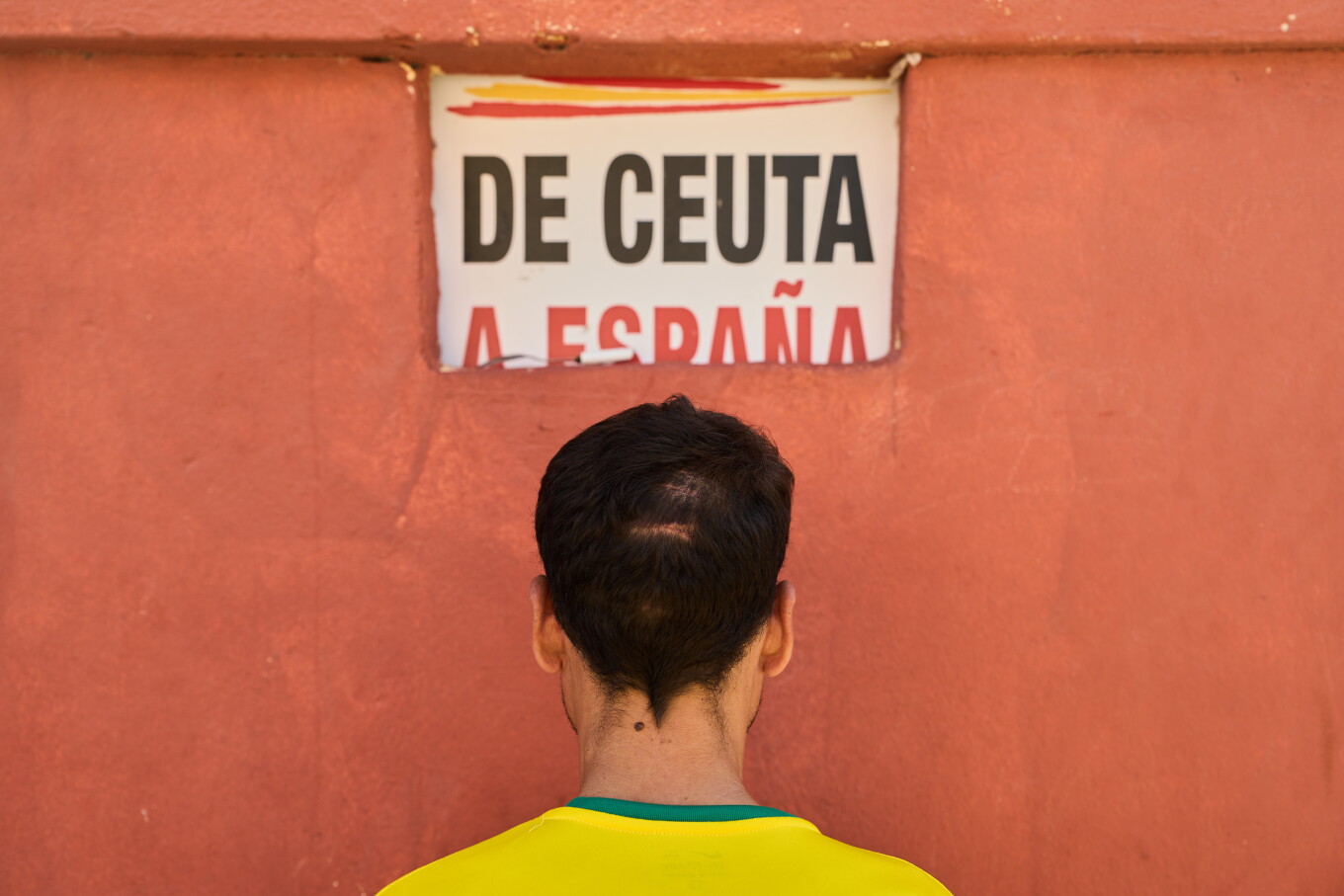
苏曼·奈沙达姆,贝尔纳特·阿曼格 休达,西班牙 — 休达一个蔓延的帐篷村里的许多移民,来此寻找更好的经济机会。另一些人则逃离战争与暴力,或因性别或性取向原因在西班牙寻求庇护。随着人道主义危机的展开,一些人站出来指控遭受虐待。在现已拆除的营地进行的采访揭示了移民寻求保护的动机。
Migrants in Ceuta face a humanitarian crisis, with some alleging abuse by Spanish soldiers. A 27-year-old Moroccan artisan claims soldiers beat him and tied his face to a tree. SUMAN NAISHADHAM, BERNAT ARMANGUÉ CEUTA, Spain — Many of the migrants in a sprawling tent village in Ceuta came searching for better economic opportunities. Others fled war and violence, or sought refuge in Spain because of their gender or sexuality. With a humanitarian crisis unfolding, some have come forward with allegations of abuse. Interviews at the now-demolished camp revealed migrants’ motivations for seeking protection.
摩洛哥工匠,27岁,称西班牙士兵殴打他 一名摩洛哥移民回忆说,清晨时分,他用衬衫按住头部,但鲜血不止。
Moroccan artisan, 27, says Spanish soldiers beat him A Moroccan migrant recalled pressing his shirt against his head in the early morning. The blood kept flowing.
他说,那天清晨,一群西班牙士兵将他的头绑在一棵树上,并殴打他的头部、背部和手臂。他因担心人身安全,要求匿名接受采访。
A group of Spanish soldiers had tied his head to a tree that September morning, he said, and struck him in the head, on the back and on his arms. He spoke on condition of anonymity out of fear for his safety.
根据他提交的一份警方报告(美联社已审阅),士兵们走近他和另一名移民,命令他们跟随,说他们的上级会处理他们。
The soldiers had approached him and another migrant and told them to follow, saying that their superior would them, according to a police report he filed, which The Associated Press has reviewed.
“他们把我们塞进汽车后备箱,锁上,开到森林里,”他在10月1日的采访中说。“我的嘴被灰色绝缘胶带封住了,”他说。
“They stuffed us into the trunk of a car, locked us in and drove us to the forest,” he said in an interview on Oct. 1. His mouth was covered with gray electrical tape, he said.
“他们殴打我的时候,我只看到了死亡,只有死亡,”他说。“想象一下,你的脸被绑在树上,他们接连不断地击打你的头部,正对着你的脸。”他说,头部缝了钉书针(订书钉),并向美联社展示了正在愈合的伤口。他说他想让士兵们承担责任。
“When they were beating me, I saw death, only death,” he said. “Imagine your face being tied to a tree while they strike your head, taking hit after hit, right to the front of your face.”He received staples in his head for his injuries, he said, and showed the AP his healing wounds. He said he wants to hold the soldiers to account.
西班牙检方正在调查休达发生的针对移民(包括未成年人)的酷虐和虐待报告。国际特赦组织9月发布的一份报告详细记录了西班牙士兵涉嫌非人道待遇的指控。
Spanish prosecutors are investigating reports of torture and mistreatment of migrants in Ceuta, including minors. Amnesty International published a report in September detailing allegations of inhumane treatment by Spanish soldiers.
“我从未想过会发生这样的事情,”这位工匠说。“我们真的相信这里的人们是善良的,政府也是体面的。”
“I never thought anything like this could happen,” the artisan said. “We truly believed the people here are good and that the government is decent.”
“有时候我会问自己为什么要来这里,但有时候又告诉自己上帝会帮助我。”一名19岁的跨性别男子返回摩洛哥。一名跨性别青少年于7月从摩洛哥城市弗尼德克游泳到达休达。不久之后,他认为自己即将进入收容所。然而,他在海边营地待了将近两个月。
“Sometimes I ask myself why I even came here, but other times I tell myself that God will help me.”Transgender man, 19, returns to Morocco A transgender teen swam to Ceuta in July from the Moroccan city of Fnideq. Soon, he thought, he would be in a shelter. Instead, he spent nearly two months at the beachside camp.
他说自己离开家是因为作为跨性别者所面临的挑战。他要求匿名接受采访,因为担心因性别身份而遭到报复。
He left home because of the challenges of being transgender, he said. He spoke on the condition of anonymity due to fears of reprisals for his gender identity.
“摩洛哥的人没有任何怜悯之心,”他在9月29日的一次采访中说道。“他们只看你的外表,而不看你的内心。”他在休达表示,他曾短暂与远房亲戚同住,但得知他的身份后,亲戚把他赶了出去。“他们不接受我的处境,”他说。
“People in Morocco don’t have any mercy,” he said in an interview on Sept. 29. “They look at the outside of you, not the inside.”In Ceuta, he said he briefly lived with extended family, but they kicked him out after learning about his identity. “They didn’t accept my situation,” he said.
西班牙的庇护法将性别认同和性取向视为寻求保护的正当理由。案件将个别评估。10月初,他在警方清理营地后返回摩洛哥。
Spain’s asylum law recognizes gender identity and sexual orientation as valid grounds for seeking protection. Cases are assessed individually. In early October, he returned to Morocco after police cleared the camp.
一名受家庭威胁的同性恋男子。一位34岁、性格内向的男子在摩洛哥北部城市泰托安离开家园,因为他哥哥在他手机里发现了他和男朋友的照片,并威胁要将他们报告给警方。
A gay man threatened by his family A soft-spoken 34-year-old man left Tetouan, in northern Morocco, after his brother found pictures of him and his boyfriend on his phone and threatened to report them to the police.
这两兄弟本来就在因出售家族房产而产生激烈争执。在一次之前的争吵中,他说哥哥曾用热油烫伤他。
The brothers were already in a bitter dispute over the sale of a family home. In a previous argument, he said his brother had burned him with hot oil.
他要求匿名接受采访,因为担心来自家庭、社区和摩洛哥政府的报复。
He spoke on condition of anonymity for fear of reprisals from his family, community and the Moroccan government.
在摩洛哥,与同性成员发生自愿性行为是非法的,可能会被处以罚款,最高可判处三年监禁。根据美国国务院的数据,每年有数百名男女因此类法律被起诉。同性恋经常被引用为摩洛哥人试图逃离时申请庇护的理由。“我离开摩洛哥是因为作为同性恋者生活非常艰难,”他说。
Consensual sexual activity with members of the same sex is illegal in Morocco, and can be publishable by fines and up to three years imprisonment. Hundreds of men and women are prosecuted annually under such laws, according to the U.S. State Department. Homosexuality is regularly cited as an asylum claim for Moroccans attempting to flee. “I left Morocco because being gay is so hard,” he said.
因批评伊斯兰教而遭到迫害 一名28岁的摩洛哥庇护申请者表示,他在网上发布批评伊斯兰教的内容后收到了死亡威胁。
Persecuted for criticizing Islam A 28-year-old Moroccan asylum seeker said he received death threats for posting content online that is critical of Islam.
2025年,他主持了聚焦宗教的TikTok直播。他开始收到死亡威胁,并称自己曾在马拉喀什被一名追随者绑架。“这就是转折点,”他说。
In 2025, he hosted TikTok livestreams focused on the religion. He began receiving death threats, and says he was kidnapped in Marrakech by a follower. “That was the tipping point,” he said.
美联社无法独立核实他的说法,但查看了他提交给西班牙当局的庇护文件副本,其中详细描述了这些事件。
The AP was not able to independently verify his claims, but viewed a copy of his asylum paperwork in which he detailed them to Spanish authorities.
他以匿名方式接受采访,因为担心遭到报复。在摩洛哥公开批评伊斯兰教可能导致刑事起诉,面临监禁和罚款。他于7月进入塞乌塔,与数万名其他人一起。
He spoke on condition of anonymity due to fear of reprisals. Publicly criticizing Islam in Morocco can lead to criminal prosecution, carrying prison sentences and fines. He crossed into Ceuta in July, joining tens of thousands more.
“第一周纯粹是为了生存,”他说。“感觉就像在逃离僵尸;有些人想攻击你,其他人想抢劫你。” 他担心如果被遣返回摩洛哥,自己的安全将得不到保障。
“The first week was pure survival” he said. “It felt like running from zombies; some people wanted to attack you, others wanted to rob you.”He fears for his safety if he is sent back to Morocco.