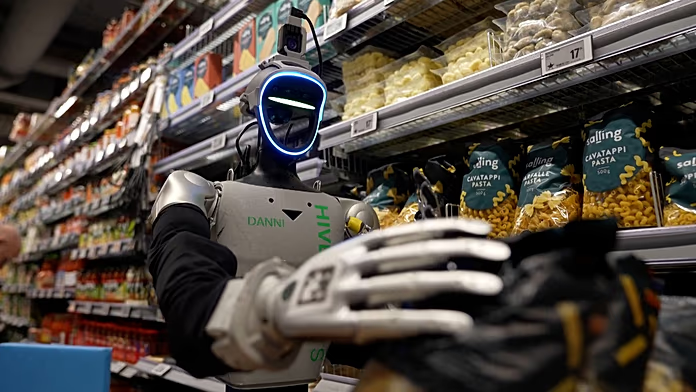
反复拿取商品、放置货架、重复相同动作数小时。在哥本哈根附近的一家Føtex超市,机器人正在学习执行零售业最耗时的工作之一。
Picking up products, placing them on shelves and repeating the same movements for hours. At a Føtex supermarket near Copenhagen, robots are learning to perform one of the most time-consuming jobs in retail.
由丹麦初创公司Hive Robots开发、中国Unitree制造的这些机器人自6月起一直在训练。目前,人工操作员引导每一个动作,帮助人工智能学习如何处理不同商品。
Developed by Danish start-up Hive Robots and built by China's Unitree, the machines have been training since June. For now, human operators guide every movement, helping the artificial intelligence learn how to handle different products.
目标是让这些机器人在2027年初能够独立完成货架补货工作,主要在超市关门时的夜间进行。
The ambition is to have them restocking shelves independently by early 2027, working mainly at night when the supermarket is closed.
此次实验是丹麦最大零售商Salling Group更广泛试验的一部分,该集团在六个欧洲国家拥有超过2000家门店。
The experiment is part of a wider trial with Salling Group, Denmark's largest retailer, which has more than 2,000 stores in six European countries.
根据Føtex的数据,员工有40%至50%的时间用于补货。零售商希望机器人最终能承担部分重复性体力劳动,让员工有更多时间服务客户。
According to Føtex, workers spend between 40 and 50 per cent of their time replenishing shelves. The retailer hopes robots will eventually take on some of this repetitive physical work, giving employees more time to assist customers.
这些机器人未来还可能检查保质期、识别空货架和发现错放商品。但目前它们的工作速度仍慢于人类,且需要密切监督。
The machines could later check expiry dates, identify empty shelves and spot misplaced goods. But they still work more slowly than people and need close supervision.
丹麦法律也必须修改,才能让机器人在购物者中自主运行。目前,重点仍放在夜间工作和远离顾客的任务上。
Danish law would also have to change before robots could operate autonomously among shoppers. For now, the focus remains on night-time work and tasks away from customers.