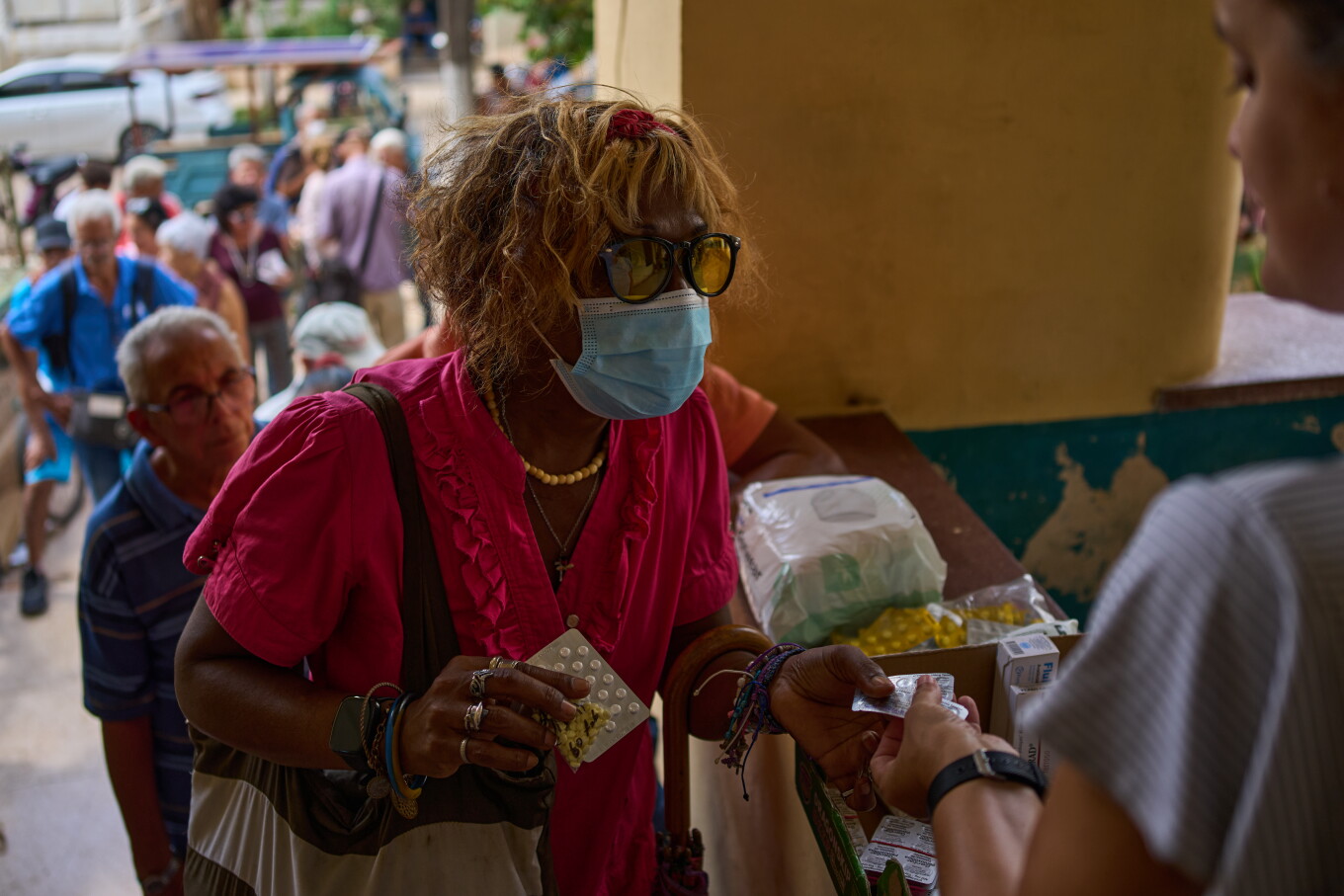
安德烈亚·罗德里格斯 哈瓦纳 — 每周四和周日中午,数十人聚集在哈瓦纳韦达诺社区的一栋公寓楼外。劳拉·门多萨下楼,核对名单与名单上的名字,并分发他们通过WhatsApp申请的药物。
ANDREA RODRÍGUEZ HAVANA — Every Thursday and Sunday at noon, dozens of people gather outside an apartment building in Havana’s Vedado neighborhood. Laura Mendoza comes downstairs, checks their names against a list and hands out medicine they requested through WhatsApp.
她分发的药物包括抗组胺药、利尿剂、眼药水和抗生素。她不收取任何费用。
Antihistamines, diuretics, eye drops and antibiotics are among the drugs she distributes. She charges nothing.
像门多萨这样的项目,名为“药品不售卖”,已成为古巴人应对日益加深的经济危机、寻找日益稀缺药物的生命线,这一危机还因自1月以来美国施加的能源和金融限制而雪上加霜。
Projects like Mendoza’s, called “Medicine Is Not for Sale,” have become a lifeline for Cubans struggling to find increasingly scarce medications as the country’s economic crisis deepens, compounded by U.S. energy and financial restrictions imposed since January.
在线卖家、街头小贩以及WhatsApp和Telegram群组也介入其中,以填补国营药房留下的空白——这些药房数十年来一直是补贴药物的主要来源。
Online sellers, street vendors and WhatsApp and Telegram groups have also stepped in to fill gaps left by state pharmacies, which for decades were the main source of subsidized medicines.
药物短缺情况已经如此严重,以至于古巴当局在7月发布了法规,允许私营药房运营——这是该国国营医疗体系的一项历史性变革,也是更广泛经济改革的一部分。在这些私营药房开业之前,像门多萨这样的项目提供了生命线。
The shortages have become so severe that Cuban authorities issued regulations in July allowing private pharmacies to operate — a historic change to the country’s state-run health system and part of broader economic reforms . Until those pharmacies open, projects like Mendoza’s provide a lifeline.
“我们在哈瓦纳有五个WhatsApp群组,最近又在瓜纳博增设了一个,”门多萨说,她估计哈瓦纳大约有100个类似的社区项目正在运作。
“We have five WhatsApp groups in Havana and recently added one in Guanabo,” said Mendoza, who estimates that about 100 similar community projects operate in Havana.
她与天主教慈善机构Caritas合作,该倡议每周从加拿大和美国的人道主义组织、携带捐赠物品的旅行者以及当地居民处获得超过13公斤(29磅)的药物。
Working with the Catholic charity Caritas, her initiative receives more than 13 kilograms (29 pounds) of medicine each week from humanitarian groups in Canada and the United States, travelers carrying donations and local residents.
“人们不仅依赖这个主要药房,他们还互相帮助,”门多萨说,她站在自己公寓里的药架旁。
“People don’t just rely on this main pharmacy. They help each other,” Mendoza said, standing beside shelves of medicine in her apartment.
志愿者有时会将药物送到无法自行取药的患者手中。但需要冷藏的药物,包括某些糖尿病药物和癌症治疗药物,尤其难以获得。患者还寻求纱布、注射器和麻醉剂,以供应不足的医院使用。
Volunteers sometimes deliver medicine to patients who cannot collect it themselves. But drugs requiring refrigeration, including some diabetes medications, and cancer treatments are particularly difficult to obtain. Patients also seek gauze, syringes and anesthetics for use in poorly supplied hospitals .
六七年前,在国家药店找到药物相对容易,”27岁的物理教师克里斯蒂娜·迪亚斯说,她来到门多萨的项目,为亲戚寻找氯硝西泮。随着短缺情况恶化,“药物变得更难找到了,”她说。
“Six or seven years ago, it was relatively easy to find medicines at state pharmacies,” said Cristina Díaz, a 27-year-old physics teacher who came to Mendoza’s project seeking clonazepam for a relative. As shortages worsened, “medicines became much harder to find,” she said.
古巴卫生部列出了基本药物计划中的603种药物,但目前只有略多于三分之一可供使用。大约400种药物由古巴实验室使用进口原材料生产。
Cuba’s Health Ministry lists 603 medicines in its basic drug program, but only slightly more than one-third are currently available. About 400 are produced by Cuban laboratories using imported raw materials.
国营制药公司古巴生物制药公司(BioCubaFarma)总裁迈尔达·莫里·佩雷斯在6月表示,该公司原计划供应的395种药物中,约有300种因进口材料短缺而未能生产。
Mayda Mauri Pérez, president of the state pharmaceutical company BioCubaFarma, said in June that about 300 of the 395 medicines the company was expected to supply had not been produced because of shortages of imported materials.
情况在中部省西戈德阿维拉尤为严重,当局最近承认该省国家药店仅有基本药物清单中约10%的药物。官员们将责任归咎于供应和物流问题,包括燃料短缺。
The situation is particularly acute in the central province of Ciego de Ávila, where authorities recently acknowledged that state pharmacies had only about 10% of the medicines on the basic list. Officials blamed supply and logistical problems, including fuel shortages .
“古巴拥有一个我们认为很强大的医药工业,”该省药品公司负责人玛丽亚·费尔南德斯·马丁内斯在官方报纸《格拉玛》上说道。但如果没有原材料,“即使是最有能力的工厂也无法完成生产循环。”政府还难以获得包装材料,如泡罩包装和瓶子,并表示美国的金融制裁使进口付款变得复杂。古巴当局表示,医疗物资的运输也曾在第三国滞留,因为航运公司担心因停靠古巴港口而面临美国的处罚。
“Cuba has a medical-pharmaceutical industry that we consider strong,” María Fernández Martínez, head of the province’s pharmacy company, told the official newspaper Granma. But without supplies, “not even the most capable factory can complete the cycle.”The government also struggles to obtain packaging such as blister packs and bottles and says U.S. financial sanctions complicate payments for imports. Cuban authorities say shipments of medical supplies have also been stranded in third countries because shipping companies fear U.S. penalties for calling at Cuban ports.
允许私营药店是古巴议会在6月批准的176项经济措施之一,旨在扩大私营企业并帮助应对该国的经济危机。
Allowing private pharmacies is part of a package of 176 economic measures approved by Cuba’s Parliament in June to expand private enterprise and help address the country’s economic crisis.
政府希望企业家能够像私营企业在食品和燃料领域所做的那样进口药物。官员表示,他们正在审查约36份开设私营药店的提案,而国营药店将继续运营。
The government hopes entrepreneurs can import medicines, as private businesses already do with food and fuel. Authorities say they are reviewing about 36 proposals to open private pharmacies, while state pharmacies will continue to operate.
私营药店将受政府监管,禁止销售仅限医院使用的药品和某些受控物质。进口必须通过国有公司进行,而药品则需要获得监管批准并妥善储存。古巴政府未对置评请求作出回应。
Private pharmacies will be regulated by the government and barred from selling hospital-only drugs and certain controlled substances. Imports will have to go through state companies, while medicines will require regulatory approval and proper storage. The Cuban government did not respond to a request for comment.
然而,对许多古巴人来说,另一个问题仍未得到解答:他们能否负担得起药品?
For many Cubans, however, another question remains unanswered: Will they be able to afford the medicine?
69岁的萨拉·马尔克斯(Sara Márquez)正服用降压药。她说,在国营药店,一盒药曾售价为0.30古巴比索。而在最近几个月,非正式卖家对同一剂量的药收费高达1000比索(约合1.50美元)——这已经超过她月养老金的30%以上。
Sara Márquez, 69, takes medication to control her blood pressure. She said a blister pack once cost 0.30 Cuban pesos at state-run pharmacies. In recent months, informal sellers have charged as much as 1,000 pesos ($1.50) for the same amount — more than 30% of her monthly pension.
“他们会以什么价格出售药品?……这将取决于人们的购买力。我负担不起。”
“At what price will they sell the medicine? ... It will depend on people’s purchasing power. I can’t afford it.”