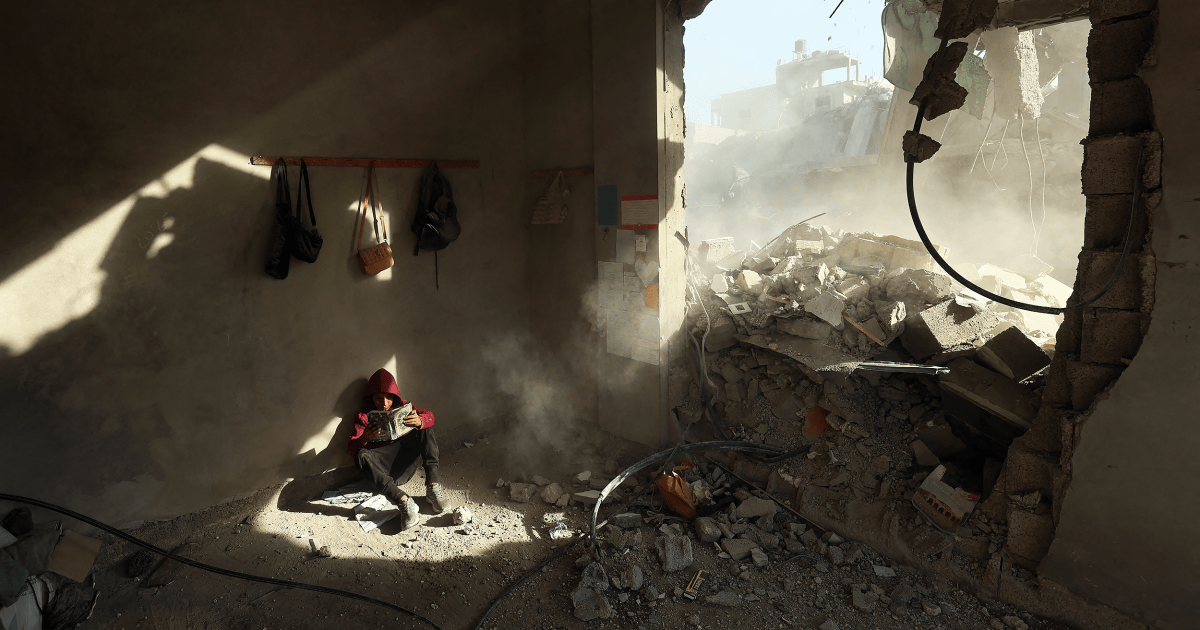
近三年前,当以色列将加沙地带一分为二,分为北部和南部时,我的28岁表弟拒绝离开我们在达拉杰的社区。我们其他人一直在一个临时庇护所到另一个临时庇护所之间辗转,而他却留在我们长大的那片破败土地上。
Nearly three years ago, when Israel split the Gaza Strip in half, north and south, my 28-year-old cousin refused to leave our neighborhood in Al-Daraj. The rest of us kept moving from one temporary shelter to the next, while he stayed on the broken ground where we grew up.
我最近终于联系上了他,电话线路非常弱,每隔几句话就会彻底消失在噪音中。
I reached him recently, the phone line so weak that every few words dissolved into nothing.
“你问社区三年后是什么样子?根本没有社区了。它只是由记忆堆砌而成的地标,”他在噪声中断断续续的线路上告诉我。“你知道以前角落面包店的位置吗?那里现在全是被压碎的砖块堆成的山,一根铁梁像断臂一样突出来。”我们曾以为杀戮会停止,痛苦终于会有个归宿。
“You ask how the neighborhood looks three years later? There is no neighborhood. It’s just landmarks made out of memories,” he told me on the crackly line. “You know where the corner bakery used to be? It’s all a mountain of crushed brick with an iron beam sticking out like a broken arm.”We thought the killing would stop and that the pain might finally have somewhere to go.
当加沙的停火协议一年前宣布时,我远在异乡,与数千身处加沙的巴勒斯坦人一起庆祝。那是我离开已超过一年的时候。
When the ceasefire in Gaza was announced one year ago, I celebrated from afar along with thousands of Palestinians who were in Gaza. It had been over a year since I had left.
通过电话,我与他们分享了喜悦和欣慰——恐怖和轰炸的声音即将结束。我们曾以为杀戮会停止,痛苦终于会有个归宿。
Over phone calls, I shared in the joy and relief that the sounds of terror and bombardment were about to end. We thought the killing would stop and that the pain might finally have somewhere to go.
几个小时后,人们开始沿着拉希德海岸路向北走,前往他们有两年未见的加沙城。他们推着手推车,把孩子扛在肩上。许多人正返回早已不复存在的家园。
Within hours, people began walking north along Al Rashid, the coastal road, toward a Gaza City most of them hadn’t seen in two years. They pushed carts and carried children on their shoulders. Many were returning to homes that no longer existed.
在随后的几个月里,我与整个飞地的人们交谈。许多人从泥地里搭起的帐篷里和我说话,有时电话线在他们说话中途就中断了,就像我和表弟的通话一样;或者通过卡顿的视频通话。出于安全考虑,我在这篇文章中删去了他们的名字。2026年3月5日 / 06:45在这场种族灭绝的第三年,加沙的人们不再计算天数或年数。他们用埋葬来衡量时间:有多少孩子被杀害,有多少父母去世,又有多少老人被他们安葬进了土地。
In the months that followed, I have spoken with people across the enclave. Many of them spoke to me from tents pitched in the mud, sometimes on phone lines that kept cutting out mid-sentence, like in my conversation with my cousin, or over glitchy video calls. For safety, I’ve withheld their names in this essay. March 5, 2026 / 06:45 Three years into this genocide, people in Gaza no longer count days or years. Instead, they measure time in burials; how many children were killed, how many parents, and how many of the old ones they have put in the ground.
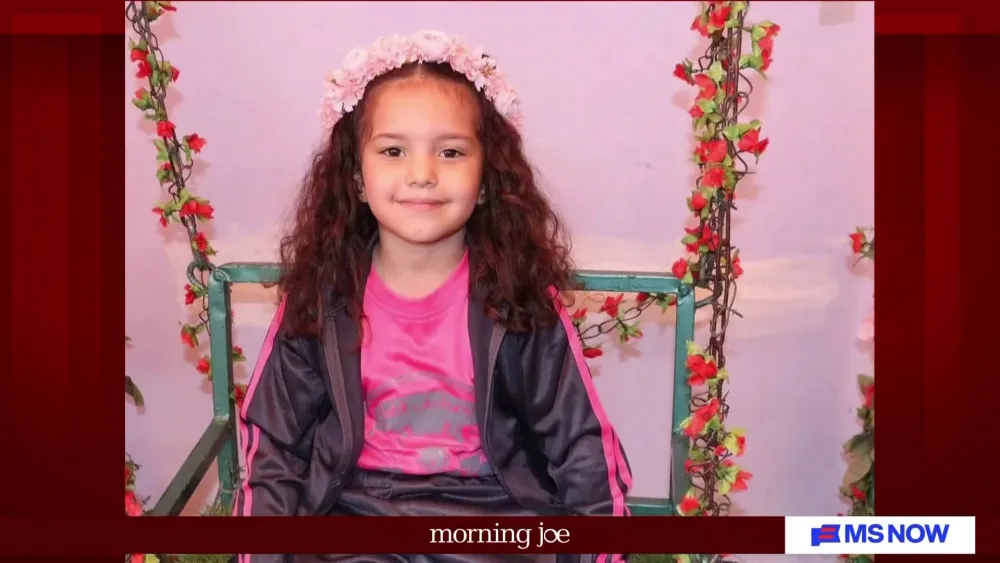
自停火宣布以来,已有超过1000名巴勒斯坦人被以色列军火击毙。有人在等待食物时遭到炮击,有人在废墟最终垮塌时被压死。以色列政府称这些袭击大多为孤立的打击。我想它们确实如此,因为一次打击可能只夺走一个家庭的生命,却很少登上头条。灭绝中最安静的阶段,也是世界最容易遗忘的阶段。
More than 1,000 Palestinians have been reported killed by Israeli fire since the truce was announced. Some were shelled while waiting for food. Others were crushed under ruins that finally gave way. Most of these attacks have been called isolated strikes by the Israeli government. I suppose they are, in the sense that a strike can take out a family at a time and rarely makes the front page. The quietest phase of the extermination is also the easiest one for the world to forget.
停火也划出了一条新线。以色列军队撤退到“黄线”后方——那是一排黄色混凝土块,将超过一半的加沙地带划在了他们这边。此后,这些混凝土块一直向西推移。以色列总理本雅明·内塔尼亚胡表示,以色列控制了加沙约60%的地区,而那些靠得太近的人已被开枪击中。如今,两百万人被迫挤在剩下的土地上。
The ceasefire also drew a new line. Israeli troops pulled back behind the “ yellow line ,” a row of yellow concrete blocks, keeping more than half the strip on their side of it. Since then, the blocks have crept west. Israeli Prime Minister Benjamin Netanyahu said Israel controls about 60% of Gaza , and people who have come too close to the line have been shot . Two million people are now packed into what is left.
“上帝知道,我们几个月来只靠动物饲料为生,”我的表亲告诉我。“我怀念每天日落后,和你叔叔一起坐在门口,喝着加了鼠尾草的红茶。我们失去了家园,我父亲——你的叔叔——被埋在诊所后面的集体墓穴里,因为我们无法到达墓地。新闻里说已经停火一年了,但每隔几天就又有一栋房子被击中,另一个家庭悄然消失。我在这些街道上行走,感觉自己就像一个鬼魂,正在参观一个曾经属于活着的人们的城市。所有留在这里的人,在三年里就像老了二十岁。我的朋友哈桑,他才26岁,头发已经全白了。我们每天只谈一件事:今天能否找到干净的水。”
“God knows we lived on ground animal feed for months,” my cousin told me. “I miss sitting on our doorstep with your uncle every evening after sunset, drinking black tea with sage. We lost our home and my father, your uncle, is buried in a mass grave behind the clinic because we couldn’t reach the cemetery. A year of ceasefire on the news, but every few days another house is struck and another family is wiped out quietly. I walk through these streets and I feel like a ghost visiting a city that used to belong to living people. Everyone who stayed here aged 20 years in three years. My friend Hassan, he’s 26, his hair is entirely white now. All we talk about is whether we could find clean water for the day.”
“上周,第二排的一个女孩抬头看着我说,‘老师,我哥哥的鞋子还在房子底下。我们能去拿回来吗?’你对这样的问题,又能说什么呢?”——一名加沙的老师,其最小的女儿于2023年被杀。
“Last week, a girl in the second row looked up at me and said, ‘Teacher, my brother’s shoes are still under the house. Can we go get them?’ What do you say to that?”A teacher in Gaza, whose youngest daughter was killed in 2023
我采访了一位来自谢赫拉德万社区的男子,他现在在加沙中部的代尔巴拉赫一块防水布下教学。由于网络连接不好,我们先通过视频通话简短交谈,随后改为语音通话。三根劈开的木桩插进湿润的沙地,一块褪色的蓝色防水布拉紧绷在顶部,如今被称为一所学校,50名孩子席地而坐在一块他告诉我永远也晾不干的地毯上。
I spoke to a man from the Sheikh Radwan neighborhood who now teaches under a tarp in Deir al-Balah, in central Gaza. We spoke on video briefly before switching over to a voice call due to the poor connection. Three splintered wooden posts driven into wet sand and a faded blue tarp pulled tight across the top is now called a school, where 50 children sit cross-legged on a carpet that he told me never quite dries out.
2023年10月之前,我们的教室曾容纳大约45名学生,两人共用一张长凳,我们当时还觉得拥挤。但此后,加沙地带几乎所有学校和大学都被夷为平地,变成了水泥废墟,有些甚至成了集体墓地。然而,老师们仍然坚持每天出现。
Before October 2023, our classrooms used to hold around 45 kids, two to a bench, and we thought that was crowded. Almost every school and university in the Strip has since been flattened into concrete, and some have become mass graves. But the teachers keep showing up anyway.
“外界的人听到‘停火’和‘学校重新开放’,就会以为事情早在一年前就已经恢复正常,”他告诉我。“他们看到一张孩子拿着笔记本的照片,就会想,哦,很好,他们又在学习了。但请你进这个防水布里待一个小时。其中有一半的孩子已经一年半没拿过铅笔了。”
“People outside hear ‘ceasefire’ and ‘schools are back’ and think things returned to normal a year ago,” he tells me. “They see a photograph of a kid holding a notebook and think, ah, good, they’re learning again. But come stand inside this tarp for an hour. Half of them haven’t held a pencil in a year and a half.”
他今年44岁,在他学校被毁前,已经当了16年的阿拉伯语老师。通过视频,我能看到他的手掌染着深蓝色的墨水,和我12岁时候自己老师手上的墨水一样。
He is 44, and he taught Arabic for 16 years before his school was destroyed. Over video I can see his palms are stained with dark blue ink, the same ink I remember on my own teachers’ hands when I was 12.
“一个9岁的孩子坐下来画一条直线,他的手会像老年人一样发抖。上周,第二排的一个女孩抬头看着我说,‘老师,我哥哥的鞋子还压在房子底下。我们能去拿回来吗?’你说该怎么回答?”他恳求道,声音因疲惫而渐渐低落。
“A 9-year-old sits down to draw a straight line and his hand trembles like an old man’s. Last week, a girl in the second row looked up at me and said, ‘Teacher, my brother’s shoes are still under the house. Can we go get them?’ What do you say to that?” he implored, his voice descending into exhaustion.
我问他为什么每天都要回来。他说,如果一个孩子早上9点手里什么也没有拿着,他们脑袋里的噪音就会占据上风。2024年4月7日 / 06:24“我的学校已经存在了16年,如今只是一堆灰色的尘土。我用自己买的记号笔在救援包裹的纸板箱上写字。我们站在这里试图教语法,而他们的肚子却完全空着。每当无人机飞过头顶,这些小孩子就会抬头望天,等着看防水布是否会摇晃。”
I asked him why he comes back every day. If a child has nothing to hold in their hands at 9 a.m. in the morning, he said, the noise in their head takes over. April 7, 2024 / 06:24 “My school of 16 years is just a pile of grey dust. I write letters on cardboard boxes from aid packages with a marker I buy with my own money. We stand here trying to teach grammar while their bellies are completely empty. These young kids are watching the sky every time a drone passes overhead, waiting to see if the tarp is going to shake.”
这名男子在2023年11月,也就是战争第二个月,失去了他最小的女儿。自从防水布搭建起来后,他每天早上都回来,为其他幸存的孩子们教授字母表。
The man lost his youngest daughter in November 2023, in the second month of the war. Every morning since the tarp went up, he has come back to teach the alphabet to other people’s surviving children.
在迪尔·巴拉赫北部,回到加沙城,阿尔-希法医院曾是加沙地带最大的医院。以色列军队在战争期间曾两次围困它。去年十月停火后,我曾在加沙城采访过一名急救员,他在阿尔-希法医院原址处,已经在救护车里睡了三个月。2024年春天,第二次围困之后,以色列军队焚毁了阿尔-希法医院综合体,其院内被挖出了集体墓穴。2024年4月初,我曾到访那里,记得那片废墟周围的空气仍弥漫着翻动的泥土和焦电线的气味。
North of Deir Al Balah, back in Gaza City, Al Shifa was once the largest hospital in the Gaza Strip. Israeli forces have besieged it twice during the war. After the ceasefire last October, I spoke to a paramedic who had been sleeping in an ambulance for three months in Gaza City, where Al Shifa hospital once stood. After the second siege, in the spring of 2024, the Al Shifa complex was burned out by the Israeli military, and mass graves were dug up in its courtyard. When I was there in early April of 2024, I remember the air around what’s left of it still smelled of turned earth and burnt wire.
车辆的后车窗被炸毁,换上了用胶带固定的塑料薄膜。这名男子31岁,来自杰巴利耶。我们通电话时,他正用一颗生锈的钉子从靴子花纹中挑出碎石。
The vehicle’s rear windows had been blown out and replaced with plastic sheeting held in place with tape. The man, 31, is from Jabalia. He picked gravel out of the treads of his boots with a rusted nail while we talked by phone.
“每当我想闭上眼睛时,我都能听到那微弱的呜咽在三吨水泥下的黑暗中渐渐消失。”——加沙的一名31岁急救员“人们总是问我,在这三年里,最艰难的救援是什么。他们以为我会谈论鲜血或断肢。但鲜血只是工作;你的双手在大脑还没来得及处理之前就已经本能地移动了。最难的部分是,当你把某人拉出来之后,那一瞬间的沉默;或者是五分钟前你被迫做出的选择,”这名急救员告诉我。
“Every night when I try to close my eyes, I hear that tiny whimper dying out in the dark under three tons of cement.”A 31-year-old paramedic in Gaza “People always ask me what the hardest rescue was over these three years. They expect me to talk about the blood or the crushed limbs. But the blood is just work; your hands move automatically before your head can process it. The hardest part is the silence right after you pull someone out, or the choices you were forced to make five minutes earlier,” the paramedic told me.
“在杰巴利耶,一座倒塌的房屋下,我们听到了两个声音。一个是男人在前面大声呼救,声音洪亮清晰。另一个是婴儿,几乎只是微弱的呜咽,深埋在后面混凝土板下。房屋框架正在快速下沉。我们知道,如果我们花两个小时挖开后墙去救婴儿,前面的板就会塌陷,压死那个男人。如果我们先救男人,婴儿就会在我们转身之前窒息而死。我们选择救男人。我们救了他。但每当我试图闭上眼睛入睡时,我都会听到那个微弱的呜咽在三吨水泥下的黑暗中慢慢消逝。”
“In Jabalia, under a collapsed house, we heard two voices. One was a man screaming for help near the front, loud and clear. The other was an infant, barely a whimper, deep under the concrete slabs in the back. The frame was settling fast. We knew if we spent two hours digging out the back wall to reach the baby, the front slab would collapse and crush the man. If we dug out the man, the baby would suffocate before we could turn around. We dug for the man. We saved him. But every night when I try to close my eyes, I hear that tiny whimper dying out in the dark under three tons of cement.”
“我在加沙采访过很多急救人员,他们很少在和你说话时直视你的眼睛。”
I’ve spoken to a lot of paramedics in Gaza, and they rarely look you in the eyes when you talk to them.
“他们去年签署了停火协议,但伤亡仍在持续,”他说。“当其他人都在逃命时,谁来治愈我们在那一刻所做的计算?”2024年10月9日 / 01:10那人停了下来。橡胶与金属摩擦的刺耳声是我们之间唯一的声音。他痛苦的熟悉感如今笼罩在我自己家人的谈话之上。我们可以轻松地谈论谁活了下来,谁穿过城镇,谁在沙地里找到了帐篷,但我们几乎从不谈论在那一刻所需的“数学”——即在死人堆下救出活人的艰难抉择。
“They signed a ceasefire paper last year, but the bodies are still coming in,” he said. “Who treats us for what we had to calculate while everyone else was running?”October 9, 2024 / 01:10 The man paused. The scratch of metal on rubber was the only sound between us. The familiarity of his pain hangs over my own family’s conversations now. We talk easily enough about who survived, who made it across town, who found a tent in the sand, but we almost never talk about the math it took to pull the living out from under the dead.
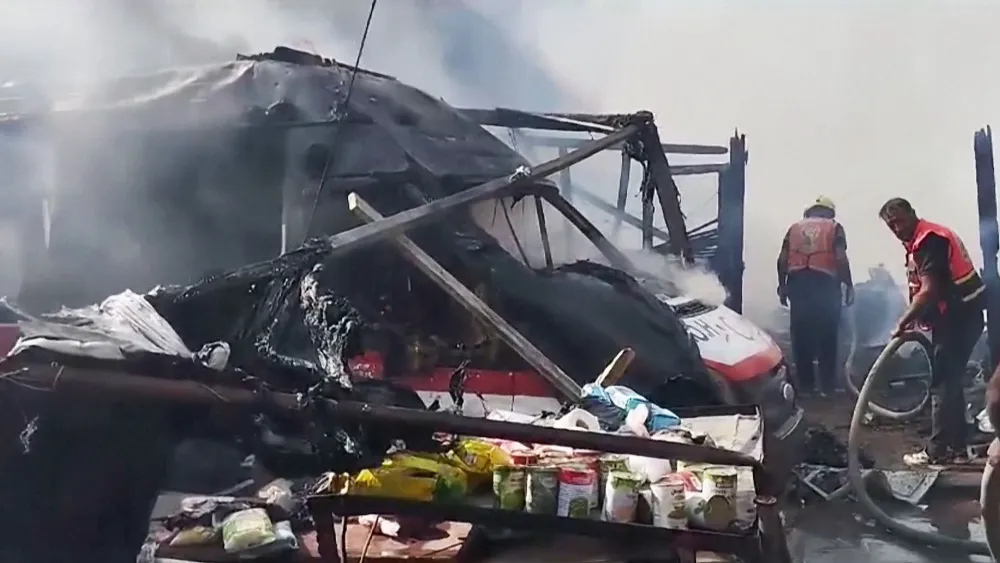
去年三月,以色列军队在拉法杀害了15名急救人员和救援工人,并将他们连同救护车和车辆一起埋在沙里,联合国曾这样报道。他们的同事大约一周后才找到他们。其中一人曾用手机录下了最后几分钟的画面。
In March of last year, Israeli troops killed 15 paramedics and rescue workers in Rafah and buried them in the sand along with their ambulances and vehicles, the UN reported . Their colleagues found them about a week later. One of the men had filmed the last minutes on his phone .
更南边,在靠近汗尤尼斯的阿尔马瓦西,生活同样支离破碎。将近两个月前,在一顶帐篷外,我通过视频与一位39岁的寡妇交谈,她正轻轻吹着一堆湿润的橄榄枝,试图在一个凹陷的铝锅下维持一堆微弱的火焰。她有四个孩子,白天每一小时都花在让他们吃饱、保暖,以至于能感觉像他们自己那样。
Farther south, in Al Mawasi near Khan Younis, life is no less disjointed. Nearly two months ago, outside a canvas tent there, I spoke over video to a 39-year-old widow as she blew softly on a pile of damp olive twigs, trying to keep a weak fire alive under a dented aluminum pot. She has four children, and every hour of daylight goes to keeping them fed and warm enough to feel like themselves.
“我的厨房曾是我们家的中心。我把香料装在玻璃罐里,整齐地摆在瓷砖架子上;每个星期四,烤箱里总飘出烤面包的香味,还有真正的陶瓷盘子,”她回忆道。
“My kitchen was the center of our home. I had spices in glass jars lined up on tile shelves and an oven that smelled like baked bread every Thursday, real ceramic plates,” she reminisced.
“我的丈夫在寻找面粉时被杀害。从那以后,我既是父亲,也是母亲,是厨师,也是守护者。”加沙的一位寡妇,四个孩子的母亲“我的丈夫在寻找面粉时被杀害。从那以后,我既是父亲,也是母亲,是厨师,也是守护者。上周,我的十二岁女儿哭着来到我面前,说她的衣服闻起来像烟和湿土。她说,‘妈妈,我不觉得自己干净了。’我不得不用半杯咸井水和一块刺激性强的洗衣肥皂给她洗头。她站在寒风中发抖,屏住呼吸,以免盐皂灼伤她的眼睛。”
“My husband was killed while searching for flour. Since then, I am the father, the mother, the cook, the guard.”A widow and mother of four in Gaza “My husband was killed while searching for flour. Since then, I am the father, the mother, the cook, the guard. My twelve-year-old daughter came to me last week crying because her clothes smelled like smoke and wet earth. She said, ‘Mama, I don’t feel clean anymore.’ I had to wash her hair using half a cup of salty well water and a piece of harsh laundry soap. She stood there shivering in the cold wind, holding her breath so the salt soap wouldn’t burn her eyes.”
她的丈夫是数百人之一,他们在试图把食物带回家时被杀害。去年十二月,当风暴淹没了Al Mawasi时,一个名叫拉哈夫·阿布·贾扎尔的八个月大的女孩就在她的帐篷不远处,因寒冷而死亡。所谓的停火第二个冬天即将到来。
Her husband was one of hundreds of people who have been killed while trying to bring food home. Last December, when the storm flooded Al Mawasi, an eight-month-old girl named Rahaf Abu Jazar died of the cold in a tent not far from hers. The second winter of the so-called ceasefire is almost here.
“我不在乎媒体怎么说,”这位寡妇告诉我。“我只想让我的孩子们坐在真正的餐桌旁,用干净的盘子吃饭,用温热的甜水洗脸,而不觉得自己在浪费珍贵的东西。我想要我的丈夫回来。”
“I don’t care about what the media says,” the widow told me. “I just want to sit my children at a real table with clean plates and wash their faces with warm, sweet water without feeling like I am wasting something precious. I want my husband back.”
帖子“‘记忆的地标’:巴勒斯坦人分享加沙日常生活的故事”首先发表于。
The post ‘Landmarks made out of memories’: Palestinians share stories of daily life in Gaza appeared first on .