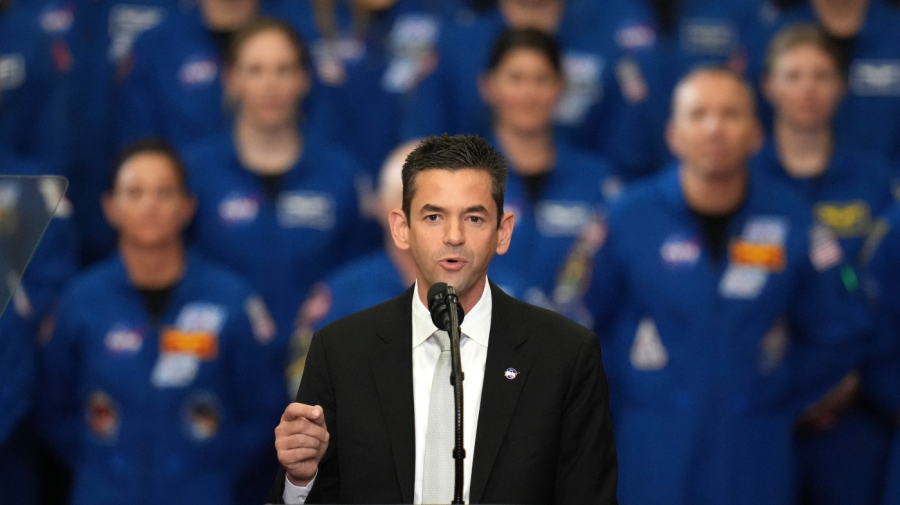
如果签署《阿尔忒弥斯协议》的各国正在思考他们需要做些什么才能更充分地参与NASA的阿尔忒弥斯月球返航计划,那么意大利和日本正在展示一条可行之路。据Ars Technica报道,NASA局长贾里德·艾萨克曼最近发出了一项挑战。
If the various nations that have signed the Artemis Accords are wondering what they need to do to more fully participate in NASA’s Artemis return to the moon program, Italy and Japan are showing the way. According to Ars Technica, NASA Administrator Jared Isaacman recently issued a challenge.
“我要告诉你们,不过,这直接来自美国总统:我们只做好交易,而我们并非总是做好交易。”
“I will tell you, though, and this is right from the top from the president of the United States: We’re only doing good deals, and we haven’t always done good deals.”
为什么要采取这种新的、强硬的、像做生意一样的做法?艾萨克曼说,在努力“让所有人满意”的过程中,他现在意识到,这种努力“有时成了任务的拖累,而不是推动力”。
Why the new, hard-headed, business-like approach? Isaacman said, after working to “make everyone happy,” in the Artemis Accords, he now realizes that effort has been, “at times, a drag on the mission instead of accelerating it.”
“你不能那样做,而我们已经改变了这一点,结果就是,好交易正在发生。”人们不应惊讶于艾萨克曼持有这种态度——他从零开始积累了近20亿美元的净资产。意大利和日本作为《阿尔忒弥斯协议》的签署国,已经领会了这一信息,并与美国航天局达成了艾萨克曼认为的“好交易”。
“You can’t do that, and we’ve changed that now, and as a result, good deals are happening.”One should not be surprised that Isaacman, who built nearly $2 billion in net worth out of nothing, would take that attitude. Both Italy and Japan, signatories of the Artemis Accords, have gotten the message and have made what the NASA administrator considers good deals with the American space agency.
日本已与NASA达成2024年协议,将派遣两名宇航员前往月球,其中一人可能参加阿尔忒弥斯IV任务——这是自1972年12月阿波罗17号以来的首次月球登陆。作为回报,日本将提供一辆月球车。与阿波罗任务的月球车不同,日本的月球车将是一种封闭式车辆,能够支持宇航员在月球表面进行长达30天的旅行。宇航员将在这辆被称为“月球巡洋舰”的车辆内穿着短袖生活。该月球巡洋舰还能够实现自主运行。
Japan has concluded a 2024 deal with NASA to fly two of its astronauts to the moon, including one possibly on Artemis IV, the first moon landing since Apollo 17 in December 1972. In return, Japan will provide a lunar rover. Unlike the lunar rover of the Apollo missions, the Japanese rover will be an enclosed vehicle that can sustain astronauts for up to 30-day journeys across the lunar surface. Astronauts would live in the lunar cruiser, as the vehicle will be called, in shirt sleeves. The lunar cruiser will be capable of operating autonomously, as well.
意大利也将在未来的阿尔忒弥斯任务中派遣宇航员前往月球。作为回报,意大利航天局将提供一个能够支持两名宇航员在月球上生存七至30天的栖息舱。该栖息舱可能配备轮子,以便能够精准定位在月球表面的任何位置。
Italy will also fly astronauts to the moon on board future Artemis missions. In return, the Italian Space Agency is contributing a habitat capable of supporting two astronauts for seven to 30 days. The habitat may have wheels that will allow it to be positioned precisely on any location on the lunar surface.
日本和意大利为其他国家甚至私营组织更充分参与阿尔忒弥斯计划提供了典范。但哪些国家最有可能抓住这一机遇?
Japan and Italy have provided a model for other countries and even private organizations to more fully participate in the Artemis program. But which are best positioned to seize that opportunity?
尽管目前与美国存在紧张关系,加拿大显然处于有利位置。事实上,该国的宇航员杰里米·汉森已经作为阿尔忒弥斯II号任务的一部分环月飞行。一些较大且较富裕的欧洲国家也可能让本国宇航员参与登月任务,这些国家包括英国、法国、德国,或许还有波兰。
Canada, despite current tensions with the U.S., is certainly well positioned. Indeed, that country already had an astronaut, Jeremy Hansen, fly around the moon as part of Artemis II. Some of the larger and richer European countries could get their own astronauts on a lunar mission. These include the United Kingdom, France, Germany and perhaps Poland.
至于亚洲国家,印度和韩国拥有各自的太空计划,可能通过协议让本国宇航员登月。在中东,沙特阿拉伯和阿拉伯联合酋长国是财富雄厚、技术先进且友好的美国海湾国家。当然,以色列也在考虑之列。
As for Asian countries, India and South Korea have their own space programs, which could make deals to see their astronauts walk on the moon. In the Middle East, Saudi Arabia and the United Arab Emirates are wealthy, technologically advanced Gulf states that are friendly to the United States. And, of course, Israel is in play as well.
加入NASA的阿尔忒弥斯计划的路径,正是国际空间站组织方式的先例。当国际空间站仍被称为“空间站自由”时,欧洲航天局和日本各自贡献了一个舱段,加拿大则提供了远程维修机械臂。后来,俄罗斯通过提供自身舱段以及联盟号飞船上的宇航员座位成为合作伙伴。作为回报,这些实体都能派遣人员前往国际空间站执行任务。
The path to joining NASA on the Artemis program is the precedent for how the International Space Station was organized. When the ISS was still Space Station Freedom, the European Space Agency and Japan each contributed a module and Canada a remote servicing robot arm. Later, Russia became a partner by providing its own module plus rides for astronauts on their Soyuz spacecraft. In return, all of these entities were able to send their personnel on tours of the ISS.
对于渴望派遣本国公民登月的国家来说,NASA并非唯一选择。印度正积极开展月球探测计划,其“月船”探测器已取得进展,并计划在2040年前派遣本国宇航员登月。韩国则希望在2045年前建立自身的月球基地。
NASA is not the only path for a country eager to send its citizens to the moon. India, which has an active lunar exploration program with its Chandrayaan probes, plans to send its own astronauts to the moon by 2040. South Korea would like to establish its own lunar base by 2045.
另一个选择是加入中国的国际月球科研站,巴基斯坦、埃及以及前太空超级大国俄罗斯已经这样做了。但正如兰德公司所指出的,与中国合作也带来诸多弊端,包括技术间谍风险,以及实际获得的控制权和收益远低于最初预期。
There is always the option ofg on to China’s International Lunar Research Station, as have Pakistan, Egypt and the former space superpower Russia. But, as the Rand Corporation points out, aligning with China brings a number of downsides with it, including technology espionage and far less control and benefit than initially expected.
最终,希望前往月球的组织和个人将不再需要国家航天机构的善意来实现这一目标。随着月球的经济开发,SpaceX和蓝色起源等商业公司将开发出运输基础设施,以便将人员和货物送往并返回地球最近的邻居——月球。因此,真正以商业为中心的太空时代将开始。
Eventually, organizations and people who desire to go to the moon will not need the good will of a national space agency to do so. As the moon is economically developed, commercial companies such as SpaceX and Blue Origin will develop a transportation infrastructure to get people and cargo to and from Earth’s nearest neighbor. Thus, a true commercially centered space age will begin.
马克·R·惠廷顿经常撰写太空政策文章,他出版了一本关于太空探索的政治研究《为什么重返月球如此困难?》以及《月球、火星及更远》和最近出版的《美国为何重返月球?》他还在“固执者角落”博客上发表文章。
Mark R. Whittington, who writes frequently about space policy, has published a political study of space exploration entitled “Why is It So Hard to Go Back to the Moon?” as well as “The Moon, Mars and Beyond” and, most recently, “Why is America Going Back to the Moon?”He blogs at Curmudgeons Corner.