我17岁的时候第一次拿起铆钉枪。那是1943年的夏天,我开始了人生中的第一份工作——在飞机机翼的框架上安装金属板,主要是B-17和B-29,这是二战期间美国军方使用的飞机。这份工作收入不错,但我最记得的是,我为能为战争努力做出贡献而感到无比自豪,为比我自身更大、更重要的事情出力。当时我并不知道,那个夏天我决定离开北达科他州的小家乡,前往西雅图加入波音公司(The Boeing Co.),这标志着我加入了一个令人难以置信的女性群体——她们佩戴着头巾,充满“能做”的态度,后来成为美国的标志性人物。
I was 17 years old when I first picked up a rivet gun. It was the summer of 1943, and I had started my first-ever job attaching sheet metal to the frames of airplane wings — mostly B-17s and B-29s, U.S. military aircraft used during the Second World War. The job paid well, but what I remember most is how proud I was to be contributing to the war effort, to something bigger and more important than myself. Though I didn’t know it at the time, my decision that summer to leave my small North Dakota hometown for Seattle to join The Boeing Co. marked my initiation into an incredible contingent of women with bandanas and can-do attitudes who would one day become American icons.
“罗西·铆钉工”,或更简单地说就是“罗西们”,是指当美国各地无数男子奔赴前线对抗轴心国时,有1800万美国女性响应号召的群体。我们长时间工作,仔细组装将被送往海外支持战争的飞机、坦克和舰船。但女性还承担了许多其他角色,让美国的整个经济引擎持续运转。她们是机械师、飞行员、工程师、电工、密码破译者、汽车工人、伐木工、农民和牧场主——在这些岗位上,她们团结一致,致力于守护国内战线。
The “Rosie the Riveters,” or more simply the “Rosies,” are the 18 million American women who answered the call when legions of men across the United States departed to fight the Axis powers. We worked long hours carefully assembling the planes, tanks and ships that would be sent to support the war overseas. But women served in many other roles, keeping America’s entire economic engine running. They were mechanics, pilots, engineers, electricians, code breakers, autoworkers, lumberjacks, farmers and ranchers — united in their effort to hold down the home front.
这些常被忽视的工作展示了女性在战争期间承担的广泛责任,有助于重塑人们对女性在劳动力和国家服务中能够作出的贡献的认知。我们做这些工作不是为了赞扬,而是为了拯救我们的国家和海外的家人。我们感受到的服务召唤,和男性一样强烈。而“最伟大的一代”中的女性帮助确保了盟军的胜利,挽救了美国人的生命,并在我们历史上最关键的时期之一加强了国内战线。
These often overlooked jobs demonstrated the wide range of responsibilities women took on during the war, helping to reshape perceptions of what women could contribute both in the workforce and in national service. We didn’t do the work for praise but to save our country and our family members who were overseas. We felt the call to serve just as strongly as the men did. And the women of the Greatest Generation helped secure Allied victory, saved American lives, and strengthened the home front during one of the most consequential periods in our history.
随着我们今年庆祝“美国250”,这是一个独特的机会,来认可罗西们作为公民自豪、牺牲精神和对美国理想忠诚的持久象征。
As we celebrate America250 this year, it is a unique opportunity to recognize the Rosies as enduring symbols of civic pride, sacrifice and devotion to the American ideal.
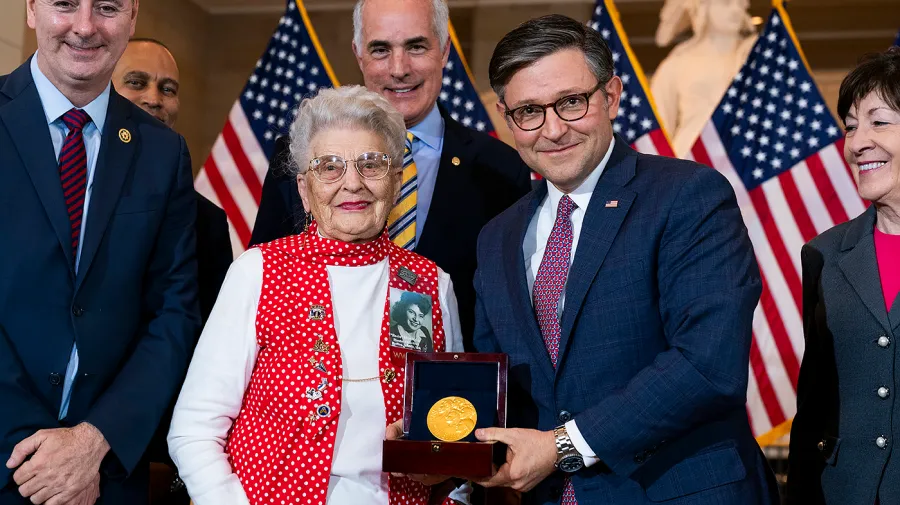
我们国家的力量一直以来都取决于愿意在为国家服务的过程中做出非凡事情的普通公民。罗斯女士们也不例外,她们每天忠实地上班,日复一日地践行着美国的服务传统。2024年,我被要求代表这1800万女性接受国会金质奖章。这是我一生的荣耀。在国家广场上建立一座纪念碑,将确保这种荣耀得以延续,代代相传。
The strength of our nation has always depended on ordinary citizens willing to do extraordinary things in service to their country. The Rosies were no exception, embodying the American tradition of service every day they dutifully showed up to work. In 2024, I was asked to accept the Congressional Gold Medal on behalf of these 18 million women. It was the honor of my lifetime. A memorial on the National Mall would ensure that honor endures for generations to come.
认识到罗斯女士们对美国的持久影响,国会于2022年通过了两党支持的立法,授权建立一座国家纪念碑,以纪念在二战期间在国内战线服役的女性。这座纪念碑不仅将表彰她们的服务,还将教育后代女性在赢得胜利和推进自由事业中所发挥的不可替代的作用。目前,该项目正处于选址和审批阶段。我相信,国家广场——靠近现有的二战纪念堂——是讲述这一重要美国历史篇章的最合适且最显著的位置。
Recognizing the Rosies’ lasting impact on the U.S., Congress passed bipartisan legislation in 2022 authorizing a national memorial to the women who served on the home front during World War II. This memorial will not only honor their service but also educate future generations about the indispensable role women played in securing victory and advancing the cause of freedom. The effort is now in the site selection and approval phase. And I believe the National Mall, in close proximity to the existing World War II Memorial, is the most fitting and prominent location for telling this important chapter of American history.
国会中已有两党立法,旨在实现这一目标。《二战女性纪念碑位置法案》将允许该纪念碑坐落于国家广场上或其附近,使美国二战女性的故事能够与纪念海外作战的英勇老兵的纪念碑并肩而立。去年年底,众议院以压倒性的两党支持通过了《二战女性纪念碑位置法案》。然而,该法案目前在参议院陷入停滞。我拒绝让这成为我们故事的终点。
There is bipartisan legislation in Congress that would allow just that. The World War II Women’s Memorial Location Act would permit the memorial to be located on or near the National Mall, placing the story of America’s World War II women alongside the memorial honoring the esteemed veterans who fought overseas. Late last year, the House of Representatives passed the World War II Women’s Memorial Location Act with overwhelming bipartisan support. However, the bill is now stalled in the Senate. I refuse to let that be the end of our story.
如今,健在的罗斯女士们越来越少。我们这些幸存者希望能够亲眼看到这一天:我们的努力和牺牲能够在国家广场上得到铭记和纪念,与纪念美国英雄的纪念碑并列。今年,我已年满100岁。但我的决心,依然如当年17岁离开家去拿铆钉枪时那样坚定。
Each year, there are fewer living Rosies. Those of us left hope to see firsthand the day that our efforts, and our sacrifices, are remembered and honored on the National Mall alongside our memorials commemorating America’s heroes. This year, I turned 100 years old. But I remain as determined as I was at 17 when I left home to pick up a rivet gun.
我呼吁参议院通过 — — 并请特朗普总统签署 — — 《二战妇女纪念碑位置法案》。当自由受到威胁时,我们响应了国家的号召。如今,我请求我们的国家确保我们的故事及其所承载的教训永不被遗忘。梅·克里尔是一位原始的“罗西·雷弗特”女工,她在1943年至1945年期间为波音公司制造飞机,参与了二战生产。她于2017年帮助设立了全国“罗西·雷弗特”日,并在2024年代表所有姐妹们接受了国会金质奖章。
So I am calling on the Senate to pass — and President Trump to sign — the World War II Women’s Memorial Location Act. We answered our country's call when freedom was at stake. Now, I ask our nation to ensure that our story, and the lessons it carries, will never be forgotten. Mae Krier is an original Rosie the Riveter who worked on Boeing aircraft during World War II, from 1943 to 1945. She helped to establish National Rosie the Riveter Day in 2017 and accepted the Congressional Gold Medal on behalf of all her fellow Rosies in 2024.