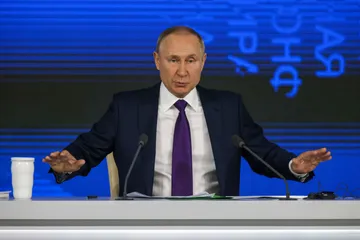
文/马克·钱伯恩 自2022年春季乌克兰局势开始对弗拉基米尔·普京不利以来,俄罗斯总统及其官员一直宣称,他们不仅是在对抗纳粹、回应北约侵略,而且冲突的赌注极高,如果失败,俄罗斯可能不复存在。
Ever since things in Ukraine first went sideways for Vladimir Putin back in the spring of 2022, the Russian president and his officials have said that, not only were they fighting Nazis and responding to NATO aggression, but that the stakes of the conflict were so high that Russia may cease to exist should they fail.
这一说法一直令人费解,因为它显得荒谬至极。然而,这种信念有助于解释克里姆林宫为何正在升级对乌克兰的攻击、扩大在欧洲的混合战行动,并通过宣布从非国防领域向军事开支大规模转移预算——从而在国内冒着引发不满的风险。
This claim has always been puzzling, because it seems so absurd. And yet such a belief would help explain the extent to which the Kremlin is now ramping up attacks on Ukraine, expanding its campaign of hybrid warfare in Europe and — by announcing massive budget transfers from non-defense to military spending — risking discontent at home.
普京本月初在年度瓦尔代俱乐部外交政策和俄罗斯问题专家会议上的演讲中再次提及这一观点。他抓住当时北约大使朱莉安·史密斯2022年的一番言论不放——她称美国寻求俄罗斯的“战略失败”,普京称这让俄罗斯的“生存权利”受到质疑。
Putin touched on the idea yet again earlier this month in his annual address to the Valdai Club conference of foreign policy and Russia analysts. Harping on a 2022 comment from then-NATO Ambassador Julianne Smith that the US sought Russia’s “strategic defeat,” Putin said this put his nation’s “very right to exist” in question.
必须结合普京战前向美国和北大西洋公约组织发出的最后通牒来理解史密斯的意图,这些通牒以两份起草条约提案的形式呈现。这些提案描述了他随后的战争目标,远不止要求乌克兰保持中立。它们还要求撤走所有盟军部队、武器和基地出中东欧,以及将所有美国核武器从任何海外基地撤出,这将大幅削弱华盛顿能为其盟友提供的核保护伞的可信度。
What Smith intended must be seen in the context of the ultimatums Putin sent to the US and North Atlantic Treaty Organization before the war, in the form of two draft treaty proposals. These described his subsequent war aims and went far beyond requiring Ukraine’s neutrality. They also demanded the removal of all alliance troops, weapons and bases from Central and Eastern Europe, and all US nuclear weapons from any foreign base, significantly reducing the credibility of the nuclear umbrella Washington could offer its allies.
因此,战略失败意味着通过在乌克兰东部顿巴斯地区阻止俄罗斯军队,终结普京重新控制莫斯科所谓历史利益区的计划。如果允许他占领乌克兰,唯一的问题就是:接下来会怎样?这仍然是一个合理的担忧,但“战略失败”一词的使用却成了普京受害者叙事中永不停歇的礼物。正如他在10月1日的讲话中所回忆的:“事情就是这么被表达的。”
So, strategic defeat meant putting an end to Putin’s project to reimpose control over Moscow’s so-called historical zone of interest by stopping his forces in Ukraine’s eastern Donbas region. Allow him to take Ukraine and the only question would be: Where next? It’s still a valid concern, but use of the term “strategic defeat” has proved a gift that never stops giving to Putin’s victimhood narrative. “This is the way it was all articulated,” he recalled in his Oct. 1 address.
“没有人忘记这一点。至少,我们没有忘记。”但乌克兰的失败究竟如何威胁到俄罗斯的存在?即使在极不可能的情况下——基辅通过将俄罗斯军队全部推回其国际公认边界而赢得战争——这对普京来说将是一次真正且屈辱的失败——俄罗斯也不会消失。它将继续以2013年前的形式存在。如果前线冻结在目前的位置,俄罗斯将获得大约20%的乌克兰领土。
“No one forgot this. At least, we did not forget this” But how would losing in Ukraine pose a threat to Russia’s existence? Even in the unlikely event that Kyiv should win the war by pushing Russia’s troops all the way back to their internationally recognized borders — a true and humiliating defeat for Putin — Russia would not disappear. It would just continue to exist in the form it had until 2013. And if the front lines were frozen where they are today, Russia would have gained about 20% of Ukrainian territory.
无论他们怎么说,俄罗斯的领导人清楚地知道,他们的对手与纳粹德国(1941年)的入侵军队、拿破仑时期的法国(1812年)或1610年占领首都的波兰立陶宛军队毫无相似之处。没有人会向莫斯科进发。
Whatever they may say, Russia's leaders know their opponents bear no resemblance to the invading armies of Nazi Germany (1941), Napoleonic France (1812) or the Polish Lithuanian forces that occupied the capital in 1610. Nobody is marching on Moscow.
事实上,美国实际上已经退居二线。去年叫停对乌克兰援助后,特朗普总统如今在帮助莫斯科方面做得比帮助基辅更多,他呼吁泽连斯基单方面停止对俄罗斯炼油厂的袭击。当乌克兰总统拒绝时,特朗普取消了对柴油出口的禁令,并呼吁泽连斯基辞职。
Indeed, the US has effectively moved to the sidelines. Having halted American aid to Ukraine last year, President Donald Trump is now doing more to help Moscow than Kyiv, calling for Volodymyr Zelenskyy to unilaterally halt attacks on Russian oil refineries. When the Ukrainian president refused, Trump lifted a ban on the purchase of diesel exports and called for Zelenskyy to resign.
政治便利性解释了莫斯科夸张言辞的一些原因。普京希望俄罗斯人感受到一种关键威胁,因为他正要求他们做出新的牺牲。他正在将该国明年已经庞大的国防预算提高27%,部分资金来自进一步削减教育、医疗和福利支出,同时央行在印钞。这将冲击生活水平。
Political expediency explains some of Moscow’s inflated rhetoric. Putin wants Russians to perceive a critical threat, because he is asking them to make new levels of sacrifice. He is boosting the country’s already large defense budget for next year by 27%, paid for in part by cutting further into education, healthcare and welfare spending, while printing money at the central bank. This will hit living standards.
他还需要征召更多士兵,这些士兵在接触线上的平均预期寿命如今被乌克兰和美国情报机构估计约为30分钟。因此,让事业显得生死攸关是有帮助的——这对普京个人而言可能确实如此,对他所建立的体系而言也是如此,如果他被认为失败的话。
He’ll also need to recruit more soldiers, whose average life expectancy at the line of contact the Ukrainian and US intelligence services now estimate at about 30 minutes. So, it helps for the cause to appear existential — as it could well be for Putin personally, and for the system he has built around him, should he be perceived to fail.
夸大威胁也有助于他努力说服欧洲人:如果他们继续支持乌克兰,他们的政府就是在邀请与俄罗斯爆发全面战争——甚至可能是核战争。
Hyping the threat also supports his efforts to persuade Europeans that by continuing to back Ukraine, their governments are inviting all-out war — perhaps even nuclear war — with Russia.
不过,这里还有更多因素在起作用,而不仅仅是愤世嫉俗的操纵。目前掌权的俄罗斯前、现任克格勃官员中也存在真正的偏执狂,普京自己就是其中之一。他们不仅因训练和职业生涯而被程序化地假设四周皆是威胁,而且他们已经亲眼看到一个看似永恒的大国(前苏联)在他们周围崩溃,而西方为此欢呼。为什么俄罗斯联邦也不能如此?
There is more at work here, though, than cynical manipulation. There’s also real paranoia among the crop of current and former KGB officers who currently run Russia, starting with Putin himself. Not only did their training and careers program them to assume threats all around, but they already saw one seemingly immortal great power (the former Soviet Union) collapse around them to the joy of the West. Why not the Russian Federation, too?
普京和他的同类强人半信半疑地认为自己正在重演第二次世界大战,因为他们看到苏联在该战争结束时在欧洲所获得的收益——以及1991年后所失去的——正是他们目前所面临的利害关系。他们还真诚地认为乌克兰不是一个真正的国家,而是一个“弗兰肯斯坦式”的国家,其建立需要撕裂俄罗斯的历史心脏地带。这种历史观是错误的,但他们真诚地相信。
Putin and his fellow strongmen half believe it when they say they’re reenacting World War II, because they see the gains the Soviet Union made in Europe at the end of that conflict — and lost after 1991 — as what’s at stake. They also genuinely think Ukraine isn’t a real country, but rather a Frankenstein state whose creation required ripping out Russia’s historic heartland. This history is wrong, but it is sincerely believed.
正如前克格勃官员对战争与和平的界限变得模糊一样,俄罗斯是什么、它的边界在哪里这一问题也变得模糊不清。
And, just as for ex-KGB officials the distinction between war and peace is blurred, so too is the question of what Russia is and where it ends.
理解这一点至关重要。它影响着与克里姆林宫可以谈判什么、不可谈判什么,普京提出的任何和平提议的真实目的可能是什么,以及所谓“俄罗斯正在乌克兰受到攻击”这一看似荒谬的说法到底意味着什么。西方领导人不应接受这些说法,但他们需要理解这种思维方式,以避免不必要的升级,或被误导去追逐根本无法实现的和解方案。
This is essential to understand. It affects what is and is not negotiable with the Kremlin, what the true purpose of any peace offer Putin makes might be and what is meant by the apparently ludicrous claim that Russia is being attacked in Ukraine. Western leaders should accept none of it, but they need to grasp the mentality to avoid unnecessary escalation or being gas lit into chasing settlements that cannot be had.
普京所谈论的俄罗斯,简单来说,比我们地图上的俄罗斯更大。它还被定义为通过保持在大国之桌上的地位,通过一种认为自己是跨越国界的文明国家的理念,以及通过一种历史继承——这种继承的范围如今,正如过去一样,必须通过武力来获得和维持。
The Russia Putin talks about is quite simply bigger than the one on our maps. It’s also defined by keeping its place at the table of great powers, by an idea that it’s a civilizational state that spills across borders and by a historical inheritance whose expanse that now, as always, had to be gained and held by force.
“传承乘以自身,”普京对他的瓦尔代听众说道,这是国家避免成为“古董收藏品”的最佳方式。对总统及其随从而言,这似乎是所有命运中最糟糕的一种——他们显然正是这样看待英国的。外长谢尔盖·拉夫罗夫在最近描述英国时,满脸轻蔑地说英国“已被削弱到极点”,不再值得在联合国安理会拥有常任理事国的席位。
“Multiplying one’s heritage,” Putin told his Valdai audience, is the best way for nations to avoid becoming "a vintage collectible.”This, to the president and his entourage, would appear to be the worst of all fates — and it’s certainly how they see Britain. Foreign Minister Sergei Lavrov oozed contempt when he recently described the UK as “diminished to the utmost degree” and no longer worthy of its permanent seat in the United Nations Security Council.
正是这种潜在的未来,普京及其同僚在谈论自己国家可能灭亡时所深深畏惧的。他们试图恢复的,不一定是苏联或沙俄帝国,而是俄罗斯作为大国的理念——这一理念超越了克里姆林宫的所有其他关切,包括经济、福祉或民众支持。
It is this potential future that Putin and others foresee with dread when they talk about their country ceasing to exist. The attempt to restore not necessarily the USSR or Russian Empire, but the idea of Russia as a great power supersedes all other Kremlin concerns, including for the economy, welfare or popular approval.
只有当普京相信自己的愿景无法实现,并且继续坚持下去对他个人而言比妥协更危险时,他才会放弃这一愿景。这个问题最终将由武力来决定,即使以谈判停火告终,因为俄罗斯如今的主权邻国也有他们自己的历史观和遗产观。他们同样希望存在。
Putin will abandon his vision only if he becomes convinced it cannot be achieved, and that to continue in the attempt is more dangerous to him personally than to settle. This question will be decided by force, even if it ends in a negotiated ceasefire, because Russia’s now sovereign neighbors have their own ideas of history and heritage. They, too, want to exist.