欧洲推动绿色公共交通背后的现实安娜·穆诺兹·帕德罗斯(Ana Munoz Padros) 2026年10月12日更环保的公交车和更清洁的公共交通车队正在改变整个欧洲的公共交通系统。但各城市是否正在以足够的速度推进改革,以实现零排放的目标呢?
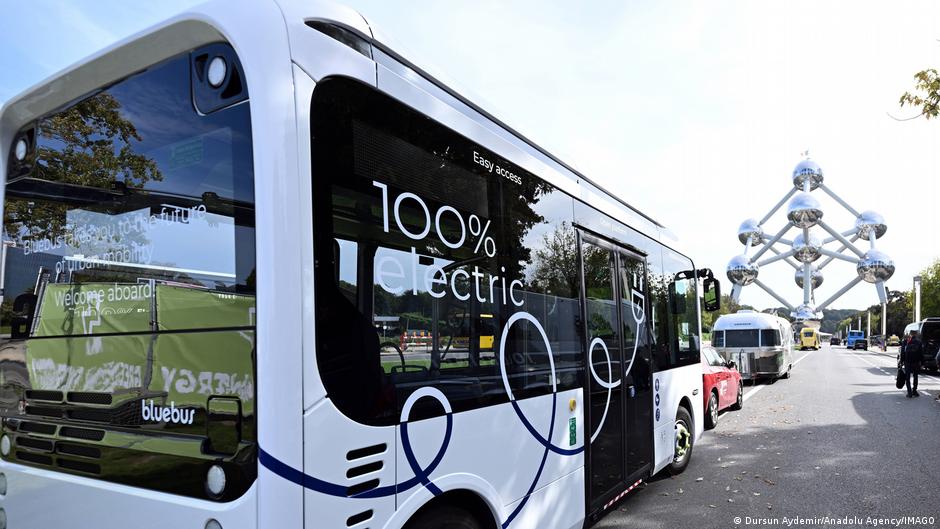
The reality behind Europe's green public transport push Ana Munoz Padros October 12, 2026 Greener buses and cleaner fleets are reshaping public transport across Europe. But are cities moving fast enough to meet their zero-emission goals? Electric buses, like this one in the Belgian capital of Brussels, are becoming increasingly common in European public transport systems An electric plug icon on their windows makes them easy to spot in cities like Brussels and Madrid.
像比利时首都布鲁塞尔这样的城市中,电动公交车正变得越来越普遍。公交车窗上标有的充电图标让它们很容易被识别;近年来,电动公交车在欧洲的街道上随处可见。
Quietly navigating the streets, electric buses have become an increasingly common sight on Europe's streets in recent years.
意大利卡塔尼亚大学(University of Catania)的交通学助理教授米凯拉·莱皮拉(Michela Le Pira)指出,减少尾气排放(即内燃机车辆运行时产生的气体和颗粒物)可能是“改善公共交通系统的最简单方法”。大多数欧洲人居住在城市地区,而道路交通对空气质量造成了严重危害。2023年,欧盟境内有近30万人因空气污染超标而死亡。
Michela Le Pira, assistant professor of transportation at Italy's University of Catania, says removing tailpipe emissions — the gases and particles generated when a combustion vehicle is running — might be "the easiest strategy to improve public transport." Most Europeans live in urban settings, and road transport harms air quality. In 2023, almost 300,000 deaths across the EU were caused by air pollution levels exceeding the World Health Organization's (WHO) recommended thresholds.
在欧洲城市地区,所有细颗粒物(PM2.5)排放中,约有14%来自道路交通(包括公共交通、私人交通和货运交通)。此外,城镇和城市占据了欧盟交通运输温室气体排放总量的近四分之一。
Of all fine particulate matter (PM2.5) concentrations in European urban areas, about 14% come from road transport, including public, private and freight transport. Additionally, towns and cities account for nearly a quarter of the European Union's transport greenhouse gas emissions (GHG).
德国之声(DW)与欧洲数据新闻网络(European Data Journalism Network)分析了超过100份关于公共交通及其排放情况的报告和数据,共梳理出欧洲33个城市中地方政府和交通运营商所作出的148项可持续发展承诺。该分析主要关注机动公共交通系统,未包括自行车、行人、出租车、共享汽车和电动滑板车等交通方式。
DW and the European Data Journalism Network evaluated more than a decade's worth of data from more than 100 reports and sources on public transit and the emissions it causes, and identified 148 sustainability commitments by local authorities and transport operators in 33 cities across Europe. The analysis focuses on motorized mass transit, leaving out bikes and pedestrians as well as taxis, shared vehicles and e-scooters.
得益于欧盟提供的资金支持,欧洲希望到2050年成为第一个实现气候中和的大陆。该计划的关键目标是将交通运输相关的温室气体排放量减少到1990年水平的90%。
More electric buses, thanks to EU funds wants to become the first climate-neutral continent by 2050. A key part of that plan is cutting transport-related GHG emissions by 90% from 1990 levels.
正如DW的分析所示,哥本哈根是欧盟唯一一个几乎完全电动化其公交车队的首都 — — 其车辆没有燃烧发动机,因此不会产生尾气排放。在罗马、里斯本和尼科西亚等城市,超过90%的公交车仍在使用柴油,而地铁和有轨电车仅占其公共交通车队的不到10%。
As DW's analysis shows, Copenhagen is the only EU capital that has almost electrified its entire bus fleet — its vehicles do not have combustion engines and therefore do not produce tailpipe emissions. In cities like Rome, Lisbon and Nicosia, more than 90% of buses still run on diesel, and metros and trams account for less than 10% of their public transport fleet.
尽管汽车仍主导欧洲街道,但“电动公交车是减少当地空气污染的一种方式”,交通与环境组织(Transport & Environment)的数据分析师马丁·拜尔尔(Martin Baierl)表示,该组织是倡导清洁交通的非营利组织。
Although cars still dominate European streets, "electric buses are one way to reduce local air pollution," said Martin Baierl, data analyst with Transport & Environment, an advocacy non-profit for clean transport.
欧盟资金使得许多城市自2021年起能够增加其电动和替代燃料公交车队。
EU funds enabled many cities to increase their electric and alternative fuel bus fleets from 2021 on.
电动公交车在欧盟首都和部分选定城市的总车队中占比20%。其数量在2021年至2025年间增加了55% — — 相当于道路上多出1,234辆此类车辆。自那时起,仅使用柴油的公交车数量一直在下降,尽管它们仍多于使用替代燃料的公交车。
Electric buses comprise 20% of the total fleet in EU capitals and selected cities. Their number increased by 55% between 2021 and 2025 — equivalent to 1,234 more such vehicles on the road. The number of diesel-only buses has been declining since then, although they still outnumber those running on alternative fuel.
一些城市可持续发展之路缓慢 除了为公交车队脱碳、帮助减少空气污染之外,采用电动车型还能帮助降低噪音和公共交通运营成本。拜尔尔解释道,如果城市能够自行发电,这一效应会更加显著。然而,电动公交车的投入成本高于柴油车型。在31个有可分析数据的城市中,有20个城市的公交车队中超过50%仍是传统车辆。
Slow road to sustainability in some cities In addition to decarbonizing the bus fleet and helping to reduce air pollution embracing electric models can help to lower noise and public transport operating costs. All the more so if the city produces its own electricity, explains Baierl. However, the outlay for e-buses is higher than for diesel models. In 20 out of the 31 cities with data to analyze, over 50% of the bus fleet is made up of traditional vehicles.
例如,布鲁塞尔是早期摆脱传统柴油动力公交车的城市之一,转而采用混合动力车型。如今,比利时首都正在为其车队实现电动化,但进展较慢。“最终什么才是正确的技术选择并不容易确定,”拜尔尔说。
Brussels, for example, was an early adopter of moving away from traditional diesel-powered buses, switching to hybrids instead. Now the Belgian capital is in the process of electrifying its fleet, but at a slower pace. "It's not easy to know what the right technology will be in the end," Baierl said.
另一个例子是氢动力公交车,它们同样实现零排放,但运营成本高于电动公交车。
Another example is hydrogen-powered buses, which also produce zero emissions but are more costly to operate than their electric counterparts.
尽管欧盟设定了到2050年将温室气体排放量减少90%的目标,但许多城市仍未完全实现零排放的目标。交通运输是唯一一个温室气体排放量仍高于1990年水平的重点行业。
Many cities have not fully committed to zero-emissions despite EU targets Transportation is the only major sector where greenhouse gas emissions remain above 1990 levels, despite the EU's ambition of a 90% reduction by 2050.
根据非营利组织Carbon Disclosure Project(CDP)的最新数据,在欧盟十大首都中,公共交通(包括公交车、有轨电车和地铁)的平均使用率超过了四分之一。在斯德哥尔摩,这一比例为49%;而在斯洛文尼亚的首都卢布尔雅那,这一比例仅为11%。德国之声(DW)对各国交通可持续发展承诺的分析显示,只有四个城市明确承诺实现公交车或所有公共交通工具的零排放目标。
On average, public transport — including buses, trams and metros — is used for more than a quarter of trips in the 10 largest EU capitals, according to recent data from the non-profit group Carbon Disclosure Project (CDP). In Stockholm, the share is 49%, while in the smaller Slovenian capital of Ljubljana, it's 11%. DW analysis of transport sustainability pledges reveals that only four cities have explicitly committed to achieving zero emissions in buses or all public transport.
铁路运输对环境较为友好,但其覆盖范围仍然有限。亚尼斯·帕帕迪米特里乌(Yannis Papadimitriou)居住在距离欧盟首都雅典85公里的地方。他每天乘坐通勤火车上班,希望这种交通方式能得到更多推广。“对我来说,选择使用电动公共交通工具(尤其是火车)是一个非常明智的选择——因为火车是最安全、最环保、也是最快的出行方式。”虽然火车、有轨电车和地铁都使用电力作为动力,但在城市范围内,公交车的数量仍然更多;在许多城市地区,大多数公交车仍使用柴油作为燃料。
Rail transport is climate-friendly, but scarce Yannis Papadimitriou lives 85 kilometers (about 53 miles) away from Athens, the EU capital with the highest air pollution mortality risk. He travels to work by commuter rail, a means of transport he'd like to see promoted more. "For me it is a very conscious choice to use electric public transport, especially trains, which are the safest, most environmentally friendly and quickest way of transport." Though trains, trams and metros run on electricity, there are more buses within city boundaries, and in many urban areas the majority still run on diesel.
公共交通的排放问题并不仅限于车辆尾气排放。在北欧,距离哥本哈根15公里的地方,保罗·卡特勒(Poul Kattler)也曾每天乘坐火车通勤。如今他已经退休,更多地选择乘坐公交车出行,并经常带着孙子孙女一起出行。尽管哥本哈根的公共交通系统几乎完全摆脱了对化石燃料的依赖(只有一辆公交车使用生物甲烷作为燃料),但随着城市的发展,地铁系统的扩建也带来了一些新的问题。
Public transport's emissions go beyond the tailpipe In Northern Europe, 15 kilometers away from Copenhagen, Poul Kattler also used to commute to work. He is now retired and takes the bus more frequently with his grandchildren. Despite Copenhagen having an almost completely fossil-fuel-free public transport system (only one bus runs on biomethane), the metro expansion, which is responding to the city's growth, comes with its own set of concerns.
卡特说,“[新地铁线的]整个建设阶段对环境的要求极其严格。”如果把建设排放考虑在内,“地铁目前的二氧化碳平衡将会非常糟糕。”但勒皮拉表示,从长远来看,新建地铁线在减少二氧化碳排放方面的益处超过了与其建设相关的排放。
"The whole construction phase [of the new metro line] is extremely environmentally demanding," Kattler said. If the construction emissions are considered, "the CO2 balance would be very poor for the metro now."
燃烧或尾气排放并不是交通运输污染空气和环境的唯一途径。间接排放(如来自发电或燃料生产的排放)增加了交通运输的二氧化碳足迹。当车厢或车辆减速时,刹车和车轮会释放非尾气颗粒物。
But in the long run, the benefits of a new metro line in reducing CO2 emissions outweigh its construction-related emissions, Le Pira said. Combustion or exhaust emissions are not the only way transport pollutes the air and the environment.
自1992年以来,欧盟的公共汽车和任何使用化石燃料运行的车辆都受到更严格的排放标准的约束。根据欧洲环境署的数据,到2022年,公交车和重型车辆的细颗粒物排放量下降了92%。然而,由于汽车变得越来越重,二十年来,来自轮胎磨损的道路交通非尾气总体排放量却增加了58%。
Indirect emissions, like those coming from electricity generation or fuel production, add to transport's CO2 footprint. Brakes and wheels release non-exhaust particle matter when wagons or vehicles slow down. Since 1992, buses and any vehicle running on fossil fuels in the EU have been subject to stricter emissions standards.
从汽车转向多式联运系统 除少数例外情况外,欧盟成员国距离实现欧盟2050年目标所设想的将交通温室气体排放量削减90%的目标还很远。
Fine particle emissions from buses and heavy-duty vehicles had dropped by 92% in 2022 according to the European Environment Agency Yet overall road transport non-exhaust emissions from tire wear have increased 58% in two decades, as cars have become heavier.
零排放公共交通是实现城市交通脱碳和达到温室气体减排目标的一个步骤。下一个挑战是让人们放弃开车。
勒皮拉表示:“如果我们讨论的是广义的可持续出行,而不仅仅是清洁的公共交通,那么核心问题是从私家车向公共交通的模式转变。”
Shifting from cars to a multimodal transport system With a few exceptions, EU member states are not close to cutting greenhouse gas transport emissions by 90%, as envisioned by the EU's 2050 target.
根据碳披露项目的数据,平均而言,私家车占欧盟最大几个首都交通运输量的三分之一以上。
Zero-emission public transport is one step toward decarbonizing transport in cities and meeting GHG reduction goals.
降低学生等群体的票价,以及对使用汽车采取抑制措施(如划定低排放区),是吸引更多乘客同时减少私人交通的两种相辅相成的方法。
The next challenge is to get people out of their cars.
在她的研究工作中,Le Pira 调查了如何让公共交通对城市居民更高效、更具吸引力,例如通过结合不同交通方式,让人们从自行车转乘火车。这种解决方案对于“汽车仍然是主要交通方式”的小城市可能尤为相关。公共交通良好的地方能够吸引人们前往。
"If we talk about sustainable mobility in general and not only clean public transport, the main problem is the model shift from private cars to public transport," Le Pira said. On average, private automobiles account for more than a third of transport in the largest EU capitals, according to CDP data.
“并非所有人都必须使用汽车的城市,宜居性就会更高,”Baierl 说。
编辑:Gianna-Carina Grün 和 Sarah Steffen 事实核查:Eva Lopez DW 的数据团队为本项目提供了研究支持。
Cheaper ticket prices for groups, like students, and disincentives for car use, such as low-emission zones, are two complementary ways of attracting more passengers while reducing private transport.
有关此分析的数据、代码和方法论,请参见此 GitHub 仓库。更多来自 DW 的数据驱动故事可在此查看。本项目是欧洲数据新闻网络在 Chat Europe 项目框架下的多家媒体机构合作项目。项目负责人:DW。合作伙伴:Voxeurop、Denik Referendum、EUrologus、OBC Transeuropa。
In her research work, Le Pira investigates how public transport can be more efficient and appealing for city dwellers, for example, by combining transport modes where people step off their bikes and onto a train. This kind of solution could be particularly relevant for small cities "where cars are still the main transport mode." Places with good public transport draw people in. "Cities where not everybody has to use a car are just more livable," Baierl said.