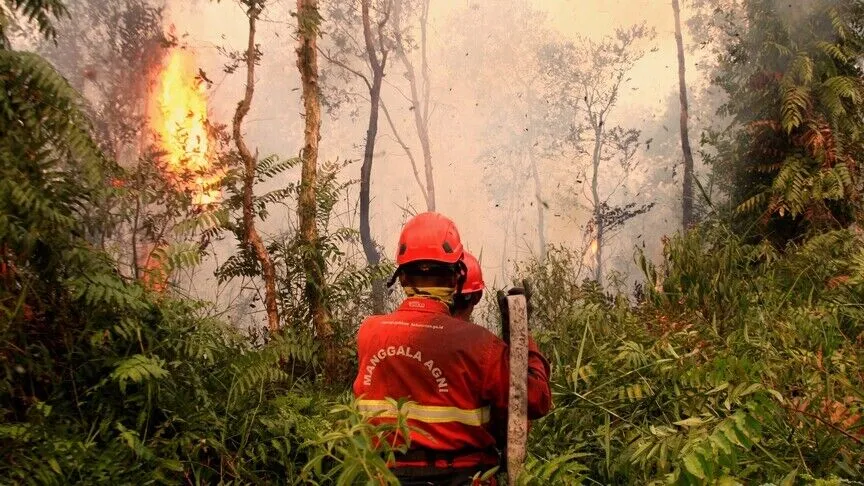
印尼当局在婆罗洲岛西加里曼丹的森林和土地火灾中救出了46只红毛猩猩,随着野火蔓延,栖息地持续被毁,濒危野生动物受到威胁。
Indonesian authorities have rescued 46 orangutans from forest and land fires in West Kalimantan on Borneo Island, as spreading wildfires continue to destroy habitats and threaten endangered wildlife.
据国营安塔拉新闻社报道,这些救援行动是在8月10月9日之间由西加里曼丹自然资源保护局和印尼IAR基金会共同开展的。
The rescues were carried out between August and Oct. 9 by the West Kalimantan Natural Resources Conservation Agency and the IAR Indonesia Foundation, according to the state-run Antara news agency.
该局局长穆尔兰·达梅里亚·帕内表示,经过医学检查和观察后,8只健康的红毛猩猩于周五被迁移至加泰邦县的 Batu Nyambu 保护森林。
The agency's chief Murlan Dameria Pane said eight healthy orangutans were relocated Friday to the Batu Nyambu Protection Forest in Ketapang district following medical examinations and observation.
被救的红毛猩猩来自加泰邦和北卡扬县,那里的火灾毁坏了森林覆盖,使红毛猩猩被困在食物有限的种植园中。
The rescued animals came from Ketapang and North Kayong districts, where fires destroyed forest cover and left orangutans stranded in plantations with limited food.
其中包括一只母猩猩和她的婴儿,它们被发现孤立在一片被油棕种植园包围的400平方米(4305平方英尺)的金合欢树林中。
Among them were a mother and her baby found isolated on a 400-square-meter (4,305-square-foot) patch of acacia trees surrounded by oil palm plantations.
印尼IAR基金会运营主管阿吉托·兰廷表示,在评估了食物可得性、水源和生态适宜性后,选择了23000公顷的 Batu Nyambu 森林作为迁移地。他警告说,仅靠迁移无法解决红毛猩猩栖息地持续被破坏的问题。
IAR Indonesia operational director Argitoe Ranting said the 23,000-hectare Batu Nyambu forest was selected after assessments of food availability, water sources, and ecological suitability. He warned that relocation alone could not address the continuing destruction of orangutan habitats.
印尼IAR基金会负责人卡尔梅莱·利亚诺·桑切斯表示,几只被救的红毛猩猩仍在接受密集的医疗治疗,以应对烧伤、营养不良、严重贫血及其他并发症。这些动物在被送回适宜的自然栖息地之前,还需要进一步康复。
IAR Indonesia chief Karmele Llano Sanchez said several rescued orangutans remained under intensive medical treatment for burns, malnutrition, severe anemia, and other complications. The animals will require further recovery before they can be returned to suitable natural habitats.