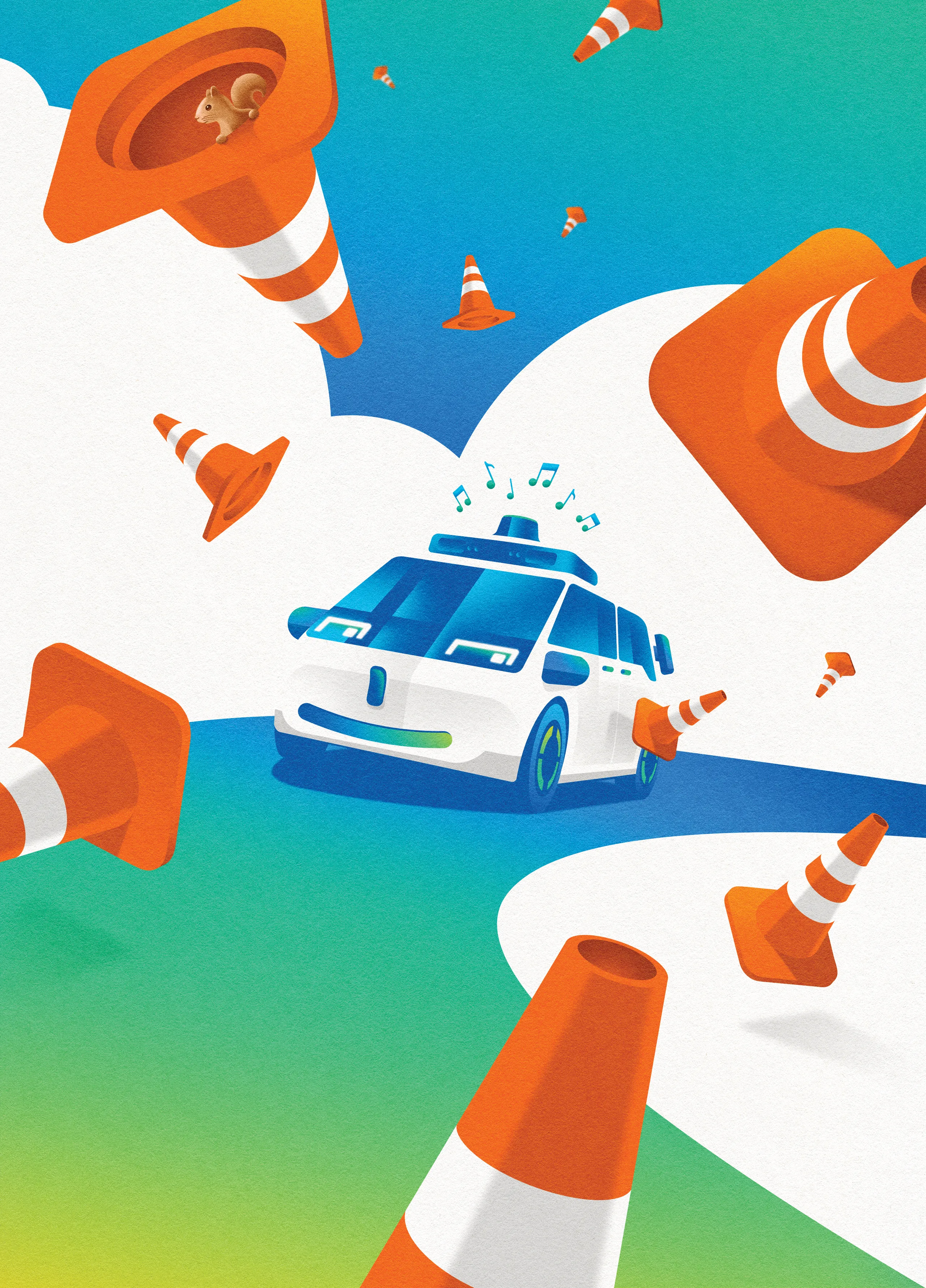
勇敢新世界部。后座视角。方向盘转动:当Waymo的一辆自动驾驶汽车行驶时,其方向盘也会随之移动——从通常位置(面向前左座位)抽搐出汽车的操作。一般来说,在美国道路上,这被称为驾驶员座位。但在Waymo中,这种称谓是任意的。Waymo Driver,正如公司所称的其自动驾驶系统——一种由传感器、摄像头、定制地图和机器学习引导的力量——无处不在。没有人被允许坐在那个前左座位上。
Brave New World Dept. A view from the back seat. The wheel turns: when one of Waymo’s autonomous vehicles is in motion, its steering wheel moves, too—twitching out the car’s maneuvers from the usual position, facing the front-left seat. Generally, on American roads, this is known as the driver’s seat. In a Waymo, such a designation is arbitrary. The Waymo Driver, as the company calls its autonomous-driving system—a force guided by sensors, cameras, custom maps, and machine learning—is all around. No one is allowed to sit in that front-left seat.
六月,Waymo推出了其首个全国性宣传活动,名为“因为”。广告以紧急灯的红色闪光开场。“每年有超过一百万人因车祸受伤,”旁白解释道。“因为我们是人类。”埃利奥特·斯莱德三十一岁,英俊略显凌乱,前臂上纹有鸟和兔子的纹身。他为一家试图在太空建造人工智能数据中心的公司工作。今年五月的某个晚上,他和未婚妻参加了在门洛公园举行的福布斯创新者250晚宴——一场工作活动。当创新者们完成创新后,大约在晚上十点,斯莱德考虑如何回家。“为什么不试试Waymo?”他建议道。
In June, Waymo unveiled its first national campaign, called “Because.”The ad opens with the red flash of emergency lights. “Car crashes injure over a million of us every year,” a voice-over explains. “Because we’re human.”Elliot Slade is thirty-one and shaggily handsome, with tattoos of birds and bunnies on his forearms. He works for a company trying to build A.I. data centers in space. One night this past May, he and his fiancée attended Forbes’s Innovator 250 gala, in Menlo Park—a work event. When the Innovators finished innovating, around ten, Slade considered how to get home. “Why don’t we try a Waymo?” he suggested.
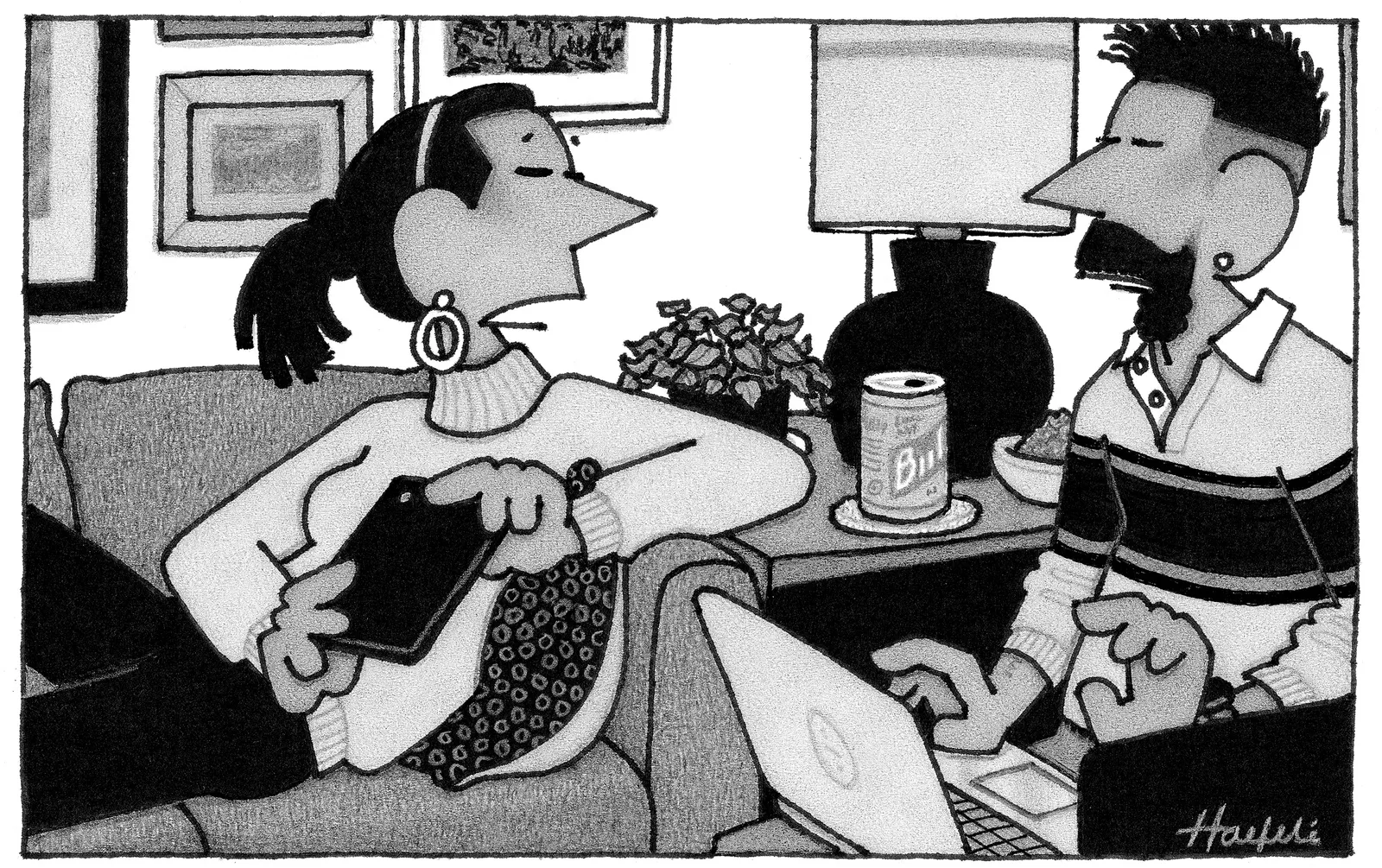
“我丈夫最近刷着Instagram时说:‘我刚收到一则Waymo广告,敦促我把Waymo带到我的城市。’”他顿了顿后说:“我觉得这其实不是我能决定的。”“也许他们希望能拿到佐兰?”那天是旧金山一个凉爽的六月日子,我叫了一辆Waymo去伯纳尔高地朋友家。车载音响系统播放着类似水疗中心的环境音,我安顿下来。车内氛围宁静,除了一个坚持提醒我系安全带的叮咚声,以及一条如果我不遵守就会呼叫客服的屏幕警告。
“I just got a Waymo ad urging me to bring Waymo to my city,” my husband remarked recently, scrolling through Instagram. “I feel like that’s not really my call,” he said, after a pause. “Maybe they’re hoping they’ll get Zohran?”It was a cool June day in San Francisco when I summoned a Waymo to take me to a friend’s home in Bernal Heights. The sound system on board played spa-like ambient tones as I settled myself. The interior was serene, aside from an insistent chiming reminder to buckle my seat belt and an onscreen threat to call support if I did not comply.
靠近市政厅时,我透过窗户看到一个年轻人对我竖中指——或者是对Waymo竖中指,或者是同时对我们两人竖中指。我有一瞬间莫名其妙的冲动想解释自己——这是为了工作!——但我僵住了。
Near City Hall, I looked out the window and saw a young man flipping me off—or flipping the Waymo off, or flipping both of us off, together. I had the brief and nonsensical impulse to explain myself—it’s for work!—but I was frozen.
散步下任务查德鳄鱼(二手)利用外周视觉避开粪便 直至凌晨3点派对后乘坐Muni巴士回家 散步下瓦伦西亚 纯鸟 担心人行道上安睡的路人 乘坐Waymo Waymo承诺为乘客提供两件相关但不同的事情:自动化和无人驾驶。自动化是公司所宣传的交通安全潜力的来源。而无人驾驶则是用户首先称赞的品质,几乎无一例外。
Walks-Down-Mission Chad Crocs (Thrifted) Uses peripheral vision to avoid poop Parties until 3am and takes Muni bus home Walks-Down-Valencia Virgin Allbirds Afraid of people peacefully sleeping on the sidewalk Takes Waymo Waymo promises its riders two things that, while related, are distinct: automation and driverlessness. Automation is the source of the traffic-safety potential that the company touts. Driverlessness, though, is the quality that users praise first, almost without exception.
他们想要放自己的音乐,控制自己的温度;他们不想进行交谈。有时这会让人觉得体贴。一位女士告诉我,她曾乘坐Waymo去紧急护理中心做链球菌检测——她认为这样更好,不会感染司机。有时,正如沃森所指出的,这种本能可能会让人感觉“自私”,即不愿与其他人类打交道。
They want to put on their own music and control their own temperature; they don’t want to make conversation. Sometimes this can feel considerate. One woman told me that she’d taken a Waymo to urgent care for a strep test—better not to infect a driver, she thought. Other times, as Watson noted, the instinct can feel “selfish,” a desire not to deal with other human beings.
在汽车主宰我们街道的一个世纪左右时间里,它们赋予了我们一套经过道路考验的隐喻词汇——我们尤其在讨论选择和能动性时会用到这些语言。我们会看引擎盖下;我们会踢轮胎。我们会检查盲点。我们会换挡进入快车道;我们会把油门踩到底,或者否则我们会踩刹车。我们会看到当橡胶遇到道路时会发生什么。最重要的是,当我们掌控局面时,我们会握住方向盘。
During the century or so in which cars have overtaken our streets, they have given us a vocabulary of road-tested metaphors—language that we turn to especially when discussing choice and agency. We look under the hood; we kick the tires. We check our blind spots. We shift gears and get in the fast lane; we keep the pedal to the metal, or else we pump the brakes. We see what happens when the rubber meets the road. Above all, when we take control, we take the wheel.
司机是美国幻想中的主角。看不见的力量介入以减轻他们的前景(参见“耶稣,接住方向盘”)既可能是解放的,也可能是令人不安的。
Drivers are the protagonists of American fantasies. The prospect of an unseen power intervening to relieve them (see “Jesus, Take the Wheel”) can be both liberating and disconcerting.