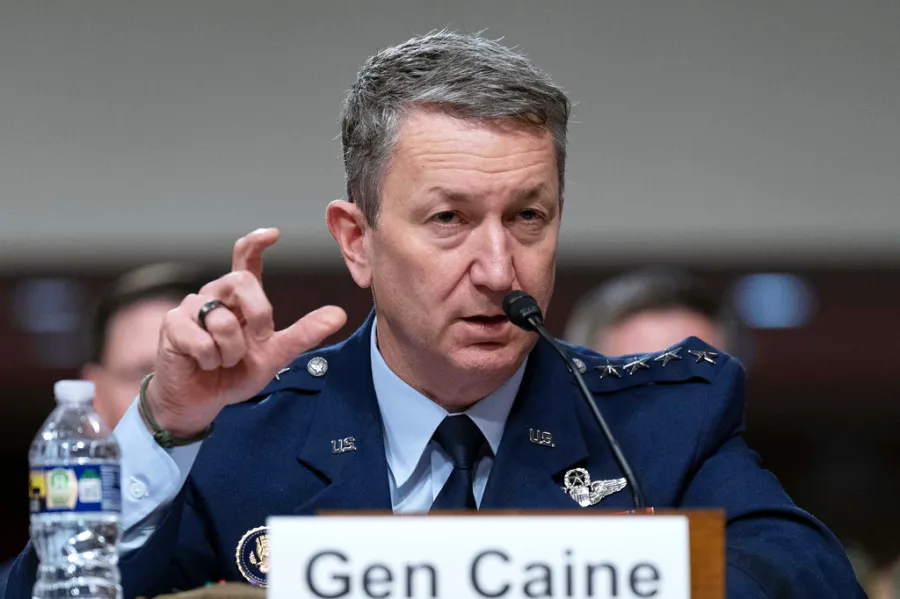
美国最高军事领导人丹·凯恩将军最近告诉密歇根州民主党参议员埃丽莎·斯洛特金,美军“没有计划”在11月出现在投票站。然而,特朗普总统的做法使得人们无法忽视对军方干预的担忧。恰恰相反,他持续攻击选举过程的公正性,暗示共和党人“至少应在15个地方接管投票工作”,并拒绝排除援引《叛乱法》的可能性,这使得许多人开始警惕一场迫在眉睫的冲突。
Gen. Dan Caine, the nation’s senior-most military leader, recently told Sen Elissa Slotkin (D-Mich.) that the U.S. military has “no plans” to be at polling places in November. But President Trump has made it impossible to dismiss fears of military interference. To the contrary, his persistent assault on the integrity of the voting process, his suggestion that Republicans “should take over the voting in at least 15 places,” and his refusal to rule out invoking the Insurrection Act have led many to begin bracing for an imminent collision.
全美民众担心,特朗普日益疯狂的、试图寻找任何手段来维持其党派在国会中多数席位的行动,将限制他们宪法保障的投票权。从法律角度而言,将部队部署到投票站的门槛很高。根据《波西·科米塔图斯法案》,总统不得将联邦军队用于执法目的。同时,联邦法律规定,在投票点部署“部队或武装人员”属于犯罪行为,但也存在例外情况。
Americans across the country are worrying that their constitutionally-assured right to vote will be curtailed by Trump’s increasingly frantic search for anything that will preserve his party’s congressional majorities. The bar for legally deploying troops to polling places is high. Under the Posse Comitatus Act, the president cannot use federal military troops for law enforcement purposes. Meanwhile, federal law makes it a crime to post “troops or armed men” at polling site, but exceptions exist.
《叛乱法》允许总统在应对“非法阻挠、结伙或集会”或“国内暴力、非法结伙或阴谋”时部署军队。此外,为“击退美国的敌人”,部队或武装人员也可被合法部署到投票点。如果总统希望将部队部署到选举地点,他完全可以编造一套符合这两个法律漏洞的虚假事实。大多数高级指挥官都清楚,一旦部队被部署到投票站,将造成严重破坏:这不仅会真正威胁民主制度,还可能使他们——而非总统——面临刑事起诉。
The Insurrection Act permits the president to deploy troops in response to “unlawful obstructions, combinations, or assemblages” or “domestic violence, unlawful combination, or conspiracy.”Troops or armed men can be legally deployed at polling sites to “repel enemies of the United States.”If the president wants to deploy troops to election sites, he can easily come up with a set of fake facts that satisfies both legal loopholes. Most senior commanders understand the damage that can be done if troops are deployed to polling places; not only would it present real threats to democracy but it could subject them — not the president — to criminal prosecution.
在向国会作证时,负责军队国内使用的指挥官承认,法律禁止将部队部署到投票点,并强调他将拒绝执行任何违反这些法律的命令。
In his testimony before Congress, the commander responsible for the domestic use of military forces acknowledged that laws prohibit deploying troops to polling sites and asserted that he would refuse orders that violate them.
然而,如果抵抗失败,总统及其法律顾问办公室为向投票站部署军队捏造法律和事实依据,军事指挥官及其军事法官仍可通过审慎判断来减轻这些行动带来的影响。首先,各州和地方官员以及指挥官必须就每个投票站正在发生的情况,彼此之间以及与媒体保持透明。如果指挥官在实地观察到的事实与特朗普及其爪牙所散布的说法存在差异,他们就需要展现出道德勇气。
However, if resistance fails and the president and his Office of Legal Counsel concoct legal and factual justifications for deploying troops to polling sites, military commanders and their judge advocates can mitigate the impacts of these actions by exercising good judgment. First, state and local officials and commanders must be transparent with each other and with the media about what is happening at every polling site. Commanders will need to display moral courage if the facts they perceive on the ground are different from those Trump and his minions are peddling.
若接到前往投票站的命令,他们必须首先专注于缓和局势。同时,他们还必须抵制任务范围不断扩张的必然压力。允许向投票站部署军队的联邦法律例外条款极为有限。指挥官不能让自己的应对措施超出这些狭窄的界限。例如,为平息不满而部署的联邦军队不得扣押投票设备、选票,或以任何其他方式干预选举过程。
If ordered to polling places, they must first and foremost focus on de-escalation. They must also resist the inevitable pressure of mission creep. Exceptions to federal law allowing deployment of troops to polling places are very narrow. Commanders cannot let their responses exceed those narrow limits. For example, federal troops deployed to quell discontent cannot seize voting equipment, ballots, or otherwise interfere in election processes.
如果国防部长命令指挥官采取铁腕手段,他们既可以选择、也必须拒绝恐吓任何人或干预投票过程,转而采取温和的方式。“武力使用规则”——即指挥官为军队在国内部署时制定的必须遵守的规则——必须明确规定:除非出现超出执法机构应对能力的实际骚乱,否则军人不得被选民看见或听见。这些规则还必须承认部署行动所依据的法律授权存在限制。
If the secretary of Defense orders commanders to wield an iron fist, they can and must refuse to intimidate anyone or to interfere in the voting process, donning velvet gloves instead. “Rules for use of force” — which are rules that are established by commanders that troops must follow when deployed domestically — must stipulate that servicemembers must be neither seen nor heard by voters unless there is an actual civil disturbance that exceeds law enforcement agencies’ ability to respond. These rules must also acknowledge the limits of the legal authorities upon which the deployment is based.
例如,规则必须规定,军队只能用于应对投票站内的实际骚乱。指挥官还必须同意,军队不得从事任何可能恐吓选民的行为,包括以任何非平息骚乱的理由拘押选民。
For example, they must stipulate that troops may only be used to address physical disturbances at the polls. They must agree that troops may not do anything that might intimidate voters, including detaining them for any reason other than to quell disturbances. (For example, they may not look for or detain suspected non-citizens, enforce voting procedures or observe voting processes.)
(例如,他们可能不会搜寻或拘留涉嫌非公民身份的人,不会执行投票程序,也不会监督投票过程。)公众应当担忧,特朗普可能会动用军队,作为其“接管”多地投票工作的努力的一部分。但这种担忧并不必然意味着军队会对选举产生负面影响。如果现有的法律约束失效,仍然存在“计划B”。被命令指挥这些部队的军官以及为他们提供法律咨询的军事法官,可以缓解特朗普试图造成的任何恐吓效果。
The public should be concerned that Trump may deploy the military as part of his effort to “take over” voting in many locations. But that concern need not translate to fear that troops will adversely impact the election. If existing legal guardrails fail, there is still a Plan B. The military officers ordered to command those troops and the judge advocates advising them can mitigate whatever intimidation Trump seeks to achieve.
史蒂文·莱珀(Steven Lepper)是美国空军退役少将,丹·莫勒(Dan Maurer)是美国陆军退役中校,尤金·R·菲德尔(Eugene R. Fidell)是军事法专家。
Steven Lepper is a retired U.S. Air Force major general, Dan Maurer is a retired U.S. Army lieutenant colonel and Eugene R. Fidell is a military law expert.