更具保护主义的美国可能会成为印度经济的意外顺风。随着各国围绕可信赖的伙伴重新绘制供应链并寻求优惠的市场准入,新德里已结束多年的谨慎态度,正在快速扩大其自由贸易网络。利用世界贸易组织开发的全球经济大规模模型,我们估计这些协议可能在2035年为印度的国内生产总值增加约1400亿美元,开拓新市场,降低进口成本,促进外国直接投资并提升生产力。
A more protectionist US could prove an unexpected tailwind for India’s economy. As countries redraw supply chains around trusted partners and seek preferential market access, New Delhi has ended years of caution and is rapidly expanding its free-trade network. Using a large-scale model of the global economy developed by the World Trade Organization, we estimate these agreements could add about $140 billion to India’s GDP in 2035, opening new markets, cutting import costs, fostering foreign direct investment and lifting productivity.
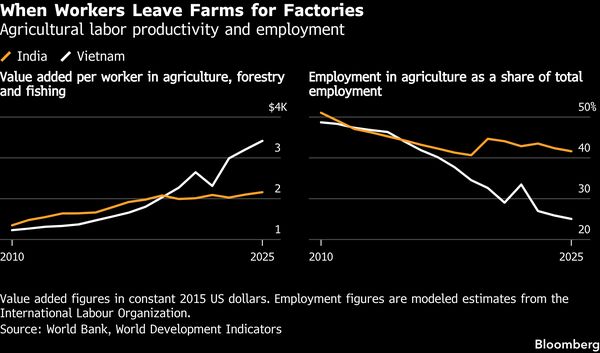
我们还考虑了两种可能放大收益的情景:实现十年制造业竞争力提升改革所带来的进一步生产力收益,以及制定帮助就业不足的农业工人转向制造业和服务业的政策。
We also consider two scenarios that could amplify the gains: realizing further productivity benefits from a decade of reforms to strengthen manufacturing competitiveness, and enacting policies that help underemployed agricultural workers transition into manufacturing and services.
自2025年1月唐纳德·特朗普总统重返白宫以来,美国关税的激增正在重塑全球贸易联系。经过19个月的剧烈波动,我们估计2024年8月美国平均关税税率为10.7%,而2024年为2.3%。这反映了部门性关税——主要针对汽车和金属,以及根据第301条强迫劳动行动设定的约10%-12.5%的国家特定税率。此税率下的关税可能使美国商品进口相比之前的制度减少约15%。威胁和调查表明未来可能会有更多上调。
The surge in US tariffs since President Donald Trump returned to the White House in January 2025 is redrawing global trade links. After 19 months of wild swings, we estimate the average US tariff rate stood at 10.7% in August, up from 2.3% in 2024. That reflects sectoral tariffs—mainly on cars and metals, and country-specific levies set at around 10%-12.5% under the Section 301 forced labor action. Tariffs at this rate could lower US goods imports by roughly 15% compared with the previous regime. Threats and investigations point to more hikes to come.
其他国家正通过多元化贸易联系和加速与新伙伴的谈判作出回应。自2025年初以来,欧盟已与南方共同市场和墨西哥签署新的或更新的协议,并与印度尼西亚、印度和澳大利亚完成谈判。东南亚国家联盟和中国在2025年10月签署了升级版的自由贸易协定。加拿大在2025-2026年签署了若干协议,并着手启动、加速或恢复其他协议。
Other countries are responding by diversifying trade links and accelerating negotiations with new partners. Since the start of 2025, the European Union has signed new or updated agreements with Mercosur and Mexico and concluded negotiations with Indonesia, India and Australia. The Association of Southeast Asian Nations and China signed an upgraded free-trade agreement in October 2025. Canada signed several agreements in 2025-26 and moved to launch, accelerate or revive others.
印度也不例外。在2025-26年,印度与欧洲自由贸易联盟、英国和阿曼的协议生效,此前已有与澳大利亚和阿拉伯联合酋长国的协议于2022年生效。印度还与新西兰签署了自由贸易协定,并与欧盟完成了谈判。此外,新德里正在寻求其他合作伙伴——包括欧亚经济联盟——并一直在争取与海湾合作委员会达成协议。
India is no exception. During 2025-26, agreements with the European Free Trade Association, the UK and Oman entered into force, adding to deals with Australia and the United Arab Emirates that took effect in 2022. India also signed an FTA with New Zealand and concluded negotiations with the EU. In addition, New Delhi is pursuing other partners—including the Eurasian Economic Union—and has sought an agreement with the Gulf Cooperation Council.
与此同时,自2025年2月特朗普和印度总理纳伦德拉·莫迪宣布计划签署双边协议以来,印度一直在寻求与美国深化贸易联系。双边关系一直较为动荡。2025年下半年,在华盛顿对印度实施25%的对等关税并额外征收与俄罗斯石油采购相关的25%关税后,印度成为面临最高额外关税的主要美国贸易伙伴之一。
At the same time, India has pursued deeper trade links with the US since Trump and Prime Minister Narendra Modi announced plans for a bilateral agreement in February 2025. The relationship has been rocky. In the second half of 2025, India faced some of the highest additional tariffs among major US trading partners after Washington imposed a 25% reciprocal tariff and an additional 25% duty linked to Russian oil purchases.
此后紧张局势有所缓解。虽然行业关税仍然存在,但美国在2025年2月取消了与俄罗斯相关的25%关税,并将对印度的对等关税税率降至18%。此外,在美国第301条强迫劳动行动框架下——该行动已取代对等关税——印度被设定为10%的税率,低于对许多其他伙伴征收的12.5%。这为达成临时协议铺平了道路,尽管达成更全面的协议可能具有挑战性。
Tensions have eased since then. While sectoral tariffs remain in place, the US removed the Russia-related 25% tariff and lowered reciprocal rates on India to 18% in February. In addition, under the Section 301 forced labor action, which has replaced reciprocal tariffs, India has been set a rate of 10%, lower than the 12.5% slapped on many other partners. This is paving the way for an interim deal, though reaching a more comprehensive agreement may prove difficult.
利用可计算一般均衡模型,我们估算了印度的贸易协定在未来十年可能如何重塑其经济。
Using a computable general equilibrium model, we estimate how India’s trade deals could reshape its economy over the next decade.
我们首先评估美国关税在8月水平相较于2024年关税的影响。我们计算得出,印度对美国出口商品的平均关税已从2024年的2.4%上升至11.6%。到2035年,我们估计这些关税将使印度对美国的商品出口减少约五分之一。但对印度经济的冲击应属有限。其产出中不到2%依赖美国市场,且其他地区的出口增长应能缓冲冲击。我们估计其对国内生产总值的影响可以忽略不计。
We start by assessing the impact of US tariffs at their August level, relative to 2024 duties. We calculate that the average tariff on Indian goods sold to the US has risen to 11.6%, from 2.4% in 2024. By 2035, we estimate the tariffs will cut Indian goods exports to the US by about one-fifth. But the hit to India’s economy should be limited. Less than 2% of its output relies on US markets, and stronger exports elsewhere should cushion the blow. We estimate the effect on gross domestic product will be negligible.
我们随后通过三种渠道对已签署或正在谈判的自由贸易协定进行建模:对于美印谈判,我们模拟了一项临时协议,根据该协议,印度向美国提供的关税减让与其在其他协议中的水平大致相当。美国将汽车产品的部门关税降至15%(包括最惠国待遇税),但保持对大多数受影响产品的50%金属关税和10%第301条关税——这与其向欧盟或日本等其他协定伙伴所给予的条件类似。我们仍预期该协议将减少紧张局势和不确定性,并带来与印度其他自由贸易协定相同的非关税壁垒下降。
We then model the FTAs already concluded or under negotiation through three channels: For US-India negotiations, we model an interim agreement under which India grants the US roughly the same tariff reductions as under its other deals. The US cuts sectoral duties on automotive products to 15% (including most-favored-nation tariffs) but keeps the 50% metal tariffs and 10% Section 301 duties on most covered products—similar to the conditions it granted other deal partners such as the EU or Japan. We still expect the agreement to reduce tensions and uncertainty and to deliver the same decline in NTMs as India’s other FTAs.
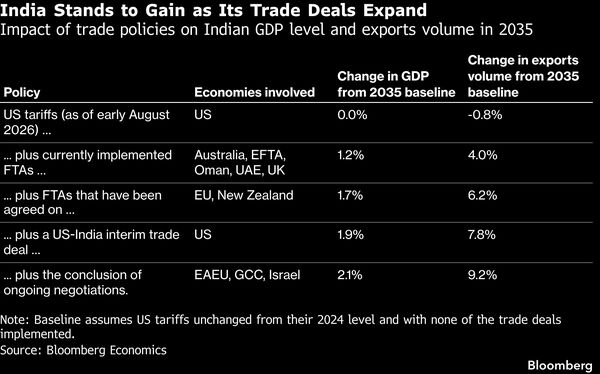
我们的分析表明,已生效的自由贸易协定应使印度的GDP在2035年相较于基准情景提高1.2%;如果欧盟和新西兰协定自2027年起实施,这一提升幅度将上升至1.7%,相当于按2025年不变美元计算的约1400亿美元增长。一项美印协议将额外增加0.2个百分点。如果与欧亚经济联盟、海湾合作委员会和以色列的谈判在未来几年内达成,收益可能再增加0.2个百分点,使得印度的GDP在2035年较基准情景高出2.1%(约合1700亿美元)。
Our analysis suggests FTAs already in force should raise India’s GDP by 1.2% by 2035 relative to baseline, rising to 1.7% if the EU and New Zealand agreements are implemented from 2027, a gain of about $140 billion at constant 2025 US dollars. A US deal would add 0.2 percentage point. If negotiations with the EAEU, GCC and Israel conclude over the next few years, the gain could rise by another 0.2 ppt, leaving GDP 2.1% higher (about $170 billion) by 2035.
贸易量的增长速度可能更快。到2035年,如果所有协定得以实施,印度的出口可能较基准情景高出近10%。随着家庭和企业获得新产品和服务的准入,以及制造业更深入地融入全球价值链,进口也将随之增长。
Trade volumes would rise even faster. By 2035, Indian exports could be almost 10% above baseline if all deals are implemented. Imports also would climb as households and businesses gain access to new products and services and manufacturers become more integrated into global value chains.
实施自由贸易协定仅是第一步。要充分释放其收益,印度需要保持改革动力。有效实施;可靠获取能源、关键矿产和先进技术;以及释放印度庞大劳动力的潜力,都将至关重要。
g FTAs is only the first step. Reaping the full benefits will require India to sustain its reform momentum. Effective implementation; reliable access to energy, critical minerals and advanced technologies; and unlocking the potential of India’s vast labor force will all be important.
我们模拟了一种乐观情景,在这种情景下,两种国内趋势将放大这些收益:印度正将雄心勃勃的工业战略与同样雄心勃勃的贸易议程相结合。如果组合得当,它可能成为长期增长的强大新引擎。美国关税是一种拖累。对于印度和世界而言,正确的应对仍可能带来发展的胜利。阅读完整报告:
We model an upside scenario in which two domestic trends amplify the gains: India is pairing an ambitious industrial strategy with an equally ambitious trade agenda. If it gets the combination right, it could become a powerful new engine of long-term growth. US tariffs are a drag. For India, and the world, the right response could yet deliver a development win. Read the full report: