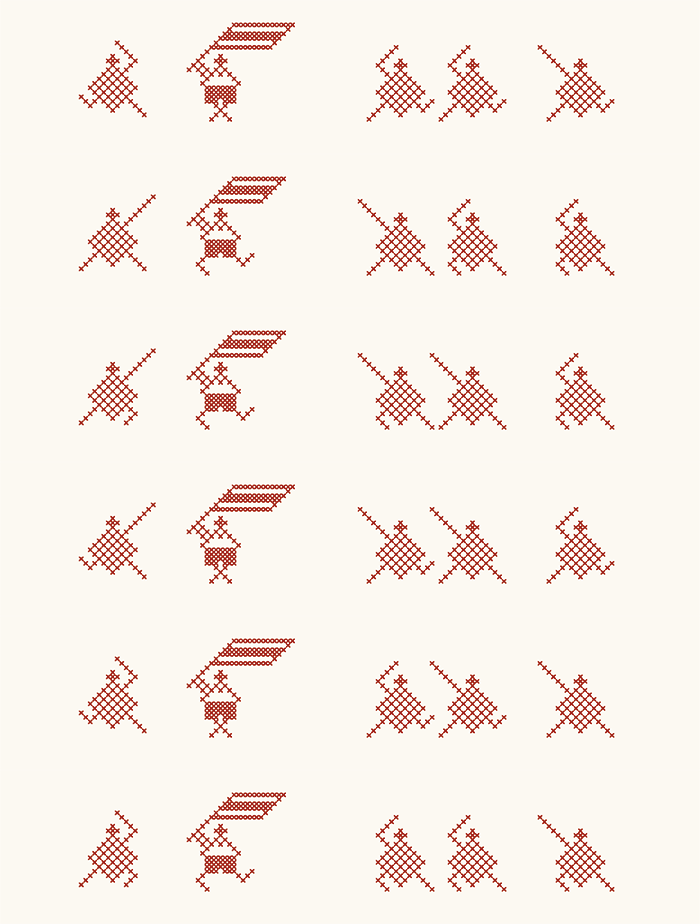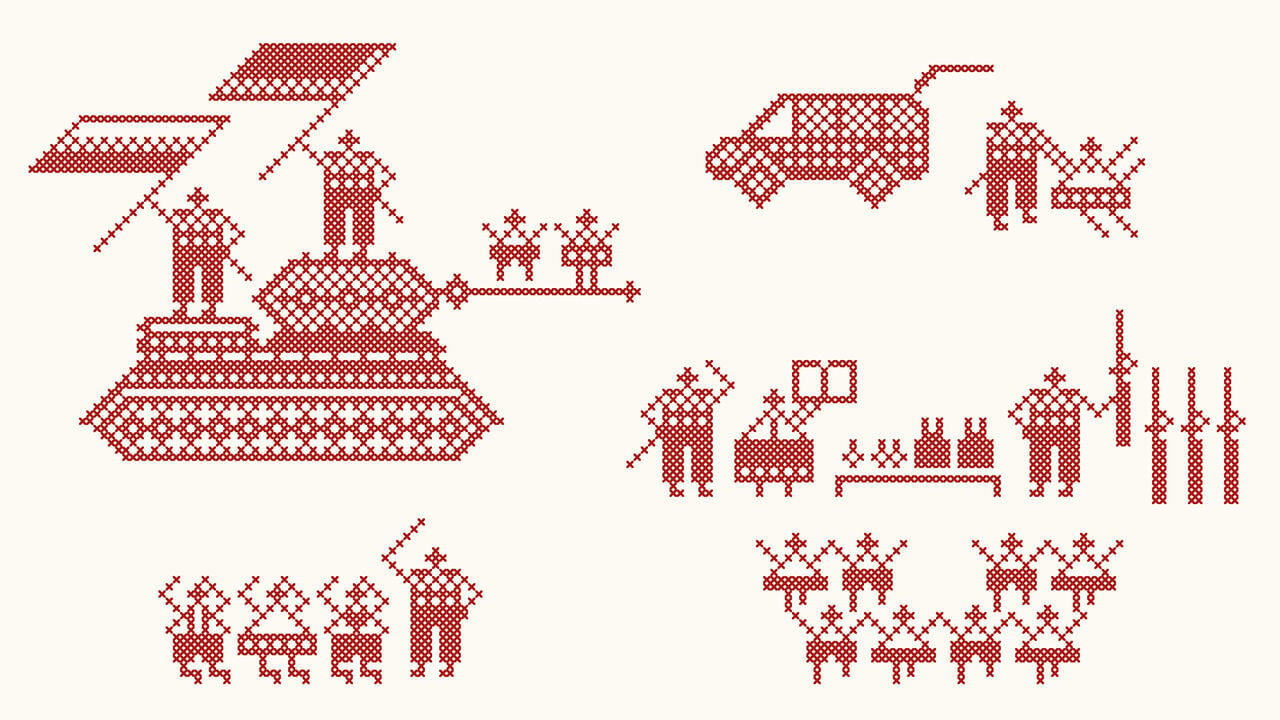
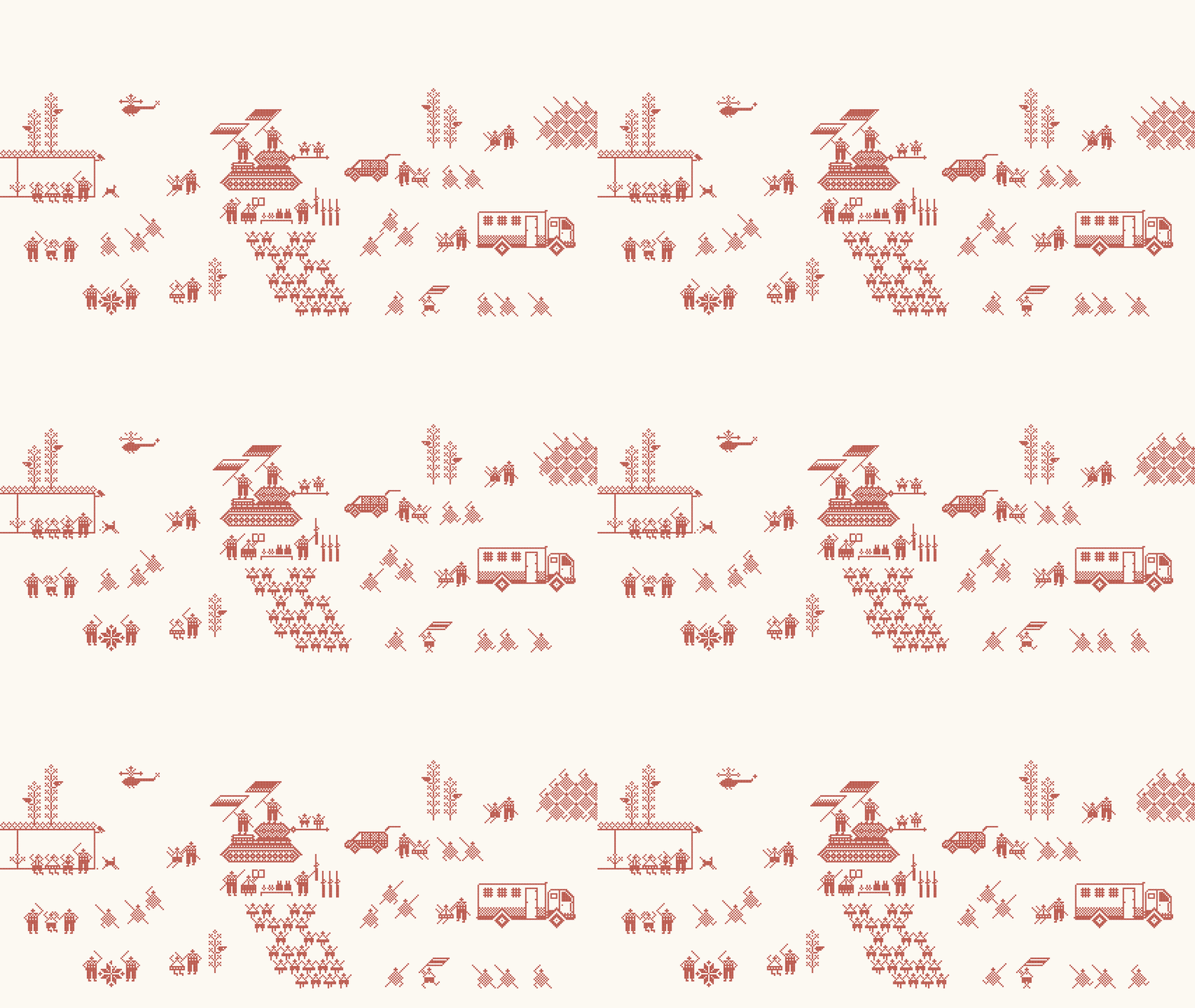
随着该国在铲除其民族遗产,俄罗斯的宣传正在接管。当阿德莉亚得知明斯克的一家名为“霍纳尔”的商店即将关闭时,她知道这只能意味着一件事:轮到它了。十多年来,这家店一直售卖装饰有民族图案的时尚服装,其中许多采用传统的红白十字绣。阿德莉亚赶到店里,但已经几乎没有什么可买的了。来自首都各地的志同道合的白俄罗斯人加入了她,进行了一项小小的反抗行为。
As the country stamps out its national heritage, Russian propaganda is taking over When Adelia found out that Honar, a shop in Minsk, was closing down, she knew it could mean only one thing: its turn had come. For more than a decade it had sold fashionable clothes adorned with folk designs, many in a traditional red-and-white cross-stitch. Adelia rushed to the shop, but already there was little left to buy. Like-minded Belarusians from across the capital had joined her in a small act of defiance.
阿德莉亚说,“霍纳尔”是一家“给勇敢者开的店”,因为“在白俄罗斯,穿带有民族图案的衣服需要勇气。”(对记者说话也需要勇气:阿德莉亚是一个化名。)2020年,当亚历山大·卢卡申科窃取选举时,爆发了大规模抗议。抗议被血腥镇压后,他多年的独裁统治加强了政治镇压。示威者遭到酷刑和监禁。数十万人逃亡。
Honar is a shop “for brave people,” says Adelia, “because wearing clothes with national motifs in Belarus requires courage.” (Speaking to journalists does too: Adelia is a pseudonym.) Massive protests erupted when Alexander Lukashenko stole an election in 2020. After they were brutally quelled, his multi-decade dictatorship doubled down on political repression. Demonstrators were tortured and locked up. Hundreds of thousands fled.
白俄罗斯独裁者长期以来一直在与弗拉基米尔·普京——俄罗斯领导人的兄弟情谊与抵制更深层次整合之间灵活周旋。但2020年成为一个转折点:来自俄罗斯——这个强大的邻国和尴尬的盟友——的军事支持让卢卡申科得以维持政权。如今,随着他维持权力的努力变得越来越绝望,他正在打压白俄罗斯文化——并将越来越多的影响力让给俄罗斯。
The Belarusian dictator has long skilfully manoeuvred between brotherliness with Vladimir Putin, Russia’s leader, and resistance to fuller integration. But 2020 marked a turning point: military support from Russia, a powerful neighbour and awkward ally, let Mr Lukashenko hang on. Now, as his bid to maintain power grows more desperate, he is cracking down on Belarusian culture—and ceding ever more influence to Russia.
尽管许多白俄罗斯人感到与更广阔的斯拉夫世界有着强烈的亲缘感,并在经济或家庭层面与俄罗斯有联系,但许多人也对普京在乌克兰的战争持警惕态度。对那些反对更深层次整合的人来说,白俄罗斯文化和语言被视为抵御这种整合的重要屏障;俄语长期以来一直是该国的主导语言。传统艺术、音乐和节庆也为更自由奔放的人提供了一个创造性的出口,因为其他表达空间正在被压缩。
Although plenty of Belarusians feel a strong sense of kinship with the wider Slavic world, and have economic or family ties to Russia, many are also wary of Mr Putin’s war in Ukraine. And for those suspicious of closer integration, Belarusian culture and language are seen as important guards against it; Russian has long been the country’s dominant language. Traditional arts, music and festivities provided a creative outlet, too, for the more free-spirited as other spaces for expression shrank.
卢卡申科一向善于抓住机遇,在他需要时提升了传统文化。2010年代,白俄罗斯民族身份经历了一次复兴。曾为美国国际开发署走访白俄罗斯、如今经营政治风险咨询公司的巴拉日·雅拉比克回忆说,当时情况“蓬勃发展”。公民社会团体组织了民俗歌曲和舞蹈节。传统刺绣成为时尚:卢卡申科本人和其他官员在国家宣传中被展示穿着此类刺绣的服装。他有时也公开用白俄罗斯语讲话。“我们知道自己的根源,尊重传统,”他在2019年用该语言说道。
Mr Lukashenko, ever the opportunist, has elevated traditional culture when it suited him. In the 2010s Belarusian national identity experienced a revival. Balázs Jarábik, who travelled the country for USAID and now runs a political-risk consultancy, remembers it “flourishing”. Civic-society groups organised folkloric song and dance festivals. Traditional embroidery became fashionable: Mr Lukashenko himself and other officials were shown wearing examples of it in state propaganda. He sometimes spoke publicly in Belarusian, too. “We know our roots, honor traditions,” he said in the language in 2019.
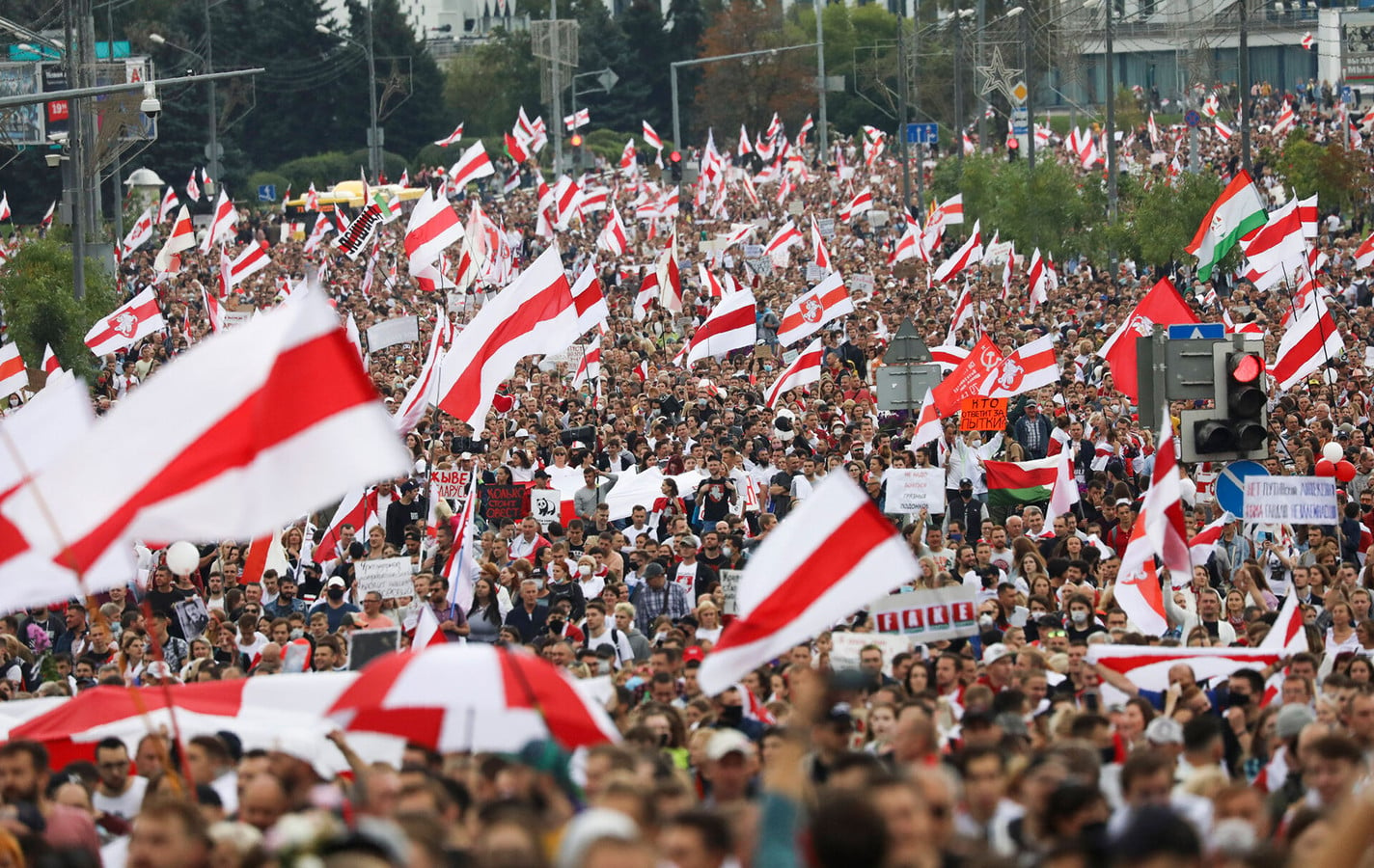
随后爆发了全国性示威。白俄罗斯爱国主义的象征被民主运动所采纳,包括该语言以及1918年短暂存在的白俄罗斯共和国的红白红旗。展示该旗帜将被处以罚款和监禁,红白配色亦是如此。但一些表达白俄罗斯身份的更微妙方式逃过了镇压。
Then came the nationwide demonstrations. Symbols of Belarusian patriotism were taken up by the democracy movement, including the language and the white-red-white flag of a short-lived Belarusian republic in 1918. Displaying the flag was punished with fines and stints in prison, as were red-and-white colour combinations. But some subtler means of expressing Belarusian identity escaped the clampdown.
情况不再如此。今年7月几天内,销售白俄罗斯服装或食品的商店宣布将关闭。音乐和历史节日被取消。早在几个月前,白俄罗斯语书籍的出版商、翻译和销售者就被拘留或被指定为“极端分子”。“这些地方的意义重大,”流亡记者汉娜·柳巴科娃说。“不仅仅是因为这是件不错的连帽衫或一本好书,而是因为这是你能看到志同道合的人的地方。”正如阿德莉亚所指出的,你可以去像Honar这样的店,只是为了用白俄罗斯语与他人交谈。
No longer. Over a few days in July, shops selling Belarusian clothes or food announced they would close down. Music and history festivals were cancelled. A few months earlier, publishers, translators and sellers of Belarusian-language books were detained or designated “extremist”. “The significance of these places was huge”, says Hanna Liubakova, a journalist in exile. “Not just because this was a nice hoodie or a great book, but [because] it’s the kind of place where you could see people who think in a similar way.”You could go to a shop like Honar just to speak to others in Belarusian, notes Adelia.
虽然商店和节日并未被正式禁止,但政权已经明确表达了其立场。一位知名宣传者写道,这些店主是“公然的人民敌人”。议员兼该国首席图书管理员瓦季姆·吉金说:“所有这些试图销售T恤的行为,所有这些暗示……我们都看在眼里。”他还说:“我们将用一把脏扫帚把所有这些民族主义病毒一扫而光。”其他措施则不那么微妙。
Though the shops and festivals are not officially banned, the regime has made its position clear. The shopkeepers were “brazen enemies of the people”, wrote a high-profile propagandist. “All these attempts to sell T-shirts, all these half-hints…we see all of it,” said Vadim Gigin, an MP and the country’s chief librarian. “We’ll sweep away all this nationalist contagion with a dirty broom.”Other measures are less subtle.
自2020年抗议以来,据流亡人权组织维亚斯纳估计,已有超过4500人因政治罪名被监禁。最近被拘留者的身份凸显了卢卡申科对白俄罗斯文化日益加强的镇压。截至8月,已知有879名政治犯被关押在监狱中。
Since the protests in 2020, over 4,500 people have been imprisoned on political charges, estimates Viasna, an exiled human-rights organisation. The identity of recent detainees highlights Mr Lukashenko’s growing crackdown on Belarusian culture. 879 political prisoners were known to be in jail as of August.
欧盟已经加强了对白俄罗斯的制裁。在特朗普时期,美国则走向了相反的方向,以换取囚犯特赦为条件解除了一些制裁。在过去一年的多轮谈判中,美国成功争取到大约500人的释放,其中包括音乐家丘马科夫和出版商科拉斯,他们均于9月16日获释并被驱逐出境。但目前没有迹象表明特朗普的交易正在促使卢卡申科改变方向。
The European Union has ratcheted up sanctions on Belarus. Under Donald Trump, America has gone in the opposite direction, lifting some in exchange for prisoner pardons. It has secured the release of around 500 in several rounds of negotiations over the past year, including Mr Chumakou, the musician, and Mr Kolas, the publisher, both of whom were freed and deported on September 16th. But there is no sign that Mr Trump’s deal-making is encouraging Mr Lukashenko to change course.
维亚斯纳记录显示,在美国主导的释放行动之后,出现了新的政治动机拘留和定罪案件,其中包括涉及白俄罗斯文化的人士。4月,在三轮释放之后,建筑事务所因推广白俄罗斯设计而遭到突袭,52名员工被拘留。
Viasna has documented new politically motivated detentions and convictions since the American-led releases, including of people involved in Belarusian culture. In April, after three rounds of releases, 52 employees were detained during a raid on an architectural firm that promotes Belarusian design.
被禁止的文学组织PEN的负责人塔西娅·尼亚德巴杰表示,政权正在用一个“政治忠诚且日益融入俄罗斯”的文化空间取代该国的原有文化空间。近年来,国营剧院雇佣了俄罗斯导演和演员,并上演了更少的白俄罗斯语戏剧。尼亚德巴杰称,博物馆展览强调了与俄罗斯的历史联系。官方音乐会的头条演出都是普京政权所青睐的俄罗斯音乐家。
Taciana Niadbaj who runs PEN, a banned literary organisation, says the regime is replacing the country’s cultural space “with one that is politically loyal and increasingly integrated into Russia’s”. In the past few years state-run theatres have hired Russian directors and actors, and staged fewer Belarusian-language plays. Museum exhibits emphasise historic links with Russia, according to Ms Niadbaj. Official concerts headline Russian musicians favoured by Mr Putin’s regime.
卢卡申科对克里姆林宫的依赖日益加深在其他方面也表现得十分明显。2014年,他曾批评俄罗斯吞并克里米亚并拒绝承认;到2022年,他已愿意让普京利用白俄罗斯领土对乌克兰发动全面入侵。根据在流亡中工作的经济学家德米特里·克鲁克的分析,在接下来的两年里,白俄罗斯出口中流向俄罗斯的份额从40%上升至60%。
Mr Lukashenko’s deepening dependence on the Kremlin has been clear in other ways. In 2014 he had criticised Russia’s annexation of Crimea and refused to acknowledge it; by 2022 he was willing to let Mr Putin use Belarusian territory for a full invasion of Ukraine. In the next two years the share of Belarusian exports that went to Russia rose from 40% to 60%, according to analysis by Dzmitry Kruk, an economist working in exile.
这种依赖如今也体现在白俄罗斯的教育课程中。利用总部位于华沙的智库iSANS的研究,《经济学人》分析了近期发放在白俄罗斯学校的教材与早期版本的对比。
This reliance is now showing up in Belarus’s educational curriculum. Using research by iSANS, a think-tank based in Warsaw, The Economist has analysed comparisons of textbooks recently distributed in Belarusian schools with earlier editions.
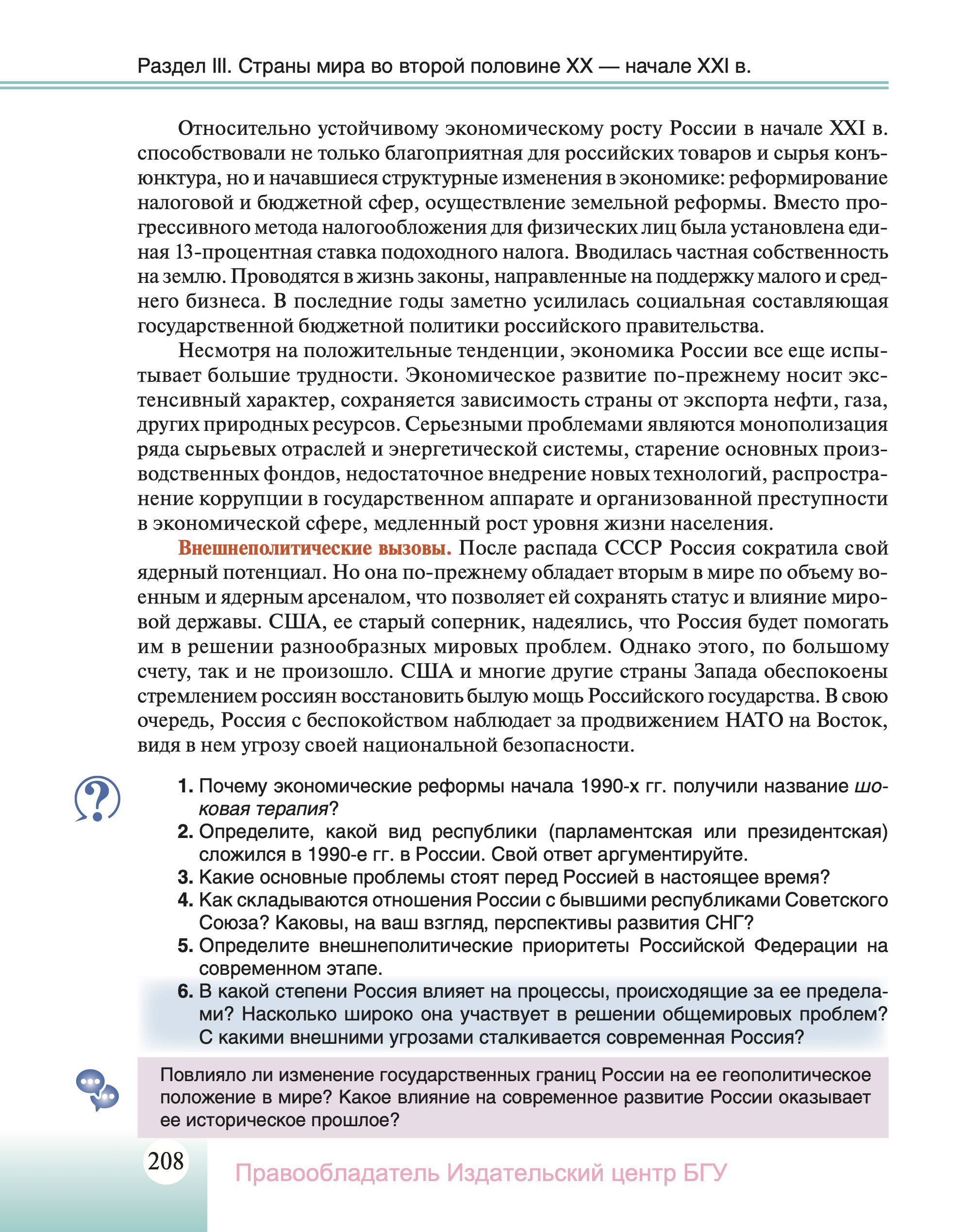
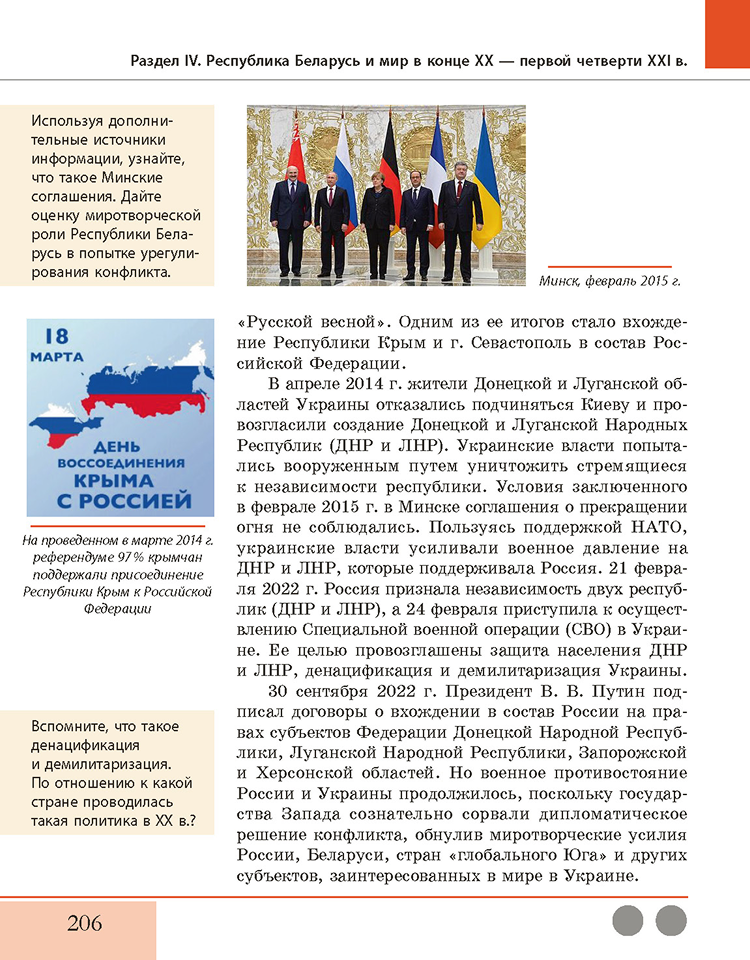
2021年、2025年,一本2021年出版的面向16至17岁学生的教材,既包含了自1991年以来俄罗斯的积极内容,也包含了消极内容。它指出了国内问题,如腐败和有组织犯罪。
2021 2025 A textbook for 16- and 17-year olds, published in 2021, included both positive and negative details about Russia since 1991. It noted domestic problems, such as corruption and organised crime.
“严重问题包括多个资源部门和能源系统的垄断、资本资产的老化、新技术采用不足、国家机构内部广泛的腐败、经济领域的有组织犯罪以及生活水平增长缓慢。”这些内容在2025年出版的同龄学生新教材中已不再出现。取而代之的是,该教材仅对普京的统治赞美有加,无论是养老金改革还是外交政策。克里姆林宫关于乌克兰战争的叙事首次出现在教材中。
“Serious problems include the monopolisation of several resource sectors and the energy system, the deterioration of capital assets, insufficient adoption of new technologies, widespread corruption within the state apparatus and organised crime in the economic sphere, and slow growth in living standards.”These no longer appear in a new textbook for the same ages published in 2025. Instead it has nothing but praise for Mr Putin’s rule, whether on pension reform or foreign policy. The Kremlin’s narratives about the war in Ukraine appear for the first time.
“2022年2月24日,[俄罗斯]在乌克兰开始进行特别军事行动(SMO)。其宣称的目标是保护顿涅茨克人民共和国和卢甘斯克人民共和国的民众,实现乌克兰的去纳粹化和非军事化。”
“On February 24th [Russia] began conducting a Special Military Operation (SMO) in Ukraine. Its proclaimed goals were the protection of the population of the DPR and LPR, denazification and demilitarisation of Ukraine.”
“然而,俄罗斯与乌克兰之间的军事冲突仍在继续,因为西方国家故意阻挠了冲突的外交解决,使得俄罗斯、白俄罗斯、‘全球南方’国家以及其他关注乌克兰和平的实体的维和努力化为乌有。”新教材还重新诠释了2020年的抗议活动,以符合普京总统的世界观。2021年的学校教材(如本教材)仅简单指出卢卡申科赢得了2020年总统选举,未提及抗议活动。
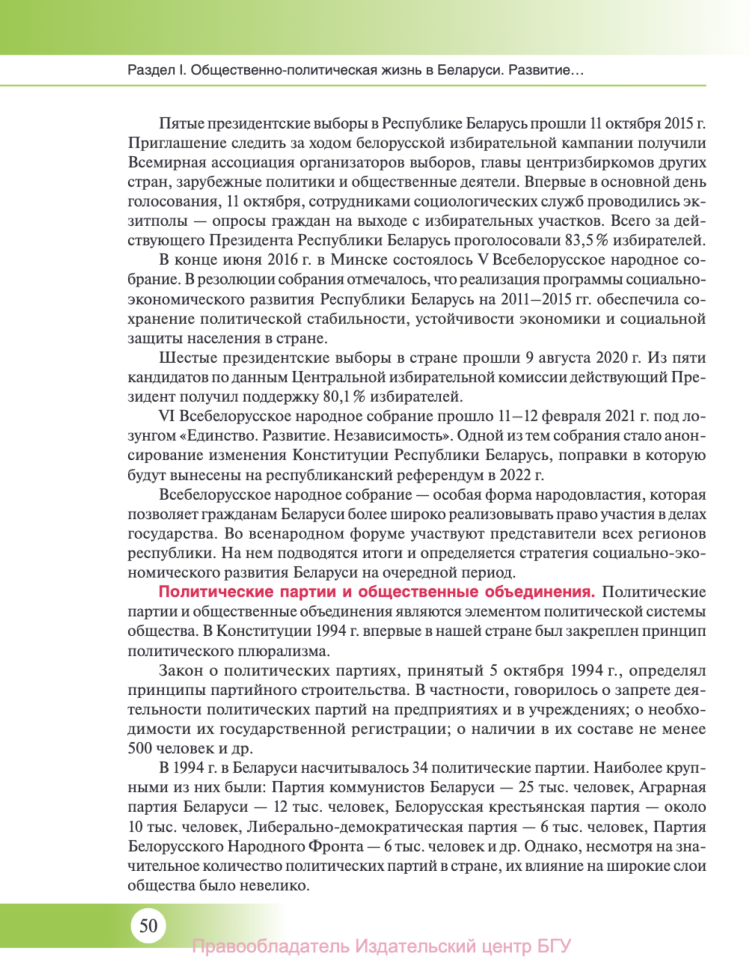
“However, the military confrontation between Russia and Ukraine continued, as Western states deliberately thwarted a diplomatic resolution to the conflict, nullifying the peacekeeping efforts of Russia, Belarus, the countries of the ‘Global South’, and other entities interested in peace in Ukraine.”The new textbook also recasts the 2020 protests to fit Mr Putin’s world view. In 2021 school textbooks such as this one simply noted that Mr Lukashenko had won the presidential election of 2020. They made no mention of the protests.
“本国第六次总统选举于2020年8月9日举行。根据中央选举委员会的数据,在五名候选人中,现任总统获得了80.1%的选民支持。”新教材承认了抗议活动的存在,但将其描述得正如普京总统可能的看法那样:这是一场由西方策划的旨在实现政权更迭的革命。
“The sixth presidential elections in the country were held on August 9th 2020. According to the Central Election Commission, out of five candidates, the incumbent President received the support of 80.1% of the voters.”The new textbook acknowledges the protests, but frames them just as Mr Putin might: they were a Western-orchestrated revolution aimed at regime change.
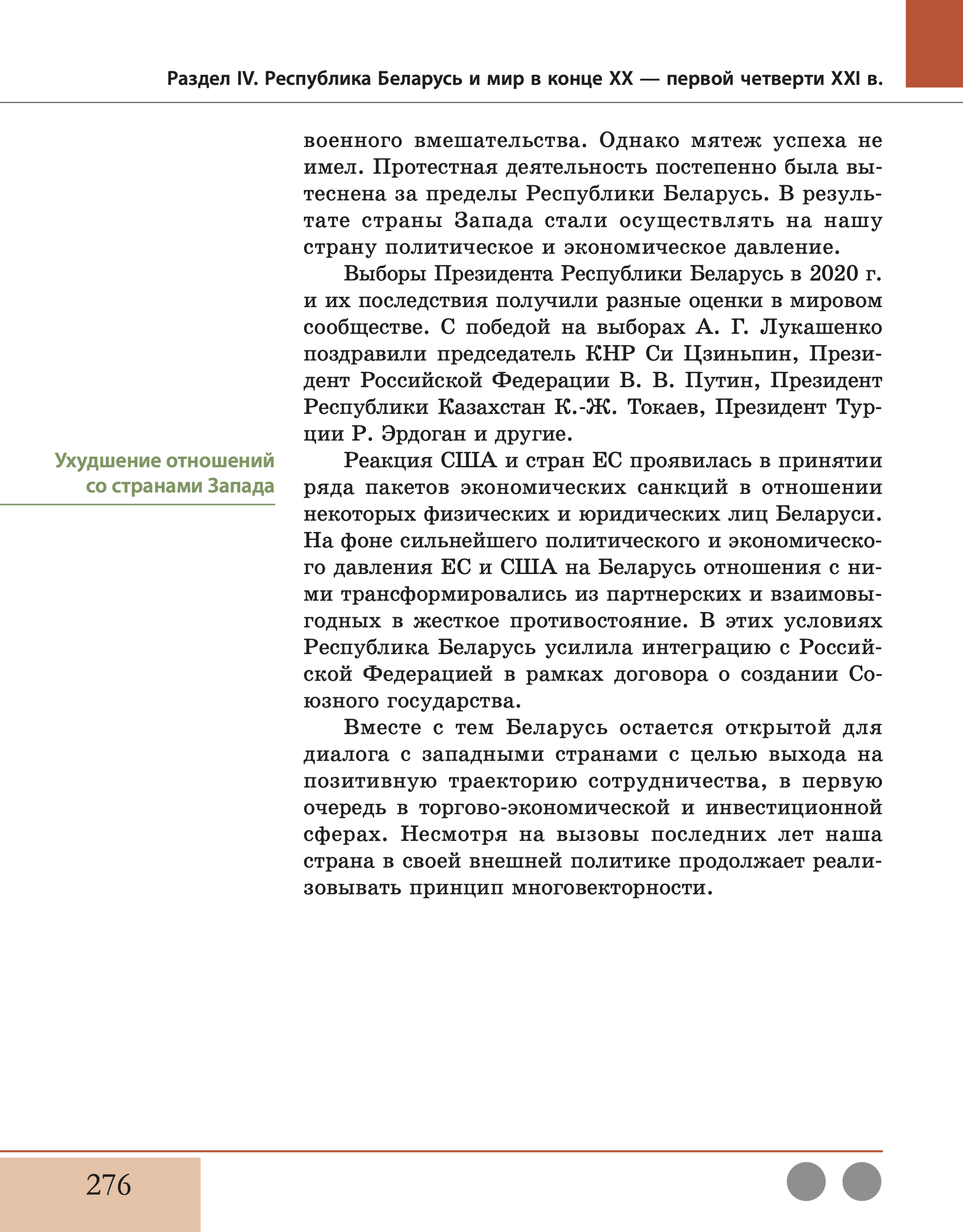
“但这次起义未能成功。抗议活动逐渐被推向白俄罗斯共和国边境之外。因此,西方国家开始对我们的国家施加政治和经济压力。”教材详细阐述了西方制裁如何加深了白俄罗斯与俄罗斯的联系。
“But the uprising was not successful. Protest activity was gradually pushed outside the borders of the Republic of Belarus. As a result, Western countries began to exert political and economic pressure on our country.”It details how Western sanctions deepened Belarus’s ties to Russia.
“在此背景下,白俄罗斯共和国在《联盟国家条约》框架下加强了与俄罗斯联邦的融合。”学校的变化不仅限于课程内容。通过监控Telegram和其他线上来源,iSANS的分析人员记录了“今年促进俄罗斯与白俄罗斯团结的活动明显扩大”。
“Under these conditions, the Republic of Belarus strengthened integration with the Russian Federation within the framework of the treaty on the creation of the Union State.”The changes in schools go beyond the curriculum. By monitoring Telegram and other online sources, analysts at iSANS have documented “a clear scaling-up” of events promoting unity between Russia and Belarus this year.
iSANS表示,民族团结日纪念活动“已从一个次要日期转变为学年中的核心思想事件之一”。
Commemoration of a National Day of Unity “has transformed from a secondary date into one of the central ideological events of the school year”, says iSANS.
今天我们幼儿园举办了一系列活动,致力于庆祝我们两个兄弟国家之间的友谊。为孩子们,我们组织了:关于两国文化和传统的主题课程;以“手牵手:明斯克 — 莫斯科”为主题的绘画比赛。iSANS还记录到学校军事爱国社团数量的增加。
Today our kindergarten held a series of events dedicated to the friendship between our two brotherly countries For the children, we organised: Thematic lessons about the culture and traditions of both countries; Drawing contests with the theme “Hand in hand: Minsk — Moscow” iSANS has also documented an increase in the number of military-patriotic clubs at schools.
许多社团与俄罗斯的姐妹组织合作。白俄罗斯教育部旨在本学年在每所职业和技术学院设立一个社团。近年来,学前教育机构首次设立了此类社团。
Many co-operate with sister groups in Russia. Belarus’s ministry of education aims to create a club in every vocational and technical college this academic year. In recent years, clubs have been set up in pre-schools for the first time.
在她被关押期间,去年获释的抗议领袖玛丽亚·卡列斯尼卡娃回忆说,她第一次在国家电视台看到穿军装的幼儿园年龄段的孩子。她说,看到俄罗斯军事宣传的蔓延令人恐惧。“白俄罗斯的未来在很大程度上取决于年轻的白俄罗斯人是否能够将自己的国家视为一个拥有自身历史和文化的独立国家,还是通过苏联过去和俄罗斯历史解释的棱镜来理解它,”卡列斯尼卡娃女士说。
While she was in prison Maria Kalesnikava, a protest leader freed last year, recalls seeing nursery-age children in military uniform on state television for the first time. It was terrifying, she says, to see the spread of Russian military propaganda. “The future of Belarus depends to a large extent on whether young Belarusians understand their own country as an independent state with its own history and culture, or through the prism of the Soviet past and Russian historical interpretations,” says Ms Kalesnikava.
除了国营学校之外,“公共空间里一切新事物都是俄语的,”阿德莉亚说。“但我可以肯定地说,白俄罗斯依然存在。”在霍纳尔关闭几周后,她从一家被禁止的白俄罗斯语出版社那里买了一箱书,这些书曾被藏在一家商店的地下室里。她告诉店主这是双赢:“我会保存这些书,而他们不会惹上麻烦”。她悄悄地卖出了其中几本。所得款项将用于支持亲民主事业。■
Outside state-run schools too, “everything new in the public space is in Russian,” says Adelia. “Yet I know for sure that Belarus lives.”A few weeks after Honar shut down, she bought a box of books from one of the banned Belarusian-language publishers, which had been hidden in the basement of a shop. She told the shop it was a win-win: “I’d save the books, and they wouldn’t get in trouble”. She has quietly sold a few of them on. The proceeds will go to a pro-democracy cause. ■