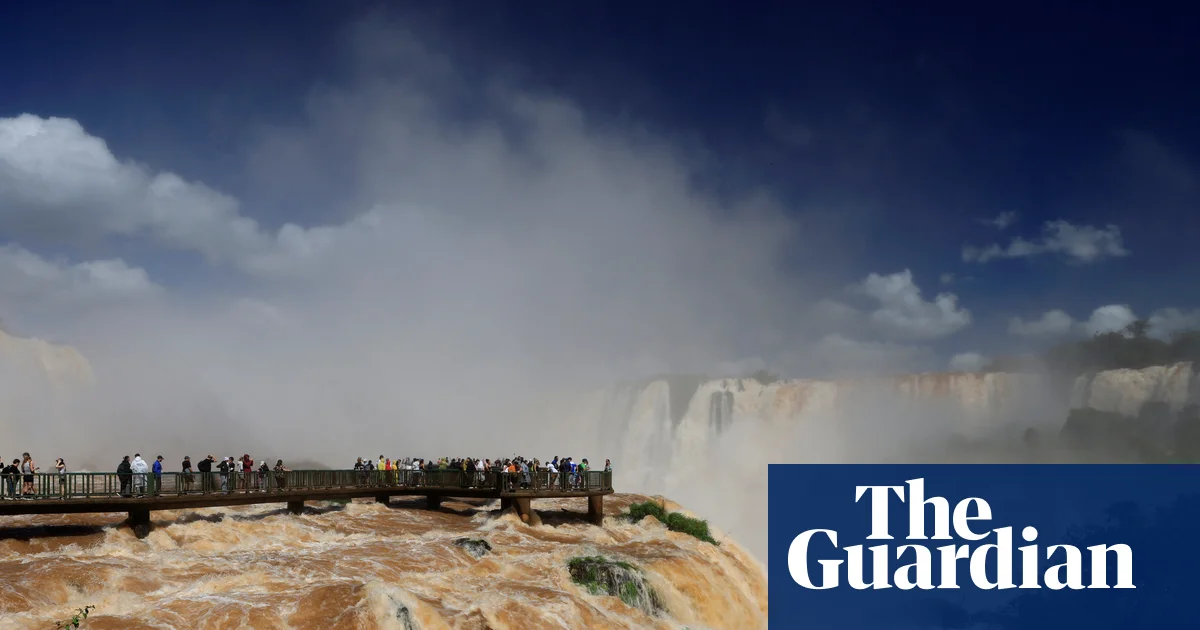
厄尔尼诺天气模式异常强盛引发的暴雨,短暂迫使阿根廷当局关闭了著名伊瓜苏瀑布的游客通道,因担忧水位快速上升可能导致河流决堤。
Heavy rainfall fuelled by a supersized El Niño weather pattern briefly forced Argentinian authorities to close tourist access to the famed Iguazu Falls, amid fears that rapidly rising water levels would cause the river to burst its banks.
国家公园官员周一采取了这一预防性措施,当时伊瓜苏河的流量超过每秒12000立方米,是其平均流量的六倍多。
National park officials took the precautionary measure on Monday when the Iguazu River’s flow exceeded 12,000 cubic metres per second – more than six times its average rate.
随后官员表示,该地区将于周二重新向游客开放,理由是河流流量出现“逐渐下降”。
It later said the area would reopen to tourists on Tuesday, citing a “gradual decline” in the river’s flow.
伊瓜苏国家公园主任何塞·马里亚·埃尔瓦斯表示,关闭通道是因为“雨一直在下”,且伊瓜苏河上游水库释放的水量并未减少,这一消息由《布宜诺斯艾利斯时报》报道。
José María Hervás, the director of the Iguazu national park, said access was closed because “it just keeps raining” and the volume of water being released from dams upstream on the Iguazu River was not falling, reported the Buenos Aires Times.
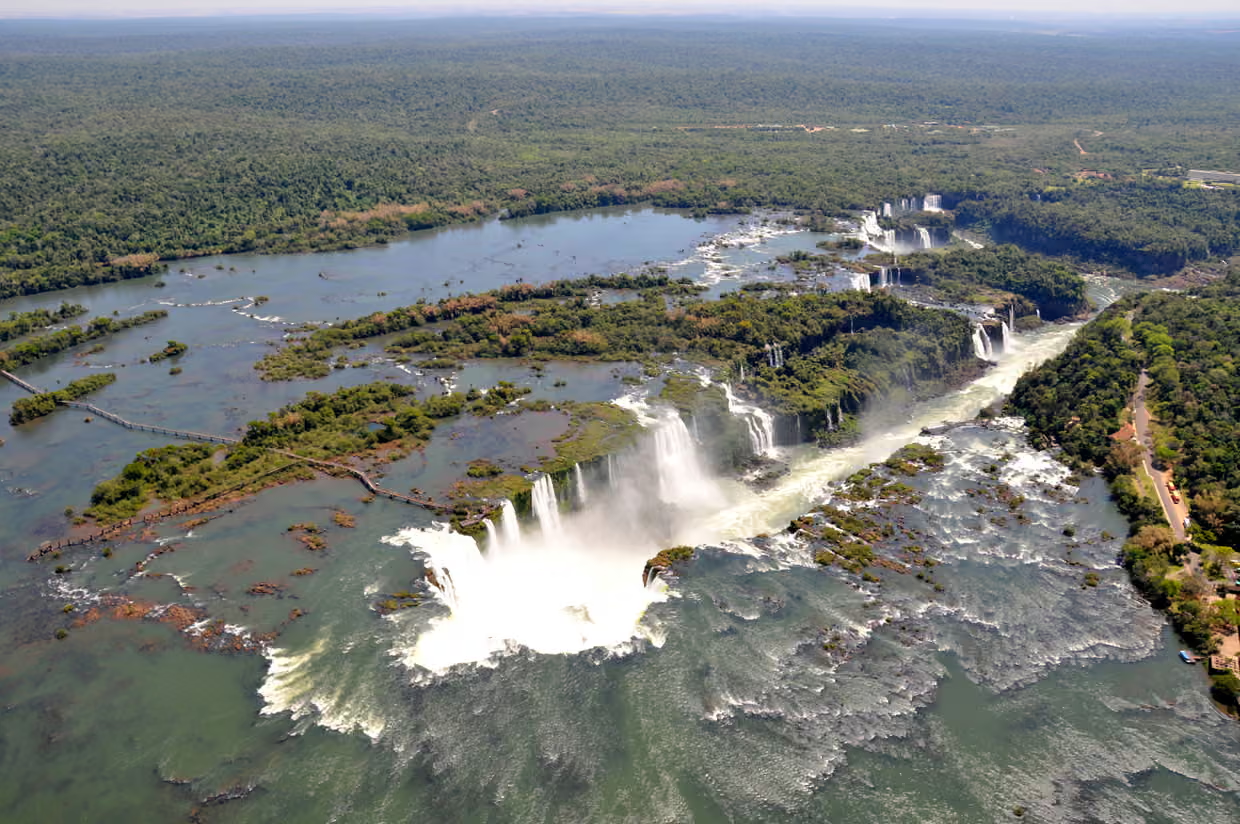
伊瓜苏瀑布被联合国教科文组织认定为世界上最大、最壮观的瀑布之一,位于阿根廷和巴西边境,横跨约2700米。
The Iguazu Falls, recognised by Unesco as one of the world’s largest and most impressive waterfalls, sits on the border of Argenina and Brazil and spans approximately 2,700 metres.
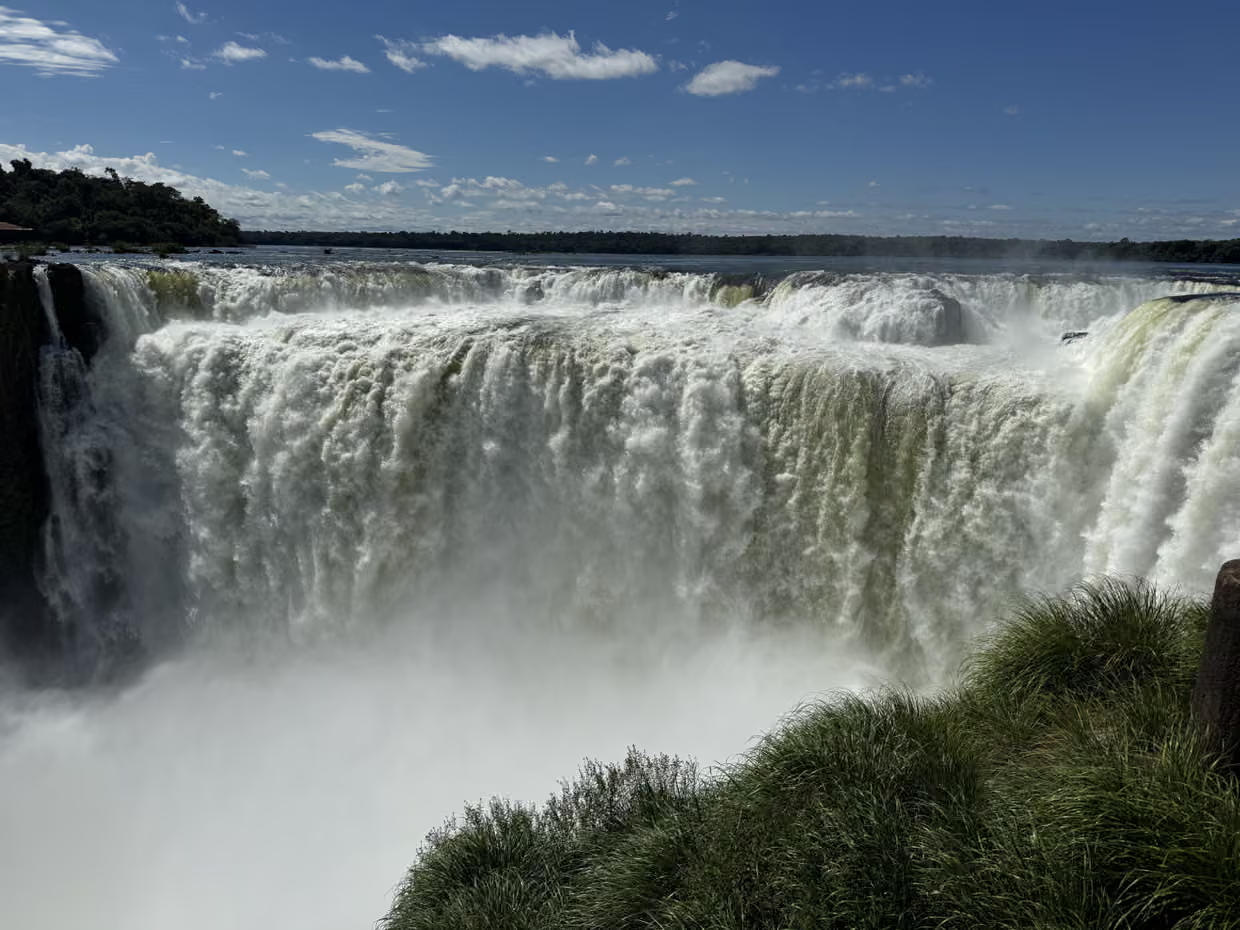
2023年和2024年,阿根廷官员曾因上一次厄尔尼诺周期引发的洪水,关闭了公园位于其境内的一侧。
In 2023 and 2024, Argentinian officials closed the park on its side of the border over flooding caused by a previous El Niño cycle.
气象学家表示,2026-2027年的厄尔尼诺将导致全球风向和降雨模式改变以及天气异常,且这一现象肯定是有史以来最强的。科学家现在还认为,人为导致的全球变暖正在使厄尔尼诺事件变得更加剧烈。
Meteorologists say the 2026-2027 El Niño, which causes global changes in winds and rainfall as well as erratic weather conditions, is certain to be the biggest ever recorded. Scientists now also think human-caused global heating is making El Niño’s more intense.
厄尔尼诺始于赤道太平洋,此时风向变化使海洋中的大量热量逸出并加热大气。该现象在北半球秋季形成,12月达到峰值,但其影响会持续到次年。
El Niño begins in the equatorial Pacific where changes in winds allow huge amounts of heat to escape the oceans and heat the atmosphere. It grows in the northern hemisphere autumn and peaks in December but has impacts well into the following year.
上个月,阿根廷沿海地区出现了高于平均水平的降雨,“类似于强厄尔尼诺期间的情况”,国家气象服务如此表示。
Last month, Argentina’s coastal region experienced above-average rainfall “similar to that seen during strong El Niño events,” the national meteorological service said.