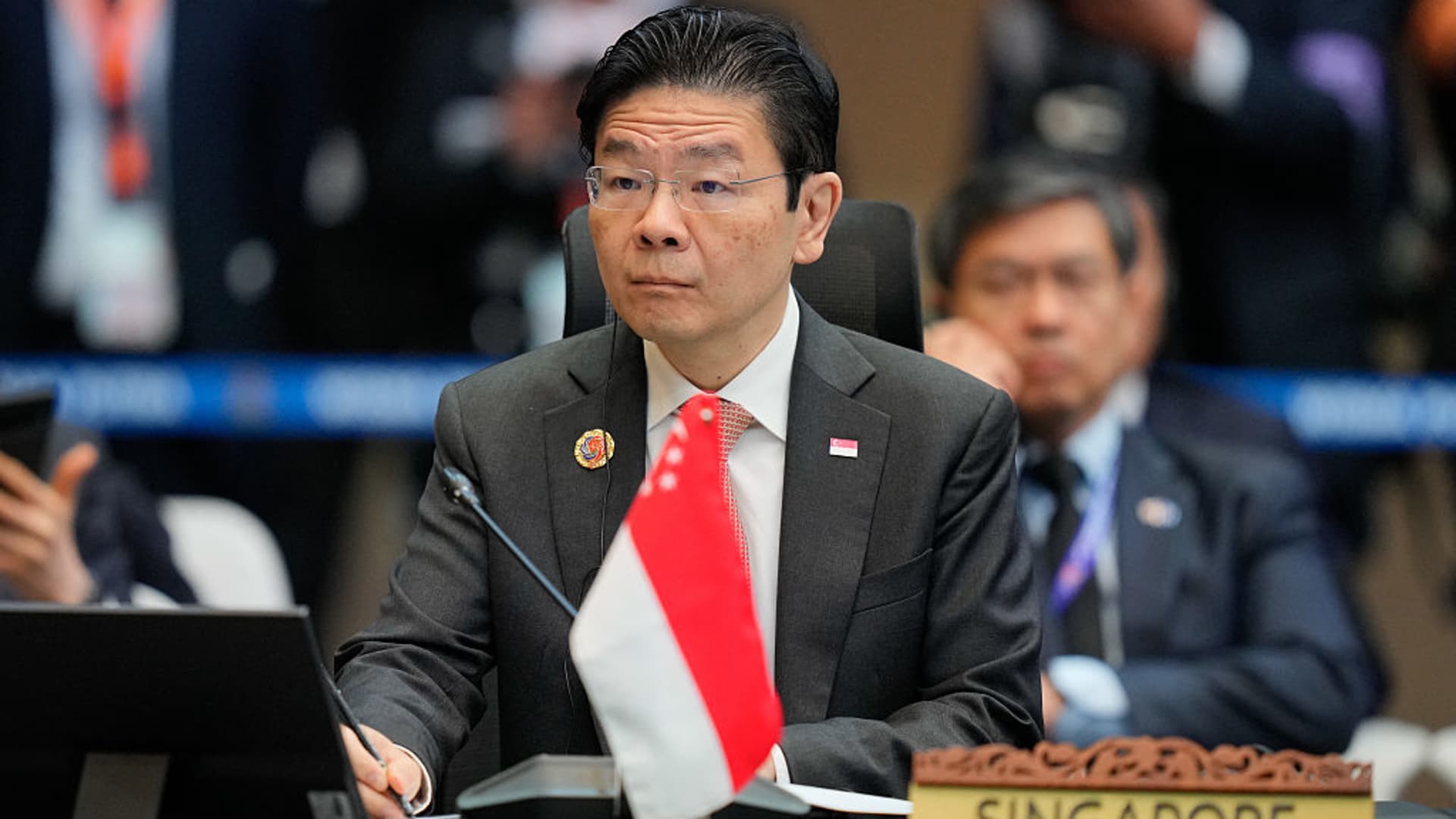
新加坡 — 新加坡总理黄循财驳斥了削弱新加坡元以提升竞争力的说法,称城邦必须依靠其经济实力,即使强势货币会增加企业成本。
SINGAPORE — Singapore Prime Minister Lawrence Wong pushed back against the idea of weakening the Singapore dollar to boost competitiveness, saying the city-state must instead rely on its economic strengths even as a strong currency adds to costs for businesses.
黄循财表示,如果新加坡经济表现良好,该国可以继续预期拥有强势且稳定的货币,并强调其在遏制进口通胀方面的作用。
Wong said Singapore could continue to expect a strong and stable currency if its economy performs well, emphasizing its role in containing imported inflation.
“你肯定不是在建议我们压低汇率以变得更有竞争力吧,”黄循财在周一于新加坡举行的星展银行亚洲未来前瞻大会上,与星展银行CEO陈淑善进行轻松交流时如是说。
"You're surely not suggesting that we depress our exchange rate in order to be more competitive," Wong said in a lighthearted exchange with DBS CEO Tan Su Shan at the bank's Asia Future Forward Conference in Singapore on Monday.
他的言论是在陈淑善指出新加坡作为避险港口的声誉有助于吸引资本并支撑当地货币之后作出的,她同时承认,新加坡仍然是一个相对昂贵的经商之地。
His remarks came after Tan highlighted Singapore's reputation as a safe haven, which has helped attract capital and support the local currency, while acknowledging that the city-state remains a relatively expensive place to do business.
“新加坡金融管理局将独立行使货币政策。新加坡元将反映我们的经济基本面,如果经济表现良好,那么我们可以继续预期拥有强势、稳定的新加坡元,该货币将以基本面为锚,并有助于遏制进口通胀,”黄循财说。
"The MAS will exercise monetary policy independently. The Singapore dollar will reflect our economic fundamentals, and if the economy does well, then we can continue to expect a strong, stable Sing dollar that is anchored on fundamentals and will also help keep imported inflation down," Wong said.
与主要使用利率调节货币条件的大多数主要央行不同,新加坡金融管理局通过汇率来实施货币政策。
Unlike most major central banks, which primarily use interest rates to manage monetary conditions, the Monetary Authority of Singapore conducts policy through the exchange rate.
它将新加坡元与该国主要贸易伙伴所属的一篮子货币挂钩,允许汇率在未公开的政策区间内波动。
It manages the Singapore dollar against a basket of currencies belonging to the country's major trading partners, allowing the exchange rate to fluctuate within an undisclosed policy band.
这一做法反映了新加坡对国际贸易和进口的高度依赖,使得货币波动对国内价格尤为重要。
The approach reflects Singapore's heavy dependence on international trade and imports, making currency movements particularly important for domestic prices.
强势的新加坡元有助于缓冲进口商品和服务的成本,特别是在全球通胀升高的时期。但它也可能使新加坡生产的商品和服务对海外买家更昂贵,给出口商带来压力。自年初以来,新加坡元对美元已升值近0.4%。
A stronger Singapore dollar helps cushion the cost of imported goods and services, particularly during periods of elevated global inflation. But it can also make Singapore-produced goods and services more expensive for overseas buyers, adding pressure on exporters. The Singapore dollar has strengthened almost 0.4% against the greenback since the start of the year.
黄循财承认了这些权衡,表示企业在考虑新加坡的其他运营成本时,也必须将货币强度纳入考量。
Wong acknowledged those trade-offs, saying businesses would have to account for currency strength alongside Singapore's other operating costs.
他说:“寻求出口的企业必须将汇率因素纳入经营成本之中,再加上他们在新加坡所面临的其他成本——众所周知,我们绝非东南亚最便宜的地点。”
"Companies that seek to export will have to factor that into the cost of doing business, together with the other costs that they experience in Singapore, as we all know, we are certainly not the cheapest location in Southeast Asia," he said.
新加坡的策略 然而,黄循财认为,仅靠价格竞争对新加坡来说并不可行。新加坡必须通过自身的能力、稳定性和可预测性来实现差异化。
Singapore strategy Still, Wong argued that competing on price alone was not a viable strategy for Singapore, which must instead differentiate itself through its capabilities, stability and predictability.
他说:“企业并不是在寻找最便宜的地点。他们在寻找能力。他们在寻找稳定性。他们在寻找可预测性。”黄循财还表示,新加坡无法仅靠成本竞争,而是正在构建更广泛的产业生态体系,将跨国公司、本地供应商、研发能力和熟练劳动力紧密联系起来。
"Companies are not looking for the cheapest locations," he said. "They are looking for capabilities. They are looking for stability. They are looking for predictability." Wong also said Singapore could not compete on cost alone, and was instead developing broader industrial ecosystems linking multinational corporations, domestic suppliers, research capabilities and skilled workers.
他补充道,新加坡的竞争力最终取决于其为企业提供的价值,而非相对的成本优势。
Singapore's competitiveness ultimately depended on the value it offered businesses rather than its relative cost advantage, he added.
他说:“我们必须再次发挥自身优势,以我们所带来的价值为基础进行竞争。”
"We have to again play to our strengths and compete on the basis of the value we bring to the table," he said.