中国和美国研究人员的一项新研究认为,银河系中一种神秘的高能光辉可能是极其罕见的宇宙“金工厂”的残骸。
A mysterious glow of high-energy light in our Milky Way galaxy could be the remains of an extremely rare cosmic “gold factory”, according to a new study by Chinese and US researchers.
两颗相互绕行的中子星碰撞——这些死星密度极大,以至于一茶匙的物质重量可达十亿吨——可能曾在天空中闪耀得如同木星般明亮,他们在上周发布于预印本服务器arXiv的论文中写道,该论文尚未经过同行评审。
The collision of two orbiting neutron stars – dead stars so dense that a teaspoon of their matter would weigh a billion tonnes – may have shone as brightly as Jupiter in the sky, they wrote in a paper posted last week on the preprint server arXiv, which has yet to be peer-reviewed.
这次剧烈碰撞喷射出原子和大量中子,这些原子吸收中子后形成了宇宙中一些最重的元素,如金、铂和铀,而碰撞残骸随后坍缩成一个黑洞。
The violent smash spewed out atoms and a flood of neutrons, which the atoms soaked up to form some of the universe’s heaviest elements, such as gold, platinum and uranium, while the wreckage collapsed into a black hole.
研究人员来自北京的中国科学院和印第安纳州的圣母大学,他们写道,这次爆炸很可能发生在1000年前左右,因为它留下的发光云团仍然很小且很亮,这是年轻残骸的特征。
The blast probably happened less than 1,000 years ago, as the glowing cloud it left behind is still small and bright, signs of a young remnant, wrote the researchers from the Chinese Academy of Sciences in Beijing and the University of Notre Dame in Indiana.
然而,似乎没有人记录下这一事件——甚至中国天文学家也没有,他们自宋朝起就保存着世界上最细致的天文记录之一,并曾著名地记录下1054年的“客星”,那是一颗超新星,如今被称为蟹状星云的残骸。
However, no one seems to have recorded it – not even Chinese astronomers, who kept some of the world’s most careful sky records from the Song dynasty onwards and famously noted the 1054 “guest star”, a supernova that left behind what is known today as the Crab Nebula.
由中国科学院高能物理研究所的Prantik Sarmah领导的团队指出,这次闪光可能非常短暂,并在几天内就消失了。
The team, led by Prantik Sarmah, of the Institute of High Energy Physics under the Chinese Academy of Sciences, noted that the flash was probably very brief and faded within days.
尽管研究人员指出,这一事件“原则上应当肉眼可见”,但它出现在天空中极偏南的位置,因此在中国、日本、欧洲以及当时其他有详细夜空记录的地区很难被看到。
Although the researchers noted such an event “would, in principle, have been readily visible to the naked eye”, it sat so far south in the sky that it would have been hard to see from China, Japan, Europe and other places that kept detailed records of the night sky at the time.
虽然这次爆炸非常明亮,但它对地球上的人们构成不了威胁。2024年由美国科学家领导的一项研究发现,此类碰撞必须发生在大约36光年以内才可能威胁到生命,而此次事件发生的距离则有数千光年之远。
Though bright, the blast would have posed no danger to people on Earth. A 2024 study led by US scientists found that such a collision would need to happen within about 36 light-years to threaten life, and this one would have been many thousands of light years away.
中子星碰撞被认为在类似银河系的星系中每隔数万年才会发生一次。如果得到证实,这种光辉将是已知的银河系内首次此类碰撞的残迹。
Neutron star collisions are believed to happen in a galaxy like the Milky Way only once every tens of thousands of years. If confirmed, the glow would be the first known remains of such a collision within our galaxy.
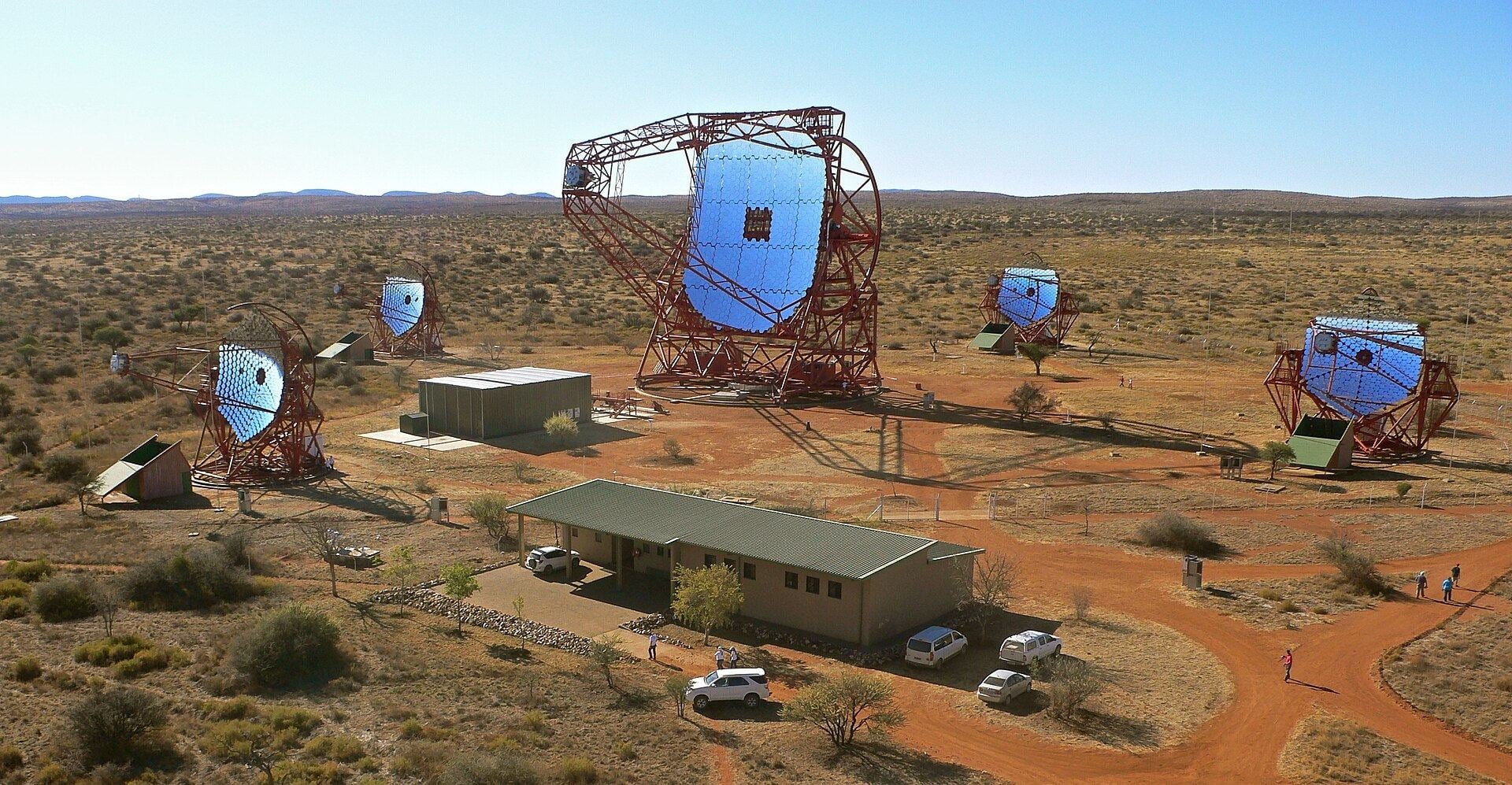
它最初由纳米比亚的高能立体望远镜系统(HESS)伽马射线望远镜发现,多年来一直让天文学家感到困惑。此类来源大多位于银河系的平坦盘面上,那是恒星诞生和死亡的地方。而这个来源则位于盘面明显之下。
First spotted by the High Energy Stereoscopic System (HESS) gamma-ray telescopes in Namibia, it has puzzled astronomers for years. Most such sources lie along the flat disc of the Milky Way, where stars are born and die. This one sits well below it.
科学家们曾将其归因于被称为脉冲星的旋转死亡恒星,或是普通爆炸恒星的残骸。但团队在报告中写道,附近并未发现脉冲星,也没有超新星留下的贝壳形状云层的迹象。
Scientists have blamed it on either a spinning dead star known as a pulsar or the debris of an ordinary exploding star. But no pulsar has been found nearby and there is no sign of the shell-shaped cloud a supernova leaves behind, the team wrote.
他们提出,中子星碰撞可以解开这一谜题。产生中子星的爆炸可以将一对星踢出银河系拥挤的盘面,它们可以漂浮数百万年,直到最终在起点遥远的地方合并。
A neutron star collision would solve that puzzle, they proposed. The explosions that create neutron stars can kick a pair out of the galaxy’s crowded disc and it can drift for millions of years before the two finally merge far from where they started.
团队表示,这一想法可以得到验证。碰撞中产生的重元素具有放射性,随着衰变,它们应仍会发出微弱的伽马射线光辉。当前的望远镜灵敏度不足以观测到这一点,但未来的望远镜,例如提出的中国空间望远镜——兆电子伏特伽马射线天文台,可能能够做到。
The team said the idea can be tested. The heavy elements made in the collision are radioactive and as they decay, they should still give off a faint glow of gamma rays. Current telescopes are not sensitive enough to see it, but future ones, such as a proposed Chinese space telescope called the MeV Gamma-Ray Observatory, could.
天文学家还可以寻找来自最初闪光的光,该光被尘埃反射后仅现在才到达地球。他们写道,南半球的大型望远镜,如智利的美国资助的维拉·C·鲁宾天文台,应该能够发现它,从而让科学家看到闪光并寻找其产生的重元素的迹象。
Astronomers could also look for light from the original flash that bounced off dust and is only now reaching Earth. Big telescopes in the southern hemisphere, such as the US-funded Vera C. Rubin Observatory in Chile, should be able to spot it, they wrote, letting scientists see the flash and look for signs of the heavy elements it made.