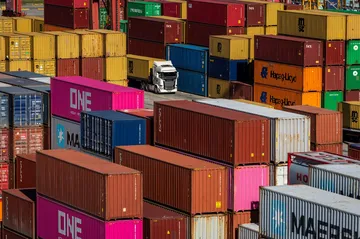
南非制造业已衰退超过三十年。如今,由美国总统唐纳德·特朗普的关税战所加剧的廉价中国商品洪流,正对其所剩无几的工业基础造成新的压力。
South Africa’s manufacturing sector has been in decline for more than three decades. Now, a deluge of cheap Chinese goods, intensified by US President Donald Trump’s tariff war, is putting what remains of its industrial base under renewed pressure.
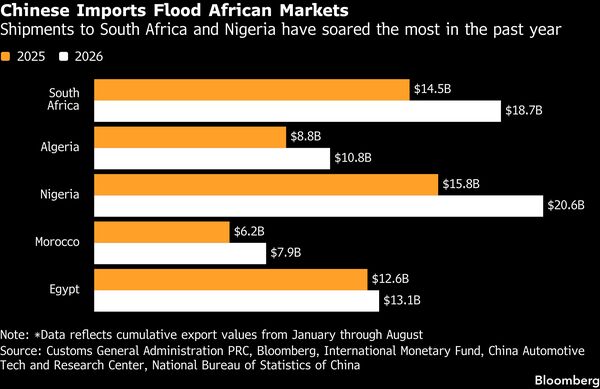
由恩坦多·图克瓦纳撰写 中国对南非的出口自本十年初以来已超过翻倍,今年前八个月相比六年前同期增长近100亿美元。在非洲主要经济体中,只有尼日利亚的增幅更大。
By Ntando Thukwana Chinese exports to South Africa have more than doubled since the start of the decade, rising by almost $10 billion in the first eight months of this year compared with the same period six years ago. Among Africa’s major economies, only Nigeria recorded a bigger increase.
自特朗普重返白宫以来,这一趋势加速。2026年前八个月,中国对南非的货运量较去年同期增长29%,因为面临美国更高壁垒的中国制造商正在寻找其他市场的客户。
The pace has accelerated since Trump returned to the White House. Shipments from China to South Africa jumped 29% in the first eight months of 2026 from a year earlier, as Chinese manufacturers confronting higher barriers in the US hunt for customers elsewhere.
南非也与中国存在巨额贸易逆差,根据央行数据,中国占该国制造业进口的三分之一以上,而出口仅占约5.9%。制造业在截至六月的三个月内连续第三个季度萎缩。
South Africa also runs a large trade deficit with China, which accounts for more than a third of the country’s manufacturing imports and only about 5.9% of exports, according to central bank data. The industry contracted for a third consecutive quarter in the three months through June.
得益于补贴和廉价货币,中国制造商不仅在压低南非生产商的成本。从巴西到越南的竞争对手也难以应对,并已对中国钢铁产品征收关税。欧盟上周与北京达成协议,以限制中国混合动力汽车出口至该集团。
Chinese manufacturers, aided by subsidies and a cheap currency, aren’t just undercutting producers in South Africa. Rivals from Brazil to Vietnam are also struggling to compete and have imposed tariffs on Chinese steel products. The European Union reached a deal with Beijing last week to curb Chinese hybrid-car exports to the bloc.
南非尤其脆弱,因为其制造商正面临高昂的能源成本、劳动力市场缺乏弹性、沉重的监管、基础设施失效以及经济增长乏力。
South Africa is particularly vulnerable as its manufacturers are already grappling with high energy costs, an inflexible labor market, burdensome regulation, failing infrastructure and weak economic growth.
最易受冲击 摩迪评级最新制造业脆弱性指数将非洲最大经济体列为其在大陆评估的八个国家中最易受中国贸易竞争影响的国家。
Most Exposed Moody’s Ratings latest Manufacturing Vulnerability Index ranks Africa’s largest economy the most exposed to Chinese trade competition of the eight nations it assessed on the continent.
它将此归因于南非“制造业规模相对较大,且出口对外国价值链的依赖程度较高,特别是对中国价值链的依赖”,以及其竞争力处于中等水平并呈下降趋势。
It attributed this to South Africa’s “relatively large manufacturing sector with a high reliance on foreign, and specifically Chinese, value added in exports” and moderate and declining competitiveness.
负责管理贸易法律并实施措施以保护本地产业的国际贸易管理委员会表示,正在调查五项来自寻求缓解进口激增影响的公司的新申请。
The International Trade Administration Commission, which administers trade laws and implements measures to protect local industries, said it is investigating five new applications from companies seeking relief from an influx of imports.
申请方涉及多个行业,从生产用于吊顶的石膏板,到用于饮料容器的轻质塑料聚对苯二甲酸乙二醇酯,再到冷轧钢。涉及的实体包括代表钢制螺母和螺栓制造商的南非紧固件制造商协会、圣戈班建筑产品南非有限公司、阿塞洛米塔尔南非有限公司,以及KAP有限公司的子公司Hosaf。
The applicants span sectors from producers of gypsum plasterboard, used for ceilings, to polyethylene terephthalate, a lightweight plastic used in beverage containers, to cold-rolled steel. The entities involved include the South African Fasteners Manufacturers’ Association, representing makers of steel nuts and bolts, Saint-Gobain Construction Products South Africa Ltd., ArcelorMittal South Africa Ltd., and Hosaf, a unit of KAP Ltd.
“多年来,与进口增加相关的案件数量总体呈上升趋势,”国际贸易管理委员会在对问题的电子邮件回复中表示。“其中部分增长可归因于来自东亚的进口增加,包括中国。”在约翰内斯堡东部的杰米斯顿,阿尔万电缆公司的工厂总监Jaycen Padiachy(51岁)亲眼目睹了中国商品涌入的影响。
“Over the years there has been a general increase in the case load relating to increased imports,” ITAC said in an emailed response to questions. “Part of that increase can be attributed to increased imports from East Asia, including China” At Alvern Cables in Germiston, east of Johannesburg, Works Director Jaycen Padiachy, 51, has seen the impact of the influx of Chinese goods firsthand.
该公司成立于1967年,生产用于住宅、工厂和基础设施的低压和中压电缆。公司曾期待全球疫情后经济活动的复苏能够帮助恢复需求。然而,Padiachy表示,复苏却出现了放缓。“我们目前注意到的是,市场竞争非常激烈;进口正在影响我们的业务。”为了应对竞争,工厂不得不调整其商业模式。“在近期的市场条件下,我们不得不在短时间内实行缩减工时,”Padiachy说。
The company, which was founded in 1967 and produces low- and medium-voltage cables used in homes, factories and infrastructure, expected the rebound in economic activity after the global pandemic to help restore demand. Instead, Padiachy said, the recovery has faltered. “What we are noticing now is a lot of competition in the market; imports are affecting our business.”To compete, the factory has had to adjust its business model. “Under recent market conditions, we’ve had to work on reduced time for a short period,” Padiachy said. ‘Wake-up Call’
“警钟”商业领袖南非(Business Leadership South Africa)负责人布西·马武索(Busi Mavuso)将部分责任归咎于当局,认为他们导致了中国商品的涌入。
Busi Mavuso, the head of Business Leadership South Africa, one of the country’s largest business lobby groups, apportions some of the blame for the influx of Chinese goods to the authorities.
“政府并没有表现出真正保护本地产业的意愿,却仍在不断谈论工业化和增值,”她在接受采访时表示。“事实是,作为一个国家,我们并没有明确的贸易政策。我们继续把政治置于经济之上,这令人担忧。”贸易部表示,他们正在认真对待这一威胁。
“You don’t see the appetite from government to actually protect local industry, and yet they continue to talk about industrialization and beneficiation,” she said in an interview. “The real fact of the matter is that we don’t have a clear trade policy as a country. We continue to put politics before economics, and that becomes concerning.”The trade department says it is taking the threat seriously.
全球贸易的动荡“是一次严峻的警钟,”贸易部代理副部长马奥托·莫勒法内(Maoto Molefane)在接受采访时说。“长期以来,我们一直依赖某个特定地区,但展望未来,南非正在考虑其他地区。”政府希望企业多元化市场,并正在推广一种“蝴蝶战略”,旨在加强不同地区之间的贸易联系。
The upheaval in global trade is “a serious wake-up call,” Maoto Molefane, acting deputy director-general at the Department of Trade, said in an interview. “For the longest time we’ve been dependent on a particular region, but going forward, South Africa is looking at other areas.”The government wants companies to diversify their markets and is promoting a “butterfly strategy” aimed at strengthening trade links across different regions.
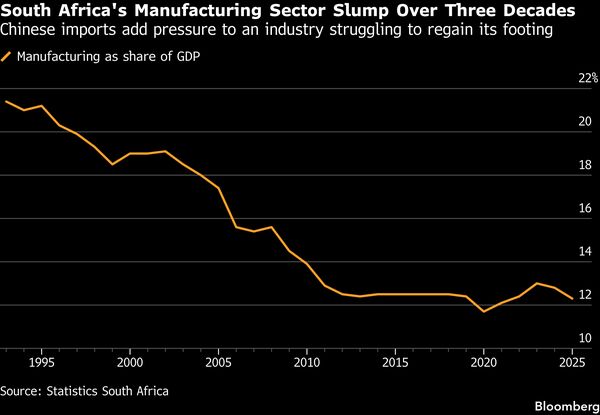
南非工业衰退的核心存在一个悖论。该国并未失去制造能力。2026年工厂产能利用率约为76%,而2003年为83.2%,这一水平与一些主要发达经济体相当。
There is a paradox at the center of South Africa’s industrial decline. The country hasn’t lost its ability to manufacture. Factory capacity utilization stood at about 76% in 2026 from 83.2% in 2003, around levels seen in some major developed economies.
问题在于,缺乏足够的需求来支撑能够确保工厂保持竞争力的商品价格,这使得投资扩大产能难以证明其合理性。
What it lacks is enough demand for goods priced at a level that will ensure its factories remain competitive, making investing in additional capacity difficult to justify.
南非民众已经面临高昂的生活成本、失业和增长停滞的压力。当更便宜的进口替代品出现时,价格往往会超过支持本地产业的论点。
South Africans are already under pressure from a high cost of living, unemployment and stagnant growth. When a cheaper imported alternative appears, price can outweigh arguments about supporting the local industry.
“能力和产能不是问题,”Nedbank集团有限公司(Nedbank Group Ltd.)制造业高级经理塞洛·塔卡特索(Sello Takatso)表示,该公司向该行业的企业提供贷款。“随着进口挑战的加剧,我们正在价格点上展开竞争。”
“Capability and capacity is not an issue,” Sello Takatso, senior manager for manufacturing at Nedbank Group Ltd., which lends to companies in the sector, said. “With the mounting challenges of imports that are taking place, we are competing on price point.”