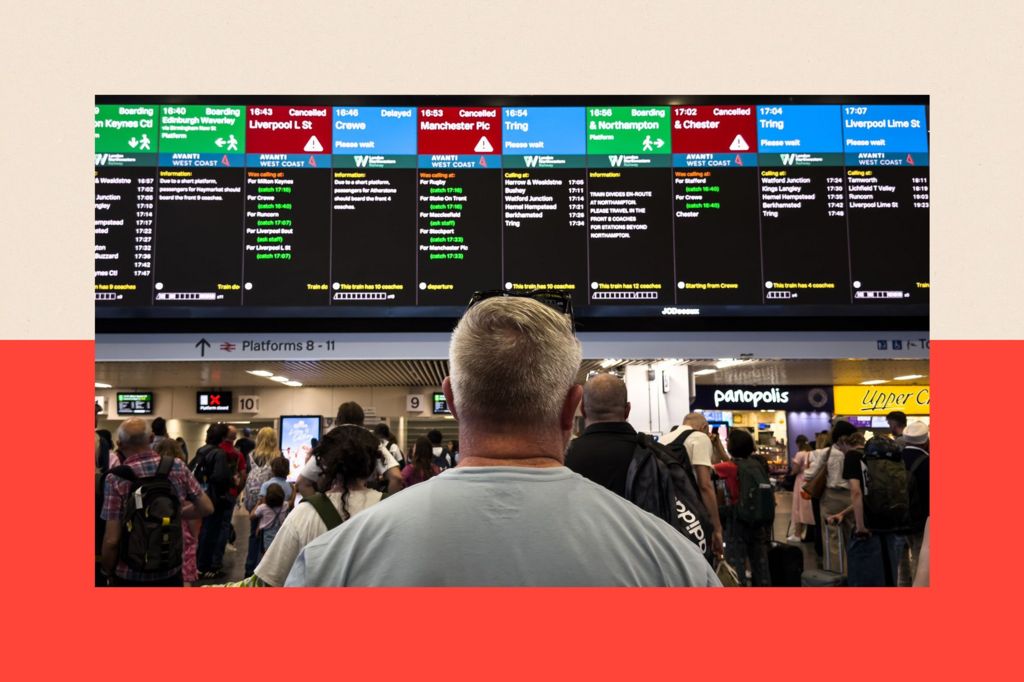
8月6日星期三下午早些时候,铁路网还十分平静。随后,就在14点前不久,一场突发的电力故障使英格兰西北部的列车全部停运。
The early afternoon of Wednesday 6 August was an unremarkable one on the rail network. Then suddenly, shortly before 14:00, a power failure brought trains across the north-west of England to a halt.
混乱随之发生:乘客告诉英国广播公司,他们被困在月台上长达数小时,有些人不得不预订当晚的酒店。
Chaos ensued: passengers told the BBC they were stranded on platforms for hours, with some having to book hotels for the night.
这起事件源于影响英国网络铁路公司曼彻斯特运营中心的一场短暂停电,本身并不寻常。但它让火车乘客本已艰难的夏天雪上加霜。
This incident, stemming from a short power cut that affected Network Rail's operating centre in Manchester, was, in itself, unusual. But it added to a difficult summer for train passengers.
频发的极端热浪需要采取限速等风险控制措施,以防轨道在高温下受损,从而导致了延误和取消。东萨塞克斯郡刘易斯附近发生了一起严重的脱轨事故,不久后埃塞克斯郡威克福德附近又发生了另一起小规模事故。
Repeated heatwaves required risk control measures like speed reductions to avoid tracks being damaged in the heat, leading to delays and cancellations. There was a serious derailment near Lewes, East Sussex, and another smaller-scale incident near Wickford in Essex soon after.
与过去几十年相比,在取消率相对较高、票价高昂的背景下,铁路用户产生“情况正在失控”的印象是可以被原谅的。
Against a backdrop of relatively high cancellation rates and steep fares compared with previous decades, rail users could be forgiven for forming the impression that things are not working.
不过,有些事情正在发生变化:工党正在稳步将几乎所有的客运铁路服务收归国有。国有化是一个受欢迎的想法——一项YouGov民调追踪显示,近三分之二的公众支持公有制。
Something is changing, though: Labour is steadily bringing nearly all passenger rail services into public hands. Nationalisation is a popular idea - a YouGov tracker poll suggests almost two thirds of the public support public ownership.
但现实中,计划仍处于早期阶段。重大的结构性变革尚未推出。专家也警告称,现在断言这些变革会有多大成功还为时过早。
But in reality, plans are still in their early stages. Big structural changes have yet to be introduced. And experts caution that it's too early to say how successful these will be.
那么,铁路国有化能否符合公众的预期?还是说,我们在当前部分国有化的铁路网下看到的持续延误和取消,是它可能难以带来真正改善的迹象?
So can rail nationalisation meet the public's expectations? Or are the ongoing delays and cancellations that we're currently seeing under a part-nationalised network a sign that it might struggle to deliver real improvement?
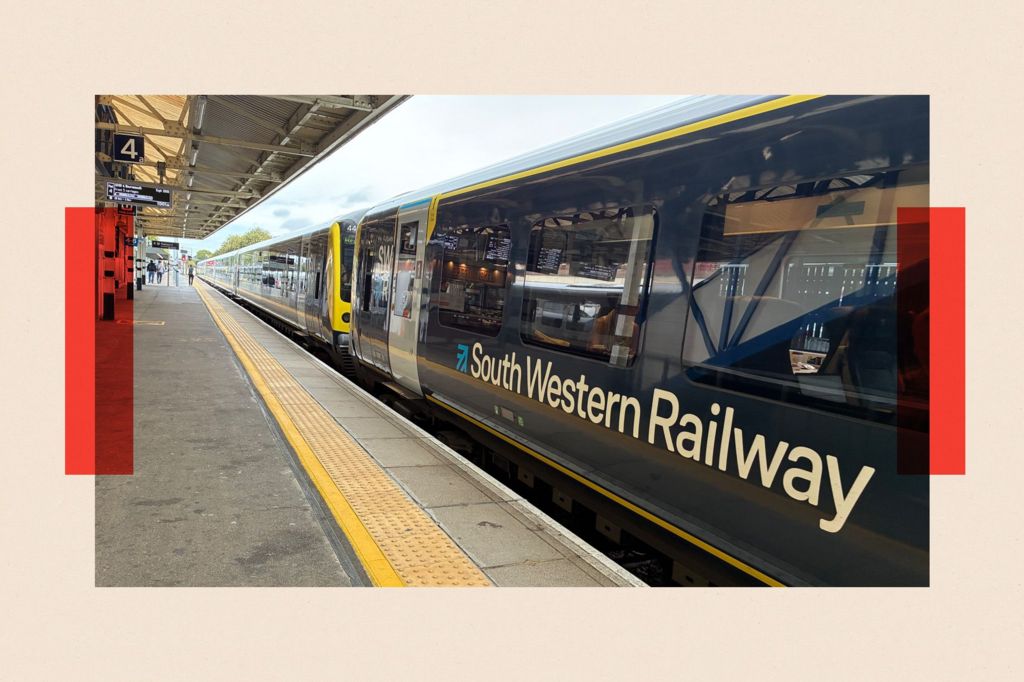
西南铁路公司于2025年5月被收归国有,这是工党迄今为止将六项铁路服务收归公有制的第一项。
South Western Railway (SWR) was nationalised in May 2025, the first of six services to be brought into public ownership under Labour so far.
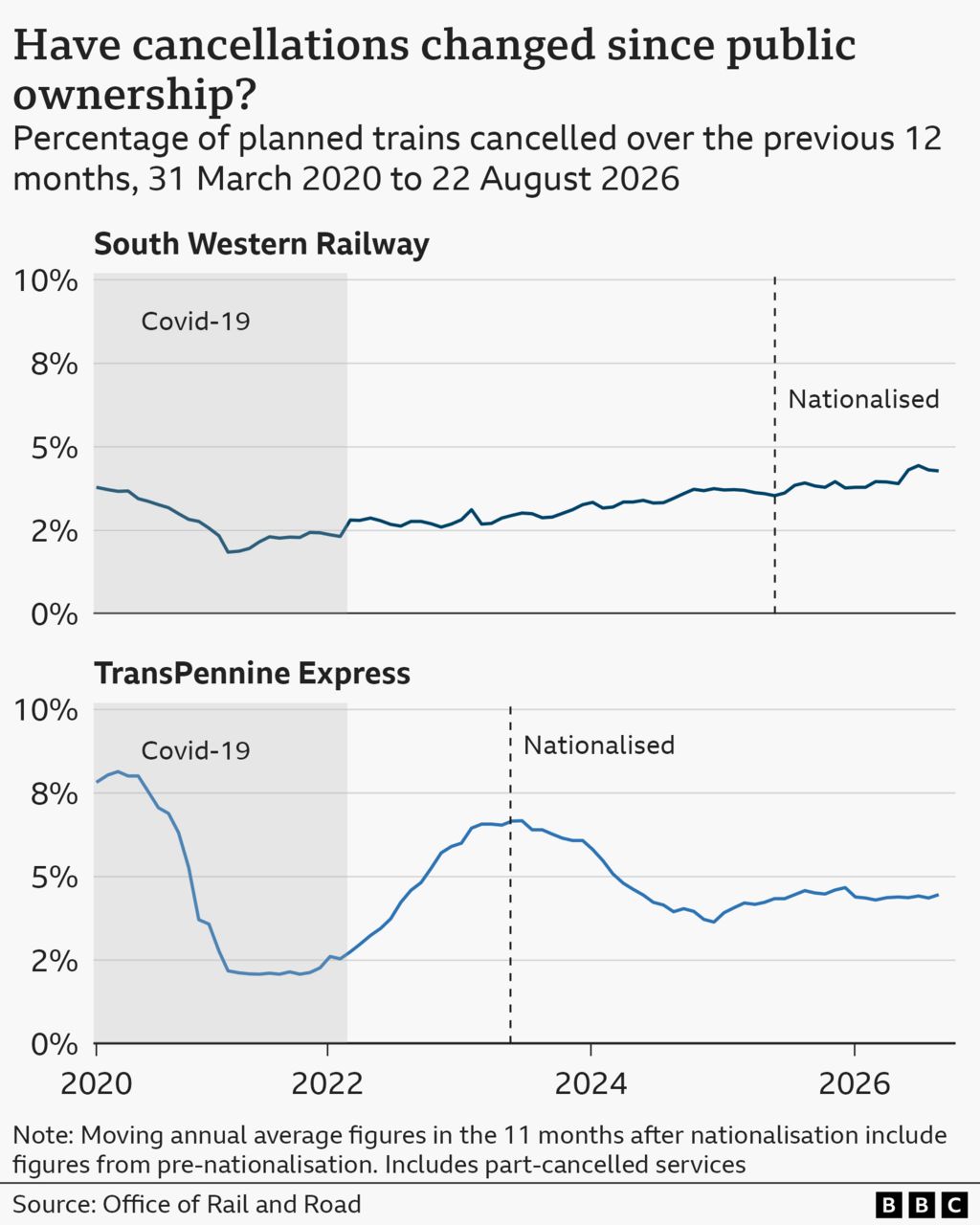
在由西南铁路公司(SWR)运营的沃金车站,经常通勤的乘客利奥告诉我,他曾对公有化抱有乐观态度,但到目前为止,他并未发现有任何改变:“我想到了‘皇帝的新衣’这个词……它依然靠不住。”西南铁路公司在收归国有后的第一年里,取消班次的现象明显增加。但这在多大程度上是由国有化引起的呢?
At Woking station, which is served by SWR, regular commuter Leo tells me he had been optimistic about public ownership, but hasn't noticed it making any difference so far: "I think the phrase 'emperor's new clothes' comes to mind… it's still unreliable." SWR saw a clear increase in cancellations during its first year in public hands. But how much of this was due to nationalisation?
保守党以西南铁路公司为例,指出公众控制并不一定意味着服务会得到改善或能解决关键问题。
The Conservatives have cited SWR as an example of how public control does not necessarily mean improvements or fix key problems.
但政府辩称,西南铁路公司收归国有初期的表现受到了盛夏高温、信号故障和擅自闯入铁路事件的影响。
But the government argues SWR's early period in public hands was affected by high summer temperatures, signal failures and trespass incidents.
铁路大臣亨迪勋爵表示,扭转这家运营商局面的工作包括在市郊线路上引入长期延误的新列车并招募更多司机,这使得因人手短缺而取消班次的情况有所减少。
Lord Hendy, the rail minister, says work to turn the operator around has included introducing long-delayed new trains on suburban routes and recruiting more drivers, resulting in a drop in those cancellations that are due to staff shortages.
跨奔宁快线于2023年5月在保守党政府治下被收归国有。由于该运营商难以维持列车时刻表并饱受劳资关系紧张之苦,许多乘客曾感到束手无策、忍无可忍。
TransPennine Express was nationalised in May 2023, under the Conservative government. Many passengers had been at their wits' end as the operator struggled to fulfil its timetable and suffered from poor industrial relations.
当局制定了一项旨在提高可靠性的计划,其中包括削减部分班次,甚至淘汰某种型号的列车,以此作为解决人手问题的方法。与司机工会达成的新协议也起到了帮助作用——据这家前私营运营商的一名内部人士向我透露,他们的公司此前是不被允许这么做的。
A plan to improve reliability was put in place, which included cutting some services and even removing one type of train as a way of sorting out staffing problems. A new deal with the drivers' union also helped - something an insider at the former private sector operator claimed to me their company had not been permitted to do.
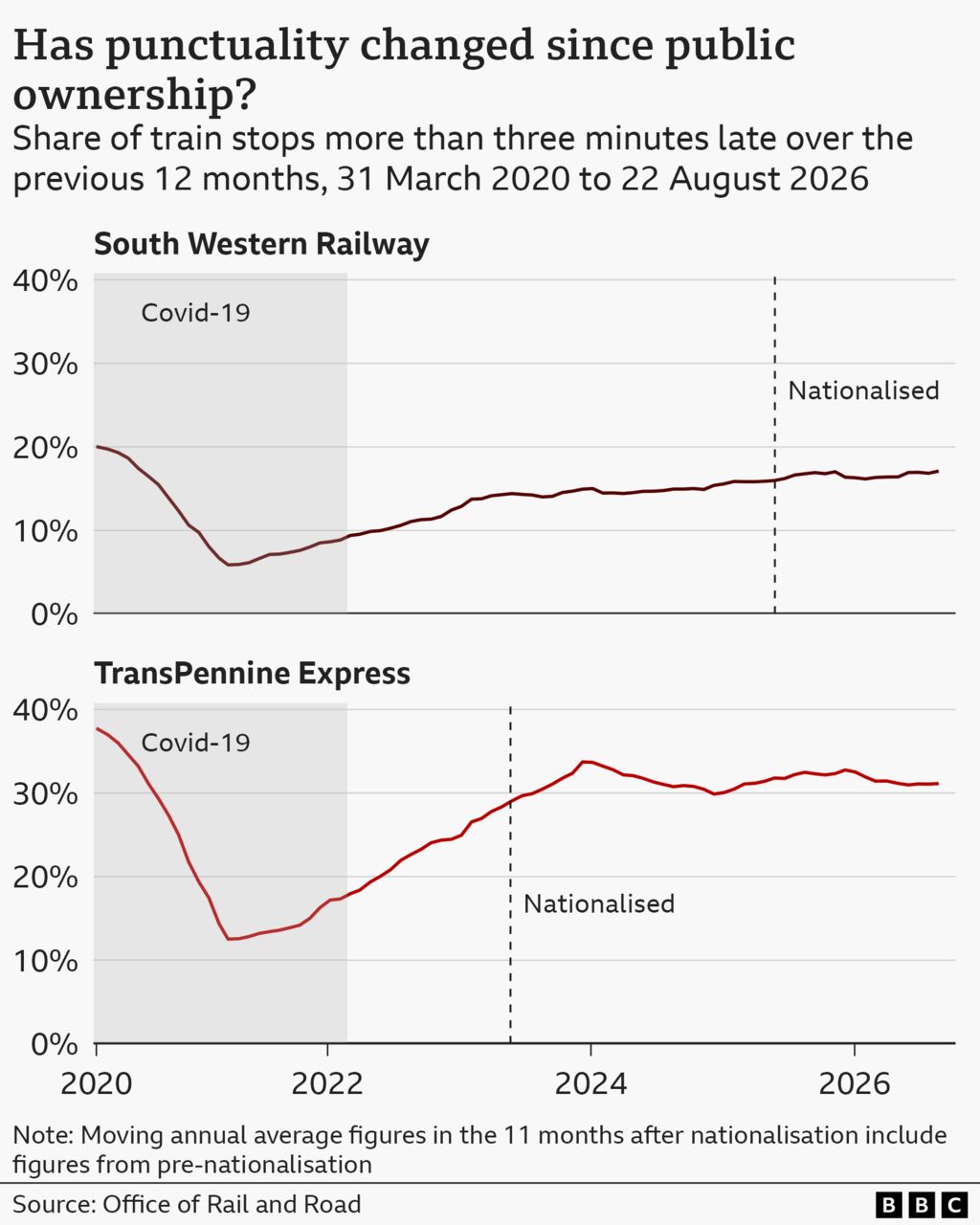
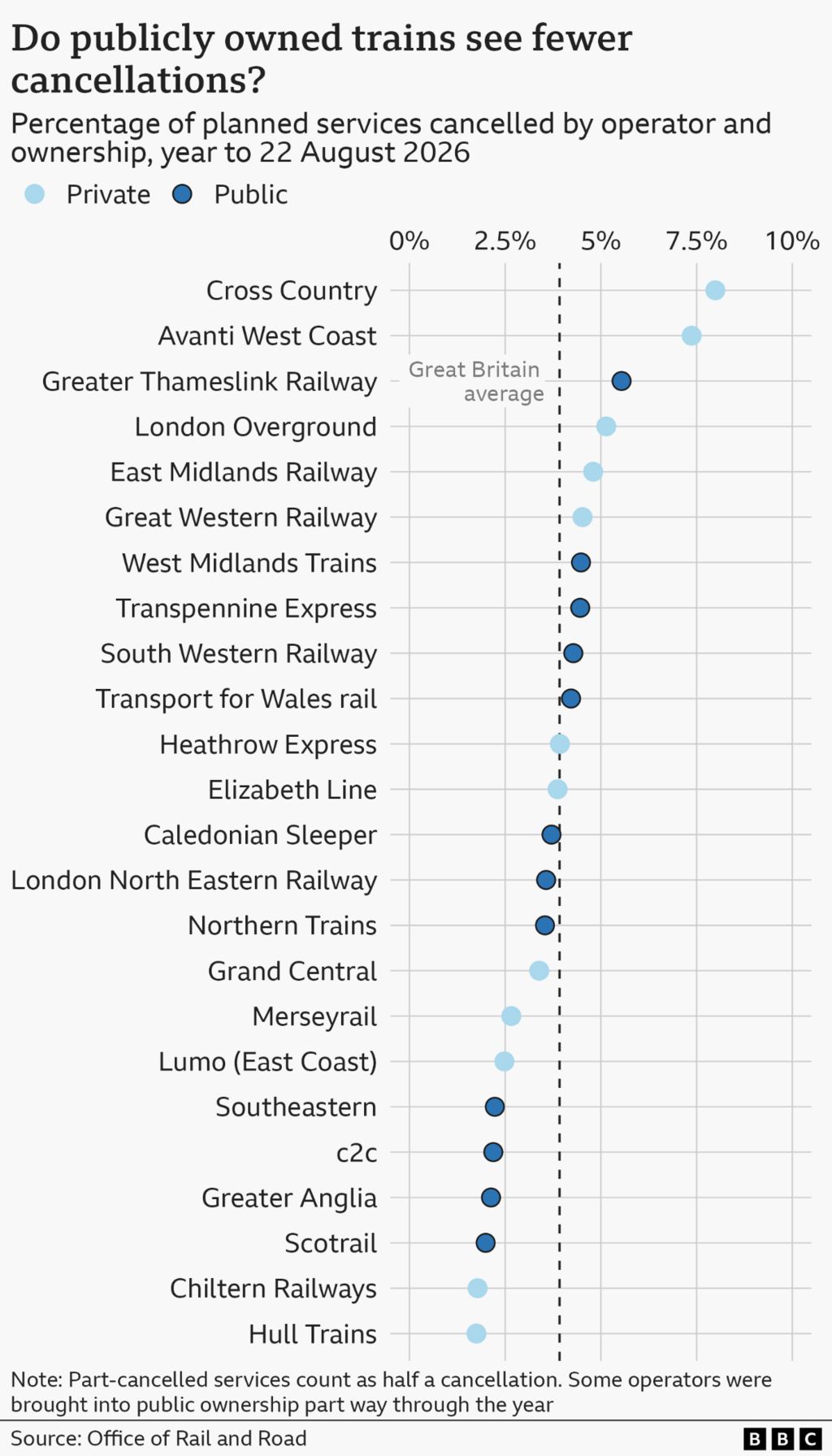
那么,这起作用了吗?取消班次的情况明显减少了。但在截至8月份的一年里,这些数据仍然高于英国的平均水平。
So has it worked? Cancellations have fallen noticeably. But they were still above the Great Britain average in the year to August.
必须指出的是,数据只能说明有限的问题。有太多不同的因素可能会影响每个列车服务的表现:例如,它所依赖的基础设施状况、天气事件,或者仅仅是政府接管之前的运作状况。
It's really important to say the data can only tell us so much. There are so many different factors that might affect the performance of each service: for example, the state of the infrastructure it relies on, weather events or simply how well it was working before the government took over.
此外,在工党执政后被收归国有的运营商中,只有西南铁路公司(SWR)和c2c铁路公司在国有化后完整度过了一整年。即便是那些更早几年被收归国有的运营商,其情况也因疫情的影响而变得扑朔迷离,当时客流量遭遇了断崖式下跌。
Plus, of the operators nationalised since Labour came to power, only SWR and c2c have completed a whole year in public hands. Even for those nationalised years earlier, the picture is clouded by the impact of the pandemic, when passenger numbers fell off a cliff.
不过,据负责管理国有化运营商的政府公司——交通部运营商有限公司(DfTO)首席执行官亚历克斯·海恩斯(Alex Hynes)表示,做出一些短期改变是有可能的。值得注意的是,这些改变包括在包括英格兰西南部在内的一些地区,由一个团队共同负责管理基础设施和客运列车服务。
But according to Alex Hynes, chief executive of DfT Operator Limited (DfTO), the government company that currently owns publicly-run operators, it has been possible to make some short-term changes. Notably, these include making one team jointly responsible for managing infrastructure and passenger train services in some areas including the south-west of England.
他表示:“铁路是一个系统:铁轨、列车、人员。因此,通过让一个人主管,他们可以修复系统的所有要素,从而为客户提供更好的服务。”海恩斯还举了最近被收归国有的泰晤士连线(Thameslink)发生变化的例子,其中包括对改善清洁、改造卫生间以及更换备受诟病的直立式“烫衣板”座椅进行的投资。
"The railway is a system: track, train, people," he says. "So by putting one person in charge, they can fix all elements of the system to deliver a better service to customers." Hynes also gives examples of changes on the recently nationalised Thameslink; investment in better cleaning, improving toilets and replacing unpopular upright "ironing-board" seats.
然而,谈到过去几年被收归国有的运营商的纯粹运营数据——延误、取消——我们现在真的能得出任何结论来判断这项政策是否奏效吗?
But when it comes to the pure performance data of operators nationalised in the past few years - delays, cancellations - can we really draw any conclusions yet to tell us whether the policy is working?
曾任铁路和公路办公室(Office of Rail and Road)监管机构主席、现为伦敦帝国理工学院交通与基础设施荣誉教授的斯蒂芬·格莱斯特(Stephen Glaister)认为:“我认为试图在这么短的时间内进行这种评估是完全无望的。”他认为需要十年时间来评估国有化的影响。
"I think it's completely hopeless to try and do that assessment over such a short period," Stephen Glaister, a former chair of regulator the Office of Rail and Road who is now emeritus professor of transport and infrastructure at Imperial College London. He thinks a decade is needed to assess the impact of nationalisation.
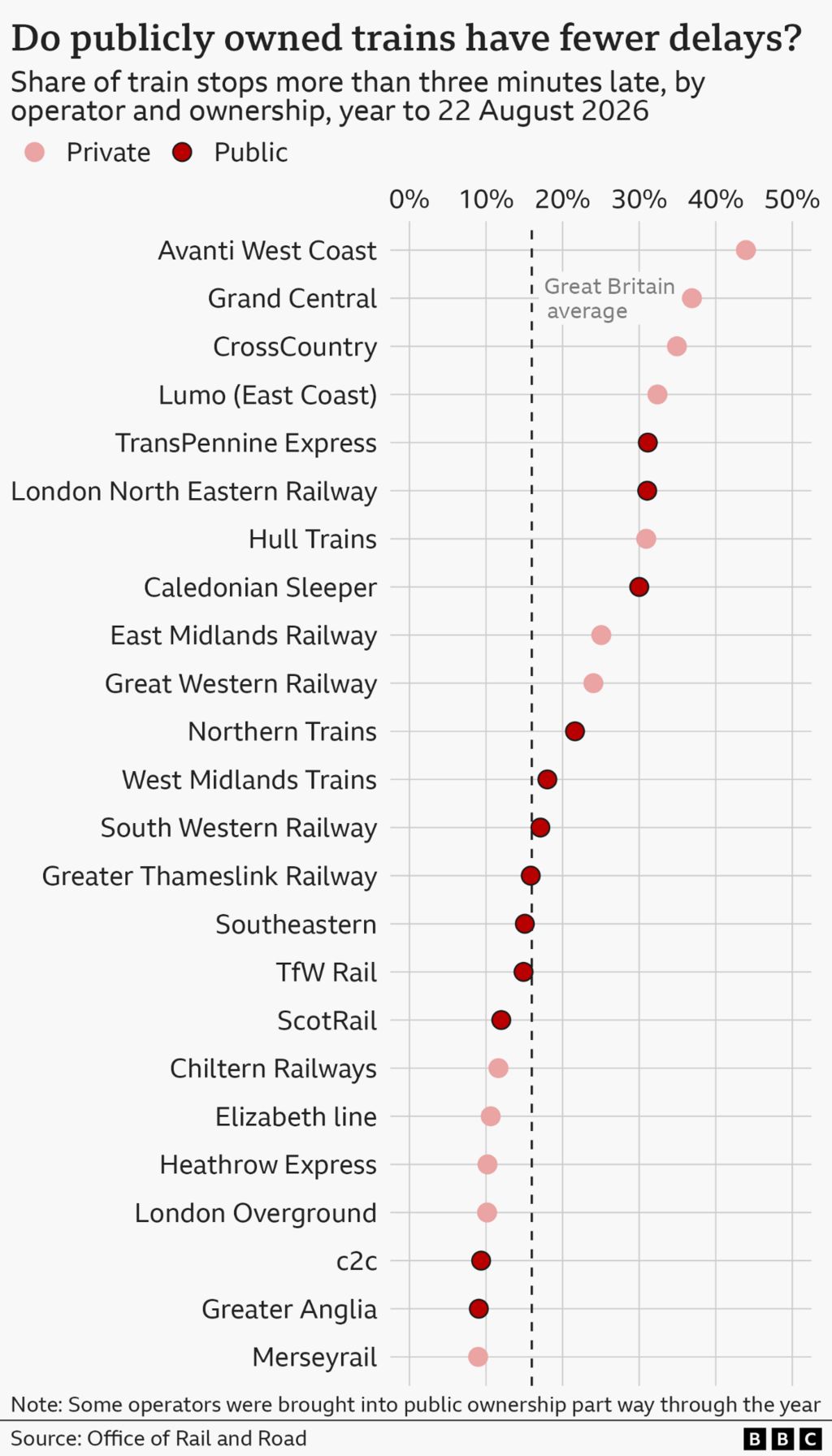
政府辩称,官方数据表明,总体而言,国有铁路运营商在准点率和列车取消方面的表现,要优于那些仍根据交通部合同由私营运营商运营的铁路。
The government argues that official data suggests publicly owned train operators are performing better on punctuality and cancellations overall than those still under DfT contracts to private operators.
专家指出,无论谁在运营客运列车,一些限制因素依然存在。许多延误的发生是因为基础设施(如信号系统)出现故障。现有网络的能力也是有限的。而获得更好的列车或更多的员工可能需要数年时间。
Experts point out that whoever is running the passenger trains, some limitations remain. Many delays happen because infrastructure, like signals, fails. There's only so much capacity on the existing network. And getting better trains or more staff can take years.
私有化最终以失败告终、留下不可靠的服务和高昂票价的观点可能很普遍。然而,格莱斯特教授(Prof Glaister)认为,在20世纪90年代的几年里,旧的私有化体系实际上运作良好。他说,运营成本和补贴当时在下降,而列车服务班次和乘客数量却在增加。在当前的背景下,明确国有化真正的含义至关重要。
The view that privatisation ultimately failed, leaving unreliable services and high fares, may be widespread. However, Prof Glaister argues that for a few years in the 1990s, the old privatised system actually worked well. Operating costs and subsidies were falling while the number of train services and passengers went up, he says. And in the current context, it's important to be clear about what nationalisation really means.
工党接手的铁路实际上并没有完全私有化,而国有化并不意味着回到英国铁路公司(British Rail)时代。
The railways Labour inherited weren't, in truth, completely privatised, and nationalisation doesn't mean a return to British Rail.
例如,基础设施管理者英国铁路网公司(Network Rail)完全处于公共控制之下已有二十多年。包括伦敦东北铁路公司(LNER)和北方铁路(Northern)在内的多家列车公司此前已经在保守党执政期间被收归国有。苏格兰铁路(Scotrail)、威尔士交通局(Transport for Wales)和加利福尼亚卧铺列车(Caledonian Sleeper)则由地方分权国民政府控制。
For example, the infrastructure manager Network Rail has been fully under public control for over two decades. A number of train companies including LNER and Northern had already been nationalised under the Conservatives. Scotrail, Transport for Wales and Caledonian Sleeper are controlled by devolved national governments.
甚至那些仍然持有威斯敏斯特英国交通部(DfT)颁发合同的运营商,多年来也一直受到政府的严格控制。在新冠疫情期间,私营运营商开始获得固定费用来运营服务,而纳税人则承担了财务风险。合同条款意味着列车公司不得不“请求政府允许他们擤鼻涕”,据一位要求匿名以便自由发言的高级行业高管透露。
And even those operators still on contracts issued by the DfT at Westminster have been heavily controlled by the government for years. During Covid, private operators started being paid a fixed fee to run services, while the taxpayer took on the financial risk. The terms of the contracts meant train companies had to "ask government for permission to blow their nose", according to one senior industry executive, who asked not to be named so they could speak freely.
利润丰厚的机车车辆公司(简称ROSCOS)仍然拥有实际的列车。货运公司也由私营运作,铁路上还有少数完全商业化的“开放式接入运营商”,如卢莫铁路(Lumo)、赫尔铁路(Hull Trains)和中央大中央铁路(Grand Central)——尽管业界担心这些运营商最终可能会被挤压。
Highly profitable rolling stock companies ("ROSCOS") still own the actual trains. Freight companies operate privately too, and there are a handful of fully commercial "open access operators" on the rails like Lumo, Hull Trains and Grand Central - although there are concerns within the industry that these could end up squeezed.
因此,通常被称为铁路国有化的举措,实际上相当于随着私营公司运营的客运列车运营商的合同到期,逐步将其收回公共手中,并将其确立为默认模式。
So what is often referred to as the nationalisation of the railways, in fact amounts to gradually returning passenger train operators run by private companies to public hands as their contracts expire - and making this the default.
不过,这并非全部进展。政府希望,在名为“大不列颠铁路”(Great British Railways,简称GBR)的新公共运营机构下重组铁路,能带来重大改观。这将把列车运营和轨道管理整合在一起,终结目前碎片化的系统。
This is not all that's happening, though. The government hopes that re-organising the railways under a new publicly run body, Great British Railways (GBR), will make a big difference. This will bring together the running of trains and tracks, ending the current fragmented system.
2018年一次糟糕的铁路时刻表引入,是当时的保守党政府最终提议将GBR作为新的统筹机构的导火索——尽管保守党认为不应将私人竞争排除在系统之外。
A botched rail timetable introduction in 2018 was the spark for the then-Conservative government to eventually propose GBR as a new overarching body - although the Tories believe private competition should not be excluded from the system.
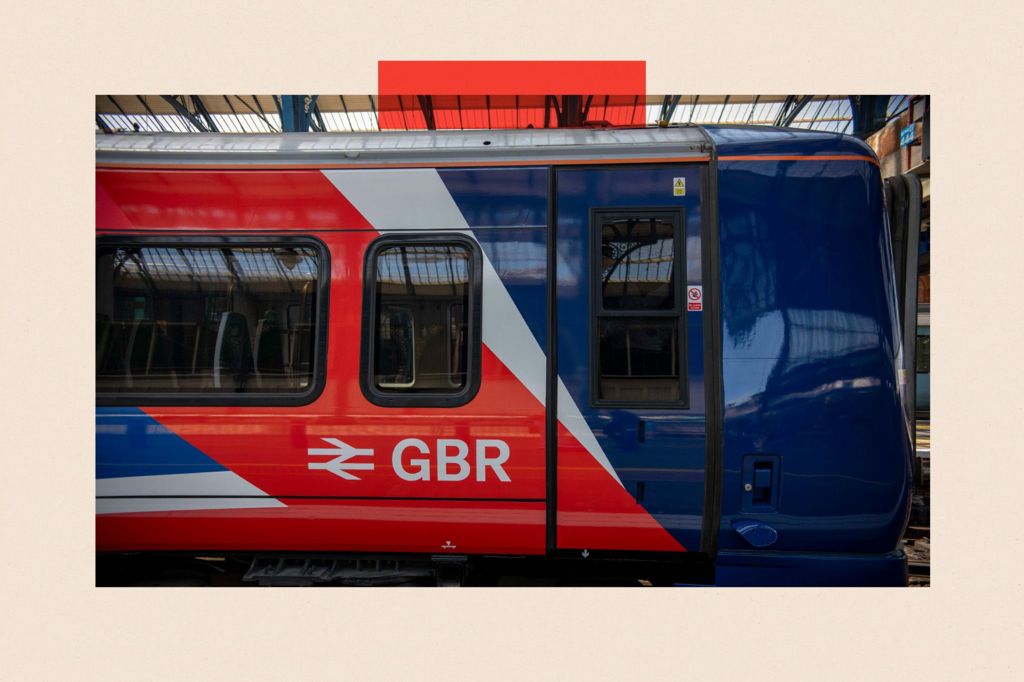
一些列车已经印上了醒目的GBR品牌标志,但该组织目前尚不存在。一项旨在创建该机构的新法律正在议会中推进。未知因素依然存在,比如GBR将如何与权力下放的地方政府互动,以及其高层领导人将是谁。
Some trains are already covered in distinctive GBR branding, but the organisation still doesn't exist. A new law to create it is making its way through parliament. Unknowns remain, like exactly how GBR will interact with devolved governments, and who its senior leaders will be.
普利茅斯大学的交通专家兼作家乔恩·肖(Jon Shaw)教授表示,“单一领导核心”的理念应该会创造出“规划更好、更契合客户需求的铁路”。
Transport expert and author Prof Jon Shaw, of the University of Plymouth, says the idea of a "single guiding mind" should create "a better planned railway that's more aligned to the customer".
肖教授认为,潜在的好处包括围绕机车车辆和时刻表做出更好的长期规划,以及消除“赔偿连环套”——即列车运营公司和英国网络公司(Network Rail)争论延误究竟是谁的责任。
Prof Shaw thinks potential benefits include better long-term planning around rolling-stock and timetables, and the removal of "the compensation merry-go-round", where train companies and Network Rail argue about whose fault a delay was.
海恩斯表示:“让铁路顺畅运转的方法,是让基础设施、列车和人员协同工作,因为它是一个系统。我们可以在国有化的GBR铁路中做到这一点,这是整整一代人以来我们未能做到的。”但肖教授警告称,其中存在潜在的陷阱。例如,“资金依然非常少”,且“一个巨大的问题在于,铁路大臣或交通部更广泛层面——或者财政部——是否能够抽身不管”,让铁路领导层去运营铁路。
Hynes says: "The way you get the railway to work is you get the infrastructure and the trains and the people working in harmony because it's a system. And we can do that in a publicly owned GBR railway in a way that we haven't been able to do for a generation." But Prof Shaw cautions of potential pitfalls. For example, "there remains very little money", and "a massive issue is whether or not the rail minister or DfT more generally - or the Treasury - will be able to butt out" and leave rail leaders to run the railway.
格莱斯特教授也担心,由于涉及大量公共资金,票价和服务水平等政治敏感方面可能会导致政客试图亲自运营铁路。
Prof Glaister also fears politically sensitive aspects such as fares and levels of service could lead to politicians trying to run the railways themselves, because of the amount of public money involved.
“事实上,政府并不擅长运营铁路,”他说,“所以你需要某种程度上独立且能够运营它的管理层。”亨迪勋爵坚称,尽管交通大臣对英国铁路公司的战略拥有最终审批权,但该机构将与政府保持真正的独立。
"Actually, governments are not very good at running railways," he says. "So you want management who are somewhat independent and able to run it." Lord Hendy insists that despite the Transport Secretary having ultimate sign-off on GBR's strategy, the body will be genuinely arms-length from government.
“这样做的目的是培养一批致力于实现交通大臣和我为其所期望的结果的人才,他们能够独立前去运营它,”他说,并补充道:“他们在未来获得成功的几率将远大于过去20年。”目前,铁路每年获得约120亿英镑的补贴——其中不包括对诸如英国高铁二号线等重大项目的支出。
"The point of this is to get a cadre of people who are committed to the outcomes that the secretary of state and I want for it, who can go off and run it on their own," he says, adding: "They'll have a lot more chance in the future than they've had in the last 20 years." The railways are currently subsidised to the tune of around £12bn a year - not including spending on major projects like HS2.
交通大臣海蒂·亚历山大表示,她希望看到补贴水平下降。与此同时,英国铁路网公司承认,预算吃紧意味着必须做出艰难的选择,而为铁路网提供资金以抵御更极端天气的影响则需要投资。
The Transport Secretary Heidi Alexander says that she wants to see subsidy levels fall. Meanwhile, Network Rail has acknowledged a squeezed budget means difficult choices, and shoring up the network against the effects of more extreme weather requires investment.
格莱斯特教授说:“当公众希望获得更好的服务水平、更高的可靠性、更少的故障和更低的票价时,他们真正要求的是向铁路投入更多资金。”
Prof Glaister says: "When the public is hoping for a better level of service, more reliability, fewer breakdowns and lower fares, what they're really asking for is more money to be put into the railway.
“我认为政府不太可能筹集到更多的资金,实际上可能[会有]更少。因此我认为,部长们通过这项政策提高期望值存在一个真正的问题。”但海恩斯并不认为减少纳税人补贴与改善列车服务之间存在矛盾。
"I don't think it's likely the government is going to be able to find more money, probably [it will have] less, actually. And so I think there's a real problem with ministers raising expectations from this policy." But Hynes doesn't see a contradiction between reducing taxpayer subsidy and making train services better.
“我的两颗指路明星是业绩提升和补贴下降,”他说,“如果服务更好,我们就会获得更多客户,获得更多收入。”亨迪勋爵和海恩斯也反驳了这样一种观点,即提高可靠性的答案可能是减少列车运行班次。
"My two north stars are performance up and subsidy down," he says. "If the service is better, we get more customers, we get more revenue." Lord Hendy and Hynes also push back on the idea that the answer to improving reliability might be running fewer trains.
海因斯表示:“在一个固定成本高昂的行业中,降低补贴的最佳途径是追求增长。”关于大不列颠铁路公司将如何处理劳资关系,也依然存在疑问。目前,各运营公司的条款和条件各不相同。如果工会寻求将这些条款和条件在整个网络中统一到最丰厚的水平,注重成本的部长们将如何应对?
Hynes says: "In an industry with high fixed costs, the best way of getting the subsidy down is to go for growth." Questions also remain about how GBR will manage industrial relations. Terms and conditions currently vary across operators. What will cost-conscious ministers do if unions seek to standardise these at the most generous level across the network?
尽管部长们辩称他们正在推进人们会注意到的改善,但各方也承认,改善的速度因运营商而异。
While ministers argue they are getting on with improvements that people will notice, there's acknowledgement that the speed of improvement will vary between operators.
亨迪勋爵表示,一些变革“应该极其枯燥……如果可以的话,确保明天比今天稍微好一点”。
Lord Hendy says some changes "ought to be dead boring… to make sure tomorrow is a little better than today if you can do it".
但他表示,需要改变“超过30年的习惯”,才能让铁路完全为了乘客的利益而运行。在沃金,人们对长远来看情况会改善是否抱有乐观态度?
But he says "more than 30 years worth of behaviors" will need altering to make the railway run solely in the interests of the customer. At Woking, is there optimism that things will improve in the long run?
利奥说:“我真的希望如此,那将是了不起的——因为现在的服务实在算不上最好。”
"I really hope so," says Leo, "it would be amazing - as it's not the best service now."

BBC深度报道是网站和应用程序上汇聚最佳分析的专栏,提供挑战固有假设的新视角,并对当下的重大问题进行深度报道。埃玛·巴内特和约翰·辛普森每周六为您精选最具启发性的深度阅读与分析内容。点击此处
BBC InDepth is the home on the website and app for the best analysis, with fresh perspectives that challenge assumptions and deep reporting on the biggest issues of the day. Emma Barnett and John Simpson bring their pick of the most thought-provoking deep reads and analysis, every Saturday. here