美国陆军正步入前所未有的领域。随着伊朗和乌克兰冲突的持续以及印太地区持续紧张的局势不断重新定义对库存的需求,对高端精确弹药的需求已经飙升。
The U.S. Army is entering unprecedented territory. Demand for exquisite munitions has skyrocketed as conflicts in Iran and Ukraine — and an ever-tense Indo-Pacific — continue to redefine stockpile demand.
与此同时,市场对低成本系统和拦截器产生了无法满足的需求,这些系统和拦截器能够平衡天平——在中东等地区,由于成本效益比失衡,这种平衡一直受到沉重负担,例如在爱国者-3型(PAC-3)拦截器对阵“见证者-136”(Shahed-136)无人机的较量中,这一比例高达114比1。
So, too, has there developed an insatiable market for cheap systems and interceptors capable of balancing scales that, in regions like the Middle East, have been encumbered by cost-per-kill ratios as lopsided as 114-1 — in the case of a PAC-3 interceptor versus a Shahed-136 drone.
如果这些还不够让人考虑的话,还有人工智能(AI)和无人系统以闪电般的速度融入作战编队,以及不得不重新思考一个简单概念的现实——隐蔽——在反恐战争的绝对制空权下,这个概念过去极少需要二次思考。
If that weren’t enough to consider, there’s the lightning-quick speed of AI integration and unmanned systems into formations, and the reality of having to rethink a simple concept — hiding — that was seldom given a second thought due to the total air superiority of the Global War on Terror.
与此同时,这种狂热的发展背景是五角大楼的新政策,该政策旨在消除采购过程中陈旧的繁文缛节,并加速将研发成果应用到战场上。
Such frenzied developments, meanwhile, come against a backdrop of new Pentagon policy that aims to eliminate the antiquated red tape of the acquisition process and speed development to the battlefield.
毫无疑问,这是一组令人生畏且亟待解决的难题。但是,如果面对这样一长串待办事项会感到压力重重的话,那么在与美国陆军副部长迈克·奥巴达尔交谈时,人们可一点也感受不到这一点,他发现自己正处于许多此类讨论的核心。
A daunting cluster of problems to solve, no doubt. But if encountering such a catalog of to-dos is stress-inducing, one would not know it when speaking to U.S. Army Under Secretary Mike Obadal, who finds himself at the center of many of these discussions.
从他的办公室到实地调研,奥巴达尔负责监督该军种的业务运营、采购战略以及人力和人事系统等无数其他职责。
From his office and out on the trail, Obadal oversees the service’s business operations, acquisition strategy, and manpower and personnel systems, among myriad other duties.
奥巴达尔是在私营部门工作一段时间后担任这一职务的,在此之前他曾有过一段军事生涯,包括担任特种作战军官、获得陆军高级陆航飞行员(Master Army Aviator)身份以及拥有驾驶九种不同类型飞机的资质。
Obadal assumed the position after a stint in the private sector, which followed a military career that included time as a Special Operations officer, the status of Master Army Aviator and qualifications in nine different aircraft.
奥巴达尔向《军事时报》谈到了他和陆军如何应对作战理念的这些剧烈转变,以及今年的美国陆军协会(AUSA)博览会如何反映出推动这些转变的惊人创新速度。
Obadal spoke to Military Times about how he and the Army are approaching these seismic shifts in warfighting philosophy, and how this year’s AUSA exposition reflects the blistering pace of innovation that catalyzes them.
五角大楼里有很多没有军事经验的人却担任着重要职务的例子。你并非其中之一。你的军事经验是如何塑造你对待这一职能的方式的?
There are many examples of individuals without military experience working in consequential positions within the Pentagon. You are not one. How has your military experience shaped how you approach this role?
我非常努力做到的,是不要让我的经验主导我做事的方式。我希望它为我做事的方式提供参考,无论是与跨部门机构合作并了解其他行政部门机构如何运作的经验,还是在常规军队或其他军队部门的经验、开展联合作战、与伙伴和盟友合作,抑或是走向美国企业界的经历。
What I try very hard to do is not let my experience drive the way I do things. I want it to inform the way I do things, whether that’s my experience working with the interagency and seeing how other executive branch agencies operate, my experience in the conventional military or in other parts of the military, doing joint work, working with partners and allies or going out into corporate America.
我不希望其中任何单一的事情成为我做出决策以及在陆军事务中规范自身行为的主导因素,但我确实希望所有这些经验能够汇聚起来并为之提供参考。
I don’t want any one of those things to be the driver of how I make decisions and conduct myself in the business of the Army, but I do want all of it to come together and inform it.
因此,当我与士兵交谈或审视项目和武器系统时,这无疑对我非常有帮助。
So, it’s certainly very helpful for me when I talk to soldiers or when I look at programs or weapon systems.
它对我的最大帮助是让我认识到,在任何地方都没有单独运作的单一武器系统。它们都是联合部队的一部分,在此基础之上,你拥有一支相互依赖的机动陆军——坦克依赖步兵,步兵依赖火力支援,所有这一切都依赖航空、医疗和后勤。
The biggest thing it helps me with is understanding that there’s no single weapon system that operates by itself anywhere. They are all part of a joint force, and within that, you have a maneuver Army that is reliant — tanks are reliant on infantry, infantry is reliant on fires, all of it is reliant on aviation, medical and logistics.
所有这些组成部分像链条一样协同工作,你必须确保链条中的每一个环节都尽可能坚固。
All those components work together as a chain, and you have to make sure every link in the chain is as strong as possible.
这是我从从军经历中获得的最大收获之一:明白所有这些事物都必须产生协同效应,而且没有轻而易举的解决办法。
That’s one of the biggest things that I take away from being in the military: an understanding that all of these things have to work in synergy, and there are no easy solutions.
我们正继续关注乌克兰和伊朗冲突的演变。在像美国陆军协会(AUSA)年会这样的活动上,你预计会看到什么来反映美国从这些冲突中汲取的经验?
We continue to watch the conflicts in Ukraine and Iran unfold. What do you expect to see at an event like AUSA that reflects what America has learned from them?
如果你在AUSA的大厅里走一走,它会给你提供一个关于陆军优先事项的良好信号。我们的优先事项体现在我们正在采购的装备中。
If you walk around the hall at AUSA, it’ll give you a good indication of the Army’s priorities. Our priorities are reflected in what we’re procuring.
追溯到几年前,当我们在中东首次看到敌方无人机时——反无人机系统成为了一个非常重要的议题。它最初是从特种部队开始的,然后扩展到了整个陆军。
Going back several years, when we were in the Middle East and we first saw adversary drones — counter-drone systems became a really important topic. It kind of started in the special operations and then expanded into the larger Army.
乌克兰不仅强化了反无人机作战是当今行动中不可或缺的一部分这一事实,更是将其巩固下来。
Ukraine has not just reinforced that counter-UAS is a critical part of operations today; it’s cemented it.
因此,如果你在全美陆军协会(AUSA)年会上走一走,你会看到数量惊人的不仅有无人机,还有反无人机系统。这正是采购和预算的体现,不仅在陆军中如此,在五角大楼也是如此。
So, if you walk around AUSA, you’re going to see an immense number of not only drones but also counter-UAS. That’s a reflection of the procurement and the budget, not just in the Army but in the Pentagon.
这是第一点。第二点是软件。能够观察、感知和整合,以了解你的阵地优势是什么,并了解敌方及其脆弱性。
That’s number one. Number two is software. Being able to see, sense and integrate to understand what your positional advantage is, and understand the adversary and their vulnerabilities.
这不仅关乎军事行动,如今它还在于我们如何应用最好的传感器和最好的软件来将这一切融合在一起,从而为我们的指挥官赋予决策优势。
That’s just military operations, but today it’s looking at how we apply the best sensors and best software to bring all of that together to give decision advantage to our commanders.
第三点是火力,当你审视当前的冲突时,远程精确打击的重要性便凸显出来了。
The third one is fires, and when you look at current conflicts, the importance of long-range precision fires is highlighted.
因此,你在大会上还将看到我们对库存弹药深度的投资组合的体现,以及弹药的多样性。
So, what you’ll also see at the conference is a reflection of our investment portfolio in our magazine depth, but also the variety of munitions.
扩大指挥官的选择空间,让他们拥有的不再仅仅是一两款精密的弹药,而是从更远射程的火炮、单向攻击和巡飞弹,一直到我们高端导弹的应有尽有。
Expanding out the optionality that commanders have beyond just one or two exquisite munitions, with everything from longer-range artillery, one-way attack and loitering munitions, up into our higher-end missiles.
所有这些都代表了我们的火力投资组合,但这仅限于进攻性行动。当我们进入防御端时,我们将看到从弹道导弹到第一类无人机的各种装备。
All of those represent our fires portfolio, but that’s just for offensive operations. When we get into the defensive side, we’ll be seeing everything from ballistic missiles down to Group One drones.
如果你看看这三个领域——无人机与反无人机;软件与传感器;以及火力投资组合——并将时间倒回到十年前的全美陆军协会年会,你会发现其中的差异引人注目。
If you look at those three areas — drones and counter-UAS; software and sensors; and the fires portfolio — and were to roll back the clock to AUSA 10 years ago, the difference is remarkable.
当时,关注的重点非常以车辆为中心、以装甲为中心,以及针对单个士兵的各种装备。所有这些事情都很重要,并且也在继续推进,但这些更新的投资领域代表了战争形态的明显转变。
At that time, the focus was very vehicle-centric, armor-centric, pieces of kit for individual soldiers. All of those things are important and are continuing to advance, but these newer investment areas represent a noticeable shift in warfare.
这些冲突显然正在影响采购的速度。但这一过程包括既强调成本适宜又强调高端的弹药库存。什么是确保成功的最佳平衡点?
These conflicts are obviously influencing the speed of acquisition. But that process includes an emphasis on both cost-friendly and exquisite munition stockpiles. What is the best balance to ensure success?
这些冲突绝对正在影响并加速陆军——以及整个国防部——进行创新、原型设计、采购然后列装不同能力的方式。
The conflicts are definitely influencing and accelerating the way the Army — and certainly the broader Department — are innovating, prototyping, procuring and then fielding different capabilities.
如果你把时间倒回十年前甚至更短,你会看到非常传统的模式:从实验开始,然后编写初始需求文件,接着进入原型设计、挑选、低速率生产,最后才是列装和高速率生产。
If you were to roll back a decade or even less, you would see very traditional models that go from experimentation into writing an initial requirement document, then into prototyping, then selection, then low-rate production and then finally into fielding and high-rate production.
那需要历时多年。那个过程非常审慎,它把我们的军队打造成了今天的样子——仍然最具统治力,但也存在许多漏洞,因为对手能够利用商业市场的技术创新。
That’s years long. That process is very deliberate, and it built our military to where it is today, which is still the most dominant, but with a number of vulnerabilities because of technical innovation in the commercial market that adversaries are able to take advantage of.
那么,我们能在哪里压缩这个周期,让它更接近这样一个过程:我们要求商业行业自掏腰包进行实验?
So, where can we compress this cycle and get it more into a process where we ask the commercial industry to experiment on their dime?
这在很大程度上与私人资本对国防市场感兴趣有关。他们在押注自己能够完成部分实验,然后我们可以进行后续的原型设计,并在列装前迅速进入低速率和高速率生产。
A lot of this has to do with private capital being interested in the defense market. They’re making a bet that they can get through some of the experimentation, and then we can follow on with prototyping and quickly get into low-rate and high-rate production before fielding.
随后,列装使我们能够获得可反馈给行业的即时意见。这基本上就是在乌克兰发生的情况,因为这对他们来说生死攸关。
Fielding then allows us to get immediate feedback that goes back into industry. That is essentially what had to happen in Ukraine because it’s existential to them.
因此,当我们提到战时状态时,乌克兰处于终极的战时状态,其中有许多经验教训可资借鉴。采购过程中有哪些不必要的步骤?在哪些地方你可以明智地承担风险?
So, when we say wartime footing, Ukraine is on the ultimate wartime footing, and there are lessons to draw from there. What are the unnecessary steps in the acquisition process? Where can you smartly accept risk?
加速进程的最大推动力之一,可能就是承认我们愿意承担风险。我们知道,如果我们缩短创新周期,就是在战场上承担更多风险,但我们同时也降低了战场上的风险,因为我们能把装备更早地送到他们手中。
Probably one of the biggest drivers of speeding things up is acknowledging that we’re willing to accept risk. We know that if we get a tighter innovation cycle, we’re accepting more risk on the battlefield, but we’re also driving down risk on the battlefield because we’re getting it to them much sooner.
那么,这就转化为火力问题。高端与低成本。本质上这是一种平衡,或者说是一种高低搭配,我们需要兼具进攻性和防御性高端武器。
So, then we get into how that translates to fires. Exquisite versus low cost. It’s a balance, or a high-low mix, essentially, where we have to have both offensive and defensive exquisite weapons.
我们必须拥有一定的库存,以便对抗对手的高端武器并发挥我们自己的打击效果。然后就会涉及规模问题,这在我们开始超越冲突的前几天、进入持久战时就会出现。我们必须拥有价格实惠的规模化武器。成本曲线需要重新向有利于我们的方向倾斜。
We have to have certain stockpiles to be able to counter the exquisite weapons of our adversaries and have our own effects. Then you get into mass, which comes when we start going beyond the first few days of a conflict, and we’re in protraction. We have to have affordable mass. The cost curve needs to come back in our favor.
在平衡上述因素的同时,国内制造业激增对于这些预置要素协助各项工作带来了多大改变?巨大的改变。
While balancing the above, how much of a difference has the surge in domestic manufacturing made in having these pre-positioned elements assisting efforts? A massive difference.
步兵班车就是一个完美的例子。那是雪佛兰科罗拉多(Chevy Colorado)的底盘;其传动系统和悬挂系统略有不同,但并没有什么不寻常的地方。
The Infantry Squad Vehicle is a perfect example. That’s a Chevy Colorado chassis; the drivetrain and suspension are a little different, but it’s nothing unusual.
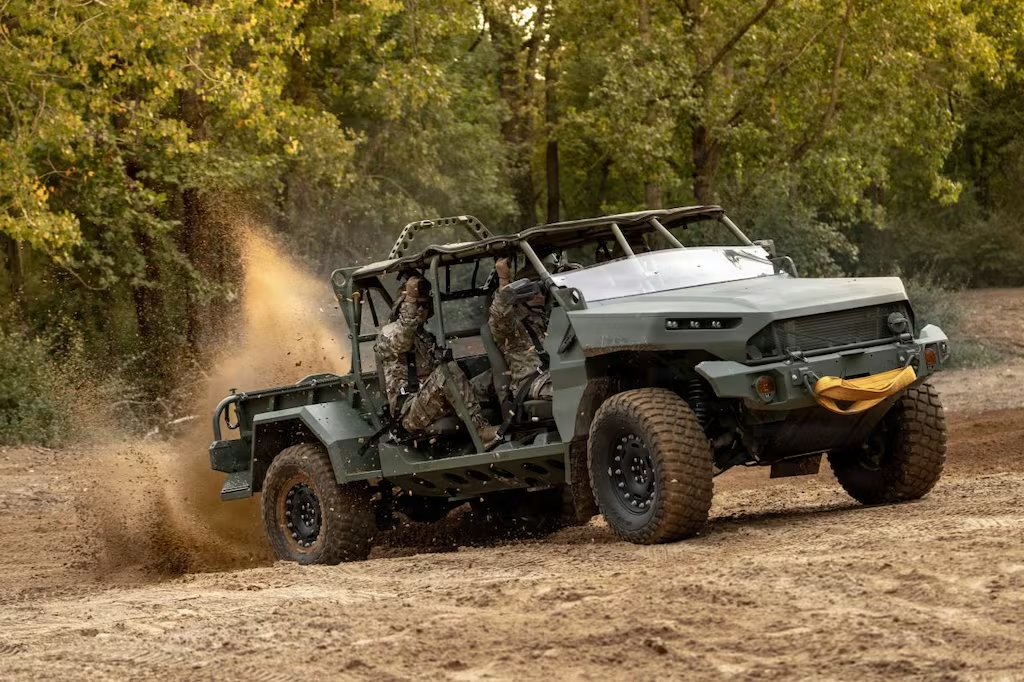
基本上,它随后会送到一家制造商那里,在其顶部加装军用特定设备。它具备了我们需要的一切功能。
Essentially, it then goes to a detailer that puts the military-specific equipment on top of it. It’s everything that we need it to be.
同任何事物一样,它也有其脆弱性。我们牺牲了反恐战争(GWOT)那些年所需的重型装甲和生存能力,换取了机动性、可运输性和易修性。
As with anything, it has its vulnerabilities. We’re sacrificing heavy armor and survivability, which we needed throughout the GWOT years, for mobility, transportability and ease of repair.
但采用这种模式也使我们能够更加轻松地对其进行维护,因为其中的许多部件都是商业化的。
But using this model also allows us to sustain it far more easily because so many of the components are commercial.
当你在未来几十年里需要保留步兵班车(ISV)——或是国内制造的设备——并且需要在未来几年进行改进时,这一点尤为重要。对于步兵班车而言,随着雪佛兰对其底盘和传动系统进行改进,这些改进会立即反馈到步兵班车的生产线中。因此,我们现在获得的升级只是商业市场的副产品。
It especially matters when you get into keeping the ISV — or domestically made equipment — in the decades ahead and needing improvements over the years. With the ISV, as Chevy makes improvements to its chassis and drivetrain, that immediately feeds back into the production line of ISVs. So, we’re now getting upgrades that are just byproducts of the commercial market.
随着进行收购,人们非常强调人工智能。为了确保尽管技术发展迅速,“人在回路”要素仍然等同于保持最终决定权,你们在与科技公司讨论什么?
With acquisition, there’s a major emphasis on AI. What are you discussing with tech companies to ensure the human-in-the-loop element equates to maintaining final say despite the speed of the tech?
每家处理这项新兴技术并与军方打交道的公司都有相同的思维方式,那就是“人在回路”的因素必须是默认设置。
Every company that deals with this emerging technology and the military is of the same mindset, which is that the human-in-the-loop factor has to be the default.
存在着这样一些工作流程和周期:人类指挥官可以说:“我需要这个在后台运行,我不需要看到它或参与其中。”但当涉及到致命的杀伤链以及在战场上做出决策时,支持指挥官的工作流程必须设置非常严格的硬性停止。
There are workflows and cycles that human commanders can say, “I need this to run in the background, and I don’t need to see it or be on it.”But when it comes to kinetic kill chains and making decisions on the battlefield, the workflows that enable commanders have to have very hard stops.
这不仅仅是指挥官说“是”或“否”。它要复杂得多,也更有细微差别。它是在进行大量计算分析的基础上提出各种选项,并说:“根据你给出的优先级、代理已经能够摄入的环境因素以及其中涉及的所有长期规划,以下是所有的行动方案。”
It’s not just a commander saying yes or no. It’s far more complicated and nuanced. It’s presenting options based on a tremendous amount of computing analysis and saying, “Here are all the courses of action based on the priorities that you gave, based on the environmental factors that the agents have been able to ingest and all of the long-term planning that goes into it.
这使得指挥官能够将诸如任务规划之类高度复杂的任务提炼成他们可以更轻松吸收的领域,然后应用只有人类才能做到的事情,即语境和理性。
That allows the commanders to then take highly complex tasks like mission planning and distill it down into areas where they can consume it more easily, and then apply what only humans can do, which is context and reason.
这种语境和理性部分正是与我们合作的科技公司非常专注于赋能的地方,而不是接管整个工作流程。在作战方面,自主性实际上在三个领域很重要。
That context and reason part is what the tech companies that work with us are very focused on enabling, as opposed to taking over entire workflows. Autonomy is important, really, in three areas when it comes to warfighting.
想想战斗破障。这是我们要求人类去做的最危险的事情之一:突破线状雷区或障碍物。如果我们能将其自动化,这就消除了本质上危险的事情。
Think about combat breaching. That’s one of the most dangerous things we ask a human to do: to breach a linear minefield or barrier. If we can automate that, that removes something inherently dangerous.
第二个是高度复杂的领域,例如指挥与控制。你如何将原本需要人类参谋军官数小时或数天的工作提炼成几秒钟,并不仅为指挥官提供几个选项,还提供其背后的分析以及对所呈产品的信心?
The second is highly complex, like command and control. How do you distill what would take human staff officers hours or days into seconds, and give a commander not only several options, but the analysis behind it and the confidence in the product being presented?
第三个是消除人类士兵正在做的重复性和单调事情的能力。例如,通过卡车进行物资补给。如果我们能实现自动化,我们就是在将这项任务从我们的后勤士兵身上剥离,让他们能够以清晰的视野和心态将自己的才能应用到解决真正的问题上。
The third is the ability to remove repetitive and mundane things human soldiers are doing. Resupplying via trucks, for instance. If we can automate that, we are removing that task from our logistics soldiers and allowing them to apply their talents to solving real problems with a clear vision and mindset.
除了武器系统之外,诸如部署——或隐藏——装备或人员这样简单的事情,也需要与甚至10年前截然不同的战略。像提出“我们如何隐藏这架直升机?”这样简单的事情,是如何影响你与工业界的对话的?
Beyond weapon systems, something as simple as staging — or hiding — equipment or personnel requires a vastly different strategy than even 10 years ago. How does something as simple as saying, “How do we hide this helo?” impact your conversations with industry?
这是我们作为军队在40或50年里不必真正考虑的事情,因为我们曾拥有有保障的制空权。鉴于远程火力和来自太空的精确瞄准,我们目前不再拥有制空权。
It’s not something that we’ve had to truly consider as an Army for 40 or 50 years because we were guaranteed air superiority. We don’t have air superiority at this point because of long-range fires and precision targeting from space.
因此,我们要回到分散部署、资产转移和大型指挥部解体。正如你从近几十年中所记得的那样,师指挥部会是一个庞大的实体,露天放置着卫星天线和其他资产。那些日子已经一去不复返了。
So, you go back to dispersion, displacement of assets and disaggregation of large headquarters. As you remember from recent decades, a division headquarters would be a massive entity with satellite dishes and other assets in the open. Those days are gone.
我们现在必须考虑如何从各家公司引入技术,以便让我们能够移走10英尺高的卫星天线和20英里长的电线,并实际拥有能够让所有人分散的小规模前沿计算和传输系统。这极其重要。
We now have to consider how we bring in technology from the companies to allow us to displace 10-foot satellite dishes and 20 miles of wire, and actually have small-scale edge compute and transport systems that can disaggregate everyone. That’s incredibly important.
当然,伪装发挥了作用。其他保密能力也发挥了作用,而这全部只是可见的要素。然后你会进入电子战和监控能力。那么,你如何将其中一些部分进行分散?
Certainly, camouflage comes into play. Other classified capabilities come into play as well, and that’s all just the visible element. Then you get into electronic warfare and the ability to monitor. So, how do you disaggregate some of that?
这些都是我们正在以更现代的姿态积极推进——并回归——的事情。
Those are all things that we are actively moving — and coming back to — in a more modern stance.