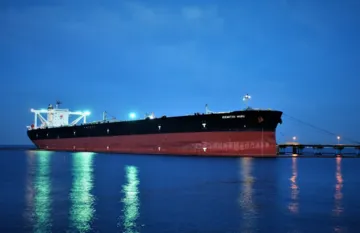
船舶追踪数据显示,与日本有关联的油轮似乎再次直接在该地区装载中东货物,这是自2月战争爆发以来的首次初步但重大的回归,反映出飙升的货运和物流成本。
Oil tankers with links to Japan appear to be picking up Middle East cargoes directly in the region once again, a tentative but significant return for the first time since the war began in February that speaks to soaring freight and logistics costs.
在波斯湾七个多月的冲突期间,日本风险厌恶型的炼油商和船东一直远离该更广泛地区。相反,他们依赖印度海岸附近或东南亚的远距离船对船转运,增加了对卖家的依赖并错失了更高的利润,但保护了油轮、船员和货物。湾区周边的任何日本油轮反而在陆续离开,在某些情况下,它们在被困数月后才得以离开。
Over more than seven months of conflict in the Persian Gulf, Japan’s risk-averse refiners and shipowners have stayed away from the wider area. Instead, they have relied on distant ship-to-ship transfers off the Indian coast or in Southeast Asia, increasing dependence on sellers and missing out on higher profits but shielding tankers, crews and cargoes. Any Japanese tankers around the Gulf have instead been leaving, in some cases after being trapped for months.
这种情况似乎正在发生改变。船舶追踪数据表明,由出光兴产株式会社所有、曾于4月离开海湾地区的超大型油轮“出光丸”号本月早些时候满载在米娜阿尔法赫尔装载的阿曼原油抵达日本。
That appears to be changing. Ship-tracking data show the Idemitsu Maru — an Idemitsu Kosan Co.-owned supertanker which had left the Gulf in April — landed in Japan earlier this month with a full cargo of Omani crude, loaded at Mina Al Fahal.
船舶经纪人表示,其他日本公司控制的至少另外两艘超大型原油运载船预计将在未来几天抵达富查伊拉,以装载驶往日本的货物。
At least two more very large crude carriers controlled by other Japanese companies are expected to reach Fujairah in the coming days to pick up Japan-bound cargoes, shipbrokers say.
然而,这些船只中没有一艘驶入波斯湾,出光兴产在回应彭博社的查询时表示,其派遣船只穿过霍尔木兹海峡的立场没有改变。一位发言人称:“我们将继续努力确保原油的稳定采购和运输安全。”
None of the vessels has crossed into the Persian Gulf, however, and Idemitsu, in response to Bloomberg queries, said its position on dispatching vessels through Hormuz had not changed. “We will continue to work toward ensuring the stable procurement of crude oil and the safety of its transport,” a spokesperson said.
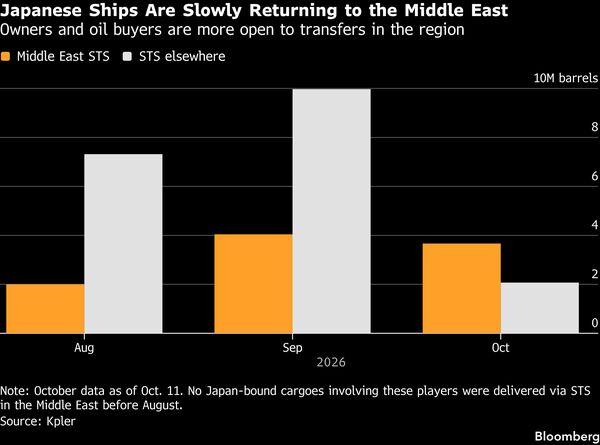
日本船东和炼油商也开始更多地依赖中东水域的船对船转运。他们从8月开始少量进行这种操作,到10月上旬已转运了近370万桶,接近9月全月4万桶的记录。
Japanese shipowners and refiners are also beginning to lean more heavily on ship-to-ship transfers in Middle Eastern waters. They began doing so in small amounts in August, and by early October had moved nearly 3.7 million barrels — approaching a tally of 4 million barrels for the whole of September.
追踪日本船只的东京大学研究生院的渡边秀典表示,这一变化似乎“反映了一种选择性回归,而不是全面转向高风险水域,因为运营商试图在安全与运输效率之间取得平衡”。他说,较低的成本可能是驱动因素之一,因为直接航行可以避免额外的费用和延迟。
The change appears “to reflect a selective return rather than a wholesale shift into higher-risk waters, as operators seek to balance safety with transport efficiency,” said Hidenori Watanave at the University of Tokyo Graduate School, who tracks Japanese vessels. Lower costs are likely to be one driver, as direct transits can avoid extra fees and delays, he said.
在东京将能源安全视为头等大事之际,更多地依赖由日本实体运营或拥有的超大型油轮,将有助于加强对转运的控制。Kpler的数据显示,2025年,来自中东的原油占日本约8.23亿桶原油进口量的93%。日本的加工设施原本就是为处理中东中质含硫和轻质原油而建造的。
Leaning more heavily on supertankers operated or owned by Japanese entities will help increase control over transfers at a time when energy security is a top concern for Tokyo. Oil from the Middle East accounted for 93% of Japan’s crude imports of about 823 million barrels in 2025, Kpler data show. Japanese processors were built to run Middle Eastern medium-sour and light crude grades.