安迪·伯纳姆部长表示,他希望英国重新工业化,并提出重新加入欧盟作为这一复兴的一部分。他的政府需要更加关注化工行业。该行业既是脱欧造成损害的典型案例,也是为何许多企业不愿经历漫长而复杂的逆转决策过程的有力例证。
Minister Andy Burnham says he wants Britain to reindustrialize and has held out the prospect of rejoining the European Union as an element in that revival. His government needs to pay more attention to chemicals. It’s a sector that offers both a textbook case of the damage wrought by Brexit and a persuasive example of why attempting the long and messy process of reversing the decision would be unwelcome for many businesses.
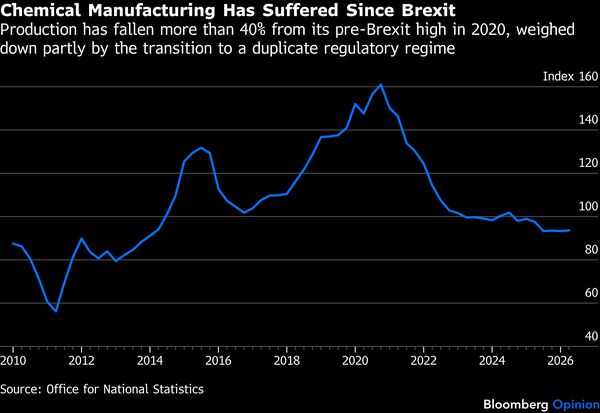
化工行业是基础产业,几乎为英国所有制造业提供原料,从化妆品和洗发水到医药、食品、汽车和钢铁。该行业高度融入欧盟单一市场,也是英国脱欧后受影响最严重的行业之一。自2020年第四季度(脱欧过渡期结束时)的峰值以来,产量已下降超过40%。
Chemicals is a foundational industry that feeds into almost all UK manufacturing, from cosmetics and shampoo to pharmaceuticals, food, autos and steel. Highly integrated into the EU’s single market, it was also one of the sectors worst affected by Britain’s withdrawal. Production has dropped more than 40% from its peak in the fourth quarter of 2020, when the post-Brexit transition period ended.
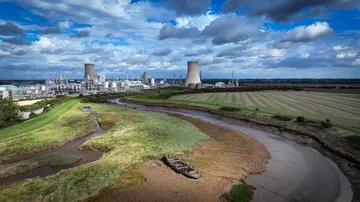
诚然,许多其他因素也导致了这一下降。新冠疫情于2020年初爆发,随后俄罗斯入侵乌克兰引发能源和原材料成本激增。这些仍然是化工制造商最紧迫的担忧。亿万富翁吉姆·拉特克利夫的英力士集团控股有限公司(Ineos Group Holdings Plc)是众多缩减规模的制造商之一,该公司上个月因天然气价格高企而闲置了其位于英格兰北部赫尔的三家化工厂。
Granted, many other factors have contributed to the decline. The Covid pandemic arrived in early 2020, followed by a surge in energy and raw materials costs triggered by Russia’s invasion of Ukraine. These remain the most pressing concerns for chemicals manufacturers. Billionaire Jim Ratcliffe’s Ineos Group Holdings Plc, one of many manufacturers to have scaled back, idled its three chemical plants in Hull in the north of England last month because of high gas prices.
令行业高管感到沮丧的是,脱欧带来的问题 largely 是自找的,而这种不满因政府未能认识到该行业的重要性而被进一步放大。伯纳姆的前任基尔·斯塔默甚至在去年发布的工业战略中未将化工列为八大重点行业之一,尽管他的政府今年5月宣布设立3.5亿英镑(4.6亿美元)韧性基金,以支持战略性重要的生产商和场所。
What has frustrated industry executives is that the problems brought on by separation from the EU are largely self-inflicted, a complaint compounded by the perception that the government has failed to recognize the sector’s importance. Burnham’s predecessor, Keir Starmer, didn’t even list chemicals as one of eight headline sectors in an industrial strategy published last year, though his government announced a £350 million ($460 million) resilience fund this May to support strategically important producers and sites.
与此同时,英国建立自身监管体系的努力是一个前车之鉴。在退出欧盟时,该国退出了欧盟的REACH(化学品注册、评估、授权和限制)机制,并建立了自己的平行框架——英国REACH。官员们曾假设他们能够继续获取保存在欧洲化学品管理局(简称欧化局)的化学品安全数据。但在鲍里斯·约翰逊政府达成的欧盟退出的协议中,并没有关于此类信息共享的条款。企业面临着必须重新提交、有时甚至需要重新测试2万多种物质的情况。
Britain’s effort to set up its own regulatory system, meanwhile, is a cautionary tale. On withdrawal, the country exited EU REACH (Registration, Evaluation, Authorisation and Restriction of Chemicals) and set up its own parallel framework, UK REACH. Officials had assumed they would retain access to chemical-safety data held at the European Chemicals Agency, or ECHA. But there was no provision for such information-sharing in the EU exit agreement reached by the Boris Johnson government. Companies faced having to re- and sometimes retest more than 20,000 substances.
脱欧后的监管负担对大型化学品制造商而言并非主要影响因素,因为它们具备消化这些成本的规模。但这对供应链——作为行业更广泛支柱的经销商、代理商和物流公司——至关重要。
The post-Brexit regulatory burden is less of a factor for large chemical manufacturers because they have the scale to absorb these costs. But it is critical for the supply chain — the distributors, agents and logistics firms that form the wider backbone of the industry.
据估计,这一过渡将耗费该行业20亿英镑;五年过去了,这套重复的系统仍未完全实施。英国安全与健康管理局承担了欧洲化学品管理局在英国大不列颠地区的职能(根据脱欧后的《温莎框架》,北爱尔兰继续留在欧盟REACH体系内),却缺乏足够的处理能力来管理此事——尽管自2021年以来,负责化学品监管的员工人数增加了70%。今年早些时候,一家化学品经销商的企业高管对我说,这套系统是“如预料般的灾难”、“泥潭”且“不可能”实施。截止日期已被一再推迟。
It was estimated that the transition would cost the industry £2 billion; five years on, the duplicate system still hasn’t been fully implemented. The Health and Safety Executive, which assumed ECHA’s function for Great Britain (Northern Ireland remains part of EU REACH under the post-Brexit Windsor Framework), lacked the bandwidth to manage it — despite a 70% increase in staff assigned to chemicals regulation since 2021. The system was a “disaster as predicted,” a “quagmire” and “impossible” to implement, one corporate executive at a chemicals distributor told me earlier this year. Deadlines have been repeatedly pushed back.
9月底,政府开始就一种替代性的过渡注册模式进行技术磋商,该模式将放宽要求,成本还不到前者的三分之一。代表170多家企业会员(其中许多是中小企业)的化学品商业协会负责人蒂姆·多吉特表示,进展“慢得令人沮丧”。多吉特告诉我,他希望政府能采取进一步措施,承认所有物质的所有欧盟REACH注册。他辩称,这不会危及人类健康标准,因为这些标准已经涵盖在大量其他的英国法律法规之中。
At the end of September, the government began a technical consultation on an alternative transitional registration model that will ease requirements and cost less than one-third as much. Progress has been “woefully slow,” according to Tim Doggett, the head of the Chemical Business Association, which counts many small and medium-sized companies among its more than 170 corporate members. Doggett told me he wants the government to go further and recognize all EU REACH registrations for all substances. It wouldn’t jeopardize human health standards, which are already covered by a plethora of other UK laws and regulations, he argues.
具有讽ic(此处为翻译矫正,按直译为“具有讽刺意味的是”)的是,这场部分以将企业从过度的欧盟监管束缚中解放出来为由而推销的“脱欧”,却给一个关键行业带来了如此沉重的负担。其目标是建立一个独立的英国化学品市场;而随之而来的是关于规模重要性的一课。英国REACH的建立,使得同时在两个市场运营的公司面临并行的合规要求。
It’s an irony that a divorce sold partly as a way to free business from the yoke of excessive EU regulation has resulted in such an increased burden for a critical sector. The objective was the creation of a standalone British chemicals market; what followed was a lesson in the importance of scale. The creation of UK REACH left companies that operate in both markets facing parallel compliance requirements.
许多公司为了规模大得多的欧盟市场,干脆放弃了英国。与此同时,英国贸易商通过将更多业务转向欧洲子公司来进行调整——这导致原本属于英国经济的关税、货运和行政工作流失。
Many simply gave up on Britain in favor of the far bigger EU market. UK traders, meanwhile, adapted by routing more business through European subsidiaries — a loss of customs duties, freight and administrative work that previously accrued to the British economy.
既然已经撕裂了一个与欧盟紧密相连的行业,那么仅凭重新加入就无法撤销这种损害——就像泼出去的化学品无法收回一样。道吉特表示,与欧盟“更紧密的合作将带来巨大好处”,但他担心,重启脱欧辩论将意味着一场新的意识形态斗争,商业界的声音会在其中被淹没,就像当初那样。(约翰逊2018年那句臭名昭著的“去他的商业”一词,正是经济利益在关于英国未来的政治斗争中被边缘化的写照。)
Having pried apart an industry that was so tightly glued into the EU, the damage can’t be undone simply by rejoining — any more than chemicals can be unspilled. While Doggett said there would be “great benefits from closer cooperation” with the EU, he fears reopening the Brexit debate would mean a renewed ideological battle in which the voice of business is drowned out, as it was the first time. (Johnson’s infamous “f* business” comment in 2018 personified how economic interests became sidelined in the political battle over Britain’s future.)
如果明天就能完成,重新加入会有所帮助。现实情况是,这将意味着长达数年的政治争吵,即便公众支持这一举动,也还需要再经过数年关于重新加入条款的谈判。CBA想要的是英国可控范围内、现在就能实施的明智商业决策。
Rejoining would help if it could be done tomorrow. The reality is that it would mean years of political wrangling and then, even if the public backed the move, years more of negotiations on the terms of re-entry. What the CBA wants is sensible business decisions that are within the UK’s control and could be implemented now.
如果连一个受脱欧严重打击的行业都没有叫嚷着要重新加入欧盟,那么我们在重新揭开旧伤疤之前或许应该暂停一下,转而关注那些不那么宏大、更务实的步骤来改善商业环境。在这个辩论中,工业界的声音常常被忽视。这一次它能发出自己的声音吗?
If even a sector so badly affected by Brexit isn’t clamoring to rejoin the EU, perhaps we should pause before reopening old wounds and focus instead on less grandiose, more pragmatic steps to improve the business environment. The voice of industry has too often been ignored in this debate. Will it make itself heard this time?