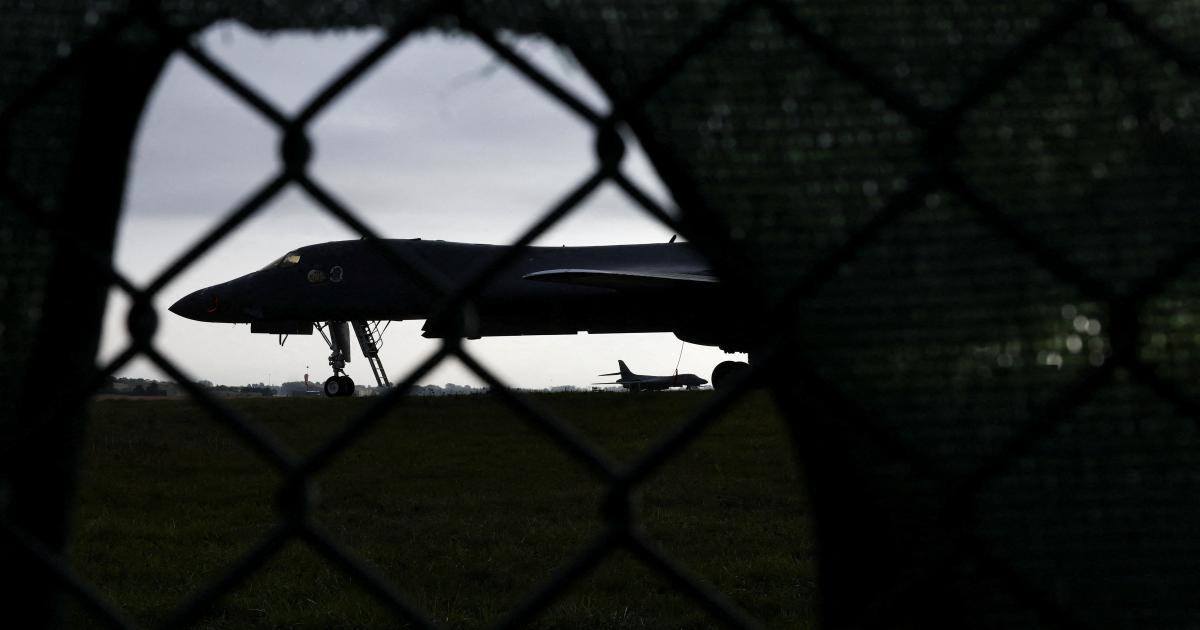
几个月来,伊朗在与世界上两支最具能力军队的战争中展现出的韧性,令许多政治人物感到困惑,也违背了公众的预期。以色列和美国已经打击了数千个伊朗目标,系统性地摧毁了该国的大部分军事基础设施,并击毙了其多位最高领导人。然而,这个伊斯兰共和国不仅生存了下来,还继续保持着强大的进攻能力。为了解释这一现象,一些人指出了伊朗对低成本、精确化、规模化武器(如“见证者-136”单向攻击无人机)的有效部署。另一些人则看到了该政权本身去中心化和自我更替的特质。
For months, Iran’s resilience in its war with two of the world’s most capable militaries has perplexed many politicians and confounded public expectations. Israel and the United States have hit thousands of Iranian targets, systematically destroying much of the country’s military infrastructure and killing many of its top leaders. Yet the Islamic Republic has not only survived but continued to maintain significant offensive capabilities. To account for this, some have pointed to Iran’s effective deployment of low-cost precise mass weapons, such as the Shahed-136 one-way attack drone. Others have looked at the decentralized and self-replacing nature of the regime itself.
尽管这些因素和其他因素都发挥了作用,但伊朗能够持久存在有一个更直接的原因:美以两国决定依赖持续的空中和防区外海军打击行动来迫使该政权屈服。这种方法并非凭空出现。几十年来,空中优势一直是美国及更广泛的西方军事战略的决定性信条。在冷战后的时代,美国将空中力量的艺术——赢得对天空的控制权,以便能够随心所欲地轰炸敌方军队、海军和领土——完善到了没有任何国家甚至国家联盟所能匹敌的程度。
Although these and other factors have played a part, there is a more straightforward reason for Iran’s staying power: the American and Israeli decision to rely on a sustained air and stand-off naval campaign to bring the regime to its knees. This approach did not come out of nowhere. Air supremacy has been the defining tenet of U.S. and wider Western military strategy for decades. In the post–Cold War era, the United States has perfected the art of airpower—winning control of the skies so that enemy armies, navies, and territory can be bombed at will—to a degree that no country or even alliance of countries has matched.
当与对手部署的地面部队对抗时,这一战略始终取得了令人瞩目的成果。美国实现快速空中优势的能力,长期以来也对潜在的侵略者起到了强有力的威慑作用。
When pitted against an adversary’s deployed ground forces, this strategy has consistently yielded impressive results. The U.S. ability to achieve rapid air superiority has also long served as a powerful deterrent to would-be aggressors.
然而,历史上很少有对手仅因惩罚性轰炸行动而屈服于极端主义要求的例子——即使是世界上最强大的空军也未能做到。事实上,史诗之怒行动只是近期或当前多场冲突之一,这些冲突包括俄罗斯在乌克兰的战争以及国社会对也门胡塞武装威胁的应对,它们共同暴露了过度依赖空袭以推翻政府或击败叛军力量的弊端。对美国战略家而言,区分空军力量的不同用途将至关重要。
Yet there are few examples in history of adversaries conceding to maximalist demands in the face of punitive bombing campaigns alone—even by the world’s greatest air force. Indeed, Operation Epic Fury is only one of several recent or current conflicts—including Russia’s war in Ukraine and international responses to the Houthi threat in Yemen—that have exposed the drawbacks of relying heavily on airstrikes to try to unseat a government or to defeat insurgent forces. For American strategists, then, it will be crucial to distinguish the different uses of airpower.
伊朗行动是军事资源的灾难性误用,它凸显了空军力量所能实现的政策局限。然而,得出美国应放弃其优先确保空中优势的 doctrine(注:此处“doctrine”保留原术语,因其为军事术语,但根据上下文可译为“主义”或“原则”,为准确起见,此处保留概念性翻译)的结论将是错误的,因为美国正与北约和亚洲盟友一起,为未来几年面临的截然不同的威胁做准备。
The Iran campaign has been a disastrous misuse of military resources, and it showcases the policy limits of what airpower can achieve. Yet it would be a mistake to conclude that the United States should shift away from its doctrine of prioritizing air superiority, as it prepares alongside NATO and Asian allies for very different threats in the coming few years.
毁灭的代价 在二十世纪的主要战争中,美国及其盟友的空中优势对战场上的成功至关重要。但空军力量仍未能迫使对手在政治上投降。在第二次世界大战期间,尽管盟军系统性地轰炸了纳粹德国的城市、工业基地以及交通和燃料网络,纳粹德国仍坚持战斗直至最后。在朝鲜战争中,尽管美国轰炸机舰队摧毁了朝鲜的大部分城市和基础设施,朝鲜仍与美国及其盟军战成平局。
THE WAGES OF DESTRUCTION During the major wars of the twentieth century, U.S. and Allied air superiority was critical to successes on the battlefield. But airpower still failed to force political capitulation by adversaries. In World War II, Nazi Germany fought to the very end despite the Allies’ systematic bombing of its cities, its industrial base, and its transport and fuel networks. In the Korean War, North Korea fought the United States and its allies to a standstill, even as fleets of U.S. bombers obliterated most of its cities and infrastructure.
而在越南战争中,尽管美国军队在连续的惩罚性空袭行动中向城市、工厂和补给线投掷了超过一百万吨的弹药,北越仍然熬过了美国。
And in Vietnam, the North Vietnamese outlasted the United States, despite the U.S. military dropping more than a million tons of ordnance on cities, factories, and supply routes, in successive punitive air campaigns.
在二十一世纪具有决定性的反暴动冲突中,几乎没有什么证据表明制空权被证明更为有效。在阿富汗和伊拉克,美国及其盟友迅速对敌人建立了绝对制空权,并能够随心所欲地呼叫精确空袭,这给盟军在战斗中带来了巨大的优势。然而在这两起事件中,这些战役最终也都未能实现其政治目标。
In the defining counterinsurgency conflicts of the twenty-first century, there is little evidence to suggest that air superiority proved any more effective. In Afghanistan and Iraq, the United States and its allies quickly established total air superiority over the enemy and were able to call in precision airstrikes at will, giving allied troops a huge advantage in combat. Yet in both cases, these campaigns also ultimately failed to achieve their political objectives.
尽管乌克兰的城市、电力基础设施和工业几乎每天都遭受猛烈轰炸,但在其遭受残酷入侵四年半多之后,俄罗斯距离征服该国并没有更近一步。在伊朗,几乎没有什么迹象表明美国和以色列的空袭激起了要求结束战争的民间压力。尽管在该战役开始前不久,该国各地曾爆发大规模反政府抗议活动,而这些抗议活动是在发生大规模国家暴力镇压后才被平息的。事实上,对民众施加苦难似乎尤其不太可能改变伊朗政权的盘算,鉴于该政权为了掌权宁愿杀害数千名抗议者。
Despite near-daily barrages of Ukraine’s cities, power infrastructure, and industry, Russia is no closer to vanquishing the country more than four and a half years after its brutal invasion began. In Iran, there has been little sign that U.S. and Israeli airstrikes have fueled popular pressure to end the war. This is despite major antigovernment protests throughout the country shortly before the campaign began, which were stamped out only after mass state violence. Indeed, inflicting hardship on the population seems especially unlikely to change the calculus of the Iranian regime, given its willingness to kill thousands of protestors to stay in power.
如果说有什么不同的话,那就是有理由认为,如今打赢战争可能比二十世纪更加困难。由于世界秩序日益呈现多极化特征,各国往往可以依靠国际支持来减轻敌方持续打击战役所带来的破坏。在乌克兰,这一点从自2022年俄罗斯入侵以来流入该国的美国和欧洲武器以及经济、军事和技术支持中就可以看出。这种援助并未阻止乌克兰人遭受可怕的损失和苦难,但它使乌克兰经济得以继续运转,并使其军队能够随着时间的推移不断补充丢失和消耗的装备及弹药。
If anything, there is reason to think that it may be even harder today to win wars than in the twentieth century. Because of the increasingly multipolar nature of the world order, countries can often rely on international support to mitigate the damage from a sustained enemy strike campaign. In Ukraine, this can be seen in the influx of American and European weapons and economic, military, and technological support into the country since Russia’s 2022 invasion. This assistance has not prevented Ukrainians from experiencing terrible loss and hardship, but it has enabled the Ukrainian economy to continue functioning and its military to consistently replace lost and expended equipment and ammunition over time.
对于伊朗而言,中国为其石油与天然气出口提供了稳定的市场,这使得伊朗经济在4月份遭受美国海上封锁之前仍能维持运转。近期,北京方面还以提供短程防空系统的方式给予伊朗军事援助,这将有助于提升伊朗的防御能力,使其能够在中低空区域对试图寻找攻击目标的美国和以色列战机构成有效威胁。俄罗斯同样是伊朗的重要盟友,它向德黑兰提供用于定位海湾地区美军的情报,并协助其研发诸如超音速反舰导弹等新型军事装备。
For Iran, China has provided a stable market for Iranian oil and gas exports, which helped to keep Iran’s economy afloat until the imposition of a U.S. naval blockade in April. More recently, Beijing has also provided military support in the form of short-range air defense systems, which will sustain and improve Iran’s capability to pose a pop-up threat to U.S. and Israeli aircraft loitering to seek targets at medium or low altitudes. Russia also remains a key Iranian ally, providing Tehran with intelligence to target U.S. forces in the Gulf and helping it develop new military capabilities, such as supersonic antiship missiles.
在历次战争中,外部支援都显著降低了伊朗因遭受空袭和导弹攻击而不得不屈服、乃至出现经济或军事崩溃的可能性。
In both wars, external support has made sustained air and missile strike campaigns far less likely to result in political capitulation, or economic or military collapse.
尽管以轰炸手段迫使敌方投降的成效并不显著,但制空权对战场局势的影响却在许多战争中起到了决定性作用。1991年的“沙漠风暴行动”中,美军成功击败了装备精良且作战经验丰富的伊拉克军队,这堪称以空中力量为主导的作战方式发挥效用的典型范例。1991年1月至2月间,美军发动的初期空袭有效削弱了伊拉克军队的战斗力及其指挥控制能力,最终促使联军地面部队在不到100小时的战斗后彻底击溃了伊拉克军。
SITTING DUCKS AND HIDDEN JACKALS Despite the poor record of punitive bombing campaigns in forcing political capitulation, air superiority has proved decisive in many wars through its impact on the battlefield. The U.S. military’s overwhelming success against the well-equipped and battle-hardened Iraqi army in Operation Desert Storm, in 1991, was, perhaps, the defining example of how an air-centered approach can be effective. The initial U.S. air campaign in January and February 1991 sufficiently degraded Iraqi forces and command and control capabilities to allow coalition ground forces to decisively defeat the Iraqi army in less than 100 hours of ground combat operations.
其他部分成功的案例包括北约1999年对科索沃的干预,当时为期78天的空袭行动导致米洛舍维奇撤出了塞族军队。另一个例子是2011年欧洲主导的针对利比亚穆阿迈尔·卡扎菲军队的空中行动,该行动迅速摧毁了进攻班加西市的政府军坦克和火炮,并通过进一步的空袭为随后反派武装向的黎波里推进提供了便利。在上述每一个案例中,空中优势都使敌方地面部队的战场局势难以为继,并迫使其撤退。
Other partial successes include NATO’s intervention in Kosovo in 1999, in which a 78-day air campaign led to Milosevic’s withdrawal of Serb forces. Yet another was the European-led air campaign against Muammar al-Qaddafi’s forces over Libya in 2011, which rapidly destroyed government tanks and artillery attacking the city of Benghazi, and facilitated a subsequent rebel advance to Tripoli with further airstrikes. In each of these cases, air superiority made the battlefield situation untenable for enemy ground forces and forced them to retreat.
区分这种有效使用空中力量的根本不同之处在于敌方力图实现的战略目标。当对手在追求需要大量部署地面部队的目标时——例如入侵并夺取邻国领土——对该对手建立空中优势几乎总是能带来决定性的军事优势。
The fundamental difference that distinguishes this effective use of airpower lies in the objectives that the enemy was seeking to achieve. When an adversary is pursuing goals that require the significant deployment of ground forces—such as an invasion to seize the territory of a neighboring state—establishing air superiority over that adversary almost always confers a decisive military advantage.
在第二次世界大战中,英美联合轰炸德国城市和工业的攻势未能迫使德国投降。但一旦盟军在任何特定战区确立了空中优势,轴心国军队在战场上的溃败就只是时间问题。在西沙漠,然后是在意大利、诺曼底以及德国本土,盟军四处巡逻的战斗轰炸机使装甲车辆和补给纵队在白天的机动变得极其危险。每当盟军地面部队遇到坚固的轴心国阵地或部队时,它们还能提供毁灭性的近距离空中支援。
In World War II, the Anglo-American combined bomber offensive against German cities and industry failed to force Germany to surrender. But once the Allies established air superiority in any given theater of operations, the operational defeat of Axis armies in the field was only a matter of time. In the Western Desert, and then in Italy, Normandy, and Germany itself, roving Allied fighter-bomber patrolsrapidly rendered movement by armored vehicles and supply columns by day prohibitively dangerous. They also could provide devastating close air support whenever Allied ground units met strong Axis positions or units.
1991 年,萨达姆·侯赛因的目标要求伊拉克军队在科威特领土上抵御由美国领导的地面部队,而美国的战术空中力量迅速使其成为不可能,首先摧毁了伊拉克的防空系统,随后对装甲车辆、后勤车队、基地和通信基础设施发动了大规模的阻断行动。2011 年利比亚,卡扎菲的部队在班加西周边部署坦克和炮兵,以轰炸反政府武装和民众,但这些部队很容易被欧洲战斗机发现并摧毁,卡扎菲为阻止后来反政府武装向的黎波里的反击而部署的部队同样也被摧毁。
In 1991, Saddam Hussein’s objectives required the Iraqi army to hold territory in Kuwait against U.S.-led ground forces, and U.S. tactical airpower rapidly made that impossible, by destroying Iraqi air defenses and then conducting a massive interdiction campaign against armored vehicles, logistics convoys, bases, and communications infrastructure. In Libya in 2011, Qaddafi’s forces deployed tanks and artillery around Benghazi to bombard rebel forces and civilians, but these were easily found and destroyed by European combat aircraft, as were units that Qaddafi deployed to try to stop later rebel counterattacks toward Tripoli.
反政府武装的最终胜利和卡扎菲的死亡并未在利比亚实现西方世界所定义的长期政策成功。但卡扎菲的军队被西方空中力量决定性地击败,他以武力镇压民众起义的目标被彻底粉碎。空中优势在许多战争中已被证明具有决定性作用。
The ultimate rebel victory and killing of Qaddafi did not deliver long-term policy success in Libya as the Western world would define it. But Qaddafi’s military forces were decisively defeated by Western airpower and his objective of crushing a popular uprising by force was rendered impossible. Air superiority has proved decisive in many wars.
相比之下,在阿富汗和伊拉克,华盛顿的任何对手都不需要在公开场合部署正规军事力量来实现他们的目标。这些组织只需对美军巡逻队保持持续的简易爆炸装置袭击和伏击节奏,然后融入更广泛的平民人口中,就能剥夺联军培育民主国家建设所需的安全性。当然,每当武装组织试图发动旨在攻占基地或城镇的大型行动时,都会遭到凶猛火力的迎头痛击,其中大部分火力由空袭提供,这要归cknowledging于无处不在的美军及联军空中优势。
In Afghanistan and Iraq, by contrast, none of Washington’s adversaries needed to field regular military forces in the open to achieve their objectives. Simply by maintaining a steady tempo of IED strikes and ambushes against U.S. patrols, and then melting back into the wider civilian population, these groups were able to deny coalition forces the security they needed to foster democratic state-building. Of course, whenever militant groups attempted larger operations designed to overrun bases or towns, they were met with ferocious firepower, much of it delivered by airstrikes, thanks to ubiquitous U.S. and coalition air superiority.
但正如在越南一样,在大多数主要战场交战中取得胜利并不足以确保美国所寻求的政治目标。阿富汗塔利班或伊拉克的武装组织所需要做的,只是维持足够长时间的安全真空,以耗尽美国和欧洲对随心所欲的“无休止战争”的耐心。尽管每场战争都各不相同,但美国在伊朗正面临类似的问题:它正试图利用空中力量,针对一个基本能够将其常规军事力量保持分散、隐蔽或转入地下的敌人来实现极端主义目标。
But just as in Vietnam, victory in most major battlefield engagements was not enough to secure the political objectives that the United States sought. All that the Taliban in Afghanistan or militant groups in Iraq had to do was to maintain a security vacuum for long enough to exhaust U.S. and European patience with discretionary “forever wars.”Although every war is different, the United States confronts a similar problem in Iran: it is trying to use airpower to achieve maximalist aims against an enemy that can largely afford to keep its conventional military forces dispersed, hidden, or underground.
美国和以色列最初旨在确立空中优势的军事行动非常成功,总体而言,两军部署的先进飞机和战术发挥了预期作用。然而,尽管随后的数月空袭摧毁了伊朗庞大弹道导弹库的一部分,但该国大部分极为重要的剩余库存和生产能力都位于深埋地下的“导弹之城”中,几乎所有的常规炸弹和导弹都无法触及。由于2025年6月较早前那场持续12天的战争——当时美国空袭使用高度专门化的30,000磅穿地弹,瞄准伊朗的核设施——伊朗剩余的大部分高浓缩可裂变材料、可移动设备和科学家很可能早在“史诗之怒”行动开始之前就已分散并隐藏起来,以躲避进一步的空袭。
The initial U.S. and Israeli campaign to establish air superiority was very successful, and in general, the advanced aircraft and tactics the two militaries deployed worked as intended. But although subsequent months of airstrikes have destroyed some of Iran’s enormous ballistic missile arsenal, most of the country’s significant remaining stocks and production capacity are in deeply buried “missile cities,” out of reach of almost all conventional bombs and missiles. Because of the earlier 12-day war in June 2025—when U.S. airstrikes targeted Iran’s nuclear infrastructure with highly specialized 30,000-pound bunker-busting bombs—the bulk of Iran’s remaining highly enriched fissile material, movable equipment, and scientists were likely dispersed and hidden from further airstrikes long before Operation Epic Fury began.
因此,为了挫败美国的战争目标,伊朗政权无需在公开场合部署正规武装力量。它只需维持对国家的控制,而伊斯兰革命卫队(IRGC)凭借其广泛的日常镇压能力,完全能够确保这一点。在霍尔木兹,伊朗可以轻易隐藏其布设水雷所需的小型快艇、反舰导弹发射装置以及无人机发射阵地,这些设施可分布在其漫长且多岩石的海岸线上。尽管以色列和美国具备在伊朗境内几乎任何地点、随时、持续数月进行有效打击的能力,但仅靠空中力量不太可能取得对伊朗的胜利。
To defeat U.S. war aims, therefore, the regime does not have to deploy regular armed forces in the open. It simply has to maintain control of the country, which the Islamic Revolutionary Guard Corps (IRGC) is well placed to ensure through widespread day-to-day repression. And in Hormuz, Iran can easily conceal the small boats it needs to drop mines, its antiship missile launchers, and its drone launch positions along the extensive and rocky coastline. Airpower alone is unlikely to deliver a victory against Iran, despite Israel’s and the United States’ ability to functionally strike almost anywhere in the country, at will, for months on end.
事实上,这正是美国及其盟友此前试图阻止也门胡塞武装发动反舰无人机和导弹袭击时所遇到的相同问题。空中力量可以且已经多次被用于摧毁在公开区域被识别的胡塞武装力量,但它无法阻止胡塞武装利用其控制的沿海领土内隐藏的导弹和无人机发射点,对商业航运构成持续威胁。
This is in fact the same problem that has frustrated earlier attempts by the United States and its allies to stop antiship drone and missile strikes by the Houthis in Yemen. Airpower can and has been used repeatedly to destroy any Houthi forces identified in the open, but it cannot prevent the group from posing a sustained threat to commercial shipping with concealed missile and drone launch sites in coastal territory that they control.
北约需要的炸弹威力 伊朗战争大大玷污了美国空军力量的全球光环。如果特朗普政府知道七个月后自己仍将面临一场没有定论的消耗战——这场战争耗尽了华盛顿复杂弹药库存的大部分,并付出了极其高昂的经济和地缘政治代价——它就不大可能会发动“史诗怒火行动”。随着俄罗斯对乌克兰的持续入侵(在这场战争中,交战双方都未能取得制空权),存在着一种真正的风险,即决策者和公众可能会失去对先进空中能力作为美国及更广泛西方军事优势核心支柱的信心。那将是一个巨大的错误。
THE BOMB POWER NATO NEEDS The war in Iran has significantly tarnished the global aura of U.S. airpower. It is unlikely that the Trump administration would have launched Operation Epic Fury if it had known that seven months later it would still be facing an inconclusive slugging match—one that has wasted a huge part of Washington’s complex munitions stockpile and come at exorbitant economic and geopolitical cost. Alongside the ongoing Russian invasion of Ukraine, in which neither side has been able to achieve air superiority, there is a real risk that policymakers and the public lose faith in advanced air capabilities as the central pillar of American and wider Western military advantage. That would be a huge mistake.
2026年对伊战争的第一个教训——正如越南战争、2003年后的伊拉克战争以及2006年后的阿富汗战争等众多其他战争一样——是通过压倒性空军力量获得的常规军事优势,并不足以实现不切实际的政治目标。但第二个教训是,这种失败并不是因为美国空中能力本身存在弱点。恰恰相反,空军力量仍然是美国常规部队中最强大的部分,也是其对敌对国家常规侵略的威慑能力和作战优势的主要来源。
The first lesson of the war against Iran in 2026—as in numerous other wars, including Vietnam, Iraq after 2003, and Afghanistan after 2006—is that conventional military superiority gained through overwhelming airpower will not be enough to achieve unrealistic political goals. But the second lesson is that this failure is not about weaknesses in U.S. air capabilities themselves. On the contrary, airpower remains the most potent piece of the United States’ conventional forces, as well as its main source of both deterrent capacity and warfighting advantage against conventional aggression by hostile states.
如果美国对“史诗怒火行动”的目标是击败伊朗对邻国的入侵,那么这场空袭行动几乎肯定会在几周内完成这一目标。
If the U.S. goals for Operation Epic Fury had been to defeat an Iranian invasion of a neighboring country, then the air campaign would almost certainly have done that within a few weeks.
假设性情景具有高度相关性,因为它涉及美国在未来几年可能被迫应对的最重大的非自愿性威胁。如果俄罗斯入侵东欧的北约成员国,或中国采取行动夺取台湾,敌方将需要大规模部署常规地面力量以夺取并随后控制领土。在这两种情况下,先进的美国及其盟友空中力量能力将是快速击败它们的绝对关键。正如萨达姆·侯赛因入侵科威特一样,如果北约或美军能够迅速赢得并利用对被入侵领土的制空权,这两种行动都可能在军事上变得不可行。
That hypothetical scenario is highly relevant because it bears on the most significant non-discretionary threats that the United States may be forced to deal with in the coming few years. In the case of a Russian invasion of a NATO member state in eastern Europe or a Chinese move to take Taiwan, the enemy would need to make large deployments of regular ground forces to seize and then hold territory. In either case, advanced U.S. and allied airpower capabilities would be absolutely essential to defeating them quickly. As with Saddam Hussein’s invasion of Kuwait, both actions could be rendered militarily untenable if NATO or U.S. forces could rapidly win and exploit air superiority over the territory that had been invaded.
因此,为了防止西方大国与中国或俄罗斯之间爆发规模更大、代价更高昂的战争,说服双方对手——即欧洲的北约部队和太平洋地区的美军领导部队——在任一方决定发动进攻时能够迅速建立并利用制空权至关重要。为此,美国需要进行正确的投资和作出恰当的武力决策。尤为紧急的优先事项包括:补充和改进美国空射弹药,提高拦截导弹的产能以防空基地和海军特遣部队,以及加速下一代战斗机、轰炸机和支援飞机的研发。
To prevent larger, far more costly wars between Western powers and either China or Russia, then, it will be vital to convince both adversaries that NATO forces in Europe and U.S.-led forces in the Pacific can rapidly establish and leverage air superiority should either power decide to attack. To do so, the United States will need to make the right investments and force decisions. Especially urgent priorities include restocking and improving U.S. air-launched munitions, ramping up production of missile interceptors to defend airbases and naval task forces, and accelerating the development of next generation fighter, bomber, and enabler aircraft.
尽管在被中国或俄罗斯部队争夺的地区建立制空权,相比在伊朗上空实现制空权要困难得多,但如果美国及其盟友希望维持常规威慑并避免爆发大国冲突,这仍是一项必不可少的任务。制空权不能赢得所有战争。但如果能够可信地实现制空权,它几乎可以保证通过拒止实现威慑——即阻止考虑自身领土扩张的国家对手采取行动。
Although establishing air superiority over an area contested by Chinese or Russian forces will be far more difficult than doing so over Iran, it is an essential task for the United States and its allies if they want to maintain conventional deterrence and avoid a major great-power conflict. Air superiority cannot win all wars. But if it can be credibly achieved, it all but guarantees deterrence by denial against state opponents considering territorial aggression of their own.