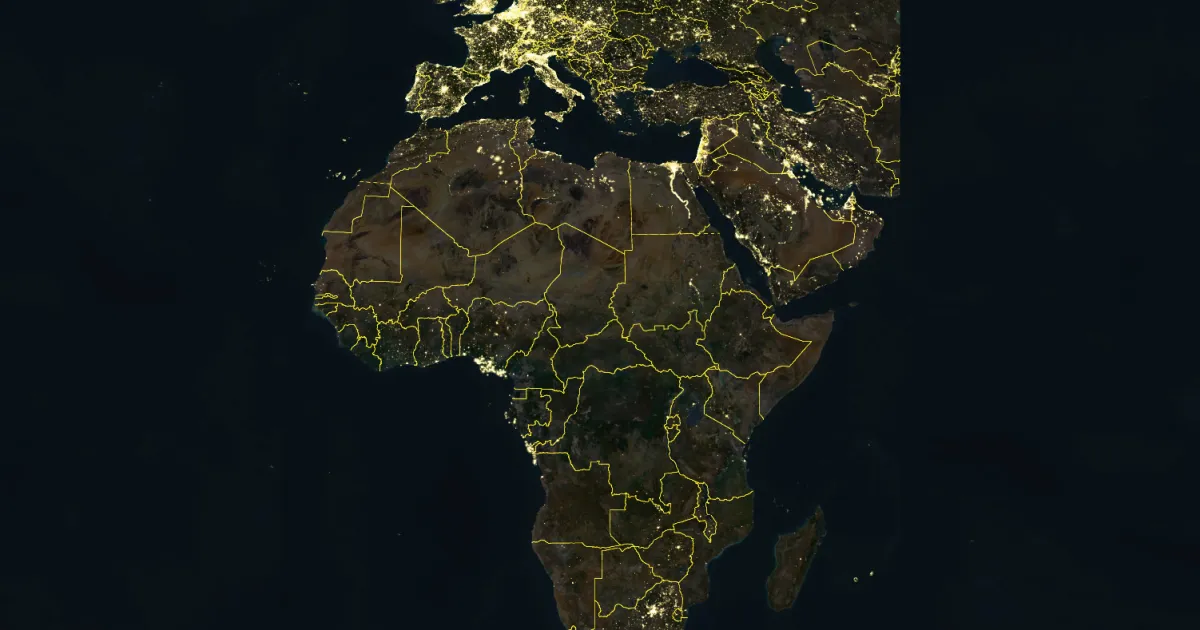
非洲拥有数十亿桶石油、数万亿立方米的天然气,并且是全球钴和锰的主要生产地(这些矿产用于制造电动汽车电池)。
Africa holds billions of barrels of oil, trillions of cubic metres of gas and produces most of the world’s cobalt and manganese for electric car batteries.
本周,能源部长、投资者和石油行业高管齐聚开普敦,参加为期至10月16日的“非洲能源周”会议。该会议重点讨论石油和天然气领域的投资、能源融资问题,以及如何消除能源贫困。
This week, energy ministers, investors and oil executives are meeting in Cape Town for African Energy Week, which runs until October 16. The conference focuses on investment in oil and gas, energy finance and ending energy poverty.
在这段可视化解释视频中,半岛电视台(Al Jazeera)展示了非洲石油、天然气及关键矿产的分布情况,分析了非洲的电力生产状况,同时也指出了仍存在电力短缺的地区。非洲的石油储量究竟有多少?
In this visual explainer, Al Jazeera maps where Africa’s oil, gas and critical minerals are found, how its electricity is generated and who still goes without it. How much oil does Africa have?
非洲的已探明原油储量为约1250亿桶,占全球总量的7.2%。这些已探明储量指的是那些已被发现且可以利用现有技术进行商业开采的石油资源,但目前仍埋藏在地下。
Africa holds about 125 billion barrels of proven crude oil reserves, representing 7.2 percent of the global total. Proven reserves are oil that has been discovered and can be extracted commercially with existing technology, but is still in the ground.
利比亚和尼日利亚的石油储量占非洲总量的近70%,分别为484亿桶和369亿桶;阿尔及利亚位居第三,拥有122亿桶的储量;安哥拉紧随其后,储量为77.8亿桶;南苏丹和埃及的石油储量分别为37.5亿桶和33亿桶。
Libya and Nigeria account for nearly 70 percent of Africa’s reserves, with 48.4 billion and 36.9 billion barrels, respectively. Algeria ranks third, with 12.2 billion barrels. Angola follows with 7.78 billion barrels, while South Sudan and Egypt hold 3.75 billion and 3.3 billion barrels, respectively.
2024年,尼日利亚成为非洲最大的石油生产国,其石油产量占非洲总量的约23%;阿尔及利亚和安哥拉的产量各占约17%,三者合计占非洲石油总产量的56%。前五大石油生产国的产量占比超过了80%。整个非洲的石油产量占全球总量的7.6%,这一比例与其在全球石油储量中的份额基本相当。
Nigeria was Africa’s largest oil producer in 2024, accounting for about 23 percent of the continent’s output. Algeria and Angola followed with about 17 percent each, and together the three produced 56 percent of Africa’s oil. The top five producers accounted for more than 80 percent. Africa as a whole produced 7.6 percent of the world’s crude oil, roughly in line with its share of global reserves.
尽管利比亚拥有非洲最大的已探明石油储量,但其石油产量在全球排名中仅位列第四。意大利的埃尼公司(Eni)、法国的TotalEnergies以及西班牙的Repsol等跨国企业都在利比亚开展业务,但由于政治纷争和贸易封锁,利比亚的石油生产曾多次受到干扰。
Libya, which holds Africa’s largest proven reserves, ranked only fourth in production. Italy’s Eni, France’s TotalEnergies and Spain’s Repsol are among the foreign companies operating in the country, where political disputes and blockades have repeatedly disrupted output.
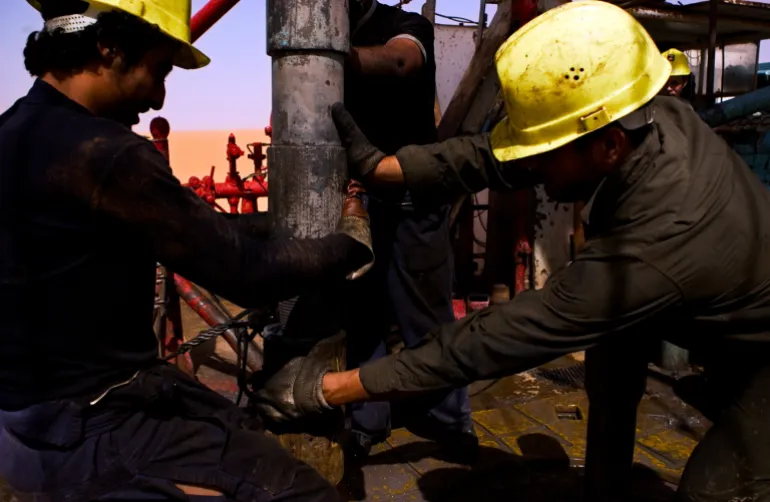
2004年6月5日,利比亚埃尔-沙拉拉油田正在进行钻井作业,当时美国石油公司正在谈判,以在制裁解除后重返该国。非洲的天然气储量在哪里?
An oil rig drills in El-Sharara, Libya, on June 5, 2004, as US oil companies negotiate to return to the country following the lifting of sanctions Where are Africa’s natural gas reserves?
截至2023年底,非洲拥有近18万亿立方米的已证实天然气储量。
Africa held almost 18 trillion cubic metres of proven natural gas reserves at the end of 2023.
尼日利亚和阿尔及利亚共占总量的约58%,其次是莫桑比克,拥有2.84万亿立方米,埃及拥有2.21万亿立方米,利比亚拥有1.51万亿立方米。
Nigeria and Algeria hold about 58 percent of the total, followed by Mozambique with 2.84 trillion cubic metres, Egypt with 2.21 trillion and Libya with 1.51 trillion.
阿尔及利亚和尼日利亚也是非洲领先的天然气出口国之一,而莫桑比克的大部分储量是在2010年代近海发现的,至今仍大多未开发。
Algeria and Nigeria are also among Africa’s leading gas exporters, while much of Mozambique’s reserves, discovered offshore in the 2010s, remain largely undeveloped.
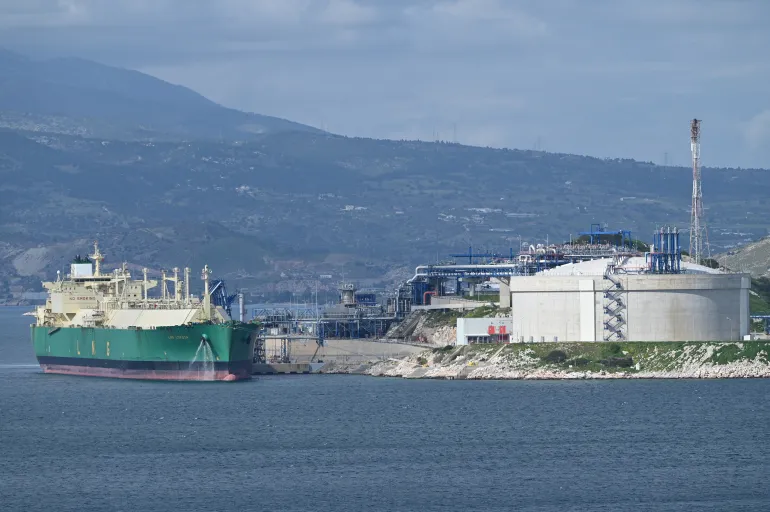
2026年2月22日,液化天然气油轮“LNG LOKOJA”在希腊雅典附近的Revithoussa终端卸下尼日利亚天然气,以此多元化欧洲的天然气供应。关键矿产来自哪里?
非洲大陆为电动汽车、电池和可再生能源技术所使用的矿产提供了大部分供给。
The LNG tanker LNG LOKOJA unloads Nigerian gas at the Revithoussa terminal near Athens, Greece, on February 22, 2026, diversifying Europe’s gas supplies Where do the critical minerals come from? The African continent supplies a large share of the minerals used in electric vehicles, batteries and renewable energy technologies.
2025年,非洲国家占全球钴产量的71.2%,锰产量的72.4%。
In 2025, African countries accounted for 71.2 percent of global cobalt production and 72.4 percent of manganese production.
钴用于可充电电池。锰主要用于增强钢材,但也用于一些电动汽车电池和储存可再生能源的电池中。
Cobalt is used in rechargeable batteries. Manganese is mainly used to strengthen steel, but it is also used in some electric vehicle batteries and in batteries that store renewable energy.
刚果民主共和国生产了全球近70%的钴。其中部分是由手工矿工开采的,国际特赦组织已记录该国一些矿区存在危险且常致命的条件。
The Democratic Republic of the Congo produces nearly 70 percent of the world’s cobalt. Some of it is dug by hand by artisanal miners, and Amnesty International has documented dangerous and often deadly conditions in some of the country’s mines.
南非生产了全球近38%的锰,其次是加蓬,产量接近25%。这三国加上加纳,共占全球锰产量的72.4%。
South Africa produces nearly 38 percent of global manganese, followed by Gabon with nearly 25 percent. Together with Ghana, the three countries account for 72.4 percent of global production.
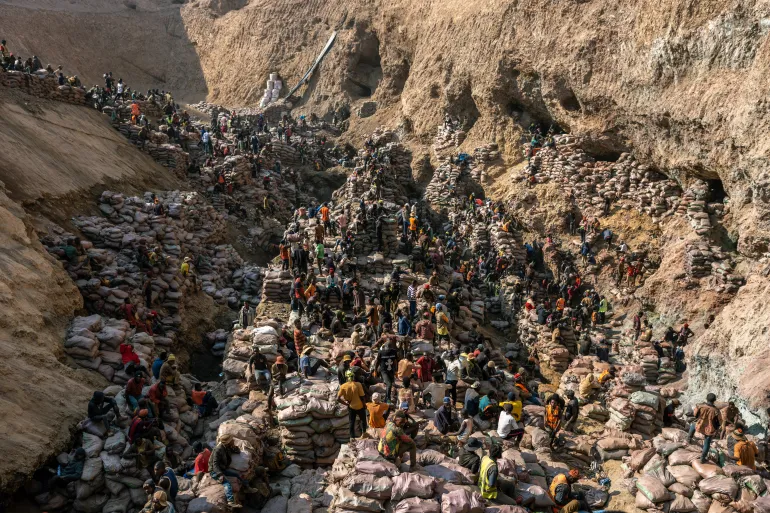
2023年6月14日,刚果民主共和国科洛韦齐附近的沙巴拉手工钴铜矿景象。津巴布韦是非洲最大的锂生产国,2025年其产量占全球总产量的9.6%。锂用于制造可充电电池,为电动汽车提供动力,并储存来自太阳能和风能的电力。
A view of the Shabara artisanal cobalt-copper mine near Kolwezi, Democratic Republic of Congo, on June 14, 2023 Zimbabwe, Africa’s largest lithium producer, accounted for 9.6 percent of global production in 2025. Lithium is used in rechargeable batteries that power electric vehicles and store electricity from solar and wind.
马达加斯加、莫桑比克和坦桑尼亚2025年合计生产22.2万吨天然石墨,占全球总产量的11.9%。石墨用于大多数锂离子电池的负极(即储存和释放能量的负极),也用于钢铁制造、润滑剂和铅笔。有多少个非洲国家从可再生能源发电?
Madagascar, Mozambique and Tanzania produced a combined 222,000 tonnes of natural graphite in 2025, or 11.9 percent of the global total. Graphite is used in the anodes of most lithium-ion batteries, the negative electrodes that store and release energy, as well as in steel manufacturing, lubricants and pencils. How many African countries produce electricity from renewables?
2024年,埃塞俄比亚和刚果民主共和国的全部电力均来自可再生能源。乌干达、纳米比亚和斯威士兰每个国家的可再生能源发电比例均超过96%,主要来自水电。
Renewable energy accounted for all electricity generated in Ethiopia and the Democratic Republic of the Congo in 2024. Uganda, Namibia and Eswatini each generated more than 96 percent from renewables, mostly hydropower.
在另一端,阿尔及利亚、利比亚、尼日尔和突尼斯的可再生能源发电比例均低于5%,这些国家主要依赖天然气或石油发电。
At the other end, renewables made up less than 5 percent in Algeria, Libya, Niger and Tunisia, which rely mainly on gas or oil.
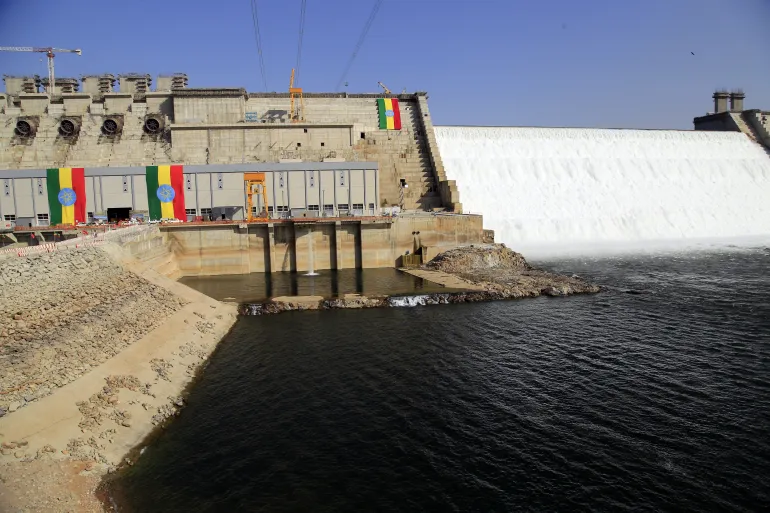
埃塞俄比亚的电力主要来自水电,其中蓝尼罗河上的埃塞俄比亚复兴大坝是非洲最大的水电工程。该大坝于2022年开始发电,并于2025年9月正式落成。
Ethiopia’s electricity comes mostly from hydropower, led by the Grand Ethiopian Renaissance Dam on the Blue Nile, Africa’s largest hydroelectric project. The dam began generating power in 2022 and was officially inaugurated in September 2025.
埃塞俄比亚贝尼尚古尔-古穆兹州蓝尼罗河上的埃塞俄比亚复兴大坝于2022年开始发电,当时正值该国与埃及和苏丹的紧张关系期间。人们在哪些地方可以用上电力?
The Grand Ethiopian Renaissance Dam on the Blue Nile in Benishangul-Gumuz, Ethiopia, began generating electricity in 2022 amid tensions with Egypt and Sudan Where do people have access to electricity?
2024年,有六个非洲国家实现了普遍用电:阿尔及利亚、埃及、毛里求斯、摩洛哥、塞舌尔和突尼斯。这六个国家总人口约2.15亿,占非洲总人口的约14%。
In 2024, six African countries reported universal electricity access: Algeria, Egypt, Mauritius, Morocco, Seychelles and Tunisia. Together, they are home to about 215 million people, or roughly 14 percent of Africa’s population.
在其他地区,用电情况差异很大。南苏丹只有5.4%的人口用上了电力。马拉维这一比例为15.6%,刚果民主共和国为22.5%,尽管该国全部电力均来自可再生能源。
Elsewhere, access varies widely. In South Sudan, only 5.4 percent of people had electricity. The figure was 15.6 percent in Malawi and 22.5 percent in the Democratic Republic of the Congo, even though the DRC generates all its power from renewables.
尼日利亚是非洲人口最多的国家,其用电覆盖率为62.5%,导致大约8500万人无法获得电力,成为全球任何国家中无电人口最多的国家。
Nigeria, Africa’s most populous country, had an access rate of 62.5 percent, leaving roughly 85 million people without electricity, the largest number of any country in the world.
在农村地区,农村地区的用电覆盖率远低于城市,许多家庭仍依赖煤油灯、蜡烛或手电筒在夜晚照亮家中。
In rural areas, where access is far lower than in cities, many families still rely on kerosene lamps, candles or torches to light their homes after dark.
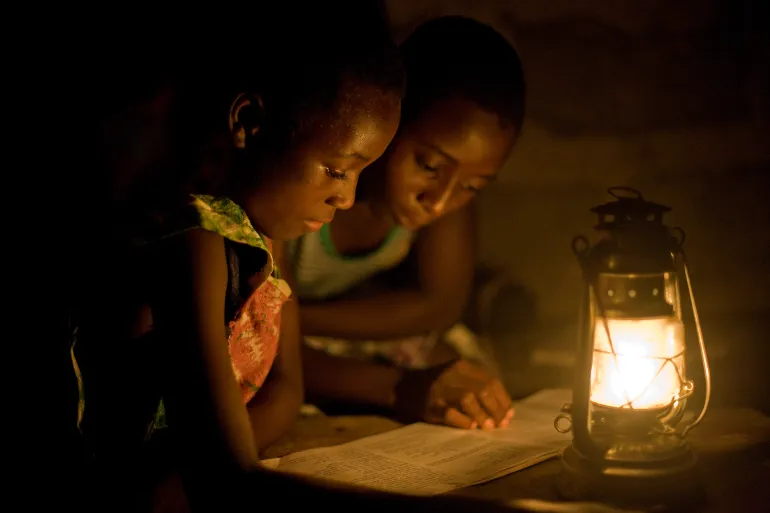
加纳的农村学生依靠煤油灯学习,因为有限的电力覆盖使得夜间学习变得困难。非洲拥有丰富的能源资源,从石油和天然气到推动全球能源转型的矿产。然而,根据世界卫生组织(WHO)的数据,撒哈拉以南非洲有超过5.6亿人缺乏电力供应,占全球总数的约86%。
Rural students in Ghana study by kerosene lantern where limited electricity access makes evening study difficult Africa has vast energy resources, from oil and natural gas to the minerals powering the global energy transition. Yet more than 560 million people in sub-Saharan Africa lack access to electricity, accounting for about 86 percent of the global total, according to the World Health Organization (WHO)