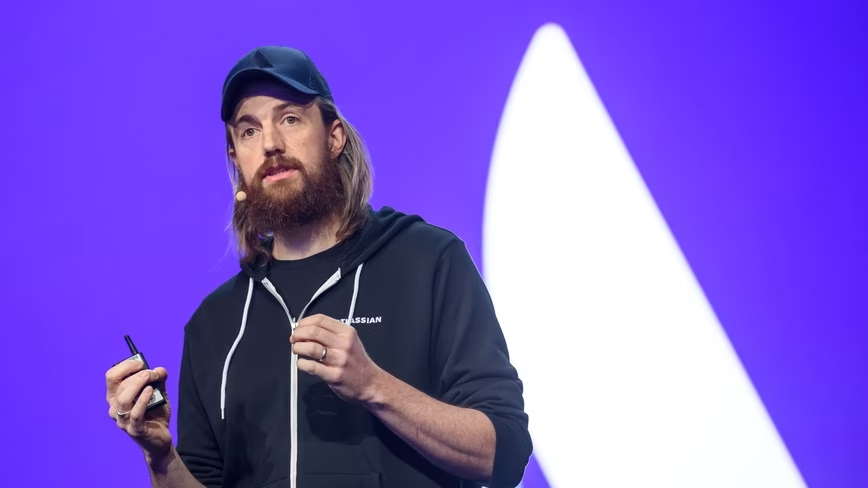
Atlassian 首席执行官迈克·坎农-布鲁克斯在投资者哈里·斯蒂宾斯主持的播客 20VC 的一次采访中表示,Atlassian 在其产品中不运行任何中国人工智能模型。
Atlassian does not run any Chinese AI models in its products, chief executive Mike Cannon-Brookes said in an interview with 20VC, the podcast hosted by investor Harry Stebbings.
该节目于周一发布,录制地点在阿姆斯特丹,Atlassian 上周在那里举办了 Team ’26 欧洲会议。
The episode came out on Monday and was recorded in Amsterdam, where Atlassian held its Team ’26 Europe conference last week.
斯蒂宾斯提出了这一问题,称 SaaStr 创始人杰森·莱姆金曾告诉他,大公司不想使用中国开源模型。迈克·坎农-布鲁克斯表示,这种情况可能会改变,但 Atlassian 会跟随其客户的需求。
Stebbings raised the issue, saying SaaStr founder Jason Lemkin had told him big companies do not want Chinese open models. Mike Cannon-Brookes said that may change, but that Atlassian follows its customers.
他说:“毫无疑问,在某些地区,客户对所谓的‘中国模型’存在一定程度的抵触。但客户对开源模型并没有抵触。”
“There is certainly some customer pushback in some places to, quote unquote, Chinese models. There is not customer pushback to open models,” he said.
相反,Atlassian 通过他所说的与英伟达的深度合作伙伴关系使用英伟达的 Nemotron 模型,同时也使用来自 Mistral 等公司的模型。他补充说,Atlassian 的工作是为客户以尽可能低的成本为每项任务挑选最合适的模型。
Instead, Atlassian uses Nvidia’s Nemotron models through what he called a deep partnership with the chipmaker, as well as models from Mistral and others. Its job is to pick the best model for each task as cheaply as possible for customers, he added.
他说道:“我们在生产环境中不使用任何中国模型,这一点我们非常明确。”
“We don’t use any Chinese models in production, we’re very clear about that,” he said.
即便如此,他也认为划清界限比表面上看起来更难。他声称许多美国模型在训练时部分使用了中国模型,但并未明确说明,然而他并未提供任何例子或证据。他还认为,拒绝企业可以检查的开放技术将难以持续。
Even so, he argued that the line is harder to draw than it looks. He claimed that many US models are trained partly on Chinese ones without saying so, but gave no examples or evidence. Refusing open technology that firms can inspect will be hard to sustain, he argued.
他说:“对于企业而言,明知其中内容却拒绝使用能带来更好结果且更便宜的替代方案,我认为这将是一个非常艰难的长期选择。”
“For an enterprise to say I’m not going to use a cheaper alternative that’ll give me better results when I know what’s in it, I think is going to be a very hard long-term choice,” he said.
他还对那些声称自己构建了人工智能模型的公司持怀疑态度。他说,这些公司中的大多数其实只是采用了中国开源权重模型,并针对特定任务进行了微调。Atlassian 也会对开源模型进行微调,但他补充说,他们不会将这些模型称为自己的。
He was also sceptical of companies that say they have built their own AI models. Most of them, he said, have taken a Chinese open-weight model and fine-tuned it for one job. Atlassian fine-tunes open models too, he added, but does not call them its own.
他说:“目前,构建专用模型的益处尚未得到明确结论,陪审团的裁决仍在等待中。”
“The jury is really out on the benefits of building specialised models at the moment,” he said.
要改变他的想法,他说,专用模型必须在价格和性能方面持续击败最新的通用模型。在他看来,很少有模型能做到这一点,许多早期初创公司随后被大型基础模型超越。
To change his mind, he said, specialised models would have to keep beating the latest general models on price and performance. Few do, in his view, and many early start-ups have since been overtaken by the big foundation models.
中国开放权重模型已经嵌入到一些美国产品中。周一,微软发布了一款基于阿里巴巴通义千问的小型决策模型。
Chinese open-weight models are already embedded in some US products. On Monday, Microsoft released a small decision model built on Alibaba’s Qwen.
成本是这次采访的另一个主题。坎农-布鲁克斯表示,大型客户现在非常关注人工智能给他们带来的成本。
Cost was the other theme of the interview. Large customers now care a great deal about what AI costs them, Cannon-Brookes said.
Atlassian 拥有一支完整的 AI 网关团队,负责将每项任务发送到最合适的模型,但他告诉产品团队不要过早担心成本。
Atlassian has a full AI gateway team that sends each task to the model that suits it, but he tells product teams not to worry about cost too early.
“如果五个人使用某个功能,我不在乎它花费多少。如果五百万人使用某个功能,我会非常关注成本,”他说。
“If five people use a feature, I don’t care how much it costs. If 5 million people use a feature, I’m going to care a lot about cost,” he said.
当被问及他今年改变了什么看法时,他说人工智能的运行成本将比他之前认为的进一步下降。
Asked what he had changed his mind on this year, he said AI running costs will fall further than he once thought.
7 月,Atlassian 为其工程师设定了每月的人工智能预算;8 月,该公司报告称第四季度收入增长了 28%。
In July, Atlassian gave its own engineers monthly AI budgets, and in August it reported 28% revenue growth for its fourth quarter.