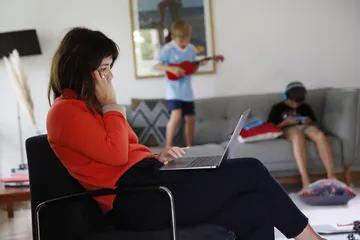
最近的书籍和研究开始强调人工智能对儿童构成的风险。这是件好事。也许我们正在集体意识到,我们不应该在新技术出现十年后才拉响警报 — — 就像我们对社交媒体所做的那样。但受人工智能影响的不仅仅是孩子。母亲们也受到影响。
Recent books and studies have begun to highlight the risks that AI poses to children. This is a good thing. Maybe we’re collectively realizing that we shouldn’t wait a decade after a new technology emerges — as we did with social media — before sounding the alarm. But kids aren’t the only ones affected by artificial intelligence. Mothers are, too.
绝大多数父母 — — 81% — — 使用人工智能来获得育儿支持。我也是其中之一。但尽管我欣赏人工智能帮我管理购物清单,我却担心它可能会让育儿变得更难。当我问谷歌的Gemini,人工智能可能会如何瓦解美国的母亲角色时,它的回答令人毛骨悚然地贴切:它警告说,人工智能可能会鼓励“高度个性化的孤立”,加剧完美主义,并让每一个育儿决定都看似伴随着“永久性、灾难性后果”的风险。
The vast majority of parents — 81% — use AI for parenting support. I’m one of them. But as much as I appreciate AI managing my grocery list, I worry it could make parenting harder. When I asked Google’s Gemini how AI might go about dismantling American motherhood, its answer rang eerily true: It warned that AI could encourage “hyper-individualized isolation,” intensify perfectionism, and make every parenting decision seem to carry a risk of “permanent, catastrophic consequences.”
作为一名年幼孩子的母亲,我对此有切身感受。例如,我最近问ChatGPT,让我的男孩们共用一个卧室是否有益。过去,我会向我的姐妹和朋友请教,她们会分享自己的经历。但现在我不再需要拿起电话来获取母亲的建议。几秒钟内,人工智能就给出了一个所谓有益的精确年龄范围 — — 尽管不清楚它是基于什么证据得出的。不过,很容易看出这种即时建议如何可能削弱历来支持母亲的同伴之间的母性网络。
As a mom of young kids, I’ve felt this personally. For example, I recently asked ChatGPT if it’s good for my boys to share a bedroom. In the past, I would have turned to my sisters and friends, who would have shared their own experiences. But I no longer need to pick up the phone to get motherly advice. Within seconds, AI gave me a precise age range when sharing was supposedly beneficial — although it’s unclear what evidence it was based on. Still, it’s easy to see how this sort of instant advice could chip away at the peer-to-peer maternal networks that have historically supported mothers.
人工智能的即时响应也可能削弱人们对母性直觉的信任。芝加哥卢里儿童医院的一项调查发现,三分之一的父母承认他们会按照人工智能生成的指导来抚养孩子,而不是依靠自己的直觉。正如丹娜·萨斯金德博士在她的新书中所警告的,母性直觉经过千百年的磨练,仍然是抚养孩子的核心部分,而生成式人工智能是新兴事物,且经常仍会产生幻觉。然而,我们却如此快速地赋予后者更大的权威。
AI’s responsiveness could also erode trust in maternal instincts. A survey by Lurie Children’s Hospital of Chicago found that a third of parents admit to following AI-generated guidance for their children instead of their own instincts. As Dr. Dana Suskind warns in her new book, maternal instinct has been honed over millennia and remains a core part of childrearing, while generative AI is new and often still hallucinates. Yet how quick we are to ascribe more authority to the latter!
然后还有人工智能所带来的不确定感 — — 甚至是末日感。未来总是未知的,但如今感觉尤其如此。近一半的母亲预计人工智能会降低她们的经济安全感以及孩子们的。面对众多让父母担忧的问题,再加上:一直到:这还不包括人工智能带来的新监控负担,而这些负担不成比例地落在已经陷于检查iPad、智能手机和学校提供设备中的母亲身上。
Then there’s the sense of uncertainty — or even doom — that AI feeds. The future is always unknown, but it feels especially so these days. Nearly half of moms expect AI will reduce their financial security their children’s. To the many questions weighing on parents, add: All the way to: This is to say nothing of the new monitoring burdens AI introduces, which disproportionately fall on mothers already knee-deep in checking iPads, smartphones and school-sponsored devices.
现在再把人工智能加入名单。研究机构“Count on Mothers”的一项最新调查发现,大多数母亲担心孩子接触不安全或不适当的内容(63%)、人类与人工智能生成互动之间的混淆(55%),以及行为或社会情感变化(51%)。只有8%的母亲认为人工智能不构成风险。
Now add AI to the list. A recent survey by the research firm Count on Mothers found that most mothers are concerned about children’s exposure to unsafe or inappropriate content (63%), confusion between human and AI-generated interactions (55%), and behavioral or social-emotional changes (51%). Only 8% of moms didn’t think AI presented a risk.
然而,在缺乏政策解决方案的情况下 — — 比如聊天机器人的年龄限制或学校限制 — — 母亲们只能自行限制孩子的人工智能使用。因为人工智能已融入搜索平台,而不像TikTok或YouTube那样包含在易于识别的应用中,所以更难追踪。而且只有少数学区限制了其使用。难怪根据Common Sense Media的报告,大多数父母一直低估孩子的人工智能使用量。跟踪所有的提醒、应用、警报和设备感觉更像是一场徒劳的练习,而不是数字管理。
And yet, in the absence of a policy fix — be it age limits on chatbots or school restrictions — moms are on their own to limit children’s AI access. Because AI is integrated into search platforms and not contained in clearly identifiable apps like TikTok or YouTube, it’s harder to track. And only a handful of school districts have restricted its use. No wonder most parents consistently underestimate their children’s use of AI, according to Common Sense Media. Keeping track of all the pings, apps, alerts and devices feels more like an exercise in futility than digital management.
换句话说,人工智能正在使本来就紧张的育儿时期变得更加紧张。我最近就此与伦敦经济学院公共政策学院即将上任的院长Anne-Marie Slaughter以及美国男孩与男子研究所所长Richard Reeves进行了讨论。正如Slaughter所说:“我母亲的理论是良性忽视……她抚养出了三个非常成功的孩子。但我的意思是,我现在甚至无法想象有人会这么说。”在我们的数字世界里,这已经不可能了。
In other words, AI is taking an already intense period for childrearing and making it more so. I recently discussed this with Anne-Marie Slaughter, the incoming dean of the London School of Economics’ School of Public Policy, and Richard Reeves, the president of the American Institute for Boys and Men. As Slaughter put it, “My mother’s theory was benign neglect … and she raised three very successful children. But, I mean, I can’t even imagine anybody saying that now.”In our digital world, it’s no longer possible.
人工智能为母亲们开启了全新的时代。毫无疑问,人工智能可以减轻母亲们承担的一些家务劳累和看不见的劳动 — — 从制定餐饮计划到管理日程,再到记住班级聚会。我愿意让机器人来倒空洗碗机并叠衣服。有趣的是,大多数父母表示,人工智能让他们的工作变得更轻松 — — 尽管他们对其对孩子的影响表达了严重担忧。
AI has introduced a whole new era of mothering. To be sure, AI can ease some of the domestic drudgery and invisible labor borne by mothers — from making meal plans to managing schedules to remembering class parties. Sign me up for a robot to empty my dishwasher and fold laundry. And interestingly, most parents say that AI has made their jobs easier — even as they express significant concern about its impact on their children.
但母亲们也付出了代价。焦虑感的加剧、无止境的优化以及日益增长的需要监控的事项清单,正在加剧父母的压力。
But there’s a cost for mothers, too. The heightened anxieties, endless optimizations and ever-growing lists of things to monitor are ratcheting up the pressures of parenthood.