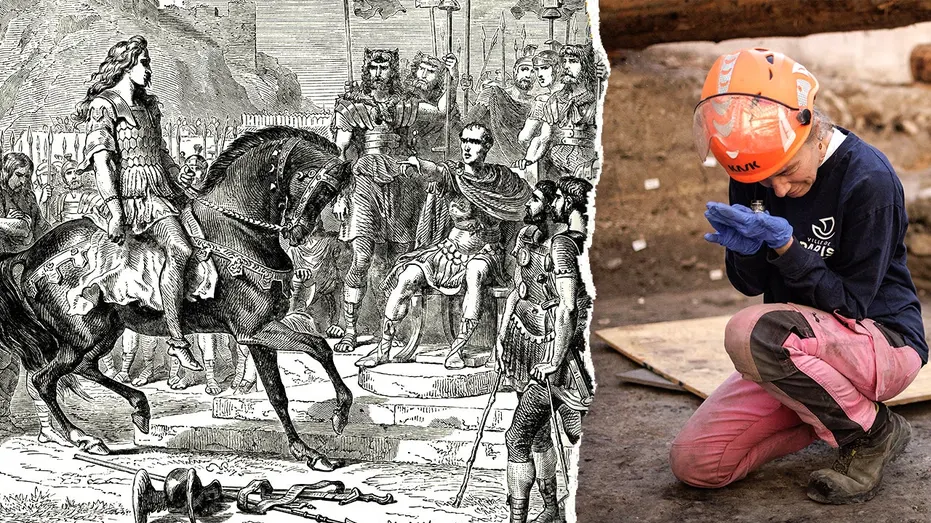
巴黎的考古学家最近发掘出一段古老的城墙,可能属于一座早已失落的城市 — — 有望解开一个追溯到凯撒时代的几百年之谜。法国文化部最近宣布了这一发现。
Archaeologists in Paris recently unearthed an ancient wall that may belong to a long-lost city — potentially solving a centuries-old mystery dating back to the times of Julius Caesar. The discovery was recently announced by the French Ministry of Culture.
在一份翻译的声明中,官员们表示,在巴黎第四区 Notre-Dame 大教堂附近的 Hôtel-Dieu 医院院内发现的一段城墙,可能属于古代城市卢泰西亚。
In a translated statement, officials said a wall discovered in the courtyard of the Hôtel-Dieu hospital — just a stone's throw away from Notre Dame Cathedral in the city's 4th arrondissement — might have belonged to the ancient city of Lutetia.
《世纪挖掘》在圣母院下方揭开神秘标记,揭示古老秘密 该发掘工作始于二月,官员们表示,这是在一项“重大改造项目”之前进行的。
'DIG OF THE CENTURY' BENEATH NOTRE DAME REVEALS MYSTERIOUS MARKINGS, ANCIENT SECRETS The excavation, which began in February, was conducted ahead of a "major redevelopment project," officials said.
翻译后的声明写道:“研究人员最初预计会发现可追溯到中世纪和早期现代时期的古代住宅、道路或聚落的痕迹。”
"Researchers initially expected to uncover traces of ancient dwellings, roads, or settlements dating to the medieval and early modern periods," the translated statement read.
“但在这些遗迹之外,他们发现了一段具有古代高卢防御工事特征的石木结构城墙。”该定居点曾被凯撒在其著作中提及,尤其是《高卢战记》 — — 但直到现在,尚未有确凿的考古证据证实其确切位置。
"Instead, alongside those remains, they discovered a stone-and-timber wall characteristic of ancient Gallic fortifications." The settlement was mentioned by Julius Caesar in his writings, particularly "The Gallic Wars" — but no conclusive archaeological evidence confirmed its location until now.
古线索破解千年之谜,靠近著名斗兽场 法国文化部长卡特琳·佩加尔在一份声明中表示,官员们“可能正在审视有史以来在理解高卢卢泰西亚方面最重要的发现之一。”
ANCIENT CLUE CRACKS OPEN A 2,000-YEAR-OLD MYSTERY NEAR FAMED COLOSSEUM In a statement, French Culture Minister Catherine Pégard said officials "may be looking at one of the most important discoveries ever made in understanding Gallic Lutetia.
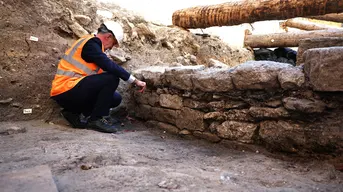
“科学上的谨慎仍要求我们验证其功能和年代,但证据的汇聚尤为显著,”佩加尔补充道。发掘现场的照片显示,大块风化的石块被不规则地堆叠成行。
"Scientific caution still requires us to verify its function and chronology, but the convergence of evidence is particularly remarkable," added Pégard. Photos from the excavation show large, weathered stone blocks stacked in uneven rows.
这段城墙长约66英尺,留有大火的痕迹;现场木质元素的放射性碳测定结果表明,它们的年代可追溯到公元前200年至公元前10年之间。
The wall, which stretches roughly 66 feet, bears evidence of a major fire, while radiocarbon testing of wooden elements found at the site suggests they date to between 200 B.C. and 10 B.C.
从罗马传奇皇帝统治时期发现的遗迹中,研究人员发现了士兵遗骸与武器。据推测,该建筑可能曾是高卢人用于防御的堡垒。
GRISLY DISCOVERY FROM LEGENDARY ROMAN EMPEROR'S REIGN REVEALS SOLDIERS' REMAINS, WEAPONS Researchers believe the structure may have served as a defensive fortification for the Gauls. The wall's stonework showed signs of fire damage, while archaeologists also uncovered burned seeds and the remains of a charred wooden building nearby.
这堵墙的石砌结构上有明显的火烧痕迹,考古学家还在附近发现了被烧焦的种子以及烧毁的木制建筑残骸。
Caesar's account indicated the Gallic Parisii tribe burned its own fortified settlement in 52 B.C. to prevent it from falling into Roman hands.
根据恺撒的记载,公元前52年时,高卢地区的帕里西部落为了防止自己的防御据点落入罗马人之手,主动放火焚毁了整个聚居地。
Dorothée Chaoui-Derieux, a Paris archaeology official at DRAC Île-de-France, said the fire damage is precisely what strengthened researchers' suspicions that the wall might belong to the ancient settlement described by Julius Caesar.
巴黎Île-de-France地区考古局的官员多萝西·沙乌伊-德里厄表示,这些火烧痕迹恰恰印证了研究人员的推测:这堵墙很可能就是恺撒所描述的古代聚居地的组成部分。
"The architecture of the wall, with its large stone blocks and system of interlocking wooden beams, very quickly made us think of a wall built in the Gallic tradition," she said in the statement.
她在声明中说道:“这堵墙采用大块石块砌成,还配有相互咬合的木梁结构,这种建筑风格立刻让我们联想到典型的高卢式建筑风格。”
Due to the redevelopment project, the ancient wall cannot remain at its original location, officials said.
官方称,由于当地正在进行重新开发项目,这堵古墙无法继续保留在原址。
CLICK HERE FOR MORE LIFESTYLE NEWS Instead, researchers plan to reconstruct part of the wall using original stones, with hopes of eventually displaying it in a Paris museum.
研究人员计划利用原有的石块重建部分墙体,希望最终能将其陈列在巴黎的博物馆中供公众参观。
Looking ahead, researchers plan to conduct further excavations to determine the wall's age and purpose.
今后,研究人员还将开展更多挖掘工作,以确定这堵墙的建造年代与具体用途。他们也会对墙体后方的平台以及其下的埋藏物展开调查。
They will also investigate the platform behind the structure and any remains buried beneath it. Stéphane Deschamps, regional archaeological conservator at the DRAC Île-de-France, said that the discovery "fills a gap in the archaeological record."
Île-de-France地区考古保护官斯特凡·德尚表示,这一发现“填补了考古记录中的空白”。他补充道:“由于西岱岛上缺乏确凿的实物证据,甚至有人推测该聚居地位于南泰尔。如今,有了这堵墙及其相关的考古发现,我们或许终于能解开这个谜团了。”
"Because of the lack of tangible evidence on the Île de la Cité, some even suggested that it was located in Nanterre," Deschamps said. "Today, with this wall and its archaeological context, we may finally hold the key to solving the mystery."