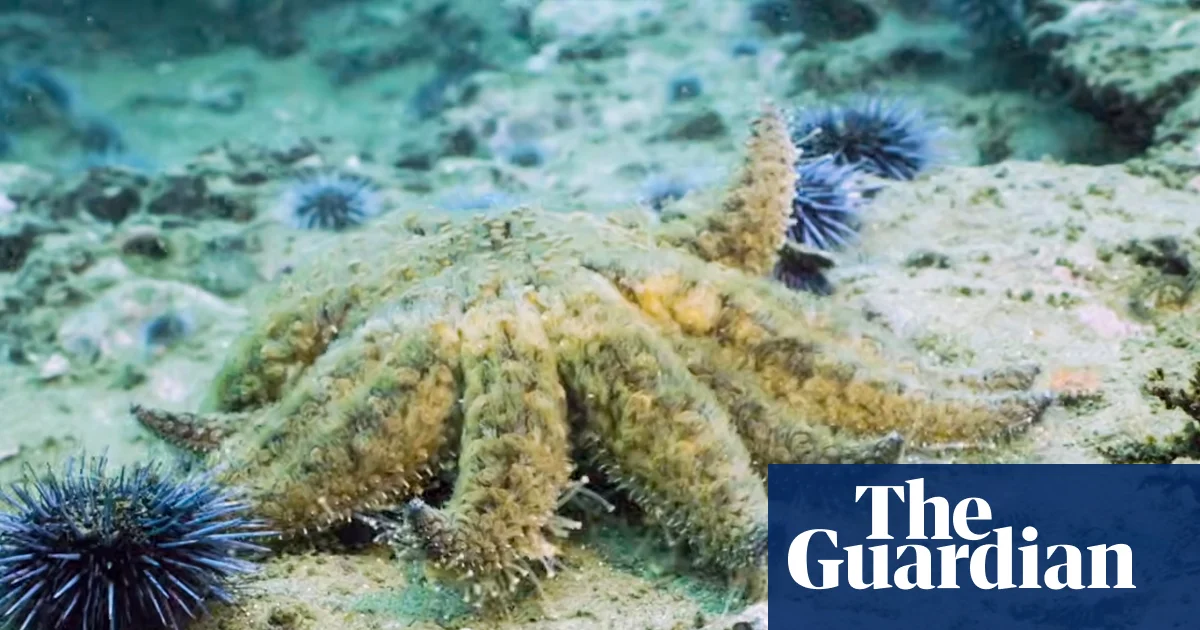
蒙特雷海岸外,加利福尼亚州,一支研究团队正为当天的第一次潜水做准备,即将进入太平洋寒冷而汹涌的水域。
Off the coast of Monterey, California, a team of researchers is gearing up for its first dive of the day into the cold and choppy waters of the Pacific Ocean.
在船的后甲板上,向日葵海星实验室的联合创始人阿什利·基德向潜水员下达了最后的指令:“第一次潜水……水中的海星。”潜水员携带装有此次任务真正主角的塑料袋跳入水中。在海底,他们将这些生物放入专门的笼子里,但保持笼门大开。目标是鼓励这些外星生物般的捕食者在它们曾经是水下生态系统关键组成部分的海床上游荡。
On the back deck of the boat, Ashley Kidd, a co-founder of the non-profit Sunflower Star Laboratory, gave the divers their final command: “Dive No 1 … stars in the water.”The divers plunge into the water carrying plastic bags containing the true stars of this mission. On the ocean floor, they place the creatures inside specialized cages but keep the doors wide open. The goal is to encourage these alien-like predators to roam the seabed where they were once a crucial part of this underwater ecosystem.
“今天我们有一只决定去散步的海星,”基德说,她正在追踪一只特别活跃的个体的行踪。
“We have a star that decided to go for a walk today,” Kidd said, tracking the progress of one particularly mobile subject.
基德的团队正致力于恢复向日葵海星,这是一种外观更像科幻作品而非传统海星的极度濒危海洋无脊椎动物。
Kidd’s team is working to restore the sunflower sea star, a critically endangered marine invertebrate that looks less like a traditional starfish and more like something out of science fiction.
“它们是海星,但这些家伙酷炫之处在于它们有超过五条臂,”基德说。“它们可以有多达24条臂,我们想把它们带回来。”太平洋的海洋末日这里的水下景观曾被高耸的海带森林主导。海带常被形容为海中的红木,生长速度可达每天2英尺,最高可超过10层楼。这些密集的水下树冠为数千种海洋物种提供了关键栖息地,并为海洋的生态引擎做出贡献,该引擎产生了大约一半的地球氧气。
“They are a sea star, but the cool thing with these guys is they have more than five arms,” Kidd said. “They can have up to 24 arms, and we want to bring them back.”A marine apocalypse in the Pacific The underwater landscape here was once dominated by towering kelp forests. Often described as the redwoods of the sea, kelp can grow taller than a 10-story building at rates of up to 2ft per day. These dense aquatic canopies form a critical habitat for thousands of marine species and contribute to the ocean’s ecological engine that produces roughly half of the oxygen on Earth.
它们也是抵御全球变暖的关键防线。全球范围内,海带森林每年通过从大气中吸收大量导致全球变暖的排放物来固定约2亿吨二氧化碳,并利用这些碳来生长。
They are also a crucial defense against global heating. Worldwide, kelp forests sequester approximately 200m tons of carbon dioxide every year by pulling large amounts of planet-warming emissions out of the atmosphere, which they use to grow.
然而,过去十年中,这些重要的水下栖息地在太平洋沿岸地区遭到了毁灭性破坏。
Yet over the past decade, these vital underwater sanctuaries have been decimated along the Pacific coast.
自2013年左右开始,由气候危机引发的海洋热浪导致西海岸水温飙升。温暖的海水加速了海星萎缩综合征的传播,这种疾病会 literally 溶解向日葵海星的身体,导致太平洋地区超过90%的向日葵海星种群被消灭。
Beginning around 2013, a marine heatwave fueled by the climate crisis spiked water temperatures across the west coast. The warm water accelerated the spread of sea star wasting syndrome, a disease that literally dissolved the bodies of sunflower sea stars, wiping out more than 90% of the Pacific population.
“从阿拉斯加到下加利福尼亚半岛,曾有60亿只向日葵海星,”向日葵海星实验室的联合创始人Reuven Bank说。“60亿,带个‘B’(十亿)。”当这些海星消失时,它们所维持的脆弱生态平衡也随之瓦解。
“There were 6bn sunflower stars from Alaska down to Baja California,” said Reuven Bank, a co-founder of the Sunflower Star Laboratory. “Six billion with a B.” When the stars disappeared, the delicate ecological balance dissolved with them. “95% of our kelp forests have disappeared in the last 10 to 12 years,” Bank said.
“在过去10到12年里,我们95%的海带森林已经消失,”Bank说。“恐惧的光环”向日葵海星以紫色海胆为食。随着海星的消失,海胆数量激增。成群的这些带刺食草动物铺满海底,贪婪地啃噬海带的根部和茎干,直至广阔的水下森林被剥夺生机,变成荒芜的沙漠。
The ‘halo of fear’Sunflower sea stars feed on purple sea urchins. With the stars gone, the urchin population exploded. Armies of these spiky grazers carpeted the seafloor, ravenously devouring the roots and stalks of the kelp until vast underwater forests were reduced to barren deserts.
为了逆转这种损害,研究人员正在竞相恢复他们所说的“恐惧的光环”。
To reverse the damage, researchers are racing to restore what they call the “halo of fear”.
“海胆和其他食草动物会闻到向日葵海星的气味,然后惊恐地逃开,”Bank说。“它们会躲藏更多,摄入更少,在各个方向多达16英尺范围内。它们吃海胆,也会吓退海胆。”在实验室里,Bank演示了一只健康的海星有多么贪婪。
“Urchins and other grazers smell a sunflower star coming and they take off in fear,” Bank said. “They hide more, they eat less, up to 16ft in every direction. They eat urchins and they scare urchins.”Back at the lab, Bank demonstrated just how voracious a healthy star can be.
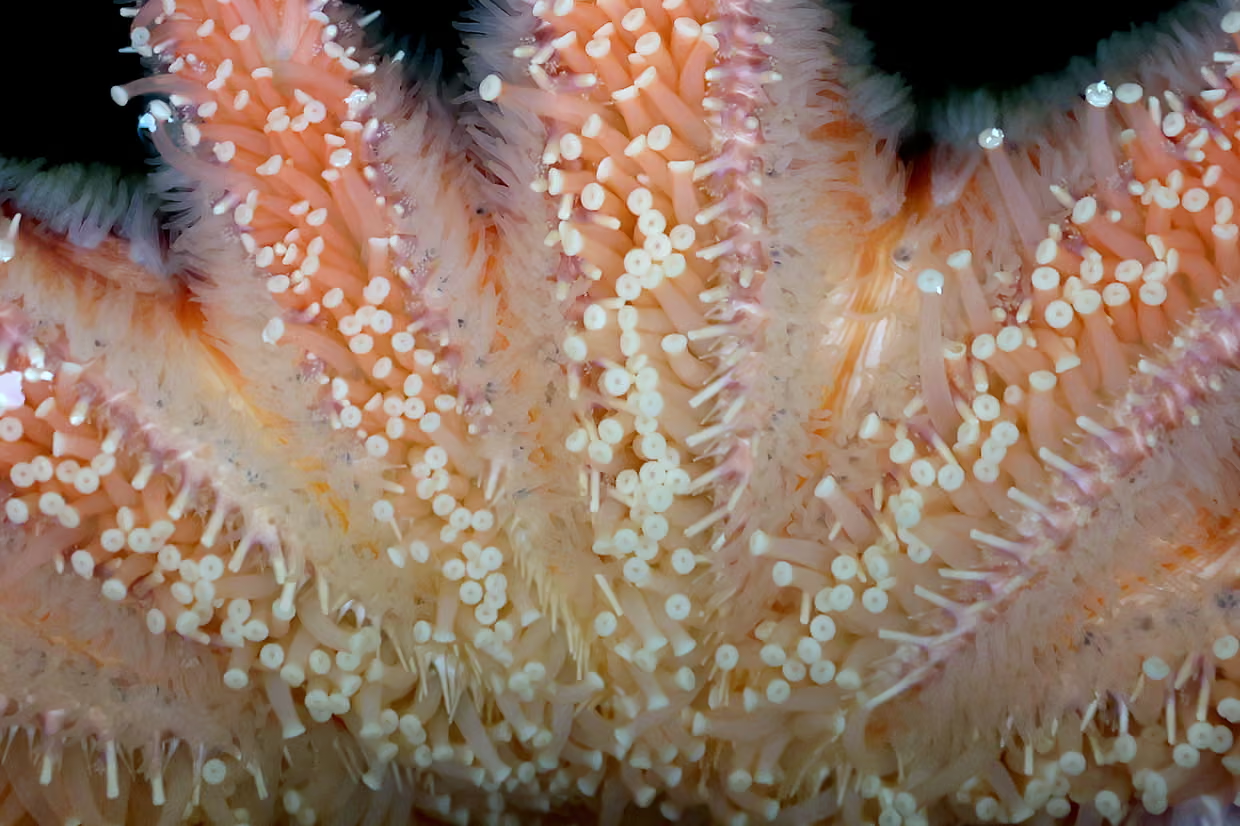
“所以这个荒唐的外星怪物在这里就是泰坦,”Bank说,他把一只紫色海胆直接放在一只大小如晚餐盘般的海星蔓延的臂上。“这只海胆完蛋了。它正被直接送进海星的嘴里。”利用数百根像液压系统一样工作的微小管足,一只向日葵海星一天可以吞食三到四只海胆。它们作为威慑力量的作用更大,因为仅仅是海星的气味就能迫使海胆躲藏,为年轻的海带提供扎根和生长的机会。
“So this ridiculous alien monster here is Titan,” Bank said, placing a purple urchin directly on to the sprawling arm of a sea star the size of a large dinner plate. “That urchin’s a goner. He’s funneling it straight to his mouth.”Using hundreds of tiny tube feet like a hydraulic system, a single sunflower star can devour three or four urchins a day. Their power as a deterrent is even greater, as the mere scent of a star forces urchins into hiding, giving young kelp a fighting chance to take root and grow.
从零开始重建生态系统在实验室的繁育设施内,研究人员正在开创性地发展复杂的海洋饲养技术,在温度可控的水箱中培育新一代海星。这项工作至关重要,因为太平洋沿岸的野生种群数量已降至灾难性的低点。“蒙特雷湾已知的向日葵海星数量为零,”班克说。
Rebuilding an ecosystem from scratch Inside the lab’s breeding facility, researchers are pioneering complex marine husbandry techniques to raise a new generation of sea stars in temperature-controlled tanks. The work is crucial as the wild population along the Pacific coast has reached catastrophic lows. “The known number of sunflower stars in Monterey Bay is zero,” said Bank.
他们的野外实验在加州属于首次。通过短暂将实验室培育的海星释放到海底,以研究其运动并监测当地海胆的行为反应,科学家们正在收集进行全规模野外重新引入所需的基线数据。
Their field experiments mark a first for California. By briefly releasing lab-raised stars on to the seafloor to study their movement and monitor the behavioral reactions of local urchins, scientists are gathering the baseline data needed for full-scale wild reintroduction.
如果试验成功,团队希望在未来几年内将该物种永久重新引入蒙特雷湾,从而引发一系列连锁反应,或许有一天能够修复受损的海岸线。
If the trials succeed, the team hopes to permanently reintroduce the species to Monterey Bay within the next few years, setting off a chain reaction that could one day heal a devastated coastline.
“恢复向日葵海星,”班克说,“是您在加州拯救我们濒危的海带森林所能采取的最重要的一步。”
“Restoring the sunflower star,” Bank said, “is the single most important step you can take to saving our beleaguered kelp forests here in California.”
气候中心(Climate Central)是一个由科学家和传播者组成的独立团队,他们研究并报道关于气候变化的事实以及它如何影响人们的生活。
Climate Central is an independent group of scientists and communicators who research and report the facts about our changing climate and how it affects people’s lives