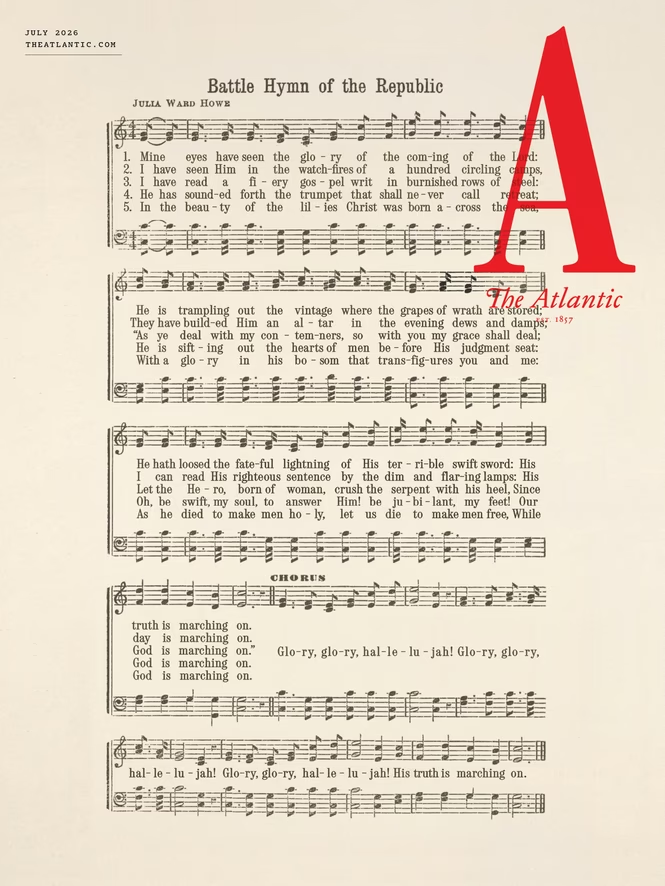
有时候是杂志的 吸引了我。七月刊的 印有《共和国战歌》的乐谱,这期杂志放在我的钢琴上,被反复大声播放。
Sometimes it’s the cover of the magazine that gets me. The July issue, featuring the music for “Battle Hymn of the Republic” on the cover, sat on my piano and was played loudly and often.
劳拉·卡迪纳尔《共和国战歌》是庆祝美国250周年纪念的恰当选择。文学学者伊莱恩·肖奥尔特为其作者朱莉娅·沃德·豪撰写了一部全面的传记。书名提醒人们,豪在为国家创作最持久的赞美诗的同时,也为平等和公众发声而战。肖奥尔特在我那本书的扉页上写道:“朱莉娅的座右铭是‘与时俱进!’这也是我们的良言。”该杂志选择在首次发表她的诗歌164年后再次庆祝她,表明这句话同样属于这本杂志,就像属于她一样。
Laura Cardinal“Battle Hymn of the Republic” is a fitting choice for a celebration of America’s 250th anniversary. The literary scholar Elaine Showalter wrote a comprehensive biography of its author, . The title is a reminder that Howe fought her own battle for equality and a public voice even as she gave the nation its most enduring hymn. In inscribing my copy of the book, Showalter wrote: “Julia’s motto was ‘Up to Date!’ Good words for us as well.”That has chosen to celebrate her again, 164 years after first publishing her poem, suggests that the motto belongs to this magazine as much as it did to her.
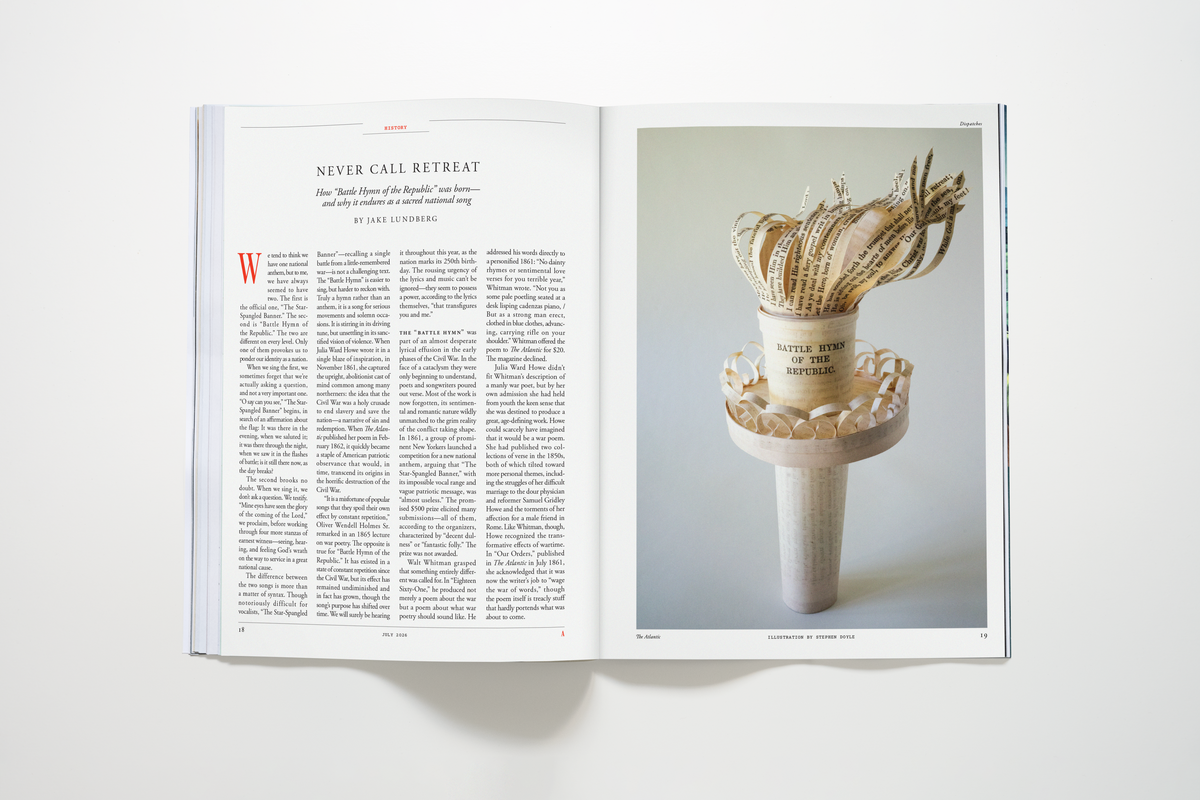
桑迪·夏皮罗杰克·伦德伯格的文章《永不呼叫退却》讲述了《共和国战歌》的历史与延续性,开篇指出我们似乎有两首国歌:不仅是《星条旗永不落》,还有《共和国战歌》。在我看来,我们实际上有三首,我惊讶地发现遗漏了《让每个声音歌唱》,这首歌常被称为黑人国歌。它由詹姆斯·韦尔登·约翰逊于1900年创作为一首诗,他的兄弟J·罗萨蒙德·约翰逊为其谱曲。
Sandy Shapiro Jake Lundberg’s story, “Never Call Retreat,” about the history and endurance of “Battle Hymn of the Republic,” begins with the observation that we seem to have two national anthems: not only “The Star-Spangled Banner,” but also the “Battle Hymn.”To my mind, we actually have three, and I was surprised by the omission of “Lift Every Voice and Sing,” often called the Black national anthem. It was composed in 1900 as a poem by James Weldon Johnson, and his brother, J. Rosamond Johnson, set it to music.
与另外两首不同,这首歌没有提及战争,而是拥抱我们作为美国人共同生活中的悲伤与庄严。在我教堂,我们每月一次将这首深受喜爱的国歌作为开场赞美诗来演唱。
The song, unlike the other two, makes no reference to war and embraces both the sorrow and the majesty of our shared life as Americans. In my church, we sing this beloved anthem as our opening hymn once a month.
唐娜·简·克鲁普金杰克·伦德伯格认为,美国有两首国歌——一首是官方的《星条旗永不落》,另一首是非官方但神圣的朱莉娅·沃德·豪的《共和国战歌》。我愿意再添加一首:约翰·牛顿的《奇异恩典》,这首赞美诗充当着精神上的国歌,并引发人们对我们国家废除奴隶制斗争的更深层反思。
Donna Jane Krupkin Jake Lundberg argues that the United States has two national anthems—one official, “The Star-Spangled Banner,” and another unofficial but sacred, Julia Ward Howe’s “Battle Hymn of the Republic.”I would add a third: John Newton’s “Amazing Grace,” a hymn that serves as a spiritual national anthem and provokes deeper introspection into our country’s struggle to abolish slavery.
牛顿于1772年创作了《奇异恩典》的歌词,比弗朗西斯·斯科特·基创作《星条旗永世飘扬》早了42年。而我把《战歌》视为废奴运动行动的号角,《奇异恩典》则一直是寻求自由者的灵魂颂歌。
Newton wrote the words to “Amazing Grace” in 1772, 42 years before Francis Scott Key wrote “The Star-Spangled Banner.”Whereas I see the “Battle Hymn” as the battle cry for action in the abolitionist cause, “Amazing Grace” was and remains the soulful anthem for those seeking freedom.
我祈祷《奇异恩典》和《战歌》在空中波及和我们社区中的复兴,能够引领我们的国家走上一条通向所有美国人真正自由的新道路。
I pray that a resurgence of “Amazing Grace” and the “Battle Hymn” over the airwaves and in our communities may lead our nation down a new path toward real freedom for all Americans.
杰里·阿尔布里顿《永不后退》提供了《共和国战歌》起源的有趣历史背景,以及这首歌在美国生活中的持久地位。但我对将《战歌》视为非官方国歌的建议持异议。
Jerry Albritton“Never Call Retreat” provides interesting historical background on the origins of “Battle Hymn of the Republic” and the song’s enduring place in American life. But I take issue with the suggestion that the “Battle Hymn” should be regarded as an unofficial national anthem.
我们的官方国歌已经具有战争主题。我们是否还需要另一首受战争启发的歌曲,尤其是一首暗示特定基督教上帝的歌曲?
Our official national anthem is already battle-themed. Do we need yet another war-inspired song, especially one that implies a specifically Christian God?
我认为,《美丽的美国》更适合作为国歌,因为它赞美了我们国家的壮丽,并唤起了我们建国文件的原则。
I would argue that “America the Beautiful,” which celebrates the grandeur of our country and evokes the principles of our founding documents, ought to be our national anthem.
欧文·詹森《共和国战歌》在许多庄严场合被演唱。我是在1965年1月30日,在伦敦圣保罗大教堂观看温斯顿·丘吉尔的葬礼电视直播时,作为一个15岁的少年第一次接触到它的。在仪式中,哀悼者们聆听着由巨大合唱团演奏出的《共和国战歌》的宏伟声音。那是一次真正感人的经历,我永远不会忘记。后来我才知道,这首歌是应丘吉尔的请求而演奏的。
Owen Jansson The “Battle Hymn of the Republic” has been sung at many solemn occasions. I was introduced to it as a 15-year-old while watching Winston Churchill’s funeral on television on January 30, 1965, at St. Paul’s Cathedral in London. During the service, mourners listened to the glorious sound of the “Battle Hymn,” projected by a huge choir. It was a truly moving experience, and one I won’t forget. The hymn, I later learned, had been performed at Churchill’s request.
奈杰尔·克莱门茨 我的父亲,理查德·P·康迪,从1957年到1974年指挥摩门 tabernacle 合唱团。“共和国进行曲”总是让我想起他与尤金·奥曼迪以及费城交响乐团的合作。当我的父亲正在为与该乐队为哥伦比亚唱片公司录制专辑做准备时,他凌晨2点给奥曼迪打电话,请他查看“共和国进行曲”的乐谱。几天之后,奥曼迪回电说他对这个想法并不“兴奋”,也不确定它会不会好。然而,在父亲的坚持下,奥曼迪最终妥协,同意将这首歌加入录音。
Nigel Clements My father, Richard P. Condie, directed the Mormon Tabernacle Choir from 1957 to 1974. “Battle Hymn of the Republic” always reminds me of his collaboration with Eugene Ormandy and the Philadelphia Orchestra. While my father was preparing for a recording with the orchestra for Columbia Records, he called Ormandy at 2 a.m. and asked him to look at the score of the “Battle Hymn.”Days later, Ormandy called back and said he wasn’t “excited” by the idea and wasn’t sure it would be good. However, at my father’s insistence, Ormandy relented and agreed to include the song on the recording.
1959年,摩门 tabernacle 合唱团的《共和国进行曲》成为一首意外的热门歌曲,在Hot 100排行榜上排名第13,并保持了16周。次年,我的父亲凭借这场演出获得了格莱美奖。这张唱片让合唱团和交响乐团一举成名,也促成了我父亲与奥曼迪终身的合作与友谊。
In 1959, the Mormon Tabernacle Choir’s “Battle Hymn of the Republic” became an unlikely hit, reaching No. 13 on the Hot 100, where it remained for 16 weeks. My father won a Grammy for the performance the following year. The recording catapulted the choir and orchestra to prominence and forged a lifelong collaboration and friendship between my father and Ormandy.
《共和国进行曲》的歌词讲述了人类灵魂的永恒真理。也许正是在那个夜晚,当我的父亲给奥曼迪打电话时,他才意识到这一点。如果我们作为一个国家能够真正领悟朱莉娅·沃德·豪的话语:超越自我;用宽恕、爱与慈善战胜仇恨、邪恶与复仇;拥抱人类灵魂的神圣潜能。那么,我想,我们就能有信心地说:“他的真理在前进。”
The lyrics of the “Battle Hymn” speak to the eternal truths of the human soul. Perhaps that’s what my father realized when he called Ormandy that night. If only we as a nation would take Julia Ward Howe’s words to heart: Be transfigured; overcome hatred, evil, and vengeance with forgiveness, love, and charity; and embrace the divine potential of the human soul. Then, I think, we could say with confidence that “His truth is marching on.”
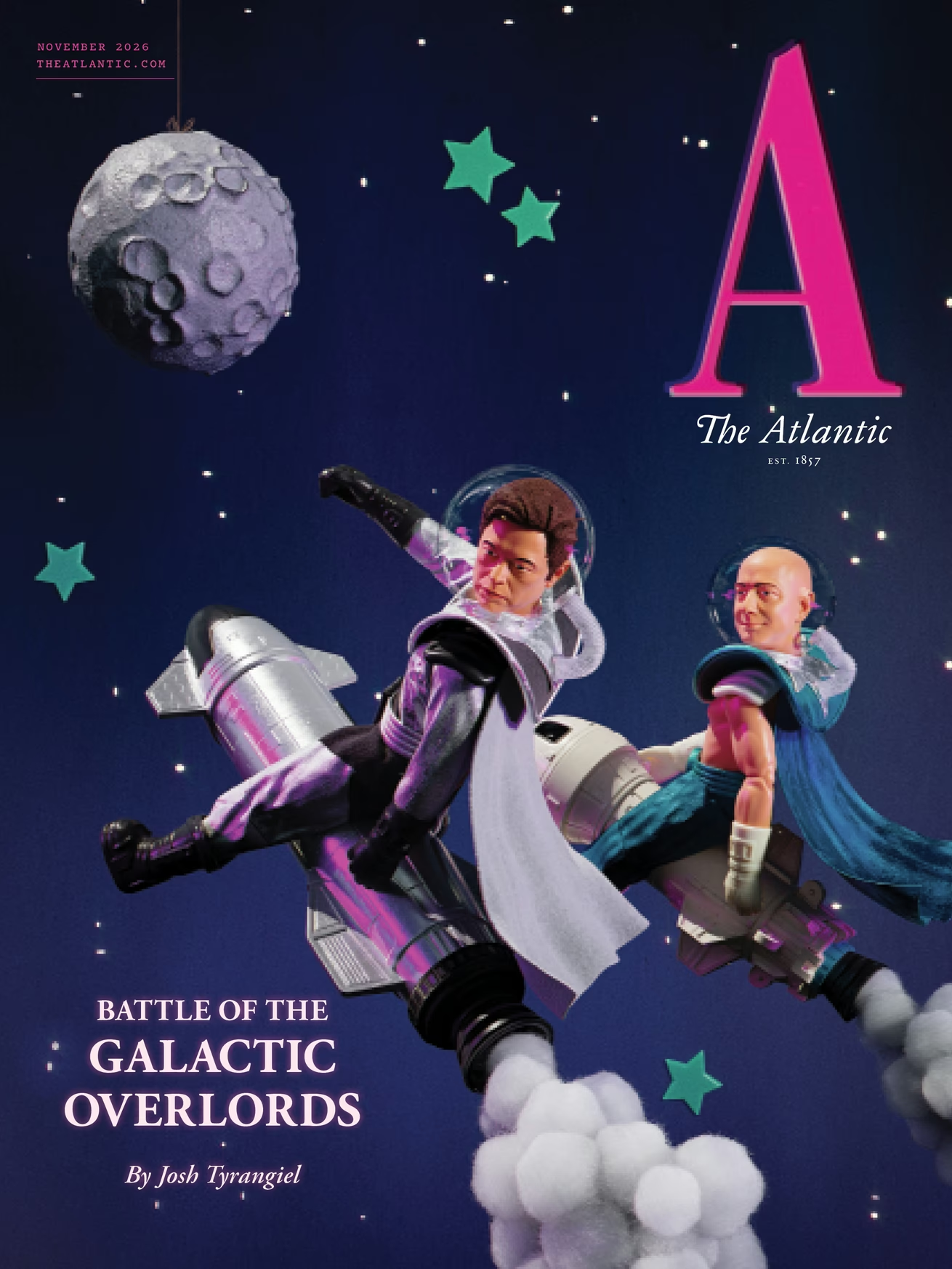
珍妮特·康迪·皮尔森 本月 故事《选择你的统治者》中,乔什·特朗吉尔报道了杰夫·贝索斯和埃隆·马斯克在地球之外塑造人类未来的竞争。由于他们拥有巨额财富,特朗吉尔写道,这两位多变的亿万富翁如今掌握着传统上仅属于国家的权力水平。为我们的 图像,艺术家托马斯·伯登将贝索斯和马斯克描绘成正在太空中激烈对决的动作人偶。— 科林·亨特,
Jeanette Condie Pearson In this month’s cover story, “Choose Your Overlord,” Josh Tyrangiel reports on the race between Jeff Bezos and Elon Musk to shape humanity’s future beyond Earth. Because of their immense wealth, Tyrangiel writes, the two mercurial billionaires now wield a degree of power traditionally reserved for nation-states. For our cover image, the artist Thomas Burden rendered Bezos and Musk as dueling action figures hurtling into space. — Colin Hunter,