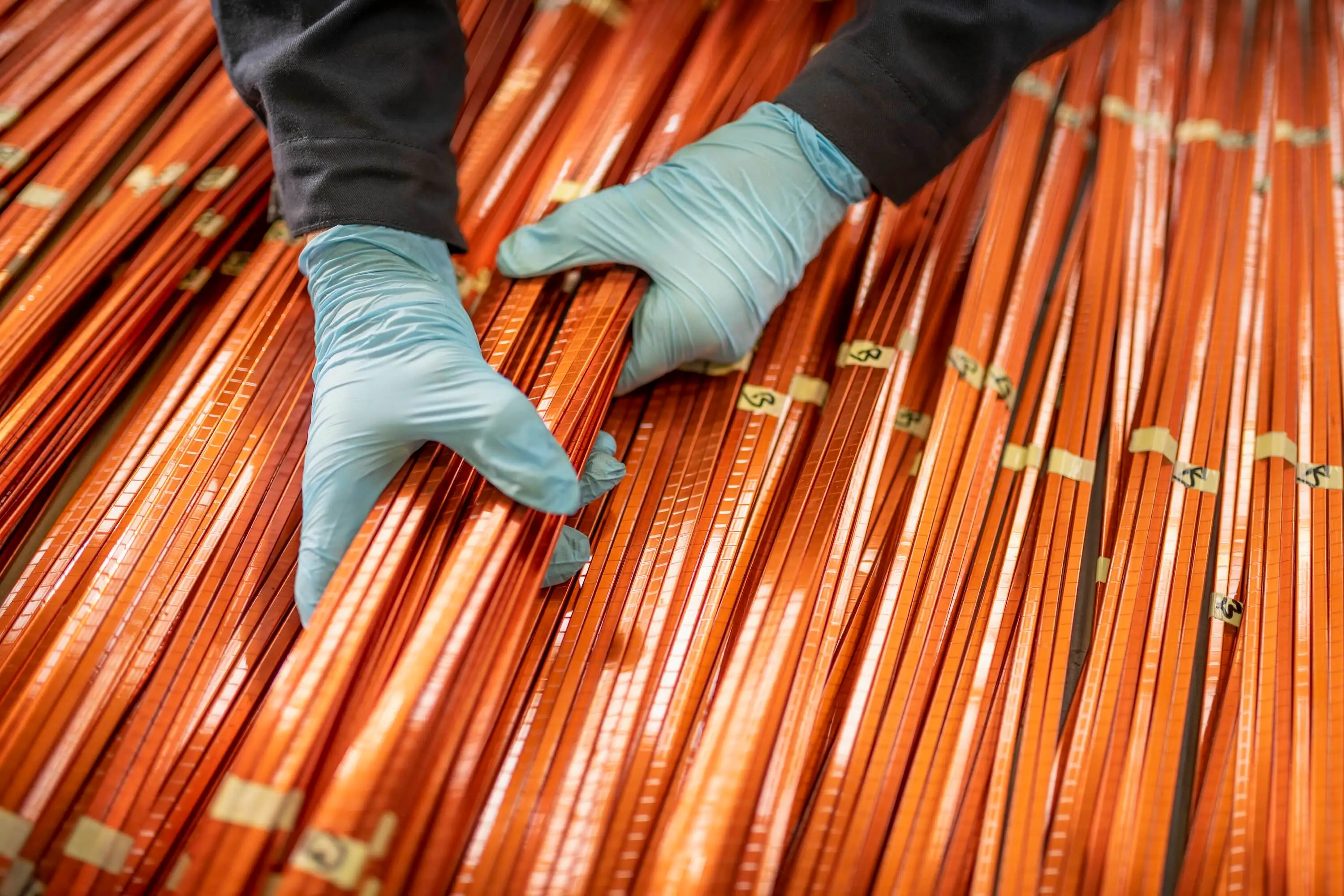
在人工智能数据中心的蓬勃发展和全球经济电气化的背景下,世界将需要更多的铜。到2040年,铜供应可能比需求少25%。
Between the AI data center boom and economy-wide electrification, the world will need a lot more copper. By 2040, copper supplies could fall 25% short of demand.
这对矿业行业来说是一个艰巨的任务,因为该行业主要通过开设新矿来提高产量,而这是一项成本高昂且依赖运气的努力。通常情况下,只有0.3%的潜在矿山能够成功投产。
That’ll be a tall order for the mining industry, which boosts production mostly by opening new mines, which is a costly, luck-driven endeavor. Typically, just 0.3% of prospective mines pan out.
一批新兴的关键矿物初创公司正在探索利用生物技术从现有矿山中提取更多铜的新方法,主要聚焦于堆浸工艺——在这一过程中,微生物有助于将矿物质与废料分离。Endolith公司研发出了“奥运会级别”的微生物,Ceibo公司正在开发自己的菌株,而Transition Metal Solutions公司则开发了益生元以提升微生物活性。
A new wave of critical minerals startups have been working on new ways to squeeze more copper out of existing mines using biotechnology, mostly by focusing on heap leaches, where microbes help separate minerals from waste. Endolith has created “Olympic caliber” microbes, Ceibo is working on its own strains, and Transition Metal Solutions has developed prebiotics to boost microbial activity.
长颈生物(Giraffe Bio)则采取了另一种方法。这家初创公司正在研发特定于矿物的化学品,以帮助矿山多回收多达5%的铜。长颈生物的联合创始人兼首席执行官亚历杭德罗·布福·森佩(Alejandro Buffo Sempé)对TechCrunch表示:“在采矿业中,这个数量‘确实非常重要’。”大多数公司如果能多回收1%到2%的铜就会感到满意。
Giraffe Bio is taking an alternative approach. The startup develops mineral-specific chemicals to help mines recover up to 5% more copper. In mining, that amount “is really very material,” Alejandro Buffo Sempé, co-founder and CEO of Giraffe Bio, told TechCrunch. Most would be happy with an additional 1% to 2%.
该公司表示,它能够提取更多铜,因为它能够根据每座矿山的矿物成分来设计专用化合物。
The startup says it can extract more copper because it’s able to engineer compounds specific to each mine’s mineral content.
为了将这项技术从实验室推向市场,长颈生物最近完成了一轮由Orion Industrial Ventures领投的640万美元种子轮融资,BHP Ventures、Twynam、Air Capital和Baruch Future Ventures也参与了投资,TechCrunch独家获悉了这一消息。
To bring the technology out of the lab, Giraffe Bio recently raised a $6.4 million seed round led by Orion Industrial Ventures, with participation from BHP Ventures, Twynam, Air Capital, and Baruch Future Ventures, TechCrunch has exclusively learned.
与其将被认为有助于铜提取的细菌直接洒在矿石上,长颈生物选择在生物反应器中培育工程化微生物以生产定制化合物。这些化学品随后被注入矿山现有的工艺流程中。
Rather than douse ores with bacteria thought to facilitate copper extraction, the company grows engineered microbes in a bioreactor to produce the bespoke compounds. Those chemicals are then inserted into a mine’s existing process.
布福·森佩表示:“我们可以利用所有的生物机制,而无需在[采矿]环境中维持微生物的存活——这在这些环境中非常复杂。”
“We can leverage all of the biological machinery without having to deal with keeping alive a microbe, which is very complicated in [mining] environments,” Buffo Sempé said.
这家初创公司从铜开始,但表示其平台也可以针对其他矿物进行定制。“这很美妙,因为我们可以针对铜,也可以针对金或银,”他说。
The startup is beginning with copper, but it says its platform can be tailored to other minerals, too. “The beauty of this is that we can target copper or we can target gold or silver,” he said.
该初创公司的化合物用于矿山的浮选过程。在浮选过程中,化学品帮助矿物在水浴中要么浮起要么下沉,使操作员能够将所需矿物从表面撇去。化学品与目标矿物结合得越紧密,可回收的量就越多。“我们在仅提取铜方面非常出色,”布福·森佩说。
The startup’s compounds are used in a mine’s flotation process. In flotation, chemicals help minerals either float or sink in a bath of water, allowing the operators to skim the desirable minerals off the top. The tighter the chemicals bind to the minerals of interest, the more that can be recovered. “We are extremely good at only picking up the copper,” Buffo Sempé said.
矿山还会使用一种称为抑制剂的化学品,它能与砷等不想要的化合物结合并将其从混合物中沉淀出去,从而在顶部留下更多理想产物。首席执行官表示,长颈鹿生物也在利用同样的生物技术平台开发抑制剂。
Mines also use chemicals called depressors, which bind to unwanted compounds like arsenic and sink them out of the mix, leaving more desirable products at the top. Giraffe Bio is using the same biotech platform to develop depressors as well, the CEO said.
除了提升矿山产量,长颈鹿生物还能在浮选过程中替代有毒化学品。
In addition to improving mine production, Giraffe Bio can supplant toxic chemicals in the flotation process, too.
“与其倒入通常对环境非常有害的化学品,我们正用生物分子来替代它们在浮选过程中提供的功能,”布福·森佩说。“我们正在最小化摩擦,以最大化产出。”
“Instead of pouring chemicals that are usually very harmful for the environment and so forth, we’re replacing the function that they are providing to the flotation process with a biomolecule,” Buffo Sempé said. “We’re minimizing the friction towards maximizing the output.”