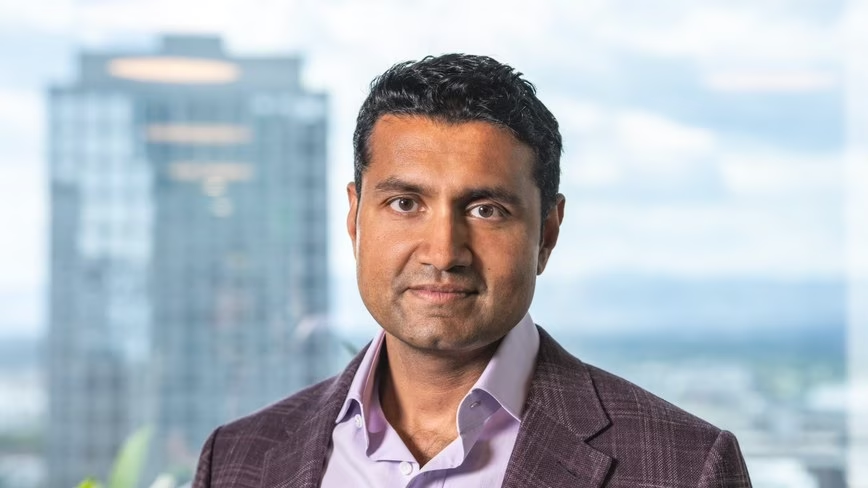
帕兰蒂尔公司的首席技术官希亚姆·桑卡尔周日在做客CBS的《Face the Nation》节目时表示,美国国防部已经替换了Anthropic公司的人工智能模型,且并未对日常运作造成任何影响。“那些模型早已被替换了,”桑卡尔说道。
The Pentagon has already replaced Anthropic’s AI models, with no operational impact, Palantir’s chief technology officer, Shyam Sankar, said on CBS’s Face the Nation on Sunday. “It’s already been replaced,” Sankar said.
此前,由于在军事人工智能的安全保障措施问题上产生分歧,美国国防部决定停止使用Anthropic公司的产品,并将其列为供应链风险企业。Anthropic开发的Claude模型原本是帕兰蒂尔公司Maven智能系统的一部分,而该系统正是美国国防部所使用的工具。
The Pentagon stopped using Anthropic’s products after a dispute over its safeguards for military AI. It labelled the company a supply chain risk. Anthropic’s Claude was part of Palantir’s Maven Smart System, which the Pentagon uses.
桑卡尔称,目前国防部使用的是xAI、OpenAI以及谷歌开发的人工智能模型,还有英伟达推出的Nemotron这类开源权重模型。负责开发人工智能应用的用户可自行挑选所需的模型。
The Department now uses models from xAI, OpenAI and Google, and open-weight models such as Nvidia’s Nemotron, Sankar said. Users building AI applications pick the models they use.
他补充道,这种自由选择并随时切换模型的能力正是推动帕兰蒂尔商业业务增长的关键因素。所谓的“末日邪教”桑卡尔认为,正是“有效利他主义”引发了人们对人工智能的诸多担忧。他指出,全美约2000名人工智能研究人员中,绝大多数都认同这一理念。
The ability to choose and switch models is what has been driving Palantir’s commercial growth, he added. A “doomsday cult”Sankar blamed effective altruism for much of the fear around AI. He said most of America’s roughly 2,000 AI researchers share its worldview.
“说到底,这就是一种带有千年末日预言色彩的‘邪教’,还夹杂着救世主情结,也就是所谓的‘有效利他主义’,”他解释道。
“It’s really this millenarian doomsday cult meets messianic complex called effective altruism,” he said.
他举例提到研究人员雅各布·考克斯顿,后者曾断言人工智能导致人类灭绝的概率高达10%。桑卡尔认为这其实是一种神学层面的批判,而非科学论断。他还提及了一个关于吸烟的言论。
He cited researcher Jacob Coxon, who has put a 10% chance on AI ending humanity. Sankar called that a theological critique rather than a scientific one. He also made a claim about smoking.
“很多人工智能研究人员开始吸烟,就是为了向同行们表明自己对人工智能的坚定信念,”桑卡尔说道。不过他并未指明具体是哪些研究人员,也未提供任何佐证。目标选定并非由人工智能决定桑卡尔将军事目标选定过程描述为一个系统性流程,而非由人工智能单独做出的决策。他介绍称,过去要在一天内执行1000次打击任务,需要50名人员花费两周时间进行规划;如今借助人工智能技术,仅需一人花上4小时即可完成。
“So many AI researchers have started smoking as a way of signaling to other researchers how much they believe in AI,” Sankar said. He did not name any researchers or give evidence for the claim. Targeting as a process Sankar described military targeting as a process rather than a choice made by AI. Executing 1,000 strikes in a single day once took two weeks of planning by 50 people, he said. With AI, one person can do it in four hours.
“人们总是立刻联想到‘人工智能负责挑选打击目标’这种情形,但事实并非如此,”他强调道。
“People jump immediately to something like AI picking the targets. That’s not what’s happening,” he said.
主持人玛格丽特·布伦南询问了美国对伊朗米纳布一所学校的袭击事件。据彭博社9月的报道,在此次袭击之前,中央司令部的一些工作人员过度依赖了名为“Maven”的人工智能系统;该报道引用了参与 Pentagon 审查的官员的话。彭博社还指出,此次袭击导致至少123名儿童死亡。
Host Margaret Brennan asked about the US strike on a school in Minab, Iran. In September, Bloomberg reported that some Central Command staff relied too heavily on AI in Maven before the strike, citing officials involved in an unreleased Pentagon review. The strike killed at least 123 children, Bloomberg reported.
桑卡尔表示,相关报道并不准确,事故的根源很可能是人为失误,并强调所有人应等待最终的调查报告。他补充说,在袭击发生后,Palantir 公司增加了人工智能系统的使用数量,以重新核查那些不由该公司负责的处理流程。
Sankar said the reporting was inaccurate and the likely cause was human error, adding that everyone should wait for the final report. After the strike, Palantir built extra AI agents to double check work in a part of the process it does not own, he said.
桑卡尔表示,他不清楚 Pentagon 何时会公布调查报告。一群120名众议院民主党议员已就此次袭击事件致信国防部长皮特·赫格塞斯。他还表示,Palantir 公司已向国会说明了“Maven”系统的使用情况。今年6月,Anthropic 公司的首席执行官表示,他们不清楚是否有人在伊朗学校的袭击事件中使用了该公司的 AI 系统。
He said he did not know when the Pentagon would publish its report. A group of 120 House Democrats wrote to Defense Secretary Pete Hegseth about the strike. Sankar said Palantir has briefed Congress on Maven. In June, Anthropic’s chief executive said he did not know whether anyone used Claude in the Iran school strike.
在“Hugging Face”事件中,相关 AI 模型只是按照用户的指令行事,桑卡尔指出;他认为这些模型属于有缺陷的产品,因此相关 AI 公司应承担责任。他建议应通过现有法律来规范人们使用 AI 的行为,并强调需要建立相应的事件应对和报告机制。
Liability and rules In the Hugging Face incident, the models only did what someone told them to do, Sankar said. He called it a defective product and said the AI companies would be liable. Existing agencies such as the FDA should regulate how people apply AI, he said.
桑卡尔还提到,Palantir 公司并未签署上个月白宫制定的 AI 相关协议;该协议仅适用于那些开发 AI 模型的企业,而 Palantir 并不属于此类企业。他表示,关于谁应该负责制定报告机制的问题,应交由新的 AI 监管机构——杰伊·克莱顿(Jay Clayton)来决定。
Existing laws give a “massive running head start”, he said, though there will need to be an incident response and reporting regime. Palantir did not sign the White House AI accord last month. Sankar said the accord was for companies that make AI models, which Palantir does not. He deferred to the new AI czar, Jay Clayton, on who should run the reporting regime.
此外,桑卡尔本人还担任陆军预备役执行创新军团的中校,负责处理与陆军人力资源相关的工作。
Sankar is also a lieutenant colonel in the Army Reserve’s Executive Innovation Corps, where he works on Army human resources.