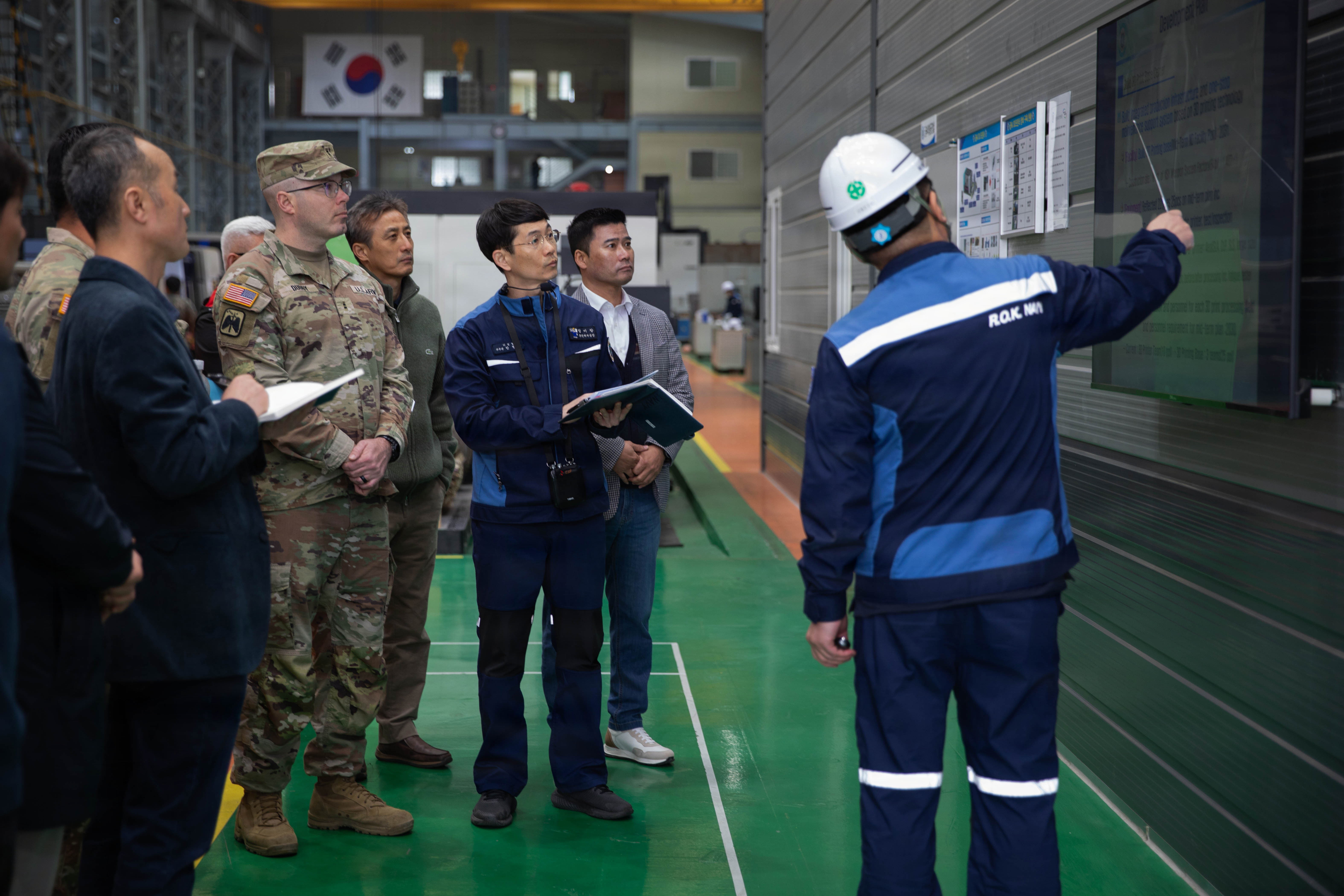
在太平洋地区,一个小小的螺栓便可能引发大麻烦,甚至导致装备交付延误数月之久。周一,斯科特·卡彭特上校在美国陆军协会年会上展示的这个螺栓,属于“通用远程操控武器站”的炮塔部件,目前该部件的供货排期已排至2027年2月。
In the Pacific, a single bolt can become a giant headache and the source of months of delay. The bolt that Col. Scott Carpenter held up Monday during the Association of the United States Army’s annual meeting belonged to a Common Remotely Operated Weapon Station turret, and it is back-ordered until February 2027.
卡彭特所指挥的美国陆军韩国物资支援司令部的官兵们通过减材制造工艺自行加工出了这个螺栓,制作成本仅为1.27美元。这一举措不仅避免了数月的交货延迟,还节省了300多美元的采购费用。
At U.S. Army Materiel Support Command — Korea, the unit Carpenter commands, soldiers built the bolt through the drill-out process of subtractive manufacturing for a cost of $1.27, avoiding months of delay and saving more than $300 in the process.
随着驻韩美军第八集团军不断完善后勤保障能力,该部队正大力投入先进制造技术,旨在为当地美军部队乃至整个太平洋地区的部队提供各类零部件。
As the Eighth Army in Korea builds out its logistics capability, it’s investing in advanced manufacturing with an eye to supplying spares, not only to local Army forces, but also to troops across the Pacific region.
“我希望把这里打造成印太司令部的先进制造中心,”卡彭特在AUSA年会期间接受记者采访时说道,“这就是我的目标。”今年早些时候,第八集团军官员曾提到,在韩国设立区域性后勤保障中心,即集物资供应、设备维护与补给于一体的枢纽,有望大幅减轻远距离后勤保障的压力并降低相关成本。周一的一场圆桌会议上,第八集团军司令约瑟夫·希尔伯中将透露,部队正着手推进这一后勤保障中心的建设工作。
“I want to be the advanced manufacturing center for INDOPACOM,” Carpenter said at an engagement with reporters at the AUSA meeting. “That’s my goal.”Eighth Army officials spoke earlier this year about how establishing a Korea-based regional sustainment hub, or center for logistics, maintenance and supply, could cut down the burden and cost of long-distance sustainment. At a roundtable event Monday, Eighth Army Commander Lt. Gen. Joseph Hilber indicated the force was moving out to build that sustainment hub.
“现在,我们不再将那些可能需要大修的设备送回美国,而是考虑在韩国就地对其进行维修,以便让这些设备能够更长时间地继续服役、继续参与战斗——让它们留在国际日期变更线以西的区域。”希尔伯说道。“这需要我们提升各种制造和维修能力,包括零部件的制造、材料的加工,以及将维修后的设备重新投入战斗的能力。”卡彭特表示,第八军已经组建了跨军种、跨地区的维护支援团队,这些团队被派往日本冲绳的第三海军陆战队远征军以及夏威夷,为陆军部队提供支援。
“Now, rather than taking equipment that might need a major overhaul and send it back to the United States, we’re looking at ways that we can overhaul it there in Korea and keep it in the fight longer. Keep it west of the [International Dateline] longer,” Hilber said. “That’s going to involve everything from some added manufacturing capabilities to additional repair capabilities that we’ve got in there in terms of being able to fabricate parts, being able to fabricate materials, and then being able to return that equipment back into the fight.”The Eighth Army has already resourced maintenance support teams that cross service and regional boundaries, departing the Korean Peninsula to support the III Marine Expeditionary Force in Okinawa, Japan, and to Hawaii to support Army rotational units, Carpenter said.
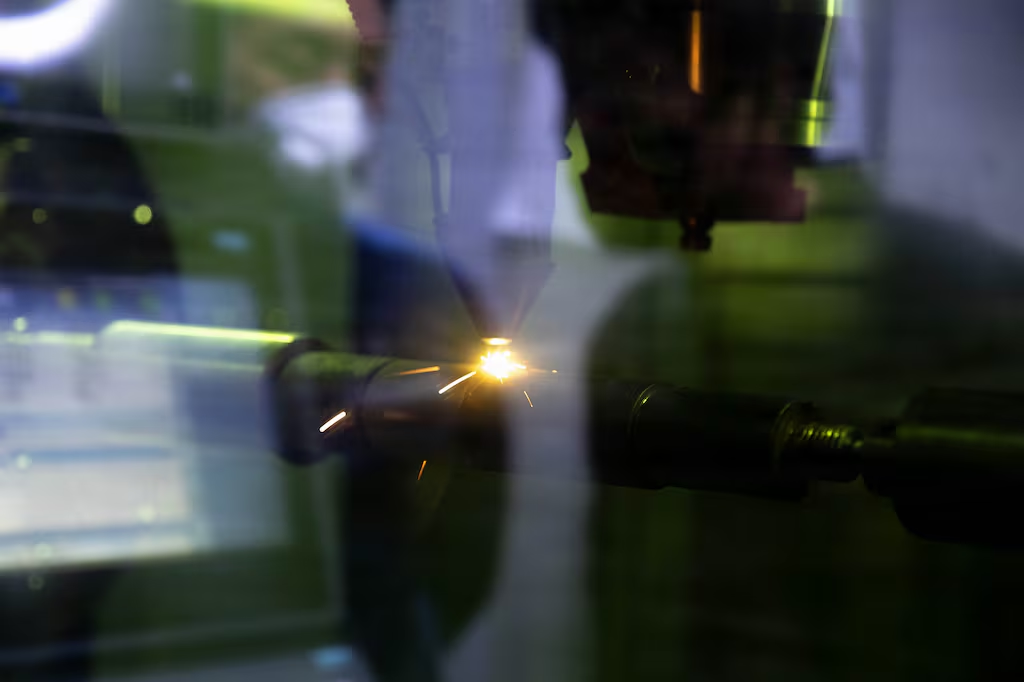
卡彭特进一步解释说,第八军正在利用增材制造(3D打印)和减材制造技术(从金属块中切割出所需零件)来生产越来越多的关键零部件。该军的物资保障部门最近购置了一台金属3D打印机,并正在建设相应的基础设施来支持其使用。
Through additive manufacturing, or 3D printing, and subtractive manufacturing, or cutting a part out of a solid block of metal, the Eighth Army is manufacturing an increasing number of critical parts, Carpenter said. The materiel support command recently acquired a metal 3D printer and is now building out infrastructure to house it.
“我们预计到1月或2月,这台金属3D打印机就能投入使用。我的目标是……能够直接用3D打印出所需的螺栓。”卡彭特说。
“But we think come January, February, the metal 3D printer [will be] in, and my goal is … I would like to get to a point where I can 3D print the bolt,” Carpenter said.
他预计到明年夏天,第八军将收到价值300万美元的先进制造设备;在2028财年预算中,还将申请额外购置价值1000万美元的机械设备。
By next summer, he said, the Eighth Army is set to receive $3 million worth of advanced manufacturing machines, with some $10 million worth of additional machinery set to be requested in the Army’s fiscal 2028 budget.
“到时候我们就能打印保险杠、车门等部件了——这些可不是普通的桌面打印机所能完成的。”卡彭特补充道。最近,一个位于关岛的军事单位请求制造一个原本需要花费3.6万美元的零件,韩国的团队通过减材制造技术仅花费了82美元就完成了这个任务。
“I’ll be able to print bumpers; I’ll be able to print doors,” Carpenter said. “These are not just desktop printers.”Recently, he said, a Guam-based military unit requested an assembly that would have cost $36,000. The Korea-based team built it through subtractive manufacturing for $82.
卡彭特还提到,通过专门的申请系统,任何联合部队成员都可以提出零件制造请求,系统会将其转交给位于韩国大邱的陆军后勤中心进行处理。
Through a request system, Carpenter said, any joint forces member can now request a part and get routed to the Army’s logistics hub in Daegu, South Korea.
“如果你是驻扎在冲绳的海军陆战队员,需要这个螺栓……我可以以极低的成本把这个螺栓送还给海军陆战队员,而且比他们通过供应系统订购要快得多,”他说。“因此,我们仍然在第一岛链内部维持作战能力。”希尔伯特表示,第八军仍面临一些障碍,包括与制造商的知识产权限制;数据共享,以确保先进制造工艺生产的零部件符合规格;以及无缝衔接到既有的陆军后勤系统——而这些系统本来并不是为这种新型零部件生产方式设计的。
“If you’re the Marines operating in Okinawa and you need this bolt … I get this bolt back over to the Marine at a fraction of the cost, and a lot quicker than if they were to order through the supply system,” he said. “So again, we’re maintaining combat power inside the First Island Chain.”Hilbert said some hurdles remained for the Eighth Army, including intellectual property restrictions with manufacturers; data-sharing to ensure the advanced manufacturing processes deliver components that are up to spec; and seamless connection into existing Army logistics systems not designed for these new modes of parts production.
“我们正在继续推进这些工作,以便我们能够更快地进行维修,”希尔伯特说。
“We’re continuing to work through those pieces to enable us to fix faster,” Hilbert said.