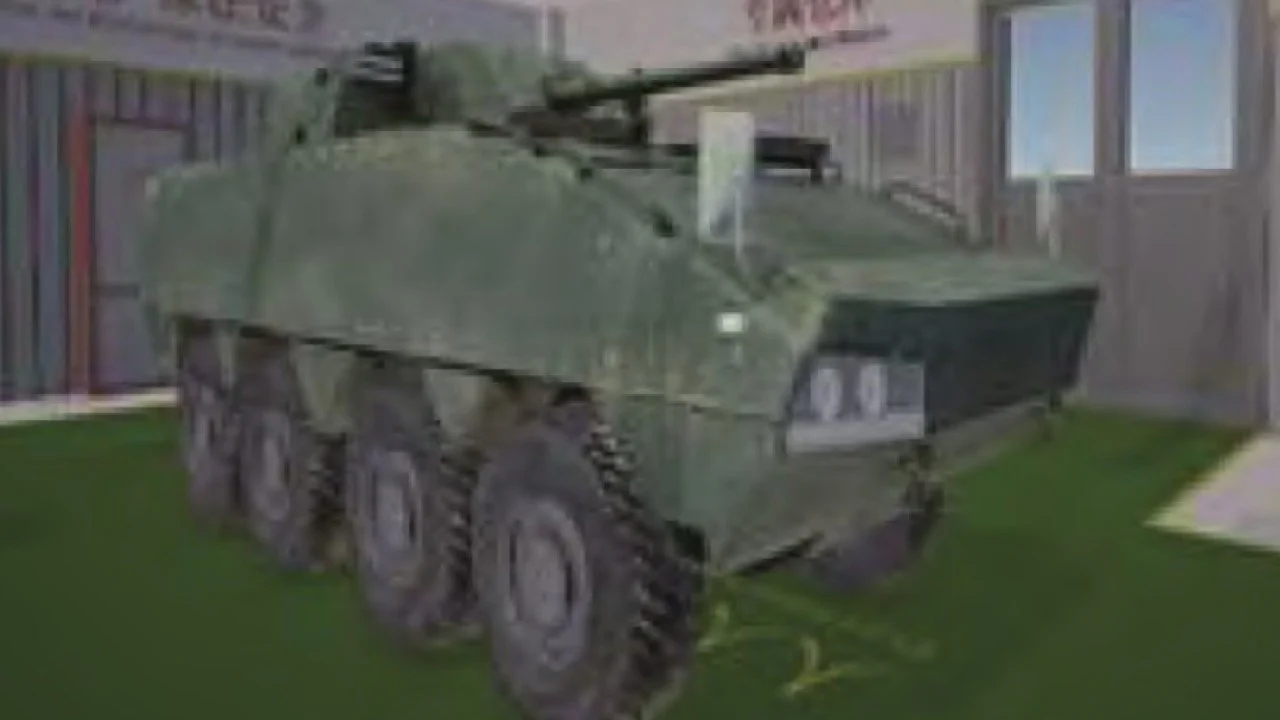
一支中国科研团队提出了四种能够在战时环境中快速切换的装备,包括能够在水下深处长时间作业的装置,因为多域作战预计将在未来数十年内发展。
A Chinese research team has proposed four types of equipment that could rapidly switch between wartime environments, including operating deep under water for long periods, as multi-domain combat is set to develop in the coming decades.
科研人员称,这种“异构”装备通过在数秒内快速重新配置物理模块和功能,能够在陆地、水面、空中和电磁争夺场等多种作战环境中执行任务,旨在超越传统装甲车辆的能力。
The “heterogeneous” equipment is designed to exceed conventional armoured vehicles by rapidly reconfiguring physical modules and functions within seconds for missions across land, water, air and electromagnetic contest grounds, according to the scientists.
研究人员表示,在原型机和现场试验证明可行性后,他们的设计已向工程应用和“面向作战的验证”迈进。
The researchers said their designs had advanced towards engineering application and “combat-oriented validation” after prototypes and field tests proved their feasibility.
该论文由内蒙古第一机械集团——一家参与中国坦克和装甲车辆研发的公司——和北京理工大学的研究人员共同撰写,并于8月6日发表于经同行评审的中文期刊《武器装备学报》。
A paper written by researchers from the Inner Mongolia First Machinery Group – a company involved in China’s tank and armoured vehicle development – and the Beijing Institute of Technology, was published by the peer-reviewed Chinese journal Acta Armamentarii on August 6.
研究将该概念置于2030至2050年装甲车辆的预期发展之中,研究人员预计届时军事行动将需要平台和系统在多个域之间更紧密的协同。
The study places the concept within the projected development of armoured vehicles between 2030 and 2050, when the researchers expect military operations will require closer coordination between platforms and systems across multiple domains.
该研究反映了对未来装甲战争的更宏观设想,即车辆能够更快适应不断变化的威胁,并与无人机等系统协同作战。
The research reflects a broader vision of future armoured warfare in which vehicles can adapt more quickly to changing threats and coordinate with systems such as drones.
作者指出,传统装甲车辆的能力受限于固定的物理模块,从侦察转向打击目标可能需要超过45秒。
The authors argue that conventional armoured vehicles, whose capabilities are tied to fixed physical modules, could take more than 45 seconds to transition from reconnaissance to striking a target.
他们还称,在10秒的无人机攻击中,传统车辆拦截多个目标的有效率可能会从89%下降至38.6%。
They also said that conventional vehicles’ effectiveness in intercepting multiple targets could fall from 89 per cent to 38.6 per cent in a 10-second drone attack.
对于采用新方法构建的车辆,研究人员设定的目标是将观察‑定位‑决定‑行动(OODA)决策循环缩短至9秒,称这比当前性能提升了五倍。
For vehicles built around their new approach, the researchers set a target of reducing the observe-orient-decide-act (OODA) decision cycle to 9 seconds, which they described as a fivefold improvement over current performance.
该设计还旨在将供给高能载荷的电力波动幅度控制在正负3%以内,同时允许根据不同任务需求对车辆配置进行定制。
The design also aimed to keep fluctuations in the power supplied to high-energy payloads within plus or minus 3 per cent, while allowing different vehicle configurations to be tailored to specific missions.
测试结果显示,在50摄氏度至零下20摄氏度(122华氏度至零下4华氏度)的温度环境下,在强电磁干扰及泥泞地形条件下共进行了1000次试验,该系统的模块连接平均耗时仅为8.7秒,成功率达到98.3%。
In tests, the team reported an average module-connection time of 8.7 seconds and a success rate of 98.3 per cent across 1,000 trials conducted at temperatures ranging from 50 degrees Celsius to minus 20 (122 to minus 4 Fahrenheit) under strong electromagnetic interference and in muddy terrain.
研究人员还提出一种专用水下模块,该模块可在水深达50米(164英尺)的环境中连续工作两小时,且从陆地环境切换至水下环境仅需12分钟。不过,相关测试尚未验证其水下性能,论文中也未给出水下行驶速度及续航里程的具体数据。
Among the capabilities, the researchers proposed a dedicated water module capable of operating under water up to 50 metres (164 feet) deep for two hours, with the transition between operating environments designed to take as little as 12 minutes. However, their tests did not establish underwater performance and the paper did not provide underwater speed or range figures.
这一设计理念旨在提升装甲部队在两栖作战中的灵活性,使车辆能够先通过水域抵达目标区域,再切换至陆地模式执行岸上任务。
The concept is intended to give armoured units greater flexibility in amphibious operations, allowing a vehicle to approach through water before switching to its land configuration for operations ashore.
研究人员还提议将水下机动能力与无人机辅助排障技术相结合,预计该系统每分钟可清除30个障碍物,从而将登陆作战所需时间缩短60%。
The researchers proposed combining underwater manoeuvres with drone-assisted obstacle clearance, projecting that the system could clear 30 obstacles per minute and reduce the time required for a landing operation by 60 per cent.
据论文所述,该陆用核心模块在公路上的最高时速可达70公里/小时(43英里/小时),非铺装路面时速也可达到40公里/小时;采用混合动力系统后,其续航里程至少可达600公里(373英里)。
The land-based core module could reach speeds of at least 70km/h (43mph) on roads and 40km/h off-road, with a range of at least 600km (373 miles) using hybrid power, according to the paper.
论文作者指出,与德国“拳击手”等现有模块化装甲车辆相比,这一设计理念有望在五个关键领域提升性能,预计还能使全生命周期成本降低约40%。《南华早报》已联系论文通讯作者任轩以寻求置评。
The authors said the concept could improve performance across five key areas compared with existing modular armoured vehicles, such as Germany’s Boxer, estimating it would cut whole-life costs by around 40 per cent. The South China Morning Post has contacted corresponding author Ren Xuan for comment.