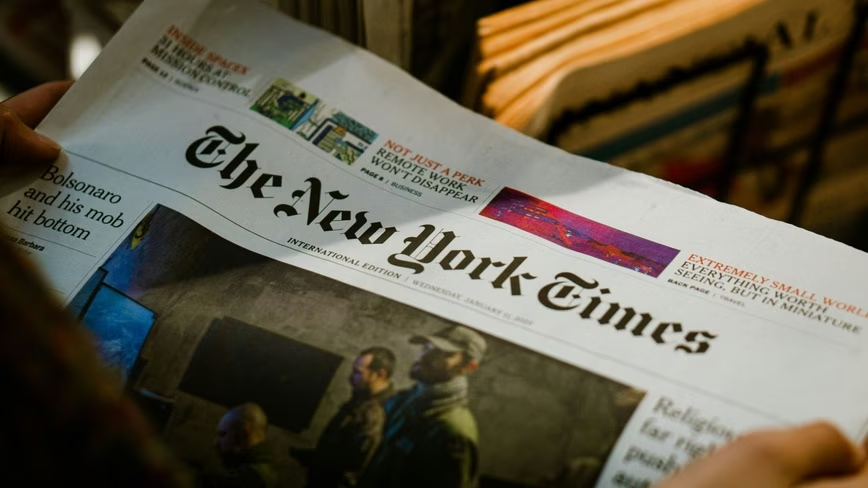
《纽约时报》、法新社以及《经济学人》于周一宣布,它们已加入一个旨在促使人工智能企业停止未经许可使用新闻内容的联盟。
The New York Times, Agence France-Presse, and The Economist have joined a coalition that wants AI companies to stop using news without permission, the group said on Monday.
该联盟名为“出版商使用权标准联盟”(SPUR),目前已有来自20多个国家的80多家成员加入。
The coalition, known as SPUR Standards for Publisher Usage Rights, has now reached over 80 members across more than 20 countries.
该联盟由英国广播公司、英国《金融时报》、《卫报》、《每日电讯报》及天空新闻于今年2月发起,美联社随后也加入了进来。
It was founded in February by the BBC, the Financial Times, the Guardian, the Telegraph and Sky News, with the Associated Press joining later.
据《Press Gazette》公布的名单显示,美国《大西洋月刊》、ITV新闻、《观察家报》、法国《队报》、法国广播电台、《新苏黎世报》以及德国出版商协会BDZV也均为联盟成员,日本、巴西、阿根廷和墨西哥的媒体组织同样在列。
The Atlantic, ITV News, The Observer, L’Equipe, Radio France, NZZ, and Germany’s publishers’ association BDZV are also on board, according to a list published by Press Gazette. So are press groups from Japan, Brazil, Argentina, and Mexico.
《纽约时报》战略合作负责人丽贝卡·格罗斯曼-科恩表示:“知识产权保护与技术进步完全可以并行不悖,也必须如此。”
“Intellectual property protection and technological advancement can and must co-exist,” said Rebecca Grossman-Cohen, who leads strategic partnerships at The New York Times.
根据该联盟官网说明,SPUR并不代表成员方进行内容授权,各出版商仍需自行与人工智能企业洽谈合作事宜。
SPUR does not license content on behalf of its members, who still strike their own deals with AI firms, according to its website.
该联盟的主要任务是制定统一规则并开发相关技术工具,以便出版商能够追踪人工智能系统对其内容的使用情况并获得相应报酬。
Instead, it is writing shared rules and technical tools so publishers can track how AI systems use their work and get paid for it.
本月,SPUR推出了首项标准:为人工智能工具及模型开发者提供一种记录机制,用于记录其获取文章、在回答中引用文章、标注出处或向用户展示文章的具体情形,随后这些记录会被反馈给相关出版商。
This month, it launched its first standard: it provides AI tools and model developers with a method for recording instances when they retrieve an article, use it in an answer, cite it, or display it to users, after which the records are sent back to the publishers.
SPUR联合创始人戴维·巴特尔指出:“面对人工智能企业以及出版业的未来,我们不能只寄望于最好的结果。”
“We can’t simply hope for the best when it comes to AI companies and the future of publishing,” said David Buttle, SPUR’s co-founder.
据路透社报道,目前多家出版商正通过法律途径及国会游说来对抗人工智能企业:例如《纽约时报》已就版权问题起诉OpenAI与微软;本月早些时候,《今日美国》集团及其旗下多家报纸也起诉了OpenAI。
Publishers are also fighting AI firms in court and in Congress as The New York Times is suing OpenAI and Microsoft over copyright, and USA Today Co and several of its papers sued OpenAI earlier this month, Reuters reported.
上个月,约300家出版商联名呼吁美国立法者禁止那些暗中抓取网站内容的人工智能机器人。
Last month, around 300 publishers urged US lawmakers to ban stealth AI bots that scrape their sites.
与此同时,美国司法部在某一案件中却站在了OpenAI一方,主张利用出版商的内容训练人工智能属于合理使用范畴。
At the same time, the US Justice Department has sided with OpenAI in one case, arguing that training AI on publishers’ work can be fair use.
随着搜索引擎提供AI答案,新闻网站也在失去访客。路透社研究所发现,在2024年11月至2025年11月期间,全球超过2500个网站的谷歌搜索流量下降了三分之一。
News sites are also losing visitors as search engines give AI answers. Over 2,500 sites saw Google search referrals drop by a third worldwide between November 2024 and November 2025, the Reuters Institute found.