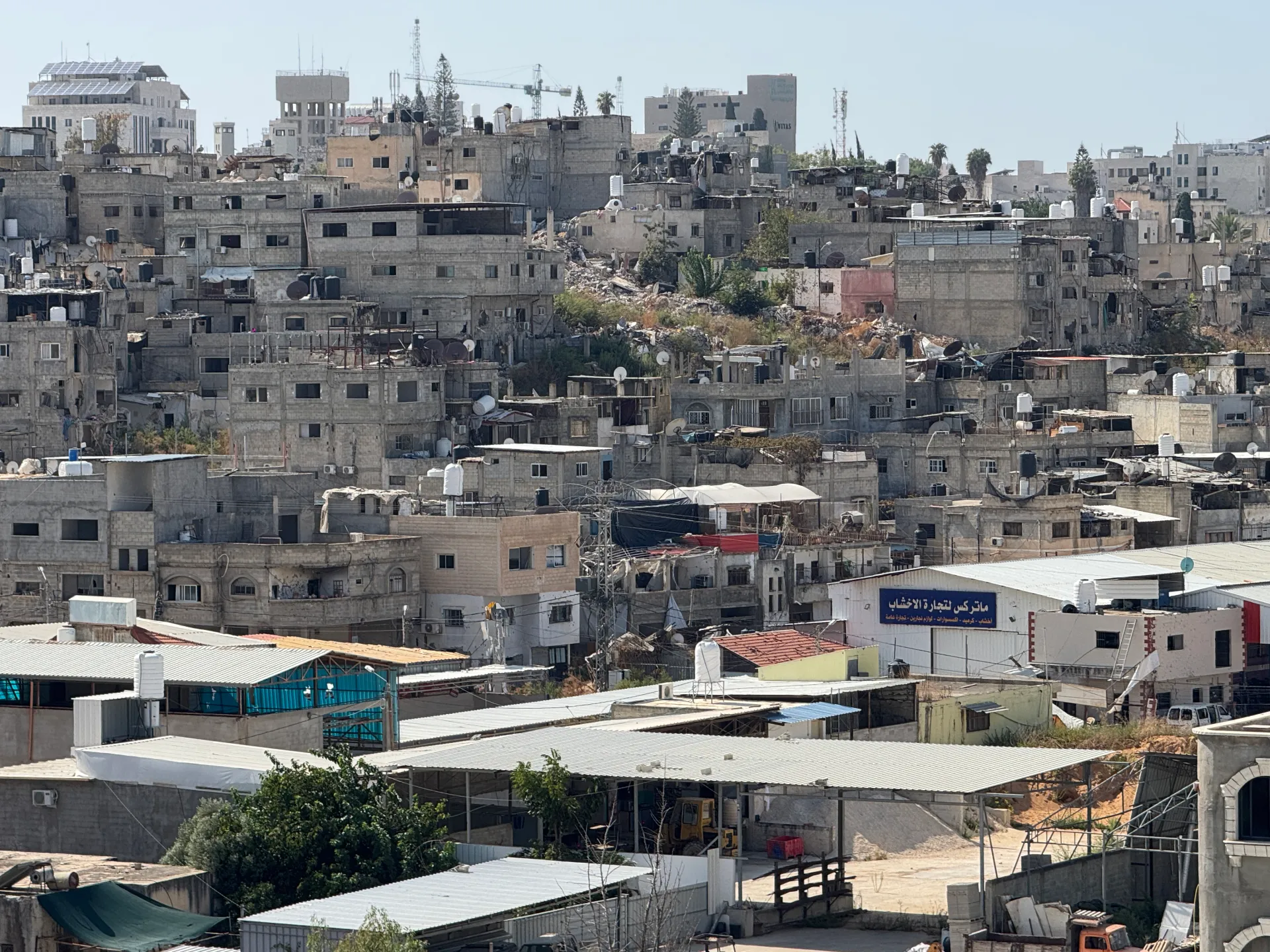
每天,福阿德·阿布·萨拉姆在租住的提纳贝郊区的家门外啜饮早咖啡,凝视眼前广袤的图尔卡雷姆难民营的每一个细节。这座位于约旦河西岸的营地在远处可见,曾有一栋两层楼的建筑,内设四套公寓,每套约300平方米(3229平方英尺),福阿德与其大家庭曾居住于此。
Every day, Fuad Abu Salam sips his morning coffee outside his rented home in the Thinnabeh suburb, gazing at every detail of the sprawling Tulkarem refugee camp in front of him. This West Bank camp he can see in the distance once housed a two-storey building comprising four apartments, each measuring 300 square metres (3,229sq feet), in which he and his extended family lived.
在他被迫离开营地后,他、妻子、四名子女和母亲被限制在提纳贝一间不超过100平方米(1076平方英尺)的小租屋中。离开营地时,他在图尔卡雷姆的家部分被毁。
After he was displaced from the camp, he, his wife, his four children, and his mother were confined to a small, rented apartment no bigger than 100sq metres (1,076sq feet) in Thinnabeh. His home in Tulkarem was partially destroyed when he left the camp.
2025年1月21日,以色列在被占领的约旦河西岸发动名为“铁墙”的军事行动,最初针对杰宁难民营。随后一周,行动扩大至图尔卡雷姆市的图尔卡雷姆和努尔·沙姆斯营地。
Everything changed for Fuad and his family on January 21, 2025, when Israel launched a military assault in the occupied West Bank dubbed “Iron Wall”, initially targeting the Jenin refugee camp. A week later, the operation expanded to include the Tulkarem and Nur Shams camps in the city of Tulkarem.
联合国表示,以色列部队在2025年1月和2月期间强行驱逐了这三座营地的全部居民,并持续阻止他们返回。
Israeli forces forcibly displaced the entire populations of the three camps during January and February 2025 and continue to prevent their return, the United Nations has said.
联合国近东巴勒斯坦难民救济与工程处(UNRWA)在题为《北约旦河西岸巴勒斯坦难民营被毁》的报告中援引的大规模流离失所数据称,仍有33,362名巴勒斯坦人被强制流离失所。到2025年10月,杰宁营地52%的建筑、努尔·沙姆斯营地48%的建筑以及图尔卡雷姆营地36%的建筑已被毁或受损。
Mass displacement Data from UNRWA cited in a report titled, Destruction of Palestinian Refugee Camps in the Northern West Bank, stated that 33,362 Palestinians remain forcibly displaced from the three camps. By October 2025, 52 percent of structures in the Jenin camp, 48 percent in the Nur Shams camp, and 36 percent in the Tulkarem camp had been destroyed or damaged.
以色列的行动影响了数百座房屋、道路和基础设施,包括供水和供电网络,同时对营地的人道援助被切断。
The Israeli operation has affected hundreds of homes, roads, and infrastructure, including water and electricity networks, while humanitarian aid to the camps has been cut off.
报告称,在所覆盖的期间,以色列部队杀害了102名巴勒斯坦人,其中包括21名儿童。这一数字占该期间以色列部队在约旦河西岸杀害的巴勒斯坦人总数的46%。
Israeli forces killed 102 Palestinians, including 21 children, during the period covered, according to the report. This represents 46 percent of the total number of Palestinians killed by Israeli forces in the West Bank during this period.
周日,以色列最高法院命令政府制定一个将流离失所者遣返回这三个难民营的时间表,并将11月23日定为政府必须作出回应的截止日期。
On Sunday, the Israeli Supreme Court ordered the government to provide a timeline for the return of displaced people to the three camps, setting November 23 as a deadline for a response.
以色列极右翼财政部长贝扎莱尔·斯莫特里奇拒绝接受这一裁决,警告称如果允许居民返回,可能会为所谓的“恐怖基础设施”的重建提供机会;他呼吁政府不要执行这一决定。
Israel’s far-right Finance Minister Bezalel Smotrich rejected the ruling, warning that the return of residents could allow for the reconstruction of what he termed “terror infrastructure”. He called on the government not to implement the decision.
与此同时,以色列国防部长伊斯雷尔·卡茨也反对法院的干预,坚称军队继续驻扎在这些难民营是出于安全考虑,并表示自己打算继续保持军事存在。
Meanwhile, Israeli Defence Minister Israel Katz opposed the court’s intervention, asserting that the army’s continued presence in the camps was a security decision and stating his intention to maintain a military presence there.
42岁的福阿德是一名温室安装工人,他不得不与难民营中的其他居民以及40多名家人一起逃离家园。但他和邻居们仍怀揣着重返故土的希望。他们辗转居住在亲戚家中,忍受着艰苦的生活条件,最终在图勒凯尔姆市的蒂纳贝(Thinnabeh)郊区安顿下来。
Fuad, 42, a greenhouse installer, found himself forced to flee with all the camp’s other residents and more than 40 family members. But he and his neighbours carried with them the hope of returning home. They moved between the homes of relatives, enduring harsh living conditions, until he finally settled in the Thinnabeh suburb of Tulkarem.
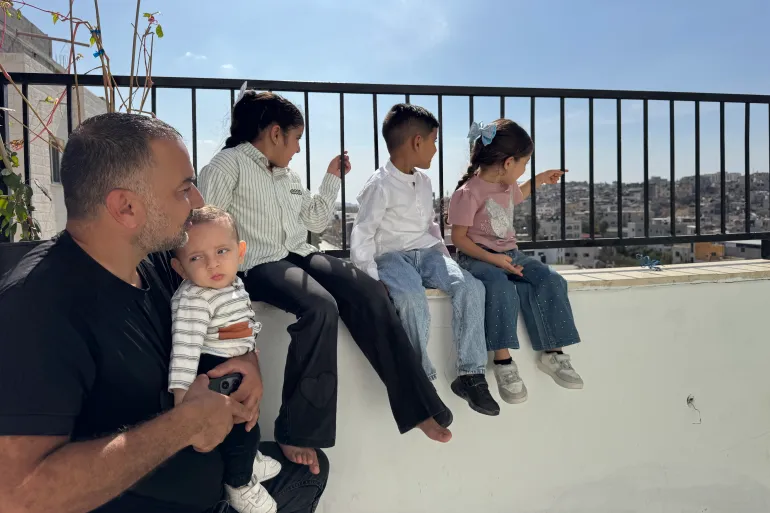
福阿德·阿布·萨拉姆(Fuad Abu Salam)和他的孩子们坐在租来的公寓里,公寓窗外可以俯瞰图勒凯尔姆难民营;他们望着自己被毁掉的家园(照片来源:Raghad Salameh/Al Jazeera)。这个可以俯瞰难民营的社区“重新给了他生活的希望”——即使无法回到自己的家中,他至少还能看到它的样子。虽然他无法回到那里,但他可以望着那栋房子,想象着有一天能够重返故里的日子。
Fuad Abu Salam sits with his children in his rented apartment overlooking the Tulkarem camp, gazing at their destroyed home [Raghad Salameh/Al Jazeera] The neighbourhood, which overlooks the camp, has “restored his spirit” because he can see his home even if it’s from afar. Although he is unable to reach the building, he can gaze at it and imagine a time when he can return. “If a decision were issued right now allowing us to return, I would go back immediately without a moment’s hesitation,” he said.
“如果现在就有允许我们返回的决定,我会立刻毫不犹豫地回去,”他说。
But his home is no longer what it used to be.
然而,他的家已经面目全非:房屋被以色列士兵部分拆除并纵火焚烧,导致整个公寓楼有80%以上的区域无法居住。福阿德计划利用废墟重建自己的家。
It was partially demolished and set on fire by Israeli soldiers, rendering more than 80 percent of the apartment block uninhabitable. Fuad plans to use the rubble to rebuild his home.
“我永远不会动摇回归的决心,哪怕只能在这片废墟上搭个帐篷继续生活,”他坚定地说。
“I will never waver in my resolve to return, even if it means pitching a tent over the ruins and living there,” he declared.
来自杰宁难民营的18岁青年穆罕默德·阿拉拉维(Mohamad Ararawi)也目睹了自己的家园被彻底摧毁,取而代之的是一条宽阔的道路。
Mohamad Ararawi, 18, from the Jenin refugee camp, also saw his home razed to the ground with a wide road replacing it.
他在接受半岛电视台采访时表示,自己一家40口原本居住在阿尔-达马吉社区的一栋五层楼的建筑里,随着以色列军事行动的开始,全部逃离了营地,转而在其他亲属的住宅中寻求庇护。
He told Al Jazeera that his family of 40, who had lived in a five-story building in the al-Damaj neighbourhood, all fled the camp when the Israeli military operation began, seeking shelter in homes belonging to other relatives.
“我的母亲、父亲、五个姐妹和我在我兄弟未完工的公寓里避难。我们忍受了严寒和酷热的艰苦条件,随后逐步完成了施工,才使其稍微可居住,”他补充道。
“My mother, father, five sisters, and I took refuge in my brother’s unfinished apartment. We endured harsh conditions, suffering through biting cold and scorching heat, before gradually completing the construction until it became somewhat habitable,” he added.
对他们而言,回到原处才是唯一重要的事,他们拒绝在营地之外的任何地方居住,即便那里缺乏基本设施。几乎不可能的回归让流离失所者返回家园并非仅仅是为居民清理道路的问题。返回意味着要在基础设施受损、数百栋房屋被毁的营地中生活,且仍缺乏生活必需品。
Returning is all that matters to them, and they refuse to live anywhere but the camp, even if it lacks basic amenities. A near-impossible return Returning the displaced back to their homes is not merely an issue of clearing roads for residents. Returning would mean living in a camp in which infrastructure has been damaged and hundreds of homes destroyed, all amid a lack of necessities.
努尔·沙姆斯营地民众服务委员会成员尼哈德·沙维什在接受半岛电视台采访时表示,尽管居民们渴望回到家中,但毁灭规模使得他们的返乡充满巨大困难。
Nihad Shawish, a member of the Nur Shams Camp Popular Services Committee, told Al Jazeera that the scale of destruction makes the residents’ return fraught with immense difficulties, despite their will to go back to their homes.
他说,大约有400户房屋被毁,其中大多数为三至四层高的建筑;约有100户房屋在以军驻扎期间被烧毁。
Approximately 400 homes, most of them three to four stories high, were destroyed, he said, while about 100 homes were burned down during the Israeli army’s presence in the camp.
即便是幸存下来的房屋也不一定适宜居住;它们的门窗和内部设施受到严重破坏。一些建筑的倒塌还损坏了邻近的住宅。
Even the ones that survived are not necessarily habitable; they sustained severe damage affecting doors, windows, and interior facilities. The collapse of some buildings has also damaged neighbouring homes.
约有10,900名营地居民仍处于流离失所状态,其中包括居住在私人住宅的家庭以及在提纳贝郊区一所学校安置的居民。
Approximately 10,900 camp residents remain displaced, including families staying in private homes and others at a school in the Thinnabeh suburb.
这张照片拍摄自 Fuad Abu Salam 的公寓,他的公寓可以俯瞰整个图勒凯勒姆难民营。每天,他都会从那里望着自己被毁掉的家园。[Raghad Salameh/半岛电视台] 图勒凯勒姆难民营民众委员会的官员 Faisal Salameh 告诉半岛电视台,共有 2000 多套住房被彻底摧毁,大约 90% 的房屋受到部分损坏,已无法居住。
A photo of Tulkarem camp taken from Fuad Abu Salam’s apartment which overlooks the camp; from there, he looks out at his destroyed home every day [Raghad Salameh/Al Jazeera] Faisal Salameh, an official with the Tulkarem Camp Popular Committee, told Al Jazeera that more than 2,000 housing units were completely destroyed, while approximately 90 per cent of the camp’s homes sustained partial damage, rendering them uninhabitable.
“由于大规模的破坏,以及某些地区被改建为道路后禁止重建的规定,以色列已经把这个难民营变成了一个让居民纷纷逃离的地方,”他说。
“Israel has turned the camp into an environment that drives residents away, given the widespread destruction and the ban on reconstruction in certain areas that have been converted into roads,” he noted.
尽管如此,Salameh 表示,只要以色列政府允许,流离失所的居民都非常渴望能够重返难民营。
Despite these conditions, Salameh said that displaced residents are eager to return to the camp as soon as a decision by the Israeli government permits them to.
该难民营原本居住着约 1.5 万人。目前,大多数流离失所者暂住在租来的房屋中或亲戚家中,还有一些人则躲在学校、清真寺或临时搭建的铁皮棚屋里。
The camp was home to approximately 15,000 people. The majority of the displaced currently live in rented homes or with relatives, while others have sought shelter in schools, mosques, or makeshift tin shacks.
以色列政府的拒绝虽然以色列最高法院的裁决为讨论流离失所者重返西岸北部难民营的问题打开了大门,但以色列政府部长的反对却引发了人们对这一裁决能否真正得到执行的质疑。在这一点上,流离失所者的生活仍处于不确定的状态。
Israeli rejection While the Israeli Supreme Court’s ruling opens the door to discussing the return of displaced persons to camps in the northern West Bank, its rejection by Israeli government ministers raises questions about whether it will be implemented. Until then, the lives of the displaced families remain in limbo.
以色列问题专家 Mohammed Halaseh 告诉半岛电视台,以色列右翼势力不仅试图改变司法系统的运作方式,还试图削弱司法系统的合法性,并对法官施加压力。他以巴勒斯坦囚犯探视问题为例,指出以色列政府未能遵守最高法院的裁决。“这种政治立场的影响显而易见,”他说。
Mohamad Halaseh, an expert on Israeli affairs, told Al Jazeera that the Israeli right-wing isn’t just trying to alter the structure of the judicial system, but also seeking to undermine its legitimacy and exert pressure on judges. He explained that the effect of political stances is evident in the disregard for Supreme Court rulings. He cites the issue of Palestinian prisoner visitations, a case in which the state failed to comply with the court’s decisions, as one example of this.
“对法院裁决的持续无视削弱了司法机关在司法决定与政治领导层立场冲突时迫使政府采取行动的能力,”他说。
“The continued disregard for court rulings undermines the judiciary’s ability to compel the government to act when judicial decisions conflict with the stance of the political leadership,” he said.
他说,有多个先例使得在这三个营地执行法院裁决的可能性不大。这对同样面临以色列政治强烈反对巴勒斯坦人返回这三座营地的居民而言尤为令人痛心。
Several precedents make the implementation of court rulings on the camps unlikely, he said. This is particularly distressing for residents who also face strong Israeli political opposition to the return of Palestinians to the three camps.
“已声明的政治立场限制了行政机构遵守司法裁决的程度,”他说。
“Declared political stances set a limit on the extent to which executive institutions comply with judicial rulings,” he said.