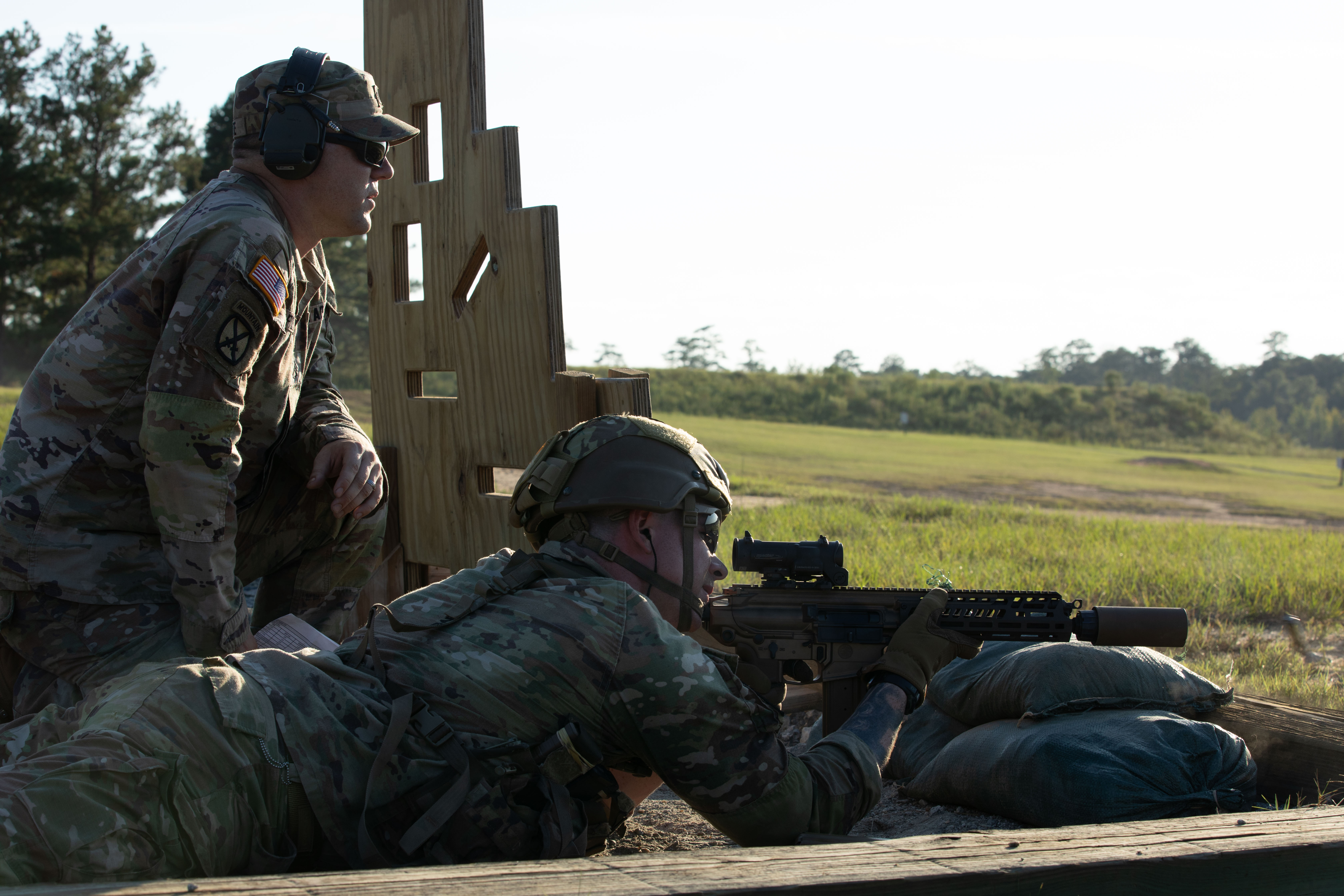
2017年,枪械制造商SIG Sauer与美国特种作战司令部签订了一份为期五年、价值4800万美元的合同,旨在为作战人员的M4A1卡宾枪配备集成消声上机匣,这是一种积极的举措,旨在实现一些人称为“隐形步兵”的未来作战概念。其理念是:通过在战场上压制每一件武器,从而大幅降低友军部队的声音特征。
In 2017, gun maker Sig Sauer landed a five-year, $48 million contract with U.S. Special Operations Command to upgrade operators’ M4A1 carbines with integrally suppressed upper receivers, an aggressive move toward a future warfighting concept that some have called the “stealth infantry.”The idea: to radically reduce the sound signature of friendly troops by suppressing every weapon on a battlefield.
该合同还使公司卷入了一个新兴关注领域:当发射消声武器时,有毒气体和颗粒物被爆射回射手面部所带来的健康危害。
The contract also plunged the company into engagement with an emerging area of concern: the health dangers of toxic gases and particles blasted back into the shooter’s face when firing a suppressed weapon.
尽管风险的全貌仍在被认识,但特种作战司令部在签订合同时明确告诉SIG Sauer,他们希望降低毒性,设定了一个当时看来似乎无法达到的标准。
While the full extent of the risks is still being understood, SOCOM made it clear to Sig at the time of the contract that it wanted to cut down on toxicity, setting a standard that seemed unreachable.
“当时的要求是,他们希望有一个消声上机匣组,其产生的毒性低于未消声的M4,”SIG Sauer国防系统产品经理Josh Shoemaker对《军事时报》表示。“当时整个行业都觉得,‘这在物理上是不可能的。’这实际上是一套要求,挑战了所有人对消声器的理解。”随后几年,SIG Sauer因多次测试显示各种消声武器存在过多的有毒回吹而多次受到质疑。但通过漫长的开发过程和先进制造技术的引入,Shoemaker表示,公司实现了在消声器中减少70%有毒气体回吹的能力。
“The requirement at the time was that they wanted a suppressed upper receiver group that produced less toxicity than an unsuppressed M4,” Josh Shoemaker, product manager for defense systems at Sig, told Military Times. “At the time the industry was all like, ‘That’s not physically possible.’ It was really a set of requirements that was defying everybody’s understanding of suppressors.”In the years that followed, Sig would come under fire multiple times for tests that showed various suppressed weapons had too much toxic blowback. But through lengthy development and the introduction of advanced manufacturing, Shoemaker said, the company reached the ability to reduce 70% of toxic gas blowback in a suppressor.
但他补充道,这其中存在权衡。消声器可以在降低噪声、火光或回吹方面表现出色,但无法同时做到这三点。公司目前提出的一种解决方案是提供专门的消声器:一种用于训练,最大限度减少回吹;另一种用于战斗,最大限度掩护特征。
But there’s a tradeoff, he added. Suppressors can excel at reducing noise, flash or blowback, but not all three at once. One solution the company is now proposing would offer specialized suppressors that maximize blowback reduction for training and signature masking for combat.
舒梅克说,其想法是,当士兵在封闭空间射击以及在同一区域长时间射击时,他们最有可能暴露于有毒气体,而这两种情况在训练中更容易发生。此外,他说,训练占据了士兵一生中将要发射的弹药的绝大多数。
The idea, Shoemaker said, is that troops are most at risk from toxic gas exposure when shooting in enclosed spaces and over long periods in the same area, both of which are more likely to happen in training. On top of that, he said, training accounts for the vast majority of the rounds a soldier will ever fire.
“陆军已经有这样的原则:他们有训练用弹药和实战用弹药。当他们上战场时,使用的弹药和弹头与训练时不同,”舒梅克说。“他们在防弹衣和军服上也是这样做的——他们在训练时穿的军服并不都是阻燃的……为什么我们不能对消音器也采用同样的做法?”在为陆军设计下一代步枪和轻机枪的10年生产合同早期——该项目被称为下一代小队武器——军方测试官员曾指出,担心被消音武器产生的有毒尾焰过多。结果导致延迟,使得装备时间从2023年底推迟到2024年。
“The Army already has this principle where they have training ammunition and go-to-war ammunition. When they go to war, they’re using a different projectile and different ammunition than they are when they’re training,” Shoemaker said. “They do this with their body armor, with their uniforms — their uniforms, when they’re training, are not all flame retardant. … Why wouldn’t we do that same thing with the suppressors?”Early in its 10-year production contract to design the Army’s next rifle and light machine gun — a program known as Next Generation Squad Weapon — military testing officials cited concerns about how much toxic back-blast the suppressed weapons were producing. The result was a delay that pushed fielding from late 2023 into 2024.
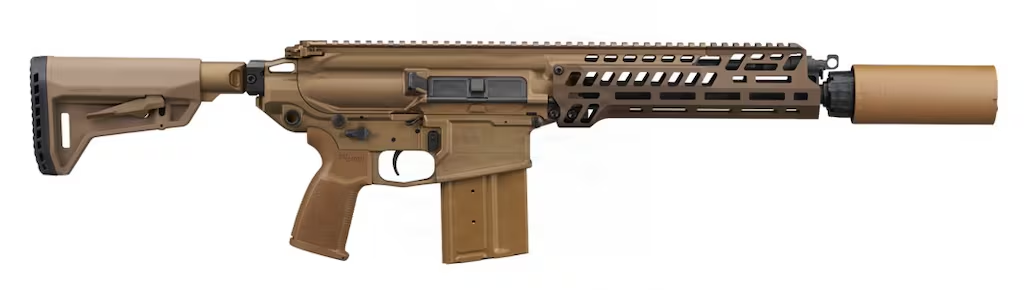
这些问题直到去年仍有报告。国防部武器测试部门在其2025财年年度报告中指出,参加作战评估的士兵“报告称因武器产生的有害气体排放而出现生理不适,同时也担心武器消音器在发射后产生的极端高温。”舒梅克说,当将之前的标准步枪——未装消音器的M4——与新型M7(具有更大口径和更强大的发射力)进行比较时,一些这样的反馈是在预料之中的。但他补充说,公司正在倾听士兵的意见,并“积极努力”以解决这些问题。
And these problems continued to be reported as recently as last year. The Pentagon’s weapons testing branch noted in its Fiscal Year 2025 annual report that soldiers in an operational assessment “reported negative physiological effects caused by the noxious off-gassing from their weapons, as well as concerns about the extreme heat from the weapons’ suppressors after firing.”Shoemaker said that some of this feedback was expected when comparing the previous standard rifle, an unsuppressed M4, to the new M7, which has a larger round and a more powerful discharge. But he added that the company was listening to soldiers and “actively working” to address concerns.
“有毒气体[仍然]是非常新的东西,对吧?” 舒梅克说。“当你多年来一直向一个非常狭窄的受众提供这些产品时,你不会得到像面向更广泛受众时那样的反馈。” 舒梅克透露,幕后,Sig一直处于减烟技术的前沿。该公司使用一种称为直接金属激光烧结(DMLS)的3D打印工艺,在其SLX和SLH消音器中构建“复杂迷宫”,以实现减烟目的。此前,消音器是通过逐个焊接机加工的挡板制成的。
“Toxic fumes [are] still a very new thing, right?”Shoemaker said. “When you have a very narrow audience that you’ve been providing these products to for years, you don’t get the same feedback that you do when you’re providing to a much wider audience.”Behind the scenes, according to Shoemaker, Sig has been close to the forefront of fume-reduction technology. The company uses a 3D printing process called Direct Metal Laser Sintering, or DMLS, to build “complex labyrinths” into their SLX and SLH suppressors designed for fume reduction. Previously, suppressors were made with machined baffles that were welded together, one by one.
“这里根本无法放入工具来切割这些路径或引导这些气体,” 舒梅克谈到新型消音器时说。“这对整个消音器行业来说是革命性的,因为它解锁了所有这些能力……来制造这些复杂几何形状。” 为了为陆军和后来的海军研发低毒性消音器,Sig获得了两个专门的测试环境:克兰箱,这是印第安纳州海军作战中心克兰分部发明的,用于精确测量在封闭空间内武器射击时释放的二氧化碳;以及军事城市地形作战(MOUT)舱,目前该舱用于精确测量四种气体——一氧化碳、二氧化碳、氨气和氢氰酸——的颗粒物含量和浓度。Sig是唯一拥有这些舱室的非军事实体。
“There would have been no way to get a tool in here to cut any of these paths or direct any of that gas,” Shoemaker said of the new suppressors. “It was game-changing for the entire suppressor industry because it unlocked all of these abilities to … make these complex geometries.”In service of developing reduced-toxicity suppressors for the Army and later the Navy, Sig acquired two specialized testing environments: the Crane box, invented at Naval Surface Warfare Center-Crane Division, Ind., to precisely measure released carbon dioxide as weapons fire in a confined space; and the Military Operations in Urban Terrain (MOUT) chamber, which now measures precise particulate amounts and concentrations of four gases: carbon monoxide, carbon dioxide, ammonia and hydrogen cyanide. Sig is the only non-military entity to possess the chambers.
虽然舒梅克表示公司仍在寻求对现有消音器的反冲减少能力进行渐进式改进——比如从目前的70%最大减少提升到75%——但他也表示,DMLS技术将使得根据使用场景,轻松提供多种专门针对声音、闪光或烟雾最大化减少的消音器变得容易。
While Shoemaker said the company is still seeking to make incremental improvements to the blowback reduction capabilities of existing suppressors — from, say, the current 70% reduction maximum to 75% — he also said the DMLS technology would make it easy to deliver a variety of suppressors specialized to maximize reduction of either sound, flash or fumes based on use case.
军方尚未提出对训练用消音器和战斗用消音器进行混合使用的需求。但舒梅克表示,这可能成为一种解决方案,适用于那些希望在声音、闪光和有毒气体减少方面全面兼顾、但又无法在一个罐体内实现全部功能的军种。如果真是这样,该公司将做好准备。
The Army has yet to ask for a mix of training suppressors and combat suppressors. But Shoemaker indicated it may emerge as a solution for a service that wants to have it all in terms of sound, flash and toxic gas reduction, and can’t practically have it all in one can. If so, the company will be ready.
他说道:“通过DMLS技术,[工程师]可以设计出新方案,我们就能制造出来,并且三天后就能进行射击测试。”
“With DMLS, [engineers] can make a new design, and we can have it and shoot it three days later,” he said.