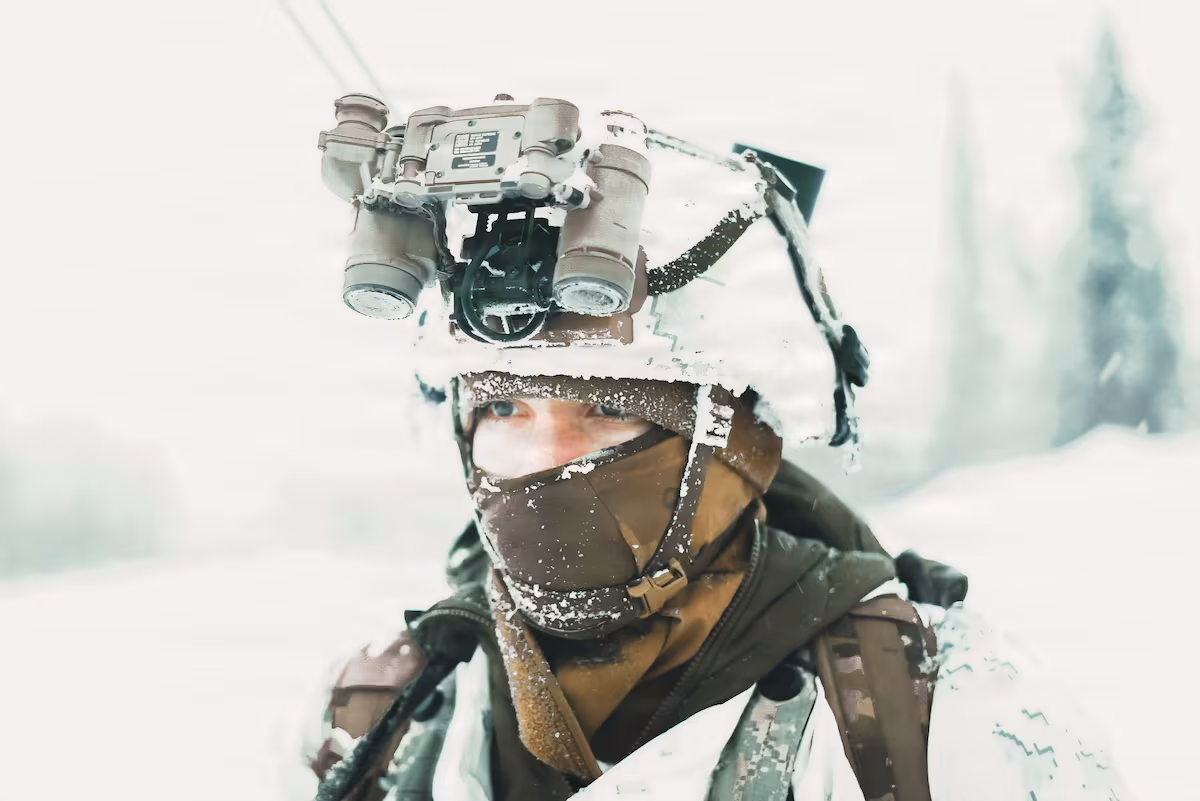
在北美寒冷地区,物品会在严寒中损坏。电池会失效。燃油和其他重要液体会结冰。车辆会被困在冰雪中。肢体和四肢?如果士兵不够小心,此类伤害可能导致局势控制完全失衡。
Things break in the bitter cold of America’s northern reaches. Batteries die. Fuel and other vital fluids freeze. Vehicles become trapped in ice and snow. Appendages and limbs? If soldiers aren’t careful, such injuries can unravel any semblance of situational control.
在阿拉斯加的广袤荒野中生存,任何一点松懈都可能致命,这构成了巨大的挑战。训练官兵在这些环境中作战,是一项更为艰巨的任务。
Survival in Alaska’s vast wilderness, where any hint of complacency can indeed kill, presents a colossal difficulty. Training service members to fight in these environs is an undertaking even more daunting.
对于美国陆军第11空降师的官兵而言,这项任务最终落在了少将约翰·科格比尔及其所辅导的有能力的领导者们的肩上。
For the soldiers of the U.S. Army’s 11th Airborne Division, this task rests, ultimately, on the shoulders of Maj. Gen. John Cogbill and the capable leaders he advises.
而北极天使部队的指挥官表示,他不会用任何东西来交换这一责任。
And the commanding general of the Arctic Angels would not trade it for anything.
“我们有一句俗语,一切都会在零下40度时损坏,”当被问及这些挑战时,科格比尔说。除了士气。
“We have a saying that everything breaks at 40 below,” Cogbill says when asked about these challenges. Everything, except morale.
从外部看,第11空降师的官兵似乎与众不同。但科格比尔坚持这并非事实。
From the outside, the soldiers of the 11th Airborne appear to be built differently. But Cogbill insists that’s not the case.
也许是刺骨的寒风,也许是延伸至地平线之外的荒野,也许是无休止倾泻下雪的天空,但首次来阿拉斯加执勤的官兵常常带着“眼中带有畏惧”的表情报到,他说。
Perhaps it’s the frigid air, wilderness that stretches beyond the horizon or a sky that unleashes snow without end, but troops reporting to Alaska for the first time often do so with “trepidation in their eyes,” he says.
“但当我六个月后再次看到他们时——他们已经完成了寒冷天气训练课程并走进了野外——他们意识到他们的小队长、排长、连长——他们正被照顾着,”他说。
“But when I see them six months later, after they’ve been through their cold-weather indoctrination course and gone out to the field, they realize their team leader, their squad leader, their platoon sergeant — they’re being taken care of,” he says.
“我们不会给他们布置他们无法承受的任务。然后他们开始在领导者身上建立信任,也开始相信自己。这就是他们真正成为‘北极铁军’的时候。”
“We’re not going to give them something they can’t handle. Then they start to build that trust in their leaders and trust in themselves. That’s when they truly become Arctic-tough.”
“要具备那种罕见的坚韧品质,既需要出色的领导力,也需要可靠的装备,”科格比尔(Cogbill)说道。第11空降师位于一个关键的战略位置——这里是美国太平洋司令部、美国北方司令部与美国欧洲司令部这三个作战指挥机构的交汇处;士兵能否信任这两者,直接决定了他们的成败。
Achieving that rare brand of toughness requires both sound leadership and reliable equipment, Cogbill says. Nestled in a region that places the 11th Airborne at a crucial convergence of three combatant commands — U.S. Pacific Command, U.S. Northern Command and U.S. European Command — a soldier’s ability to trust in both is the difference between success and failure.
科格比尔在接受《军事时报》(Military Times)采访时谈到了如何赢得这些单位的信任,以及为何不断创新对于及时掌握遥远地区的发展动态至关重要(因为在极寒的北极地区,任何疏忽都可能导致灾难性后果)。
Cogbill spoke to Military Times about what goes into earning that trust, and how a relentless pursuit of innovation is critical to keeping abreast of distant developments that would be reduced to ruin in the far North.
对于“北极天使”(Arctic Angels)这支部队来说,适应恶劣的环境本身就是他们训练的一部分。
For the Arctic Angels, accounting for their surroundings is part of the fun.
“在阿拉斯加,冬天总是不可避免地到来,”科格比尔说,“但他们乐于面对这一切。”
“Winter is always coming in Alaska,” Cogbill says. “They embrace it.”
编辑注:部分回答内容经过修改以提升表达的清晰度。
Editor’s note: Some answers have been edited for clarity.
《军事时报》(Military Times)问:我们看到北极地区的战略重要性日益凸显,相关威胁也在迅速演变。这些变化对你们训练士兵的方式产生了怎样的影响?
MT: We’re watching the Arctic domain become increasingly vital, with threats evolving rapidly. How are developments in the region impacting how you’re preparing your soldiers?
科格比尔回答:美国国防部制定北极战略是有原因的:我们能够迅速抵达这些地区中的任何一个,并在9小时内抵达全球90%的工业区。现代空军的奠基人比利·米切尔(Billy Mitchell)曾说过:“谁控制了阿拉斯加,谁就控制了世界。”阿拉斯加是一个重要的战略平台,无论是向西延伸至印度-太平洋地区,还是越过北极到达欧洲,都能发挥巨大的军事影响力。
Cogbill: The Department of War has an Arctic strategy for a reason. We can range any of these locations and be within 90% of the industrial world within nine hours. Billy Mitchell, the father of the modern-day Air Force, said whoever owns Alaska owns the world. It’s a power projection platform in any of those directions — west of the International Date Line to the Indo-Pacific or over the pole to Europe.
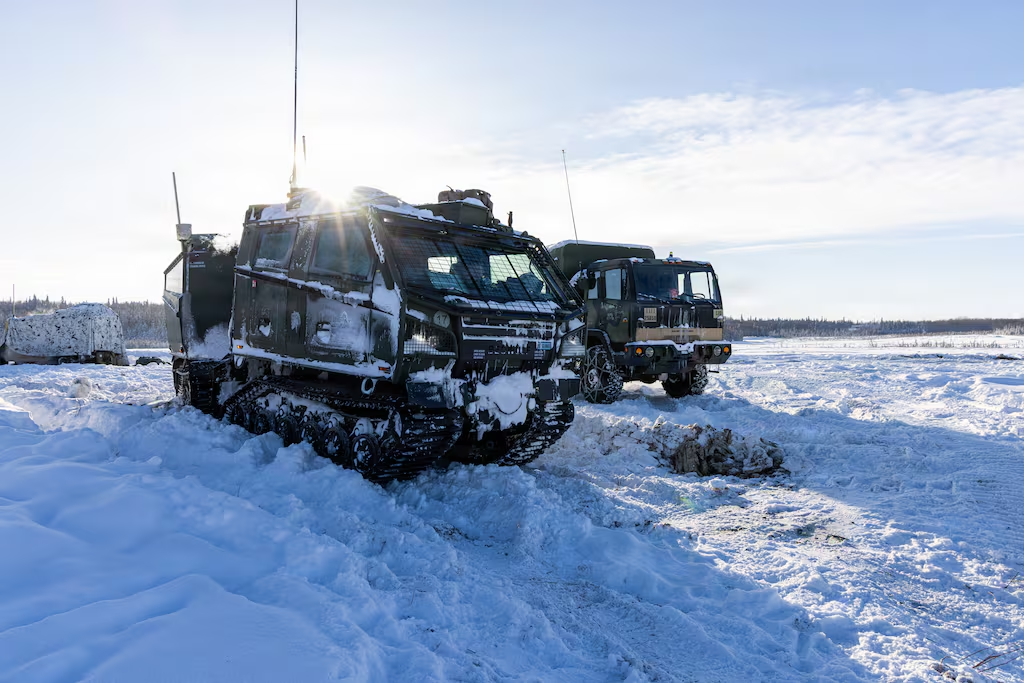
因此,我们必须具备在各种环境中作战的能力。由于我们是唯一一支专门驻扎在北极的部队,所以我们必须配备其他单位没有的特殊装备,比如“寒冷天气全地形车”(Cold Weather All-Terrain Vehicle, CATV)——这种车辆非常适合在雪地上运送士兵和装备。我们还必须熟练使用滑雪板和雪鞋,并且能够在携带这些装备的情况下从飞机上直接跳伞执行任务。更重要的是,我们必须能够依靠这些装备生存下来,甚至展开战斗并取得胜利。
Therefore, we have to be able to fight in different environments. But we optimize for the Arctic, because we’re the only Arctic division. We have to have certain vehicles that no other unit has, such as the Cold Weather All-Terrain Vehicle (CATV), the workhorse for moving soldiers and equipment over snow. We have to be proficient in skis and snowshoes. We have to be able to jump out of airplanes with this gear. We have to be able to do air assault missions with this kit and then sustain ourselves — not just survive, but fight and thrive.
您提到了那些独特的装备。如今的技术在极寒的北极环境中并不能普遍适用。那么,你们的部队是如何通过创新来克服这些挑战的呢?
You mentioned unique equipment. Today’s tech does not universally function in Arctic extremes. How are your troops innovating to overcome those challenges?
无人机目前是一个热门话题,我认为我们在这一领域正在逐渐赶上其他军种的发展速度。
Drones are a hot topic right now, and it’s something that I’d say we’re catching up a little bit with the rest of the Army.
我们不属于那些需要“在实战中推动技术变革”的部队(即那些需要通过实际战斗来推动技术发展的部队),因此最初并没有大量部署中小型无人机。不过,“持续创新”是我们第11空降师的核心理念;这意味着我们能够快速学习并适应新的技术。我们还通过向其他军种学习他们如何使用第一人称视角的无人机(无论是用于侦察还是执行打击任务)来推动自身的技术进步。
We’re not a Transformation-in-Contact division, which means we didn’t have an initial fielding of a large number of small- and medium-range drones. But continuous transformation is a mindset for the 11th Airborne Division, which means we’re learning and adapting quickly, and we’re also bootstrapping this effort by learning from other divisions in the Army and how they’ve utilized first-person-view drones, either for reconnaissance or for strike.
因此,我们正在与第101空降师、第25步兵师等部队合作,获取所需的设备,并建立自己的北极创新实验室,以研发适用于极寒环境的无人机系统。
So, we are collaborating with these other divisions — like the 101st Airborne Division and the 25th Infantry Division — to get our own parts, stand up our own Arctic innovation labs and build similar systems.
不过,在阿拉斯加进行冬季训练时,无人机的电池续航时间仅为在太平洋地区的1/20。因此,我们正在努力寻找延长电池寿命的方法,同时研发能够在强风、高海拔及零下温度环境下正常运行的无人机。
The difference is, if we want to fly these drones in Alaska during our winter training exercise, the battery life will be about 1/20th of what it is in the Pacific. So, we’re trying to figure out ways to prolong battery life, to build drones that are more capable in high wind, high altitude and sub-freezing temperatures.
对于那些在世界其他地方都能正常使用的设备,我们会将其带到阿拉斯加进行实地测试。如果发现设备在极端环境下无法正常工作,我们会联系当地的创新合作伙伴(比如费尔班克斯大学的学术机构),向他们请教:“这是一个工程问题,你们能帮我们解决吗?”
Something that works anywhere else in the world — we bring it up to Alaska, take it out to the field and put it through its paces. If it doesn’t work, then we have innovation partners — academic partners at the University of Alaska, Fairbanks, for instance — who we go to and say, “Hey, this is an engineering problem. What can you do to help us?”
费尔班克斯大学拥有全球最优秀的无人机工程研究项目之一,因为他们本身就生活在这种极端环境中。因此,我们会尽可能地与他们分享信息,向同行学习,并与现代化改革项目紧密合作,共同推动这些创新举措的落实。
They’ve got one of the best small UAS engineering programs in the entire world, because they live and operate in this environment. So, we share as much as we can, learn from our peers and work closely with the modernization enterprise to pioneer some of these efforts.
在寻找这些解决方案时,我们可以从乌克兰或伊朗这样的国家身上学到哪些作战经验呢?这些国家的环境条件可能与我们的环境截然不同。
When you’re seeking those solutions, what combat lessons can you learn from places like Ukraine or Iran, which may be inherently different environmentally? There are certain things that just work differently in the Arctic.
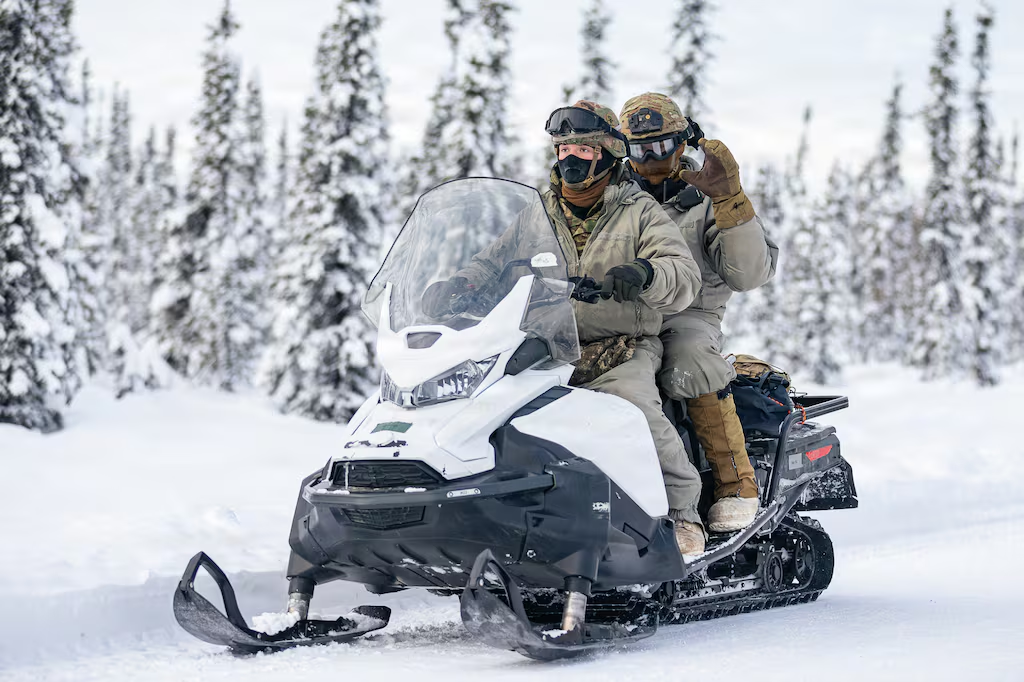
在北极地区,某些作战方式确实存在显著差异:士兵的机动性更差(从A点移动到B点非常困难);在积雪深度达到腰部的高度的野外环境中,物资补给变得更加困难;电池寿命缩短,因此需要更频繁地补充能源;水无法大量运输;燃料必须以冰块的形式进行运输。这些都是后勤方面面临的挑战。对于单个士兵来说,最重要的是如何在这种恶劣环境下灵活机动、顺利完成任务。
Mobility is harder, going from point A to point B. Sustainment is harder when you’re talking about moving things off-road through waist-deep snow. Battery life is shortened, which means you have to resupply more often. Water can’t be delivered in bulk. Fuel has to be delivered in cubed ice. Those are all the logistical challenges. For the individual soldier, it’s about just being able to maneuver.
在所有这些作战环境中,一个共同的需求是:必须具备决策主导权,并实现人机协作。因此,我们非常重视无人机技术的发展。我们正在加紧研发相关装备,并与陆军物资司令部及SkyFoundry项目合作,尽可能将更多无人机提供给士兵,以便他们能够在任何环境下执行任务。
Common across all these operating environments are the need for decision dominance and for human-machine teaming. So, we understand the importance of drones, which is why we’re catching up as fast as we can and working with the Army Materiel Command and SkyFoundry initiative to get as many of these drones as possible into the hands of our soldiers so they can operate in any environment.
在决策主导权方面,关键在于建立统一的作战信息和情报共享机制。从步枪小队到师级、军级,乃至最高指挥层,都必须能够清晰地了解敌情、自身情况,并利用所有可用传感器来做出最有效的作战决策。
For the decision dominance piece, it’s about being able to develop a common operating picture and a common intel picture at echelon. Everywhere from the rifle squad up to the division and corps, all the way up to a combatant commander — where we can see the enemy, see ourselves and use all the sensors at our disposal to make decisions about how to strike most efficiently.
为了实现这一目标,我们正在利用现有的训练演习和联合合作伙伴关系,通过战术数据链路实现设备间的互联互通(即“机器对机器”的通信),从而更好地掌握目标信息、提升作战效率。
We’re using existing exercises and joint partners to pass targets through tactical data links to do machine-to-machine communication, gain and maintain custody of targets and increase our lethality as a division and warfighting headquarters.
那么,在无人驾驶技术和人工智能(AI)的整合方面,你们的指挥部采取了哪些措施来确保士兵具备批判性思维能力,从而为明智的决策提供支持呢?
When it comes to unmanned and AI integration, what is your command doing to ensure soldiers are critical thinkers who can inform sound decision-making?
这些规则因指挥层级的不同而有所差异。作为师长,我负责我们师所做出的所有决策,无论是训练还是作战方面的决策。如果我决定攻击某个目标,那么这个决策及其结果都由我来承担。
It varies depending on the echelon of command. As the division commander, I’m responsible for every decision we make as a division, whether it’s in training or combat. If I make a decision to strike a target, I own that decision and the outcome.
一个让指挥官感到有决策权的文化,同时也意味着一种需要承担责任的文化。尽管各种机械设备和人工智能技术发展迅速,但军队仍然要求我们指挥官依靠自己的判断力和经验来决定是否发动攻击。
A culture where commanders feel empowered also means a culture of accountability. Having commanders in the loop — although the machines and AI are evolving rapidly, the Army still expects us as commanders to use judgment and experience to make a call to strike or not strike. You have to practice that.
我们必须通过不断的训练来提升自己的能力。我们每 90 天会进行一次演习,以此来评估这些算法的优缺点,与工程师以及我们的操作人员共同协作,不断改进我们的作战策略。
You have to get reps and sets, and do it through training as often as you can. So, we do exercises every 90 days to help us see the strengths and weaknesses of the algorithms, to code, to work with the engineers and our own operators.
我们需要能够编写新的程序,并开发出自主性更强的人工智能解决方案,以便不仅能够找到缩短作战流程的最佳方案,还能将这些人工智能技术应用于作战规则和经验总结等环节中。在训练中,我们可以利用这些人工智能技术来提升自己的能力,使我的决策更加迅速、更加明智,从而获得更好的作战结果。
We need to be able to program new strategies and develop agentic AI solutions for targeting that allow us to not only find optimal solutions for shortening kill chains, but also to be able to incorporate large language models in things like rules of engagement and lessons learned. Anything that we’re doing in a training exercise can then be referenced using these large language models to make us better, to make my decisions faster, better, more informed and hopefully yield better outcomes.
过去几年里,技术创新的速度令人震惊。那么,我们该如何确保第 11 装甲空降师在未来一年或五年内仍能保持领先地位呢?
Over the last few years, it is the speed of innovation that has been most staggering. How do you ensure the 11th Airborne is up to speed a year or five years from now?
随着这些技术的普及(这种趋势不仅存在于我的指挥层或班级层面,而是贯穿整个部队体系),我们必须通过实际训练来不断提升自身的作战能力。
With the proliferation of these machines — and not just at my level or the squad level, but throughout our formations — we have to train and rehearse this physically.
我提到了数字化目标定位技术,但当涉及到致命性武器(如自动武器)的使用,以及需要协调火力与战术动作的排长、班长和连长等基层指挥官时,这些技术必须通过实弹训练来加以验证和运用。
I mentioned digital targeting, but when you talk about the mechanics of lethal squads, platoons and company commanders who are trying to converge fire and maneuver, you have to put that into live-fire training.
最近,我们在埃尔门多夫-理查森联合基地的各作战分队先后进行了九次多兵种协同实弹演习。在每一次演习中,他们都运用FPV无人机来执行打击与侦察任务,同时也在思考:“此刻敌人会从哪里发起攻击?我们针对反无人机系统的应对措施又是什么?”
Our brigades at Joint Base Elmendorf-Richardson recently went through nine company iterations of combined arms live fire. In every single one of those live fires, they were employing FPV drones in a strike capability and in a reconnaissance capability, while also trying to think, “Where would the enemy be attacking us right now? What is our counter-UAS posture?”
这样一来,连级指挥官在制定进攻目标的战术决策时,便多了一个考量维度。归根结底,就是要通过反复训练让这种思维模式成为他们的本能——即时刻牢记作战环境中存在机器因素这一事实。
So, you’re adding another dimension to a company commander’s thought process as they try to make tactical decisions about how to assault an objective. Again, it’s getting those reps and sets. It becomes ingrained in them that there’s always a machine aspect.
举个例子,如果你是营级指挥官,就需要思考:“现在有哪些单位能观测到我的位置?哪些单位能发现指挥所的位置?我方搭建了多少顶帐篷?从空中俯瞰这些帐篷是什么样子?夏天时是什么样?冬天雪地里搭上绿色帐篷又是什么样呢?”
So, maybe you’re a battalion commander, and you have to think, “Who can see me right now? Who can see this command post? How many tents do I have set up? What does that look like from above? What does it look like in the summer? What does it look like in the winter, when I’ve got a green tent on a snowy landscape?”
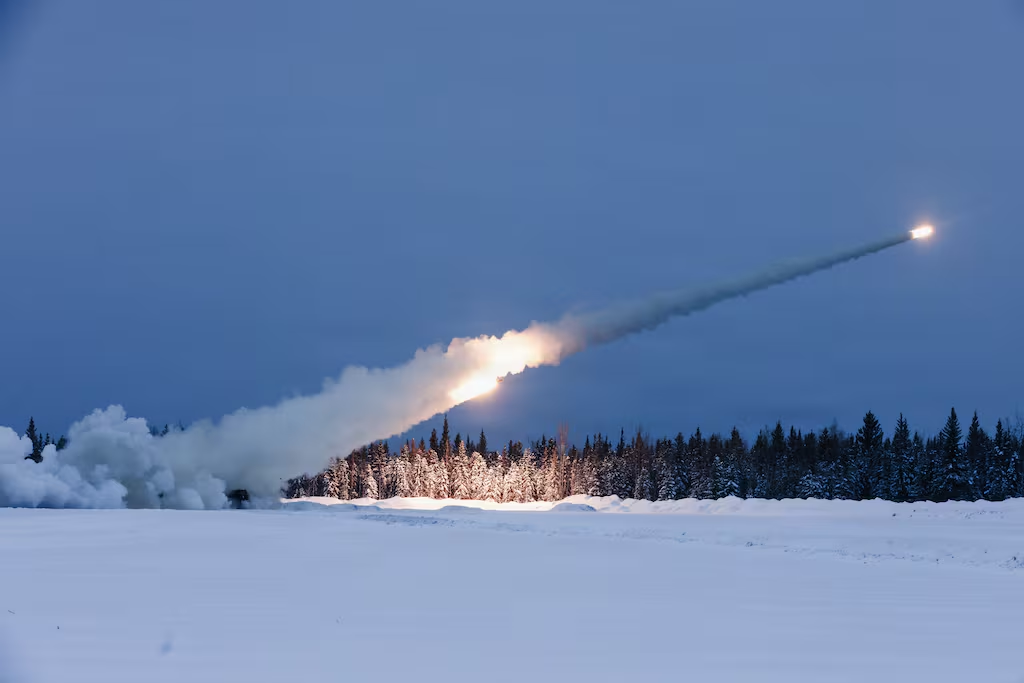
再进一步来说,如果你想做到更周全,可能会选择搭建白色帐篷,但随之而来的问题便是:“我方发出的电子战信号会被机器或传感器捕捉到吗?我的部队和装备在帐篷内运转所产生的热信号又是什么样呢?”
Or, if you’re one step ahead, maybe you set up a white tent, but then you have to consider, “What kind of EW signature am I emitting that can be picked up by a machine or a sensor? What does my heat signature look like? Because I’ve got all these bodies and machines cranking out processing power inside of a tent.”
该如何应对这些挑战呢?这就需要我们时刻思考我们如何观测敌人,以及敌人又如何观测我们,从而确保我们能灵活调整战术、始终占据主动。
So, how do you mitigate that? It requires constant thought about how we see the enemy, but also how the enemy sees us, and making sure that we can adapt and stay ahead.
我认为,从乌克兰战场、‘狂怒行动’及其他战区积累的经验教训,正是我们开展训练的重要参考依据。这种经验反馈机制必须高效运转,毕竟我们无法同时出现在所有战场、完成所有任务,但完全可以从各地的实战经验中汲取养分。
That’s where I think those lessons learned from the battle labs in Ukraine, Operation Epic Fury and other places inform the way we train. That feedback loop has to be super fast, because we can’t be everywhere and do everything, but we can certainly learn from everywhere.
倘若我们能借助大语言模型,将这些经验教训整合到一个统一的平台中,就能更便捷地获取相关知识,并将其融入日常训练体系之中。
So, if we can use large language models to put all these lessons learned into a one-stop shop, it makes it a lot easier for us to access all that knowledge and incorporate it into how we train every single day.
您不仅要应对需要正常运作的技术,还要面对不断变化的格局。气候变化的影响已经打开了航道。中俄合作因此激增。陆军正如何适应这些变化?
You’re not just dealing with tech that needs to work, but a changing landscape as well. Impacts of climate change have opened up sea lanes. Chinese-Russian collaboration has surged as a result. How is the Army adapting to those changes?
我们可以全球部署,是五角大楼唯一的北极师,但我们可以前往任何地方。
We’re worldwide deployable and the Pentagon’s only Arctic division, but we could go anywhere.
我们非常清楚对手之间的勾结以及这对我们意味着什么。伴随环境变化 — — 您提到的航道开放 — — 也存在战略咽喉要地,我们正看到这些咽喉要地有多么重要 — — 比如霍尔木兹海峡或红海的曼德海峡。
We’re very aware of the collusion between adversaries and what that would mean to us. With environmental changes — you talked about sea lanes opening — there are also strategic choke points, and we’re seeing how important choke points can be — like the Strait of Hormuz or Bab al-Mandeb in the Red Sea.
白令海峡就在阿拉斯加海岸附近。我们社区里也有人,他们并不总是以美国的最佳利益为重。
We have the Bering Strait right off the coast of Alaska. And there are people in our neighborhood who don’t always have the best interests of the United States in mind.
那么,我们如何威慑?这可能是我们能做的最重要的事情 — — 阻止对手产生“今天就是我们行动的日子,我们要向美利坚合众国发动进攻”的想法。
So, how do we deter? That’s probably the most important thing we can do is deter an adversary from thinking, “Today’s the day that we’re going to go. We’re going to take a shot at the United States of America.”
我们通过前线存在来威慑。通过训练有素的人员来威慑。通过能够在从竞争升级到危机再到冲突时占上风的有能力的伙伴来威慑。
You deter through forward presence. You deter through people who are trained, and you deter through capable partners that are able to prevail if it goes from competition to crisis to conflict.
这就是我们每天通过“通道行动”所努力构建的。随着我们与多国伙伴进行训练,我们需要具备投射力量的能力,使自己能够横跨一些战略咽喉要地,并在对手开始侵犯我们国家边界时能够将其遏制住。
That’s what we’re trying to build every day through Operation Pathways . As we train with our multinational partners, we need the ability to project power, to put ourselves astride some of those strategic choke points and be capable of holding adversaries at bay if they start to encroach on our national boundaries.
您提到一切在零下40摄氏度时都会失效。但部队中确实存在一种在共同艰难中的情谊。初级士兵如何保持积极性?我们的士兵来自与其他地方相同的基础训练。
You mentioned that everything breaks at -40. But there is a certain love, among troops, in shared misery. How do your junior enlisted stay motivated? We get our soldiers from the same basic training as anywhere else.
他们可能来自夏威夷,也可能来自福特波克基地。但当他们抵达阿拉斯加后,他们立刻意识到自己肩负着重要的任务:必须在极寒的环境中(温度范围通常在零下20至零下40摄氏度之间)执行任务。这正是我们国家对我们的期望。而他们确实能够胜任这些挑战。
They may be coming from Hawaii. They may be coming from Fort Polk. But when they arrive in Alaska, they realize they have a job to do, and they are going to be expected to operate anywhere from -20 to -40, which was the range of temperatures during our last Joint Pacific Multinational Readiness Center rotation in February. That’s expected. That’s what our nation needs us to do. And they rise to the occasion.
我和我的军士长使用“ANGELS”这个缩写来提醒第11空降师的每一位士兵:你们就是“北极天使”(Arctic Angels)。
My sergeant major and I use the ANGELS acronym to remind soldiers of our expectations of every paratrooper in the 11th Airborne Division as the Arctic Angels.
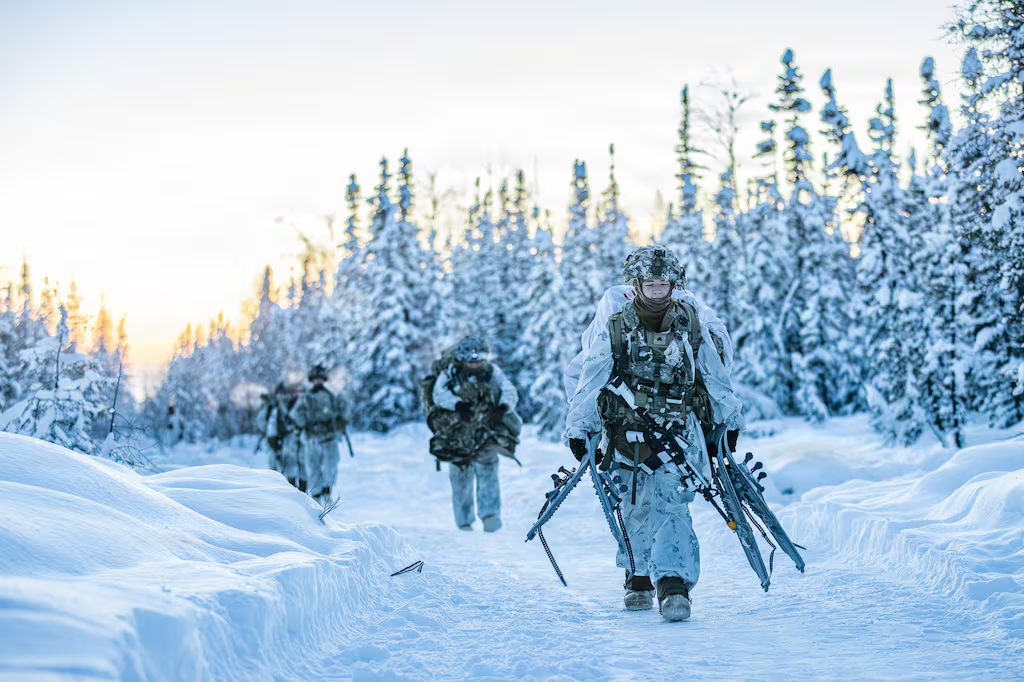
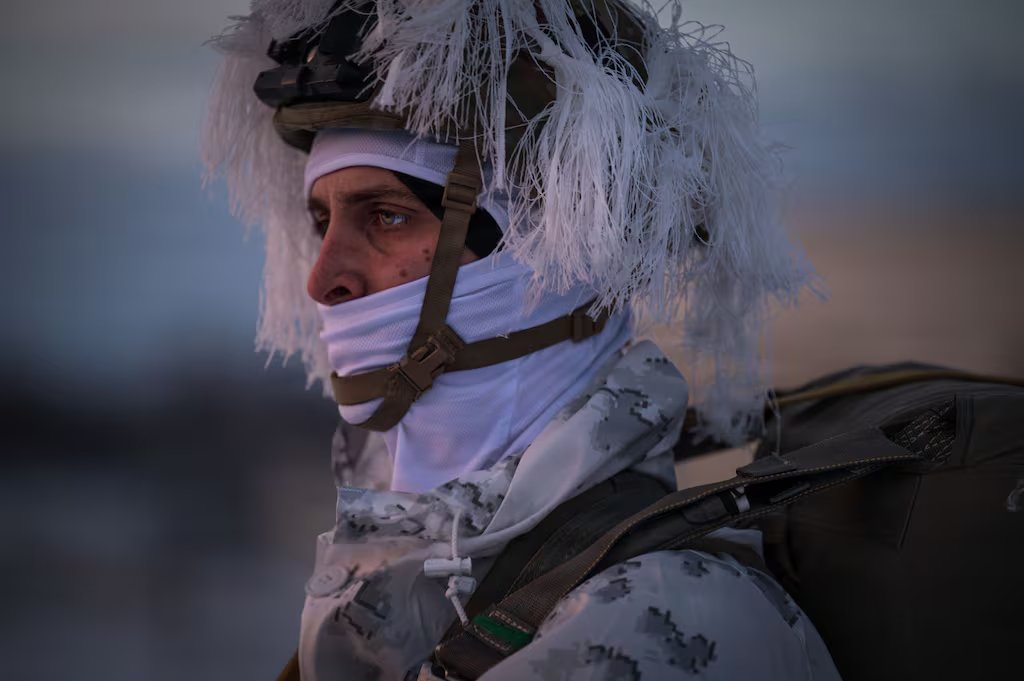
A 代表“适应极寒环境的坚韧性”:无论是后勤保障人员、网络战专家还是步兵,每个人都必须具备在极寒环境中生存的能力。
The A is for Arctic tough. Everybody, whether you’re a sustainer, a cyber warrior or an infantryman, has to be Arctic tough, and you’ve got to be able to operate in that environment.
N 代表“夜间作战能力”:夜间作战人员必须掌握夜间作战的主动权,并保持对敌人的优势。
The N means you’ve got to be able to fight at night. Night fighters have to own the night and maintain that advantage over our enemies.
G 代表“出色的团队协作精神”:无论是在团队内部、小队中,还是在上级指挥部或下属单位中,你们都必须成为优秀的队友。
The G represents being a great teammate, whether that’s inside of your team, squad, company, up to your higher headquarters or down to a subordinate unit. We demand that you be a great teammate.
E 代表“专业技能”:你们必须精通体能训练、射击技术、战斗演练以及医疗急救知识;作为第11空降师的一员,你们必须能够执行各种任务(如从飞机上跳伞、使用雪鞋或滑雪板进行移动、拖拽雪橇等)。
The E represents being experts in the fundamentals — your PT, marksmanship, battle drills, medical training and mobility. This means a lot. Being part of the 11th Airborne Division means you’ve got to be able to jump out of a plane, air assault, move on snowshoes and skis, pull a sled — do all that’s expected.
L 代表“致命战斗力”:我们的存在目的就是在全球任何地方消灭敌人。
The L is to be lethal. That’s why we exist — to close with and destroy the enemy anywhere in the world.
S 代表“模范带头作用”:在极寒环境中,任何违反操作标准的行为都可能导致人员受伤甚至死亡。因此,我们需要那些严格遵守各项规定、以身作则的领导者;这样的领导者才能增强整个组织的凝聚力。
And then lastly, the S. We need soldiers to be standard bearers. Because if you violate a standard in the Arctic, people lose a finger, a hand, a leg or a life. It’s a natural risk to operate in this environment, so we need leaders who are very engaged, who know the standard, who uphold it and model it themselves. That builds trust in the organization.
北极战争领域的专业知识具有极高的价值。我们不仅培训特种部队(如“游骑兵”)、空降作战人员以及反侵略作战专家,这些士兵不仅学会了如何在极端环境中生存,还能在这种环境下茁壮成长。
There’s ultimately so much value in Arctic warfare expertise. Not only are we training Rangers, jump masters, air assault and repel masters, but these are people who have learned how to fight and not just survive, but thrive in these conditions.
一旦在阿拉斯加服役过,人们往往就再也不想离开了。大多数人初来时都感到紧张,但最终都会对那里的环境赞不绝口、充满热情。
And once you’ve served in Alaska, you kind of never want to leave. Most people come here a little bit nervous, but they leave kicking and screaming.
当与其他军种及盟友合作时,这些专业知识会得到进一步提升。例如,海军陆战队今年宣布将派遣部队到阿拉斯加执行任务。随着该地区受到更多关注,未来会有更多的合作机会吗?
That expertise is only enhanced when working with other services and allies. The Marines this year announced an Alaska rotation, for instance. Do you anticipate more collaboration as the region receives greater focus?
我们非常重视联合训练以及各军种之间的协同作战能力。每年在育空训练区进行的联合训练中,我们都会邀请所有多边合作伙伴参与。
We’re all about joint training opportunities and service interoperability. When we do our annual training exercise up there in the Yukon Training Area , we invite all of our multinational partners and all of our joint partners.
我们永远不会单独作战,也不会仅以陆军或美国一方的力量来应对挑战;我们希望所有相关方都能携手合作。
We’ll never fight alone. We’ll never fight as just an Army, and we’ll never fight as just the United States of America. We want everybody to come together.
联合太平洋-阿拉斯加训练基地的训练场地面积非常广阔,是加利福尼亚州福特·欧文国家训练中心的2.5倍。那里有广袤的原始森林、宽松的飞行空域以及充足的机动空间——这样的环境对我们的训练来说简直是完美的。
There is plenty of training area in the Joint Pacific Alaskan Range Complex . It’s two and a half times the size of the National Training Center in Fort Irwin, California. So, imagine all that wild and wonderful wilderness out there with very permissive airspace and a lot of maneuver area. So, the more the merrier for us, and those joint training opportunities help us see gaps and seams where maybe our machines are not talking.
联合训练不仅能让各方更好地了解彼此的能力与不足,还能帮助我们发现那些可能导致沟通不畅的问题。只有通过定期共同训练,我们才能真正掌握协同作战的精髓。因此,我们非常欢迎这样的机会。
But we want to be able to seamlessly have a common operating picture and share a common intel picture on a single pane of glass. You can’t know if you can do it well or not unless you train together on a regular basis, so we welcome that opportunity. Part of maximizing training is budgeting for it.
要充分发挥训练效果,关键在于为相关训练项目提供足够的预算支持。如果你需要向那些负责资源分配的人阐述北极战争的重要性,你会怎么说呢?
If you were going to pitch the importance of the Arctic to those who distribute those resources, what would you say? With the budget, it’ll work out, and soldiers will find ways to train.
只要预算得到保障,一切都会顺利解决;士兵们也会想出各种训练方法。体能训练是免费的,因此如果我们拥有身体素质过硬、能够适应极地环境的士兵,那么我们就具备了完成任务的能力。
PT is free, so if we have physically fit, Arctic-tough soldiers, then that’s what we’re going to be. We can go out there and train in the elements and do all those things we’ve discussed, but I think the most important thing is that we have to be able to project this power.
我们可以到野外进行训练,完成之前讨论过的所有训练项目;但我认为最重要的是:我们必须能够将这些作战力量迅速部署到需要的战场——无论是在太平洋、欧洲,还是世界其他任何地方。
Alaska is far away from a lot, but it’s strategically located at the center of three combatant commands. If you’re going to build an Arctic-capable lethal fighting force, you have to be able to get it to the fight, whether that’s in the Pacific, Europe, or anywhere else in the world.
25年前我在阿拉斯加服役时,我们只有一个空降营作为作战单位;如今,我们已经拥有一个具备空降和空中突击能力的完整师。此外,我们还配备了适用于寒冷气候的全地形车辆,以及陆军投入的所有相关装备。
When I served in Alaska 25 years ago, we had an airborne battalion task force, but now we have an entire division that’s airborne and air assault capable. And we have these cold-weather all-terrain vehicles. We have all of the kit that the Army has invested in.
那么,如何将这些作战力量迅速部署到战场呢?关键在于基础设施建设、作战能力的提升,以及与空军的协同作战能力——确保我们能够及时抵达目标地点。这也需要我们了解那些重要的海上交通线路,以便能够快速将部队和装备运送到目的地。
How do you get it to the fight? That’s infrastructure, that’s power projection, that’s joint interoperability with the Air Force to make sure we can get there. That’s understanding the sea lines of communication that you brought up earlier, so we can float those things and get it there fast enough.
这正是“Pathways行动”(Operation Pathways)的核心理念:我们不仅与多国合作伙伴共同训练,以增强彼此之间的协同作战能力和互信,还会在国际日期变更线以西的地区进行实战演练,确保我们的部队和装备随时处于备战状态。这样一来,如果需要在太平洋某地执行任务,我们就能立即带着所有装备赶赴现场——这大大缩短了作战准备时间。维持这种作战能力至关重要。
That goes to our ready-forward concept with Operation Pathways. Not only do we train with multinational partners to build that interoperability and trust, but we also train in those locations to be west of the International Date Line with soldiers and equipment. So, if we need to do something somewhere in the Pacific, we’re already there with our gear. That really shortens the commute time, if you will. It’s critically important that we maintain that capability.