印度的可再生能源装机容量在过去十年增长了四倍,达到约300吉瓦,使该国远超其在《巴黎协定》下的自愿承诺,印度总理纳伦德拉·莫迪周二在新德里布隆伯格新经济论坛上表示。
India’s renewable energy capacity has quadrupled over the past decade to about 300 gigawatts, putting the country well ahead of its voluntary commitments under the Paris Agreement, Prime Minister Narendra Modi said.
包括屋顶太阳能激励和太阳能灌溉泵在内的项目降低了消费者成本,同时有助于减少排放。莫迪表示,这一扩张帮助印度成为首个实现其《巴黎协定》自愿承诺的二十国集团国家——即在2030截止日期前九年,实现非化石能源占装机电力容量的40%。
Programs including incentives for rooftop solar and sun-powered irrigation pumps have lowered consumer costs while helping reduce emissions, Modi said Tuesday at the Bloomberg New Economy Forum in New Delhi. The expansion helped India become the first Group of 20 nation to meet its voluntary Paris pledge of having 40% of installed power capacity from non-fossil sources, nine years ahead of the 2030 deadline.
莫迪强调落实现有承诺和加快执行,这进一步凸显了印度在下月土耳其安塔利亚举行的COP31峰会前的立场。新德里正在抵制欧盟推动更深层次全球减排的举动,认为各国应首先兑现现有承诺。印度环境部上周表示,全球谈判应聚焦于弥补执行差距和落实发达国家长期承诺的气候融资,而非设定新目标。
Modi’s emphasis on meeting existing commitments and accelerating implementation sharpens India’s position ahead of next month’s COP31 summit in Antalya, Turkey. New Delhi is resisting a European Union push for deeper global emissions cuts, arguing that countries should first deliver on existing pledges. India’s environment ministry said last week that global negotiations should focus on closing implementation gaps and delivering long-promised climate finance from developed nations rather than setting new targets.
“印度正在进行的能源转型正在创造新的机遇,”莫迪说,并补充称,该国正以一种“不同的思维方式”推进这一转变,即同时优先考虑人民和地球。
“This energy transition taking place in India is creating new opportunities,” Modi said, adding that the country is approaching the shift with a “different mindset” by prioritizing people and the planet at the same time.
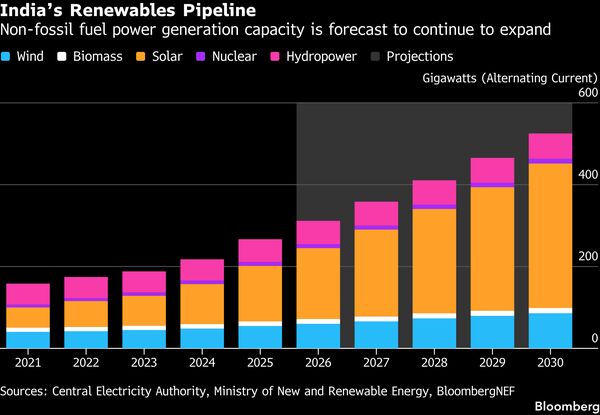
根据彭博新能源财经(BloombergNEF)的数据,去年非化石能源占印度装机电力容量的比重超过一半,当时印度超越美国,成为继中国之后全球第二大太阳能和风能项目建设国。此后,印度承诺到2035年将可再生能源在装机电力容量中的比重提升至60%,并将2005年以来的经济碳排放强度降低47%。
Non-fossil fuel sources accounted for more than half of India’s installed power capacity last year, when the country surpassed the US to become the world’s second-biggest builder of solar and wind projects after China, according to BloombergNEF. The South Asian nation has since pledged to raise the share of renewable energy in installed power capacity to 60% and cut the economy’s emissions intensity by 47% from 2005 levels by 2035.
截至8月底,印度的非化石燃料发电装机容量达到了304吉瓦,其中核能发电装机容量约为9吉瓦,水力发电厂的装机容量超过25吉瓦。大型水力发电设施占印度清洁能源发电总装机容量的17%。
India’s 304 gigawatts of non-fossil fuel-based generation capacity at the end of August, includes almost 9 gigawatts of nuclear as well as hydropower plants of more than 25 megawatts capacity. Large hydro facilities account for 17% of India’s clean power capacity.