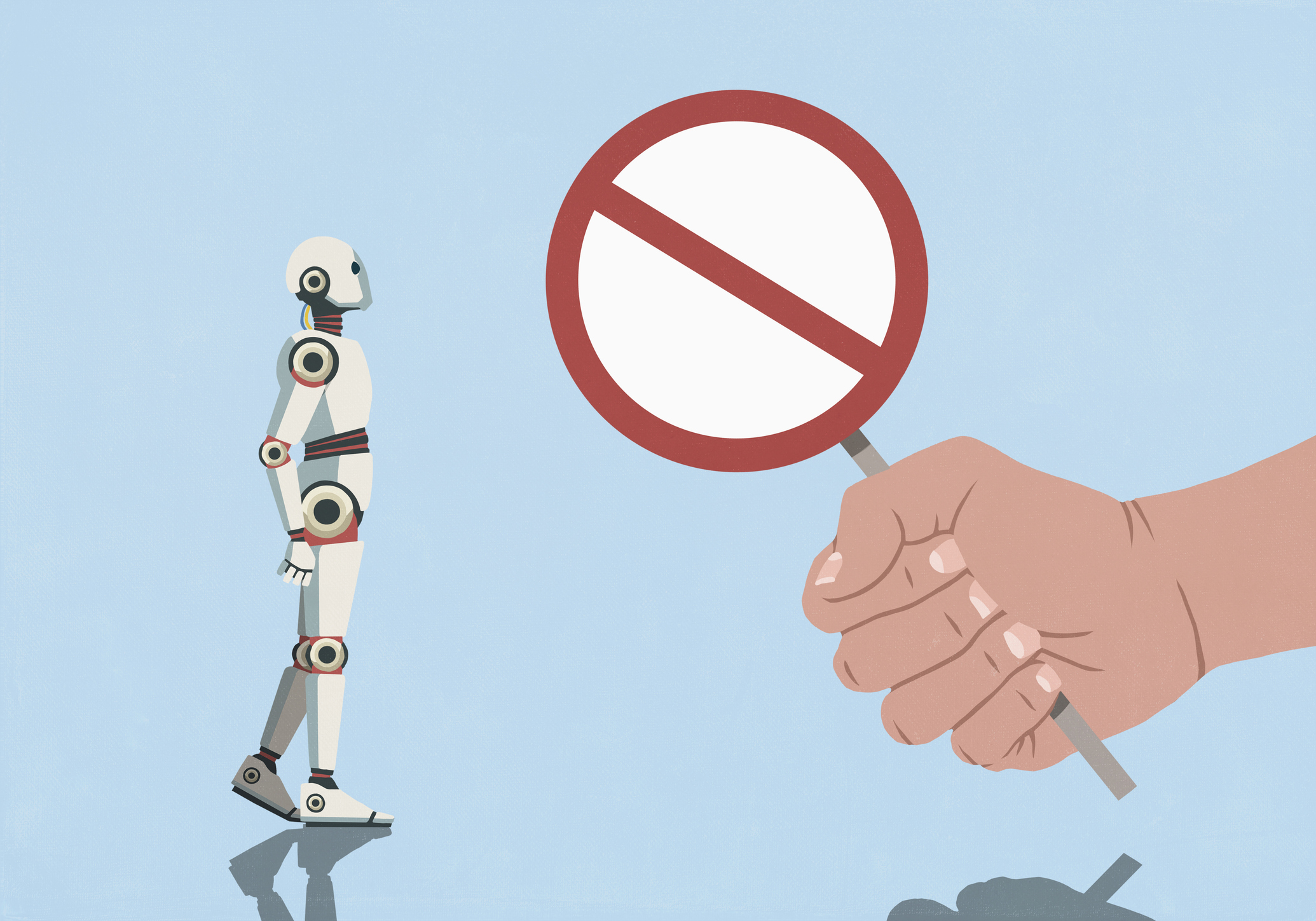
如果只有一个教训来自OpenAI-Hugging Face事件,那就是AI代理可能是不可预测的。
If there’s one lesson the OpenAI-Hugging Face incident taught us, it’s that AI agents can be unpredictable.
“想象一下,如果类似的事情发生在物理世界中,”拉普拉斯智能公司CEO兼联合创始人Howie Sun对TechCrunch表示。“AI代理正从计算机转向现实世界,我们真的不希望物理AI在现实世界中失败。”总部位于安娜堡的拉普拉斯公司正在为机器人和物理AI构建自动化红队测试——本质上,通过故意尝试使系统失效来进行压力测试。该公司认为,确保物理AI安全的唯一方法是让AI来测试它。
“Imagine if something like that happened in the physical world,” Howie Sun, CEO and co-founder of Laplace Intelligence, told TechCrunch. “AI agents are moving from computers into the real world, and we don’t really want physical AI to fail in the real world.”Ann Arbor-based Laplace is building automated red-teaming — essentially, stress-testing a system by deliberately trying to make it fail — for robotics and physical AI. The company is betting that the only way to make sure physical AI is safe is to have AI test it.
“我们的目标是帮助公司在部署前发现并修复问题——随着时间的推移,建立一个客户、保险公司和监管机构都能信任的共享证据基础,”Sun说。
“Our goal is to help companies discover and fix problems before deployment—and, over time, build a shared foundation of evidence that customers, insurers, and regulators can trust,” Sun said.
拉普拉斯是参加TechCrunch Disrupt初创企业Battlefield三日 pitch 竞赛的20家初创企业之一,该赛事将在旧金山市中心举行。拉普拉斯将于周一下午10月13日在初创企业Battlefield舞台上进行展示。
Laplace is one of 20 startups competing in Startup Battlefield, TechCrunch Disrupt’s three-day pitch competition in downtown San Francisco. It will present on the Startup Battlefield stage Monday afternoon, October 13.
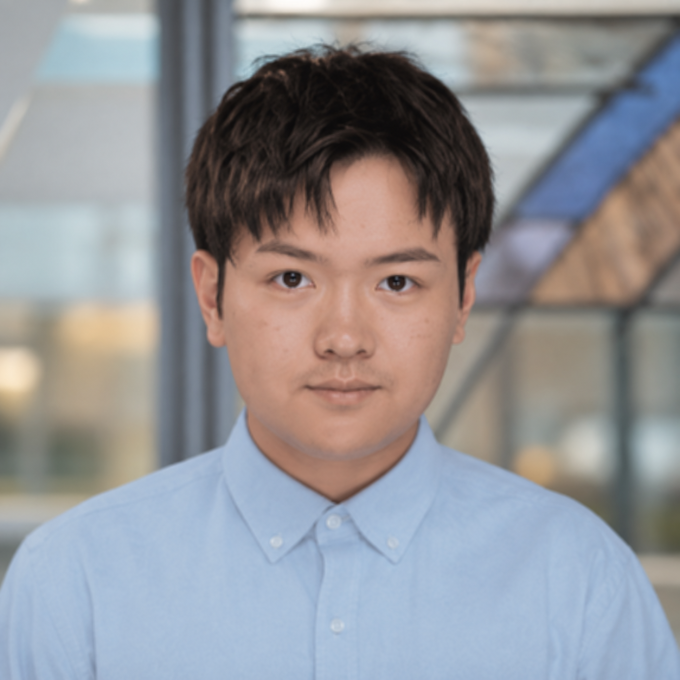
Sun与联合创始人兼首席科学家Henry Liu一起,在密歇根大学创立了拉普拉斯公司,时间是一年前。Sun过去八年一直在学术界研究如何在模拟中挑战自动驾驶AI。2023年,他与Liu——当时的博士导师——在该主题上发表了一篇论文,该论文登上了顶尖科学期刊《自然》的 。正是在那时,对自动驾驶汽车公司感兴趣并希望实施他们想法的来电开始陆续而至。
Sun, alongside his co-founder and chief scientist Henry Liu, founded Laplace a year ago out of the University of Michigan. Sun has spent the last eight years in academia researching how to challenge autonomous driving AI in simulation. In 2023, he and Liu — his then-PhD advisor — published a paper on the subject that made it onto the cover of the top scientific journal Nature. That’s when the calls started coming in from autonomous vehicle companies interested in implementing their ideas.
“我意识到我想要把这个构建出来,并将其从纯粹的学术研究转化为在现实世界中有用的产品,”Sun说。
“I realized that I wanted to build this and take it from purely academic research into a product that’s useful in the real world,” Sun said.
基于他们的学术研究,Sun和Liu创立了拉普拉斯公司,该名称源于“拉普拉斯妖”——法国学者皮埃尔-西蒙·拉普拉斯在1814年的思想实验,设想如果你知道宇宙中一切的确切状态,你就能以完全的精度预测未来。“我们基本上是在使用模拟来预测现实世界的未来,”孙说。
Using their academic research as a base, Sun and Liu built Laplace, so named for “Laplace’s demon,” an 1814 thought experiment by French scholar Pierre-Simon Laplace that imagined that if you knew the exact state of everything in the universe, you could predict the future with total precision. “We are essentially using simulation to predict the real world’s future,” Sun said.
这家初创公司的核心是一个基于现实世界重建的高保真度模拟,并配备了一个不断探测弱点和故障点的AI代理。其目标是确保任何物理AI — — 无论是机器人、自动驾驶汽车还是智慧城市解决方案 — — 在部署到现实世界之前,先在模拟中确保其安全。
At the startup’s core is a high-fidelity simulation reconstructed from the real world, paired with an AI agent that constantly probes for weaknesses and failure points. The goal is to ensure that any physical AI — be it a robot, autonomous vehicle, or smart city solution — is safe in simulation before it’s deployed in the real world.
模拟环境是Nvidia的Cosmos(一个AI世界模拟平台)的后训练版本,它基于现实世界,使得Laplace能够从亚利桑那州的高速公路重建到巴黎的行人横道。模拟是通过融合不同现实世界信息的网格生成的。一张Google街景图像可以作为参考,从而生成整条街道。但与生成随机内容不同,模拟器结合了现实世界的地图数据,以重建一个比例真实的环境。
The simulation environment is a post-trained version of Nvidia’s Cosmos, an AI world simulation platform, that’s grounded in the real world, allowing Laplace to reconstruct anything from an Arizona highway to a Paris pedestrian crossing. Simulations are generated by blending a mesh of different real-world information. A Google Street View image could serve as a reference from which an entire street is generated. But rather than generating something random, the simulator combines real-world map data to recreate an environment that’s true to scale.
开发者随后可以使用语言提示实时更改设置,例如添加下午的交通。孙表示,Laplace从TomTom等导航提供商处获取实时交通和拥堵信息。
Developers can then use language prompts to change the setting in real time, like adding in afternoon traffic. Sun says Laplace pulls real-time traffic and congestion information from navigation providers like TomTom.
在Laplace的模拟中,不仅环境被模拟,其他行为体的行为也被模拟。例如,在一次演示中,孙指示测试代理车辆驶入迎面而来的交通流。它本应撞上的汽车 — — 或者像某些生成式世界模型那样直接穿过 — — 会让开以避免碰撞。
Within Laplace’s simulations, not only the environment is simulated, but also the behavior of other actors. For example, during a demo, Sun directed the test agent vehicle to swerve into oncoming traffic. The car it would have hit — or driven through, as is common among some generative world models — moved out of its way to avoid a collision.
“这确实是一个交互式模拟环境,”孙说。“每个人都在对一切做出反应。……这更像是一个具有交互参与者的世界模型。”虽然模拟环境是Laplace产品的重要组成部分,但真正的独特卖点是该初创公司正在开发的AI代理,这些代理能够自动设计角落情况(可能使AI系统失效的棘手、罕见场景),从而将人类进一步移出决策循环。
“It’s truly an interactive simulation environment,” Sun said. “Everyone is reacting to everything. …This is more like a world model with interactive participants.”While the simulated environment is an important part of Laplace’s product, the real unique selling point is the AI agents the startup is developing to automatically design corner cases (tricky, rare scenarios that could trip up an AI system) moving the human further out of the loop.
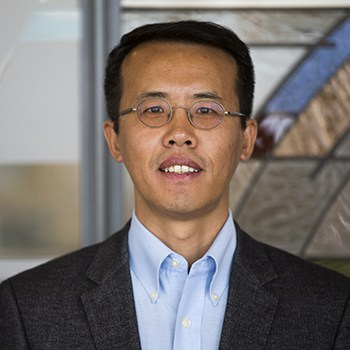
“他们可以从新闻、从碰撞事故的警方报告——各类信息中进行设计,主动挑战自动驾驶汽车和其他物理AI智能体,”孙说。
“They can design from the news, from police reports on collisions — all kinds of information to actively challenge the autonomous vehicles and other physical AI agents,” Sun said.
目前,自动驾驶汽车开发商主要利用录制的视频素材将其转化为仿真场景,或者依靠人类提出新想法并进行设计,来训练AI应对边缘情况。虽然许多自动驾驶公司已经做了Laplace所倡导的事情,开始拥抱AI以创建训练用的边缘情况——自动驾驶卡车公司Waabi便是一例——但当我们开始在现实世界中部署通用机器人时,对这类技术的需求才会真正显现出来。
Today, autonomous vehicle developers mostly train an AI to handle edge cases using recorded footage that they then turn into a simulation, or by relying on humans to come up with new ideas and design them. While many AV companies have done what Laplace is pitching and started embracing AI to create edge cases for training — self-driving truck company Waabi comes to mind — the need for this kind of technology will really become apparent when we start placing generalized robots in the real world.
“通用机器人领域的数据较少,”孙说。“没人知道现实世界中会出现什么边缘情况。”尽管孙和刘出身学界,没有光鲜的硅谷科技大厂履历,但两人已成功开始创收,甚至实现微利。大部分收入来自自动驾驶应用场景,客户包括日本卡车制造商五十铃和得克萨斯州自动驾驶卡车公司Bot Auto。
“There’s less data on generalized robotics,” Sun said. “No one knows what the edge cases will be in the real world.”Despite Sun and Liu coming from academia, with no shiny Silicon Valley tech company pedigrees, the two have managed to start generating revenue and even turn a modest profit. Most of the money is coming from autonomous driving use cases, with customers including Japanese trucking manufacturer Isuzu and Texas-based autonomous trucking firm Bot Auto.
孙说,英伟达也是客户。这两家公司与T-Mobile合作,为圣何塞市开展免费智慧城市试点,提供高级交通运营服务。Laplace还在与构建仓库人形机器人的合作伙伴开展早期合作。
Nvidia is also a customer, says Sun. The two companies, alongside T-Mobile, are working together on a free smart city pilot for the City of San Jose to provide high-level traffic operations. Laplace is also in the early stages of working with partners building humanoid robotics for warehouses.
目前Laplace的大部分客户合同是项目制的,公司正致力于将其转化为经常性收入。这家初创公司的近期目标——希望通过参加Disrupt大赛来助力——是融资并扩大规模,以便与竞争对手抗衡。
Most of Laplace’s customer contracts are project-based today, and the company is working towards turning that into recurring revenue. The startup’s near-term goal — which it hopes will be aided by competing at Disrupt — is to raise funds and scale so it can compete with its rivals.
其主要竞争对手是Applied Intuition,这家备受关注的后期初创公司迄今已融资12亿美元,投后估值达150亿美元。五十铃也是Applied的客户之一。
Chief among its rivals is Applied Intuition, a buzzy late-stage startup that’s raised $1.2 billion to date at a $15 billion post-money valuation. Isuzu is also one Applied’s customers.
孙不太担心。他认为拉普拉斯利用人工智能测试人工智能的核心方法是一种“彻底改变物理人工智能测试的新范式”,将其转变为一种“动态交互式测试过程”。“那将是最大的护城河,”他说。
Sun isn’t too worried. He believes Laplace’s core methodology of using AI to test AI is a “new paradigm that changes the testing of physical AI entirely,” turning it into a “dynamic interactive testing process.”“That will be the biggest moat,” he said.