火箭因其臭名昭著的缺陷而令人头疼。物理学定律迫使火箭必须以几乎零容错的方式制造,即便如此,只有其重量的一小部分最终能够进入轨道。
Rockets are, infamously, a real pain in the butt. Our old friend physics forces rockets to be built with almost no room for error, and even then only a small fraction of their weight makes it to orbit.
至少在理论上,还有其他完成这项任务的方式——空间电梯、离心机,或者悬挂在太空卫星上的巨型链条,用于从地球捞取货物。(蓝色起源曾花时间研究过这一想法,后来该想法出现在尼尔·斯蒂芬森的小说中。)还有另一个可以追溯到儒勒·凡尔纳的想法:使用大型火炮将炮弹射入太空。
There are, at least in theory, other ways to do the job—space elevators, centrifuges, or a big chain hanging from a satellite in space and scooping up cargo from Earth. (Blue Origin spent some time thinking about that one before the idea wound up in a Neal Stephenson novel.) And then there’s an idea dating all the way back to Jules Verne: Use a big gun to shoot a projectile into space.
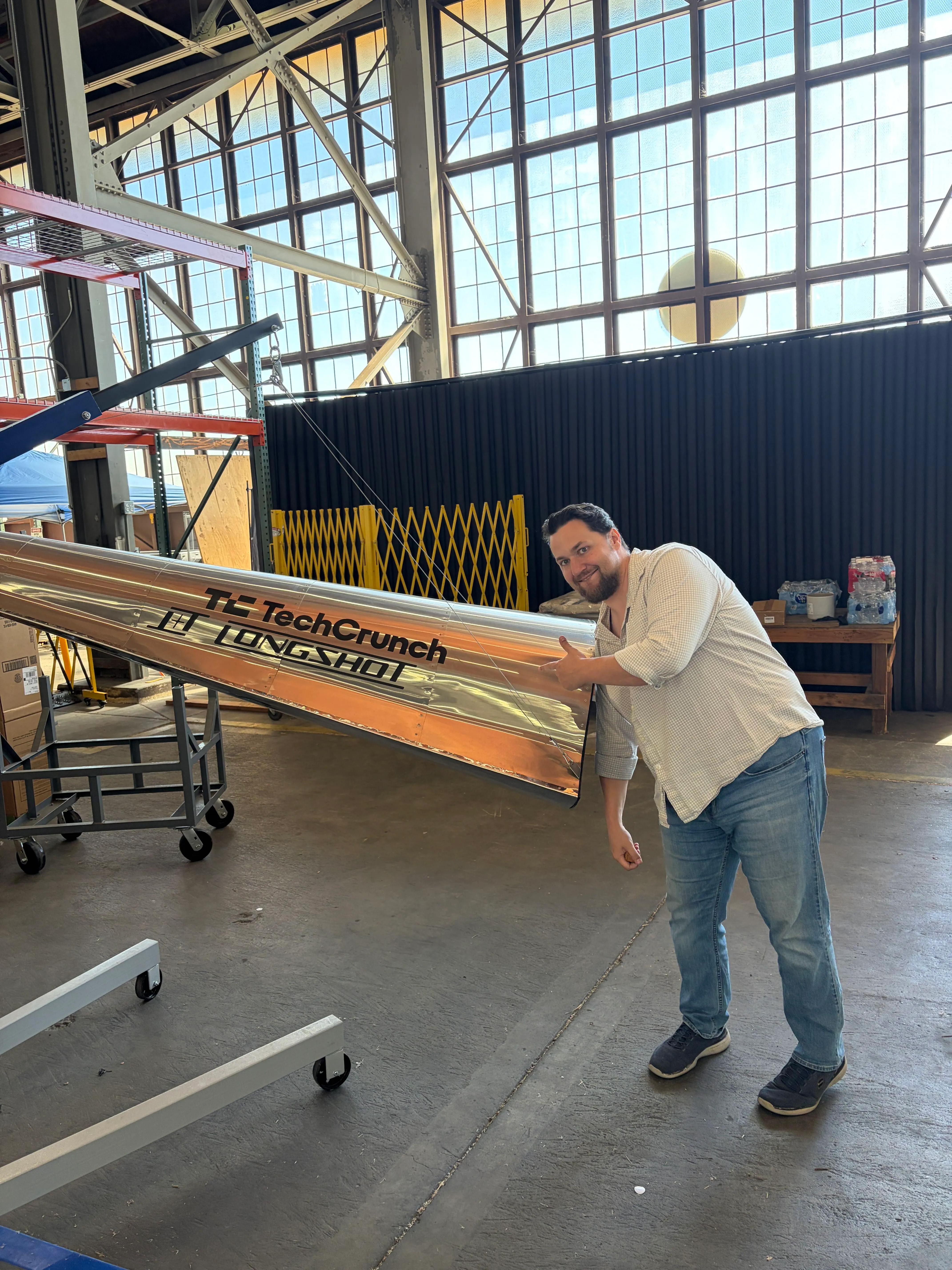
总部位于加利福尼亚州阿拉米达的初创公司Longshot Space Technology正致力于实现这一想法。联合创始人、首席执行官Mike Grace和首席技术官Nato Saichek认为,有一个机会可以将已经证明其价值的技术应用于紧迫的太空发射需求。该初创公司已从风险投资者那里筹集了约2000万美元,以支持其使命。
Longshot Space Technology, a startup based in Alameda, California, is working on exactly that. The cofounders, CEO Mike Grace and CTO Nato Saichek, see an opportunity to take a technology that has already proven its worth, and apply it to the pressing need for space launch. The startup has raised about $20 million from venture investors in service of its mission.
谈到前沿技术时,Grace表示:“你可以制造出具有高度新颖性的东西,或者你可以做一些非常困难的事情。你不可能两者兼得。”他以SpaceX为例,指出该公司已经“采用了经典的低风险技术并进行了激进的规模化”。他说,SpaceX在NASA火箭研究方面所做的,Longshot将在多级注射炮上实现——这种设计在炮弹移动过程中通过枪管提供额外助推力,最初用于二战期间以及1960年代的研究项目。
When it comes to frontier technology, Grace says, “you can build something that has a lot of novelty, or you can do something really hard. You don’t get to do both.”He points to SpaceX as an example of a company that has “taken classically de-risked technology and scaled it aggressively.”What SpaceX did with NASA rocket research, he says, Longshot will do with multi-injection guns — designs that give a projectile extra boosts as it moves down the barrel — built for World War II and during 1960s research programs.
其想法是将发射载具第一级所完成的所有工作浓缩为一个可重复使用的地面加速器。想象一根水平安装在地面上的钢管,其长度上分布着连接高压气体罐的端口。当炮弹被发射并沿枪管移动时,这些气体罐会在精确的时刻开火以加速它——目前已达到最高马赫4的速度。
The idea is to take all the work done by the first stage of a launch vehicle and collapse that into a reusable accelerator on the ground. Picture a steel pipe mounted horizontally over the ground, with tanks of high-pressure gas attached at ports spread across its length. When a projectile is fired and moves down the barrel, the tanks fire off at precise times to accelerate it — to speeds as high as Mach 4, thus far.
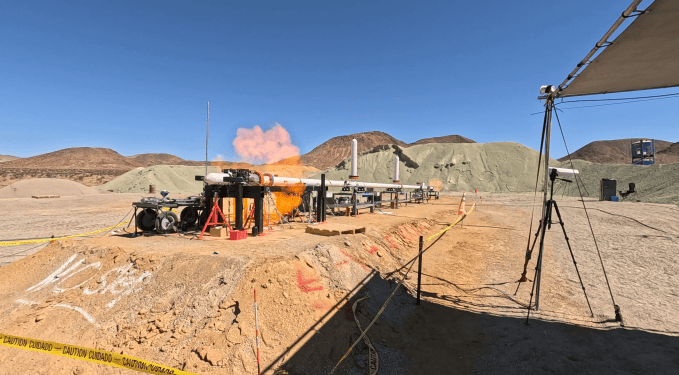
该公司目前正在位于加利福尼亚州巴斯托附近的测试场地使用一门70英尺长、直径6英寸的火炮进行试射,并表示该火炮能够将弹丸加速到接近高超音速。随后,它预计将在阿拉米达测试场地开始使用一门140英尺长、直径30英寸的火炮。之后,公司正在准备建造一门直径30英寸、长328英尺的火炮,并计划将其延长至约3000英尺——这将使其成为地球上最大的火炮。团队表示,该火炮将能够将220磅的有效载荷发射至最高马赫8的速度。
The company is currently firing an 70-foot gun with a 6-inch diameter at its test site near Barstow, California, and says it can accelerate projectiles up to near-hypersonic speeds. Soon, it expects to start firing a 140-foot-long gun with a 30-inch diameter at its Alameda test site. After that, the company is preparing to build out a 30-inch diameter gun that is 328-feet long, with plans to extend it to about 3,000 feet—making it the largest gun on the planet. It will be capable of launching 220-pound payloads up to speeds of Mach 8, the team says.
这些火炮将使Longshot能够在证明其技术有效性的同时,通过为美国军方进行高超音速测试来创造收入,而美国军方已向该公司授予了多份合同。格雷斯设想在美国军事基地(如布利斯堡)建造其一门火炮,该火炮可成为测试下一代美国拦截导弹基础设施的一部分。(而且不,这些火炮不需要以一定角度向上发射。Longshot的弹丸是一种升力体,意味着其形状会产生升力,因此一旦离开枪管,它将在空气动力学作用下获得高度。)
These guns will let Longshot keep proving its technology works while also generating revenue from performing hypersonic testing for the US military, which has awarded the company several contracts. Grace envisions building one of his guns on a US military installation like Fort Bliss, where it could be part of the infrastructure for testing the next generation of US interceptors. (And no, the guns don’t need to point up at an angle. Longshot’s projectile is a lifting body, meaning its shape generates lift, so it will aerodynamically gain altitude once it exits the barrel.)“If you want to practice shooting down a Chinese or Russian hypersonic missile, wouldn’t it be nice not to pay $30 million for that?”
“如果你想练习击落中国或俄罗斯的高超音速导弹,难道不希望不用花3000万美元就能做到吗?”格雷斯问道。“这一方法只需花费五十万美元、二十五万美元,就能进行高超音速‘陶靶’训练——发射它们并击落它们,而且速度快、成本低。”然而,终极目标是将大型有效载荷送入太空。团队有信心能够将当前设计放大,使有效载荷的加速速度达到每秒5公里(超过11000英里/小时)。
Grace asks. “This is a way for half a million, a quarter of a million bucks, of doing hypersonic clay pigeons, throw them and shoot them down, and do it really fast and really cheap.”The ultimate goal, however, is putting large payloads into space. The team is confident it can scale up its current design to accelerate payloads to as much as 5 kilometers per second (more than 11,000 mph).
如果有效载荷(实际上充当火箭的第二级)具备自身推进系统,那么这一速度足以进入太空。但实现这一点需要一门长10公里(约6英里)、直径近10英尺的火炮。正如你所能想象的,公司面临的一个问题就是寻找合适的作业场地。
That’s fast enough to get into space if the payload, which effectively serves as the second stage of a rocket, has its own propulsion system. But doing that would require a gun 10 kilometers (about 6 miles) long and nearly 10 feet in diameter. As you might imagine, one problem the company faces is simply finding suitable worksites.
“难的不是建造东西,而是找到一个允许你建造东西的地方,”塞切克开玩笑说。
“The hard part is not building the thing, it’s finding a place where they will let you build the thing,” Saichek jokes.
但如果Longshot能够实现其愿景,数学就会非常诱人:该系统建造和加燃料的成本都很低,而且高度可重复使用。格雷斯预计,如果一切顺利,他们可以以难以置信的每公斤50美元(约合每磅22美元)的价格将有效载荷送入太空。考虑到备受炒作的轨道数据中心行业需要将价格降至每公斤约300美元才能起步,这为Longshot提供了充足的空间来提供具有竞争力的价格。
But if Longshot can realize its vision, the math is very attractive: The system is cheap to construct and to fuel, and is highly reusable. Grace expects that if everything works out, they can send payloads to space for a hard-to-believe $50 per kilogram (about $22 per pound). Considering that the much-hyped orbital data center industry needs prices to fall to around $300 per kilogram to get off the ground, that leaves Longshot plenty of room to offer a competitive price.
以这种形式和条件发射航天器需要进行一些修改,但在这个价格点上,卫星运营商将愿意尝试。
It will require some modification to launch spacecraft in this form factor and conditions, but at that price point, satellite operators will be willing to try.