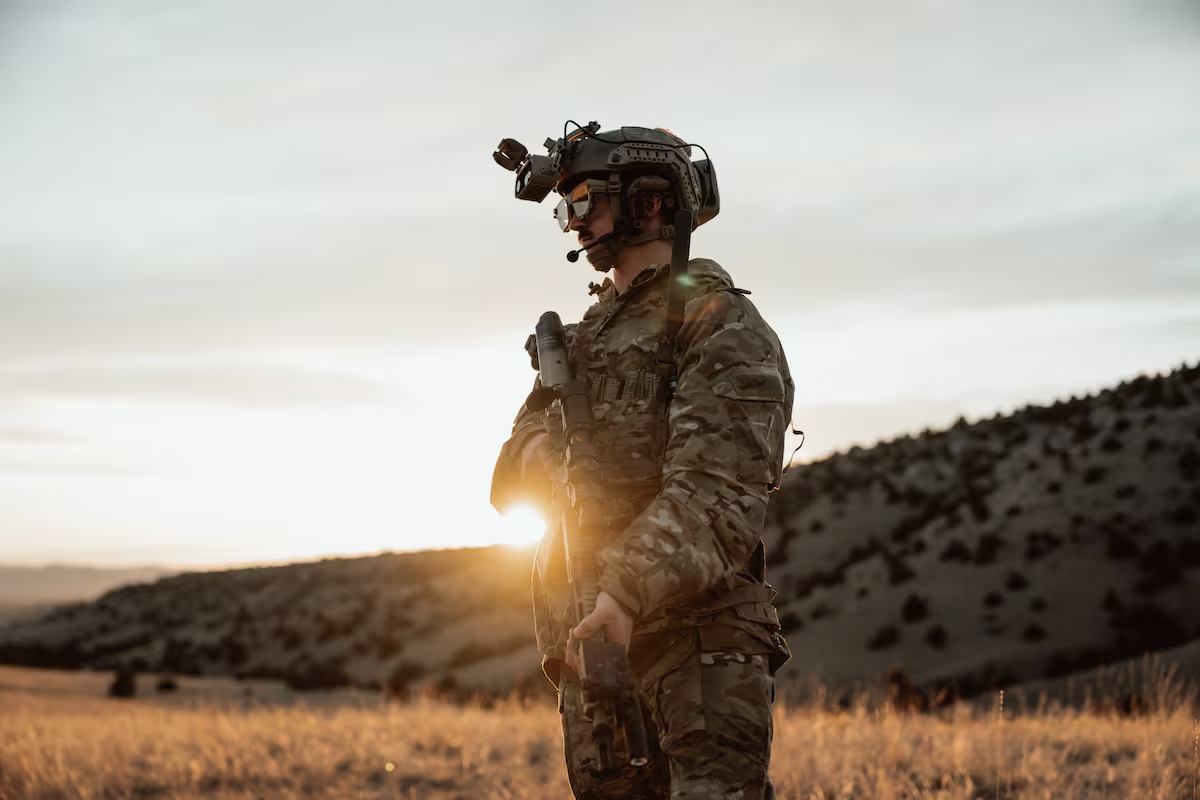
去年,总部位于华盛顿特区的Rivet公司是美国陆军“士兵背负式任务指挥”项目的两家承包商之一,该项目旨在研发一种能够提升战场态势感知和通信能力的设备。
Last year, Washington, D.C.-based Rivet was one of two contractors selected for the U.S. Army’s Soldier Borne Mission Command program, an effort to develop a device that enhances situational awareness and communication on the battlefield.
据联合创始人兼首席执行官Dave Marra透露,自那以后,Rivet已完成5500万美元的A轮融资,并向陆军交付了首批70台原型机。
Since then, Rivet has raised $55 million in Series A financing and delivered its first 70 prototypes to the Army, according to co-founder and chief executive Dave Marra.
而另一家承包商Anduril则开发出了一款类似原始一体化视觉增强系统(IVAS)的头显——该系统他们也曾参与研发——Rivet则采取了不同的路径:推出了一款名为Rivet Hard Spec的军用智能眼镜。
While the other contractor, Anduril, developed a headset resembling the original Integrated Visual Augmentation System, or IVAS, which it had also helped develop, Rivet took a different approach: a pair of militarized smart glasses called the Rivet Hard Spec.
Marra在接受《军事时报》采访时解释称,Hard Spec的理念是帮助那些“在艰苦环境中从事艰苦工作”的人。虽然最初的目标是为步兵提供用于目标定位和导航的可操作信息,但该设备的应用范围已扩展至其他任务,包括士兵可能不常进行的技术和机械工作。
Marra explained in an interview with Military Times that the idea behind the Hard Spec is helping people who “do hard jobs in hard places.”While the initial goal was to give infantrymen actionable information for targeting and navigation, the application has expanded to other tasks, including technical and mechanical work that soldiers may not perform regularly.
他强调,这一理念并非要把步兵变成IT专家或机械师,而是通过智能眼镜,让受过专业训练的人员在执行任务时能够获得正确的操作流程,而无需依赖纸质手册。
He explained that the idea isn’t to turn an infantryman into an IT specialist or mechanic, but rather, the glasses could give a trained professional the correct procedures for a task without requiring a physical manual.
他说道:“所以这不仅仅是说‘嘿,我们想为每个军事职业专长创造一种通用解决方案’。而是,你作为一名多功能士兵、海军陆战队员或空军人员想要做的事情。而这种技术正是实现这一目标的强大加速器。”他还补充说,Rivet也正在将这项技术应用于其他领域,主要是航空航天制造以及飞机和车辆维修保养。
“So it’s not just like, ‘Hey, we want to create one solution for every military occupational specialty,’” Marra said. “[It’s] what you want to do as a multifunctional soldier or Marine or airman. And this kind of technology is a great accelerator to exactly that.”He added that Rivet is also adapting the technology for other fields, primarily aerospace manufacturing and aircraft and motor pool maintenance.
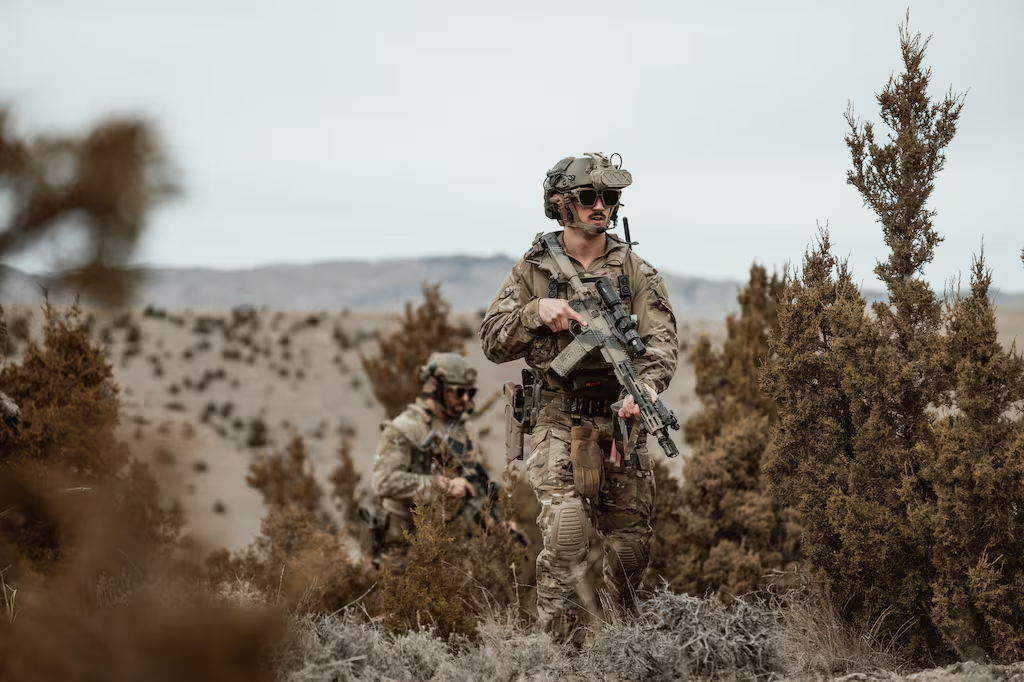
他进一步表示:“如果你偶尔忘记某个步骤,或者在这一岗位上还未达到100%的熟练程度,或者你并非每天都要执行该特定程序,那么在高压环境下,很容易遗漏某一步骤。而通过这款眼镜,你可以非常轻松地看到每一步操作,从而避免疏忽。”
“If you happen to forget or you’re not 100% proficient in this role or you don’t do this particular procedure every single day, you can very easily see how a step could be overlooked, especially when you’re in a high-stress environment,” he said.
公司的长期目标更为雄心勃勃:让士兵使用这些眼镜来指挥AI代理,从而控制战场上的机器人和无人机。
The company’s longer-term goal is even more ambitious: enabling soldiers to use the glasses to command AI agents that can control robots and drones on the battlefield.
马拉表示,这意味着超越使用AI来对复杂问题提供合理回答的范畴。
Marra said that means moving beyond using AI to provide a reasoned response to a complicated question.
“我在让一个代理代表我去做某件事,”他说。“我们想要达到的状态是,代理和机器人能够相互分配任务。”他表示,士兵应该能够“用普通语言而不是指令语言”来与这些系统进行交流。
“I’m asking an agent to go do something on my behalf,” he said. “What we want to get is where an agent and a robot can task each other.”He said soldiers should be able to communicate with those systems “in common language, not command language.”
例如,他说,士兵可以对无人机说:“‘嘿,那座山丘上有个目标。请在那座山丘上方盘旋,进行侦察,并把视频发回给我。’”如果这听起来很熟悉,那是因为这个概念几乎与2019年电影《蜘蛛侠:英雄远征》中的麦高芬几乎完全相同。在电影中,蜘蛛侠和反派神秘博争夺一副能够将佩戴者连接到AI赋能的全球防御系统的眼镜。
For example, he said, a soldier could tell a drone: “‘Hey, there is a target over that hill. Please orbit over that hill and reconnoiter it and send me back the video.’”If that sounds familiar, it’s because the concept is almost identical to the MacGuffin in the 2019 film Spider-Man: Far From Home. In the movie, Spider-Man and the villain Mysterio fight over a pair of glasses that connect the wearer to an AI-enabled global defense system.
“而如今实现这一点的最佳方式,就是佩戴一副在AI上拥有‘眼睛和耳朵’的眼镜,”马拉说。“因此在许多情况下,我认为我们正在为AI装上眼睛和耳朵,然后让这种具备代理能力的协作系统在人力劳动力中得以实现。”
“And the best way to do that today is having a pair of glasses that has eyes and ears on [the AI],” Marra said. “So in many cases, I would say that we’re putting eyes and ears on AI, and then allowing this kind of agentic ensemble to happen within the human workforce.”