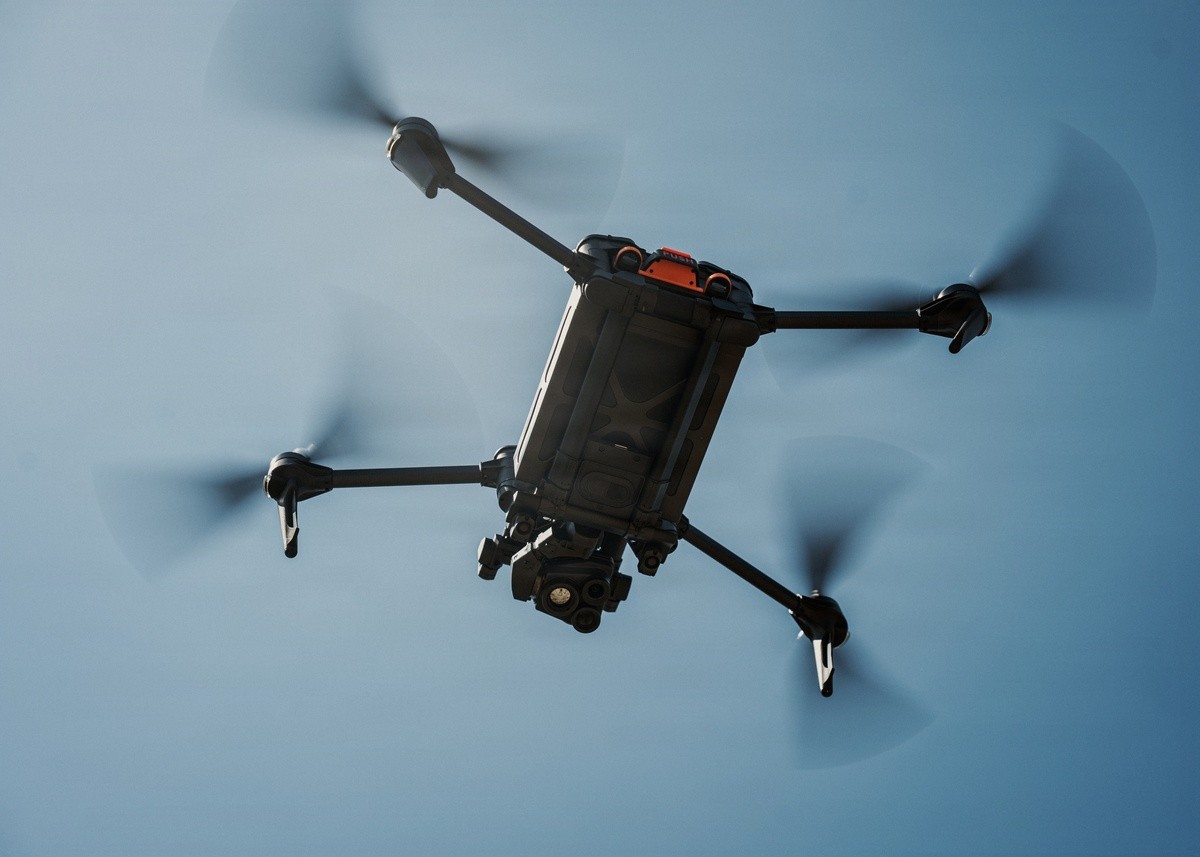
在布拉格堡(Fort Bragg),士兵们最近测试了无人系统如何帮助部队突破障碍物,同时降低他们在战场上面临的风险。
At Fort Bragg, soldiers recently tested how unmanned systems could help troops breach obstacles while reducing exposure to battlefield hazards.
在“Sandhills 2.0”项目中,士兵们规划了飞行路线,并在63号训练场操作了Bumblebee V2小型无人机系统。该项目旨在验证无人系统在突破障碍物时的作用;同时,士兵们与工业合作伙伴共同收集反馈,以期为未来陆军的发展提供参考。
During Project Sandhills 2.0, soldiers planned flight routes and operated Bumblebee V2 small unmanned aircraft systems at Range 63. The project tested how unmanned systems could support contested obstacle breaching, while soldiers and industry partners collected feedback to inform future Army capabilities.
陆军表示,该项目涉及的无人系统包括自动驾驶卡车、用于清除障碍物的机器人设备、无人机群以及用于探测地雷和对抗无人机的装备。其中,某些对抗无人机的装备仍需要人工授权才能执行任务,这表明“自动化”并不意味着完全排除人类的决策作用——人类的决策能力依然是陆军作战的核心。
The Army said the effort included autonomous trucks, robotic breaching payloads, drone swarms, mine detection and counter-UAS tools operating on the same problem. A counter-UAS turret used a human-authorized effector, underscoring that autonomy did not mean removing people from critical decisions. Human decision-making remains central to the Army’s approach.
这一实验揭示了一个更为重要的问题:自动化技术的真正影响并不在于陆军是否引入了单个机器人系统,而在于是否拥有足够数量的自动化系统,以及这些系统是否能够执行足够多的任务,从而改变整个作战部队的作战方式。
The experiment illustrates the larger question raised by retired Army Col. Dave Rowland and retired Command Sgt. Maj. Brian Hester in a Sept. 29 Modern War Institute analysis: Autonomy becomes consequential not when the Army adds an individual robotic system, but when it has enough autonomous systems, performing enough missions, to change how an entire brigade fights.
退役陆军上校戴夫·罗兰德(Dave Rowland)和退役指挥军士长布莱恩·赫斯特(Brian Hester)在9月29日的《现代战争研究所》(Modern War Institute)分析报告中指出:当自动化系统数量足够多、执行的任务足够多时,它们才会真正改变整个作战部队的作战方式。在由无人机、传感器、电子战和精确火力构成的战场上,这种变化尤为显著。
That difference becomes more consequential as autonomous systems are integrated across a battlefield shaped by drones, sensors, electronic warfare and precision fires. Rowland and Hester argue that persistent observation and long-range fires make large formations easier to find and attack, threatening the maneuver that allows combined-arms forces to concentrate combat power. They envision autonomous systems moving ahead of manned formations to identify enemy positions, obstacles and usable routes.
罗兰德和赫斯特认为,持续的监视能力以及远程火力使得大型作战编队更容易被发现和攻击,从而威胁到联合武装部队集中战斗力量的能力。他们设想,自动化系统可以先行于有人部队行动,识别敌方位置、障碍物以及可通行的路线;其他系统则可以提供反无人机、电子战、感知或欺骗等支援功能;而自动化平台则可以负责在危险区域运送物资。
Other systems could provide counter-drone, electronic-warfare, sensing or deception capabilities, while autonomous platforms could move supplies through exposed areas. The Army is moving beyond experimentation into acquisition and organizational changes, with its fiscal 2026 budget justification including an “Autonomy Formation” effort intended to accelerate robotics for armored and infantry formations.
陆军正从实验阶段转向采购和组织变革,其2026财年预算说明书中包含一项“自主编队”行动,旨在加速装甲和步兵编队的机器人化发展。
In July, the Army selected four companies for its Engineer Autonomous Breaching Capability program, which calls for prototypes capable of breaching complex obstacles and minefields under direct observation and fire using beyond-line-of-sight autonomous control.
7月,陆军为工程自主突击能力计划选定了四家公司,该计划要求研发出能够在直接观察和火力下,利用超视距自主控制突破复杂障碍和雷区的原型系统。该单位的评估计划于2027年初进行。
An assessment of the unit is planned for early 2027.
10月1日,代理陆军部长亚当·泰勒签署了一份备忘录,指示成立美国陆军未来与自主系统司令部(FASCOM)。陆军于10月2日宣布了这一举措,表示该司令部将把自主能力融入航空、装甲、火力、后勤、工程和训练编队之中。
On Oct. 1, Acting Army Secretary Adam Telle signed a memorandum directing the establishment of the U.S. Army Futures and Autonomous Systems Command, or FASCOM. The Army announced the move Oct. 2, saying the command will integrate autonomous capabilities into aviation, armor, fires, sustainment, engineer and training formations.
该司令部还将优先发展自主火力、作战车辆、舰艇补给、突破、侦察、监视和目标获取,以及有人-无人协同作战,以实现到2028财年的采购和装备。但陆军自身的研究表明,将这一雄心转化为战场能力并非易事。
It will also prioritize autonomous fires, combat vehicles, watercraft resupply, breaching, reconnaissance, surveillance and target acquisition, and crewed-uncrewed teaming for acquisition and fielding by fiscal 2028. But the Army’s own research shows why turning that ambition into battlefield capability won’t be simple.
在陆军研究实验室9月30日的一项研究中,13名士兵在为期两周的模拟演习中操作了一支混合空地编队。该编队包括一辆有人控制车辆、两辆机器人作战车辆、一个未来垂直升降平台以及共享发射效应,在争夺条件下对抗有人控制的对抗部队。
In a Sept. 30 Army Research Laboratory study, 13 soldiers operated a mixed air-ground formation during a two-week simulation. The formation included a manned control vehicle, two robotic combat vehicles, a Future Vertical Lift platform and shared launched effects, operating against a human-controlled opposing force under contested conditions.
研究人员发现,该编队能够快速适应、发展出有效的协同模式,并且随着任务复杂性增加,主观工作负荷保持稳定。研究结果表明,在所测试的条件下,空地协同是可行的,士兵能够在不可持续的认知负担之外整合自主能力。
Researchers found that the formation adapted rapidly, developed effective coordination patterns and maintained stable subjective workload as mission complexity increased. The findings suggest that air-ground teaming was feasible under the conditions tested and that soldiers could integrate autonomous capabilities without an unsustainable cognitive burden.
然而,该研究并未展示作战旅的自主机动能力。它仅在特定条件下的模拟中测试了一种特定的人机编队。
However, the study did not demonstrate autonomous maneuver by an operational brigade. It tested a specific human-machine formation in a simulation under defined conditions.
另一项由陆军研究实验室进行的研究,聚焦于自主侦察和筛查,指出士兵与机器人的信任、通信、共同理解和认知负荷是需要进一步研究的领域。当通信受阻或被切断时,这些问题变得尤为重要。正是在此背景下,罗兰和赫斯特设想了指挥层面的根本性变革。
Another Army Research Laboratory study examining autonomous reconnaissance and screening identified soldier-robot trust, communications, shared understanding and cognitive load as areas requiring further research. Those issues become especially important when communications are degraded or denied. That is where Rowland and Hester envision a fundamental change in command.
如果每架无人车辆都需要一名士兵持续控制,旅级单位就无法实现自主化的规模化。退役的陆军领导人描述了一种从操作单个系统,到监督多个系统,再到协同指挥有人-无人混合编队,最终通过任务指挥指挥自主编队的进展路径。
A brigade cannot scale autonomy if every unmanned vehicle requires a soldier continuously controlling it. The retired Army leaders describe a progression from operating individual systems, to supervising multiple systems, to coordinating mixed manned-unmanned teams and eventually commanding autonomous formations through mission command.
乌克兰提供了无人系统目前已能实现的证据,但也警示人们不要夸大其技术能力。
Ukraine offers evidence of what unmanned systems can already do, but also a warning against overstating the technology.
罗兰和赫斯特指出,乌克兰在后勤和伤员疏散中使用了无人地面系统,同时也注意到这些系统大多仍是遥控操作,或仅具备有限的自主能力。它们的使用表明,将危险工作从人员转移到机器具有价值;但这并不意味着完全自主的编队已具备实战能力。
Rowland and Hester point to Ukrainian use of unmanned ground systems for logistics and casualty evacuation while noting that most remain remotely operated or have only limited autonomy. Their use demonstrates the value of shifting dangerous work from people to machines; it does not establish that fully autonomous formations are ready for combat.
陆军面临的问题远不止于采购机器本身。它必须确定一个编队能够吸纳多少系统,士兵应如何监督它们,网络在受攻击时如何支持这些系统,以及当机器遇到其编程未预见的情况时会发生什么。
The Army faces a problem bigger than acquiring machines alone. It must determine how many systems formations can absorb, how soldiers should supervise them, how networks can support them under attack and what happens when a machine encounters circumstances its programming does not anticipate.
罗兰和赫斯特主张,陆军应在技术趋于成熟之前就吸取这些教训。他们呼吁各旅在本国驻地使用有意义数量的自主系统进行训练,及时发现问题并优化战术,再将这些系统送往战斗训练中心。
Rowland and Hester argue the Army should learn those lessons before the technology is perfected. They call for brigades to train with meaningful quantities of autonomous systems at home stations, identify failures and refine tactics before those systems reach combat training centers.
陆军目前正在围绕这一更广泛的推动力,协调其组织结构、采购工作和训练。未解决的问题是,这些努力是否能够产生比成功演示更困难的东西:即在对手积极干扰其通信并攻击其部队时,旅能够看到、生存、维持和机动的可重复方式。
The Army is now aligning its organizations, acquisition efforts and training around that broader push. The unresolved question is whether those efforts can produce something more difficult than a successful demonstration: a repeatable way for a brigade to see, survive, sustain and maneuver when an adversary is actively disrupting its communications and attacking its forces.