戴高马埃(Dai Kadomae),CFA、CPA,是总部位于泰国的GARYO FINANCE创始人,曾任Oisix首席财务官和花旗投资银行家。他为东南亚和印度的跨境并购、融资和业务发展提供咨询。
Dai Kadomae, CFA, CPA, is the Thailand-based founder of GARYO FINANCE and a former Oisix CFO and Citi investment banker. He advises on cross-border M&A, capital raising and business development across Southeast Asia and India.
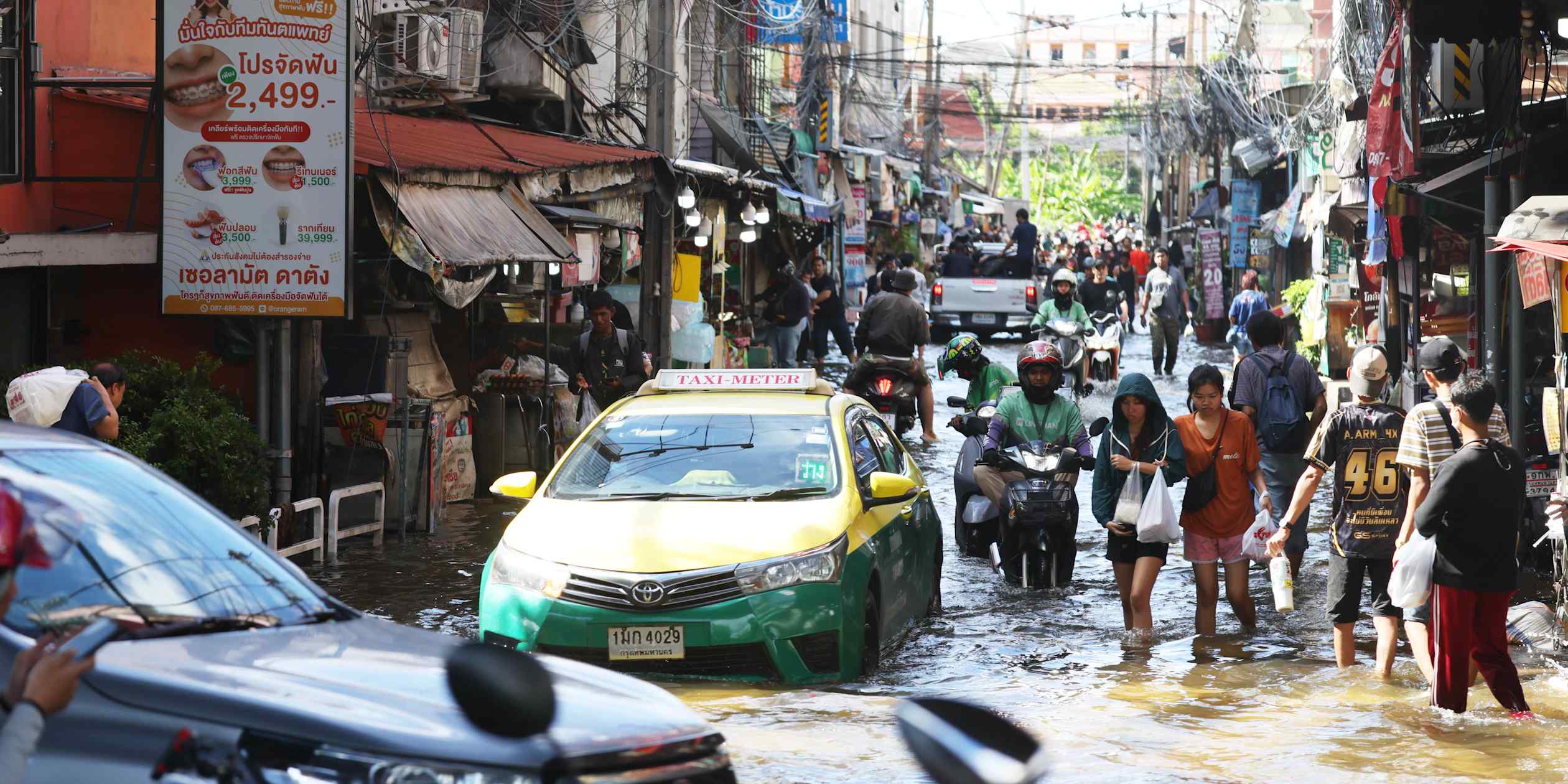
9月底,曼谷及其周边地区因48小时内降雨近300毫米而遭遇严重洪水。主要道路和住宅被淹,曼谷的全部50个区被正式指定为灾害影响地区。
At the end of September, Bangkok and surrounding areas were hit by severe flooding after nearly 300 millimeters of rain fell in 48 hours. Major roads and homes were inundated, and all 50 of Bangkok's districts were officially designated disaster-affected areas.
该国目前正在为相反的威胁做准备。厄尔尼诺现象正在增强,美国预报员认为今年秋冬出现非常强烈的厄尔尼诺事件的概率超过90%。厄尔尼诺的影响因地区而异,但它常常给泰国带来更干燥的条件,增加了水库、农场和当地供水系统的压力。为什么这个国家仍然同时遭受洪水和水资源短缺的困扰?
The country is now preparing for the opposite threat. El Nino is strengthening, with U.S. forecasters putting the chance of a very strong event this fall and winter at more than 90%. El Nino's effects vary by region, but it often brings drier conditions to Thailand, putting more pressure on reservoirs, farms and local water systems. Why does the country continue to suffer from both floods and water shortages?
问题不只是缺水。降雨量大但高度季节化,且并不总是在需求最高的时候到来。快速的城市发展减少了自然的防洪蓄滞区。与此同时,农场、工厂和城市对稳定供水的依赖日益增加。曼谷的低海拔和土地下沉使排水变得更加困难。
The problem is not simply a lack of water. Rainfall is heavy but highly seasonal, and it does not always arrive when demand is greatest. Rapid urban development has reduced natural flood-retention areas. At the same time, farms, factories and cities increasingly rely on stable water supplies. Bangkok's low elevation and land subsidence make drainage harder still.
计划和技术援助并不是缺失的环节。在2011年毁灭性洪水之后,日本国际协力机构(JICA)帮助制定了湄南河流域的综合防洪管理计划,日本援助还为阿育他亚提供了防洪闸门和排水设备。然而,执行过程证明更具挑战性。责任仍然分散,大型项目在预算审批、土地征收和环境评估方面可能耗费数年时间,因为政治优先事项会发生变化。
Plans and technical help are not the missing pieces. After the devastating 2011 floods, The Japan International Cooperation Agency (JICA) helped prepare a comprehensive flood-management plan for the Chao Phraya basin, and Japanese aid funded floodgates and drainage equipment in Ayutthaya. However, execution has proved harder. Responsibility remains fragmented and large projects can spend years in budget approval, land acquisition and environmental review as political priorities shift.
世界银行将2011年洪水造成的损失和损害估计为约1.4万亿泰铢(当时相当于465亿美元),制造业占总损失的大约70%。
The World Bank put damage and losses from the 2011 floods at about 1.4 trillion baht ($46.5 billion at the time), with manufacturing accounting for roughly 70% of the total.
对日本企业而言,这场灾难暴露了区域供应链的脆弱性。几年后,2015-16年厄尔尼诺现象导致水库水位大幅下降,泰国的第二季稻作也受到影响。越南同样遭遇了严重干旱和海水倒灌。
For Japanese companies, the disaster exposed the vulnerability of regional supply chains. A few years later, the 2015-16 El Nino sharply reduced reservoir levels and Thailand's secondary rice crop. Vietnam also suffered severe drought and saltwater intrusion.
这些事件在泰国引发了全国性警示,但风险在不同地区差异显著。北部省份既面临山洪爆发,也面临旱季供水短缺。昭披耶河流域必须储备足够的水量以应对旱季,同时保留防洪容量。在泰国主要工业中心——东部经济走廊,更多工厂和新数据中心的建设正在增加商业用水需求。在萨穆伊岛和普吉岛等度假岛屿,旱季旅游业对当地有限水资源造成了巨大压力。那么,应该做出哪些改变?
Those episodes in Thailand were nationwide warnings, but the risks vary sharply by region. Northern provinces face flash floods as well as dry-season shortages. The Chao Phraya basin must store enough for dry periods and preserve capacity for floods. In the Eastern Economic Corridor, Thailand's main industrial hub, more factories and new data centers are adding to commercial demand. On resort islands such as Koh Samui and Phuket, tourism puts heavy pressure on limited local supplies during the dry season. So what should change?
首先,明确优先事项。根据世界银行的数据,泰国有超过30个部门和机构参与水资源管理。年均水务支出约为1100亿泰铢(约合330亿美元),而九项主要防洪项目的预估成本超过5000亿泰铢。各机构倾向于支持解决眼前问题的小型项目,而大型项目则因预算有限而相互竞争,甚至可能挤占日常维护经费。
First, clearer priorities. According to the World Bank, more than 30 ministries and departments in Thailand are involved in water management. With annual water spending of around 110 billion baht (about $33 billion) and the nine major flood projects estimated to cost more than 500 billion baht, agencies have tended to favor smaller projects that address immediate problems, while larger ones compete for limited budgets and can squeeze routine maintenance. A pasture affected by prolonged dry conditions in San Ildefonso, El Salvador, on Aug. 26, due to the effects of El Nino.
一张2023年8月26日拍摄的照片显示,萨尔瓦多圣伊尔德方索地区因厄尔尼诺影响而出现长期干旱的牧场。泰国也常因厄尔尼诺而遭遇干燥条件。
Thailand also is often hit by drier conditions because of El Nino. The Office of the National Water Resources (ONWR), the central government's water policy coordinator, is best placed to set national priorities and identify risks that cross provincial boundaries.
国家水资源办公室(ONWR)作为中央政府的水资源政策协调机构,最适合制定国家优先事项并识别跨越省界的风险。然而,ONWR并不掌控预算分配权,这一权力属于预算局。因此,协调必须超越规划层面,延伸至预算分配环节。
Yet ONWR does not control budget allocations; that authority rests with the Budget Bureau. Coordination must therefore extend beyond planning to budget allocation. Local drainage, smaller supply systems and routine maintenance are often better handled closer to the communities affected.
在应对当地排水系统问题、小型供水系统故障以及日常维护工作方面,通常由受影响社区所在地的政府或机构来负责处理这些事务。这表明应该将更多的权力和预算下放到地方层面。然而,如果缺乏相应的资金支持,这种权力下放反而只会让问题被“向上级政府”转移(即问题会从地方层面被推到更高层级的政府)。
That argues for greater devolution of both authority and budget. Devolution without money would simply push the problem down the administrative ladder. Devolution does not mean shifting every water problem to local government.
权力下放并不意味着要将所有与水资源相关的问题都交由地方政府来解决;例如,整个流域范围内的防洪系统以及大型河流治理工程仍应由中央政府负责。不过,中央政府的管控并不意味着可以忽视对项目本身的严格筛选与评估。最近获批的、耗资1600亿泰铢的“Chai Nat-Pa Sak-Gulf引水工程”引发了学者们和当地社区的质疑——他们对该工程的路线选择、土地征用方式,以及该项目的经济效益是否过度依赖于2011年那场特大洪水表示担忧。
Basin-wide flood systems and major river works still belong under central leadership. Central control, however, does not remove the need for rigorous project selection. The newly approved 160 billion baht Chai Nat-Pa Sak-Gulf diversion project has drawn questions from academics and affected communities over its route, land expropriation and whether its economic case relies too heavily on the exceptional 2011 floods.
有限的公共资金应当被优先用于那些能够避免最大损失、带来最广泛社会效益,并具有长期价值的项目上。
Scarce public capital should be concentrated on projects that avert the greatest losses, deliver the widest social benefits and provide strong whole-life value.
对于那些仍由中央政府负责的大型项目,发展融资确实是一个可行的解决方案。不过,这并不能缓解财政压力:政府的举债行为仍在不断增加公共债务;截至2026年8月底,泰国的公共债务已占国内生产总值的68%,接近该国规定的70%的财政上限。
For large projects that remain a central government responsibility, development finance is one option. It does not, however, ease the fiscal constraint: Sovereign borrowing still adds to public debt, which stood at about 68% of gross domestic product at the end of August 2026, close to Thailand's 70% fiscal limit.
世界银行、亚洲开发银行(ADB)和日本国际协力银行(JICA)可以通过项目评估、采购规范以及多年的监督工作来改善项目的融资条件和执行效果。例如,亚洲开发银行就计划为下湄南河流域的灌溉与防洪设施升级项目提供16亿美元的贷款支持。
The World Bank, the Asian Development Bank and JICA can improve financing terms and project execution through appraisal, procurement discipline and multiyear supervision. ADB, for example, lists a proposed $1.6 billion facility for irrigation and flood-control upgrades in the Lower East Chao Phraya basin.
商业供水遵循不同的逻辑。工业园区、数据中心、大型度假村及其他主要用户可以衡量需求和可靠服务的价值。他们应承担更多为其主要建设的额外容量的成本。长期供应协议可以通过为投资者提供可预测的收入,并将建设和运营风险分配给最能管理这些风险的各方,使此类项目更具可行性。
Commercial water supply follows a different logic. Industrial estates, data centers, large resorts and other major users can measure demand and the value of reliable service. They ought to bear more of the cost of additional capacity built mainly for them. Long-term supply agreements can make such projects more viable by giving investors predictable revenues and assigning construction and operating risks to the parties best able to manage them.
泰国的一个长期案例展示了这一机制在实践中的运作方式。TTW 是一家曾用名泰国自来水供应的上市私营水生产商,根据一项包含最低采购承诺的30年协议,向省级自来水局出售处理后的水。该合同提供稳定的现金流,并明确分配了系统运营的责任。当风险转移能降低全生命周期成本或提升服务质量时,公私合作才有意义,而不仅仅是因为政府预算紧张。
A long-standing Thai example shows how this works in practice. TTW, a listed private water producer formerly known as Thai Tap Water Supply, sells treated water to the Provincial Waterworks Authority under a 30-year agreement with minimum purchase commitments. The contract provides steady cash flow and assigns clear responsibility for operating the system. Public-private partnerships make sense when that transfer of risk lowers whole-life cost or improves service quality, not simply because government budgets are tight.
物有所值的考量不会在施工完成后结束。水泵、处理厂、排水系统和管道只有在持续的专业运营和维护下才能长期发挥作用。否则,泄漏、故障和过早损坏将迅速毁掉原始投资的价值。
Value for money does not end when construction is finished. Pumps, treatment plants, drainage systems and pipelines only perform over time with sustained, professional operation and maintenance. Without it, leaks, breakdowns and premature deterioration quickly destroy the value of the original investment.
九月下旬的洪水暴露了泰国水风险的一面。强劲的厄尔尼诺现象可能很快考验另一面。解决方案不是另一个一刀切的计划,而是更清晰的责任划分——中央政府必须承担什么,地方当局应管理什么,发展机构应支持哪些投资,商业用户应承担什么——随后是保持基础设施在财政空间有限的情况下继续运行的纪律。
Late September's floods have shown one side of Thailand's water risk. A strong El Nino may soon test the other. The answer is not another one-size-fits-all plan, but a clearer division of responsibility -- what central government must fund, what local authorities should manage, which investments development institutions should support and what commercial users ought to pay for -- followed by the discipline to keep the infrastructure working despite limited fiscal space.