聚变能通常会让人联想到布满大型激光器或磁体的巨型工业设施,但位于马萨诸塞州剑桥的一家初创公司一直在悄悄研发一台可以放在桌面上的装置。
Fusion power usually conjures images of massive industrial facilities laced with large lasers or magnets, but a startup in Cambridge, Massachusetts, has been quietly building a device that can fit on a tabletop.
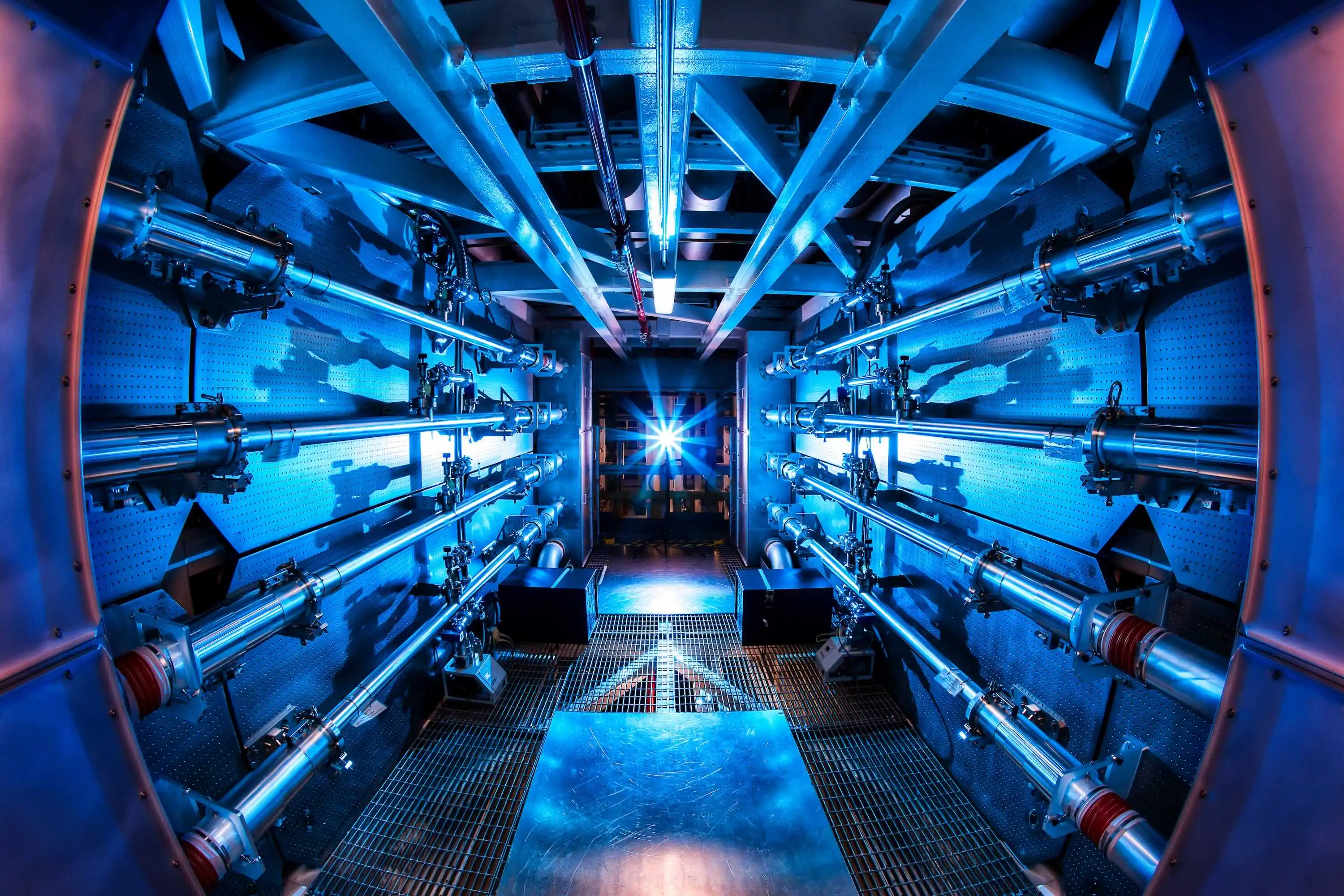
在与我进行视频通话时,剑桥重工业公司联合创始人兼首席执行官云凯身后展示了该装置的光学系统。该公司一直在麻省理工学院附近的一个小型实验室里以隐身模式运营,云凯向TechCrunch独家展示了他们正在开发的技术。
The optics of the device were on display behind Yun Kai, co-founder and CEO of Cambridge Heavy Industries, while he chatted with me on a video call. The company has been operating in stealth out of a small lab near MIT, and Kai gave TechCrunch an exclusive look at the technology it has been developing.
“我们故意打造了一台小型模块化反应堆。它很小,是台式的,”他告诉我。“因为它很小,所以让一切变得更简单。”这种小尺寸使得剑桥重工能够快速进行实验和迭代。“小型模块化的特性可以让每天进行50到80次实验,即50到80次点火,”他说。这些实验产生的数据将用于由AI驱动的模拟中,以优化设计。
“We purposely built a small modular reactor. It’s tiny, it’s benchtop,” he told me. “Because it’s small, it makes everything easier.”The small size has allowed Cambridge Heavy to experiment and iterate quickly. “The small module nature can enable 50 to 80 experiments, 50 to 80 shots per day,” he said. Data from those experiments will feed simulations that use AI to optimize the design.
这种敏捷的方法吸引了投资者的关注。这家初创公司最近完成了一轮由Azolla Ventures领投的620万美元种子轮融资,Overlay、Neta基金会、P3A、MassCEC以及Rothrock家族也参与了投资。
That nimble approach has attracted investor attention. The startup recently raised a $6.2 million seed round led by Azolla Ventures with participation from Overlay, Neta Foundation, P3A, MassCEC, and the Rothrock family.
剑桥重工的聚变反应堆利用激光压缩燃料靶,其原理类似于那项开创性实验——该实验证明受控聚变反应可以产生比消耗更多的能量。但与其他惯性约束设计不同,剑桥重工的方案将点燃聚变所需的激光数量降到了最低。
Cambridge Heavy’s fusion reactor uses lasers to compress a fuel target, similar to the groundbreaking experiment that proved controlled fusion reactions could produce more power than they consume. But unlike other inertial confinement designs, Cambridge Heavy’s minimizes the number of lasers required to spark fusion.
该系统使用两台主激光器来驱动点燃。一台激光器被分割成多条光束,这些光束以同心圆环的形式输出光束。这些激光光环被精准定时,依次击中平坦圆形的燃料靶,从外向内逐层作用。第一圈激光在靶内引发一个向内传播的压缩波。随后的激光光环则在恰到好处的时刻到达,进一步增强该波,以进一步压缩燃料。
The system uses two main lasers to drive ignition. One laser is split into multiple beam lines that deliver light in concentric rings. Those rings of laser light are timed to hit the flat, round fuel target successively, starting from the outside and working in. The first ring starts a compression wave within the target that starts traveling inward. The subsequent laser rings are timed to boost the wave at just the right moment to further compress the fuel.
当冲击波到达目标中心时,激光会照射目标,产生热量并生成磁场。在适当的压力和热量下,就会发生聚变。
As the shock wave reaches the center of the target, a laser fires on the target, generating heat and producing a magnetic field. With the right amount of pressure and heat, fusion occurs.
凯说,剑桥重工的设计能够在相对较低的激光功率下产生高压。这一概念源自麻省理工学院化学家基思·纳尔逊的实验室。在那里,研究人员利用激光脉冲研究极端条件下的材料。随着压力的增加,他们意识到自己正在接近聚变所需的条件。
Cambridge Heavy’s design generates high pressures with relatively low laser power, Kai said. The concept emerged from the lab of Keith Nelson, a chemist at MIT. There, researchers used the laser pulses to study materials under extreme conditions. As they ramped up pressures, they realized they were approaching fusion-ready conditions.
凯表示,剑桥重工计划在大约十年后根据这一概念开发一座发电厂,尽管这需要对设计进行放大。该发电厂将比目前的台面原型更大,但不会像其他聚变发电厂那样庞大。凯说,其规模应相当于两个篮球场的大小,并将用于测试该方法是否能产生足够的能量来支持一座发电厂。
In about a decade, Cambridge Heavy plans to develop a power plant from the concept, though that’ll require scaling up the design. It will be larger than the current benchtop prototype, though not quite as large as other fusion power plants. Kai said it should be about the size of two basketball courts, and it will test whether the approach can generate enough energy to support a power plant.
在那之前,剑桥重工计划使用其小型设备来生产氚,这是一种稀有的氢同位素,如今几乎所有在研的聚变发电厂都将使用它。目前氚的售价约为每克3万美元。
Before that happens, though, Cambridge Heavy plans to use its smaller-scale devices to make tritium, a rare isotope of hydrogen that will be used by nearly all fusion power plants in the works today. Tritium sells for around $30,000 per gram today.
每座发电厂不需要大量氚——每年只需克级——但这种物质极其稀有,如今全球仅存约40公斤。一项最近的研究预测,如果没有新的来源,到2054年聚变产业将缺口约28公斤氚。按当前价格计算,这相当于约8.4亿美元价值的氚。
Each power plant won’t need a lot of tritium — on the order of grams per year — but the substance is so rare that only about 40 kilograms exist today. One recent study predicts that without new sources, the fusion power industry will be short by about 28 kilograms in 2054. At current prices, that’s about $840 million worth of tritium.
聚变初创公司正在设计燃料系统,以帮助反应堆在氚供应方面基本实现自给自足,尽管它们可能需要偶尔补充。但凯表示,这一过程可能需要长达10年,这将为剑桥重工在推进其发电厂的过程中带来多年的潜在收入。
Fusion startups are in the process of designing fuel systems that will help the reactors be largely self-sufficient when it comes to tritium supplies, though they may need occasional top-ups. But that process could take up to 10 years, Kai said, giving Cambridge Heavy years of potential revenue as it pursues its power plant.