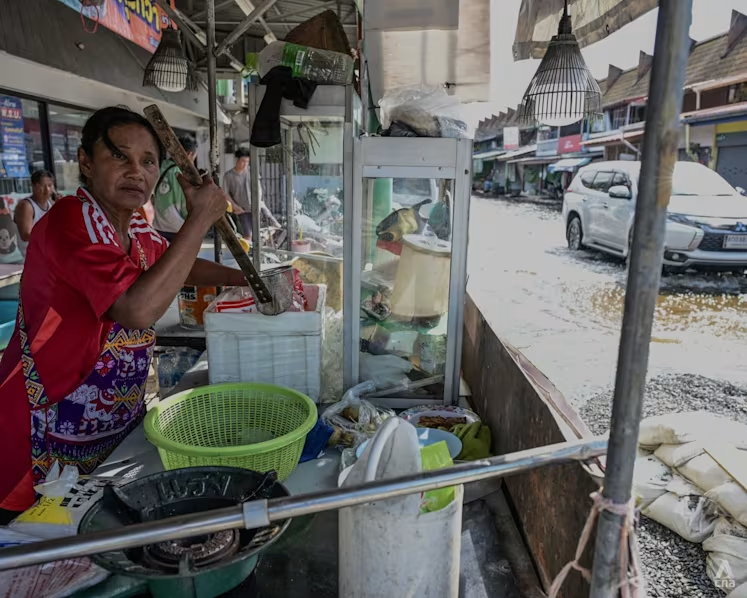
曼谷:旺迪·克尔赛的面馆坐落在一块干燥的土地上,四周环绕着曼谷最近洪水的残迹。
BANGKOK: Wandee Kerdsai’s noodle shop sits on an island of dry ground, surrounded by the remnants of Bangkok’s recent floods.
被迫关闭15天后,她正在炖煮的冬阴功汤的香味再次飘散在街角,这位62岁的老板已经在这里摆摊多年。
After being forced to close for 15 days, the aroma of her simmering tom yum soup once again drifts across the street corner where the 62-year-old has set up shop for years.
上月下旬,几乎连续不断的暴雨席卷泰国首都,导致排水系统不堪重负,引发曼谷多个地区的广泛洪水。
Late last month, almost continuous torrential rainfall engulfed Thailand’s capital and overwhelmed its drainage systems, causing widespread flooding in multiple parts of the city.
从9月24日到26日的短短48小时内,降雨量超过300毫米,促使全市50个区宣布进入紧急状态。
More than 300mm fell in just 48 hours from Sep 24 to Sep 26, prompting an emergency to be declared in all 50 districts.
据政府事后评估,大约32.9万户家庭,约70万曼谷居民受到影响。
Approximately 329,000 households around 700,000 Bangkok residents - were affected, according to a government assessment in the aftermath.
“警报来得太晚了。等他们告诉我们洪水即将来临时,水已经冲进来了。我们根本没有时间做准备或抢救任何东西,”旺迪说。
“The warning came too late. By the time they told us flooding was coming, the water was already rushing in. We didn't have time to prepare or save anything,” Wandee said.
在一些低洼地区,洪水尚未完全退去。社区和专家们同样表达了担忧,不仅担心当局在此次事件中的应对能力,还担心气候变化加剧的未来灾害风险会超过曼谷有限基础设施的承受能力。
In some low-lying areas, the water is yet to fully recede. And communities and experts alike have expressed concern not only about authorities’ capacity response to this event but also the risks of future disasters supercharged by climate change overwhelming Bangkok’s limited infrastructure.
旺迪·克尔赛在2026年9月下旬曼谷洪水之后,被迫关闭面馆超过两周。
Wandee Kerdsai had to close her noodle shop for more than two weeks after flooding in Bangkok in late September, 2026.
旺迪的小厨房已经重新开放。但她所在的曼谷低洼东部边缘地区拉勃朗社区仍然陷入流动和不便之中。
Wandee’s small kitchen is back open. But her community in Lat Krabang on the city’s low-lying eastern fringe is still in the grip of dislocation and inconvenience.
该地区的住宅区、运河和城市扩张区坐落在天然易发洪水的地形上,当暴雨来袭时,城市排水基础设施的极限就会受到考验。尽管市政官员作为紧急响应增设了更多排水泵,但洪水峰值时的水位仍高于此前。
The district’s housing estates, canals and urban sprawl sit on naturally flood-prone terrain, where the limits of the city’s drainage infrastructure is tested when the skies open. Flood levels reached more than here during its peak, despite the installation of more water pumps as an immediate response by city officials.
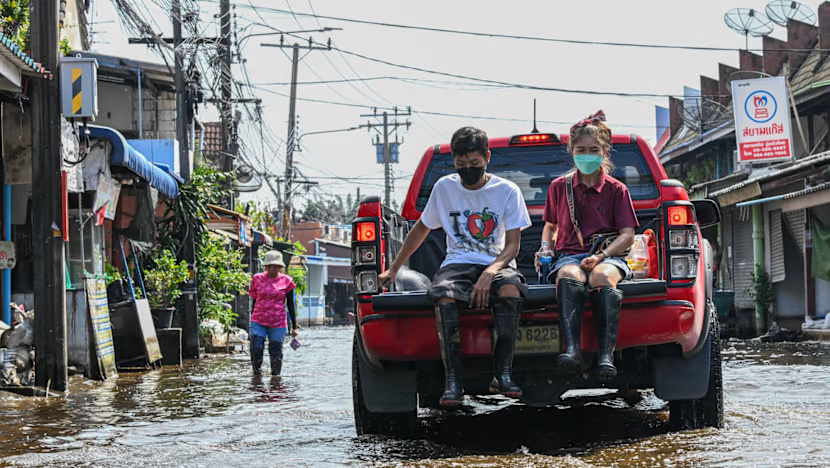
两周过去了,过往车辆激起层层涟漪。在更深处的住宅街道上,积水仍淹至居民小腿,他们定期涉水离开被淹社区,前往干燥地带采购物资。
A fortnight on, small waves ripple and splash in the passing traffic. Deeper down residential streets, water still reaches the shins of residents making regular quests out of the flooded neighbourhood and out to dry ground for supplies.
身穿雨靴的老人也在其中,手提装着物品的塑料袋,有的搭乘皮卡车货箱,有的坐在缓慢穿行洪水中的摩托车后座上抬高双脚。
Elderly people wearing gumboots are among them, clutching goods in plastic bags, some hitching rides on the back of pickups or lifting up their ankles on the back of motorcycles idling slowly through the deluge.
“水位就是不退。它淹没了我们房屋和建筑物下方的整个区域,让人们几乎无法走动,甚至无法回家,”住在该地区的工厂工人农努·克赛(Nongnoot Kerdsai),55岁,说道。
“The water just isn't going down. It has flooded the entire area beneath our houses and buildings, making it almost impossible for people to move around or even get back into their homes,” said Nongnoot Kerdsai, 55, a factory worker who lives in the area.
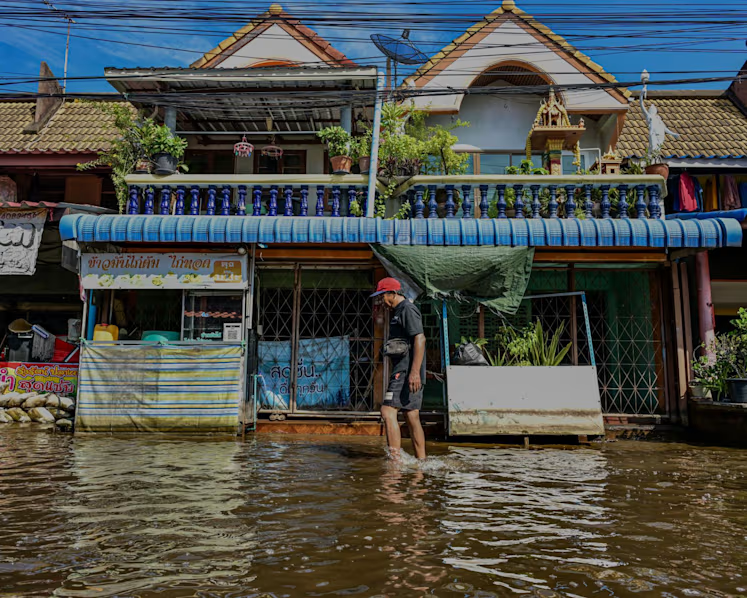
“生活极其困难,尤其是有老人或卧床病人、行动不便的家庭。”沙袋无助地躺在那里,成了上个月下旬倾盆大雨面前徒劳的阻隔。烈日难以蒸发浑浊的积水,水中此时已散发出咸腥味,仿佛海滩上冲上岸的海藻。
“Life has been extremely difficult, especially for families with elderly people or bedridden patients who can't move easily.”Sandbags lie helplessly, futile obstacles to the hard rain that massed here late last month. The intense sun does little to evaporate the murky waters, which by now carry a briny smell, akin to seaweed washed up on a beach.
“我经历过洪水,但这是我在该地区见过最严重的一次,”在街上涉水而行的当地工人披拉·楚查鲁克(Phrot Choicharuek),50岁,说道。
“I've lived through floods before, but this is the worst I've seen in this area,” said Phrot Choicharuek, 50, a local labourer wading along the street.
拉甲邦县工人披拉·楚查鲁克表示,这是他在曼谷见过最严重的洪水。
Phrot Choicharuek, a labourer in Lat Krabang district, said this flood has been the worst he has seen in Bangkok.
一场“罕见”事件 曼谷曾因依赖比标志性的意大利水上城市更广泛的运河网络而被称为“东方威尼斯”,但混凝土开发建设已在很大程度上填平了其泛滥平原,阻碍了吸收雨水和来自北方河流径流的能力。
AN "EXCEPTIONAL" EVENT Once called the “Venice of the East” for its reliance on a canal network more extensive than the iconic Italian fluvial city, Bangkok’s concrete development has largely filled its floodplains, hampering the ability to absorb rain and river flows from the north.
过去几周,问题已远远超出这座特大城市。截至10月12日,洪水已波及51个府,约90.8万户家庭。
Over the past few weeks, the problem has extended far beyond the megacity. By Oct 12, flooding had affected 51 provinces and about 908,000 households.
斯德哥尔摩环境研究所驻曼谷高级研究员塔纳蓬·皮曼(Thanapon Piman)表示,从全国来看,这场洪水“在其地理范围、持续时间和受影响社区数量方面均属罕见”。
Nationally, flooding has been “exceptional for its geographical extent, persistence and number of communities affected”, said Thanapon Piman, a senior research fellow at the Stockholm Environment Institute in Bangkok.
他说反复的降雨导致集水区饱和,河流系统水位上涨,而高潮使得洪水更难排入海中。
He said repeated rainfall left catchments saturated and river systems swollen, while high tides made it harder for floodwater to drain to the sea.
对许多人来说,这一紧急情况让人联想到2011年,当时季风降雨和热带风暴在泰国北部和中部引发了广泛洪水。当时,曼谷郊区的大部分地区被淹没数周甚至数月,全国共有815人死亡。
For many, the emergency situation drew comparisons with 2011, when monsoon rains and tropical storms triggered widespread flooding across northern and central Thailand. Then, large parts of Bangkok's outskirts remained inundated for weeks or months and 815 people died across the country.
然而这一次,专家解释说,洪水情况不同。曼谷的主要成因是极端局地降雨,而非2011年那样,大量水从上游通过昭披耶河及其支流汇聚而来。
This time, however, the flooding was different, experts explained. Bangkok's main driver was extreme local rainfall, rather than enormous volumes of water arriving from upstream down the Chao Phraya river and its tributaries as in 2011.
“这一次不是一次全国性的极端事件……而是某些地区出现极端强降雨且持续时间长,”卡塞萨特大学水资源工程系教授努查纳特·斯里翁吉塔农说。
“This was not a single nationwide extreme event ... It’s extremely heavy and prolonged rainfall in some areas,” said Nuchanart Sriwongsitanon, a professor at the Department of Water Resources Engineering at Kasetsart University.
她警告称,如果未来再次出现如此强降雨,同时伴随高河流和高潮,将导致该国尚未做好准备的毁灭性后果。
If such heavy rain was to occur again in the future alongside high river flows and high tides she warned of devastating effects that the country was not prepared for.
“复合事件带来的未来风险更高。如果所有因素同时发生,我们肯定会面临问题,”她说。
“There is a higher future risk from compound events. If everything happens at the same time, we will face problems for sure,” she said.
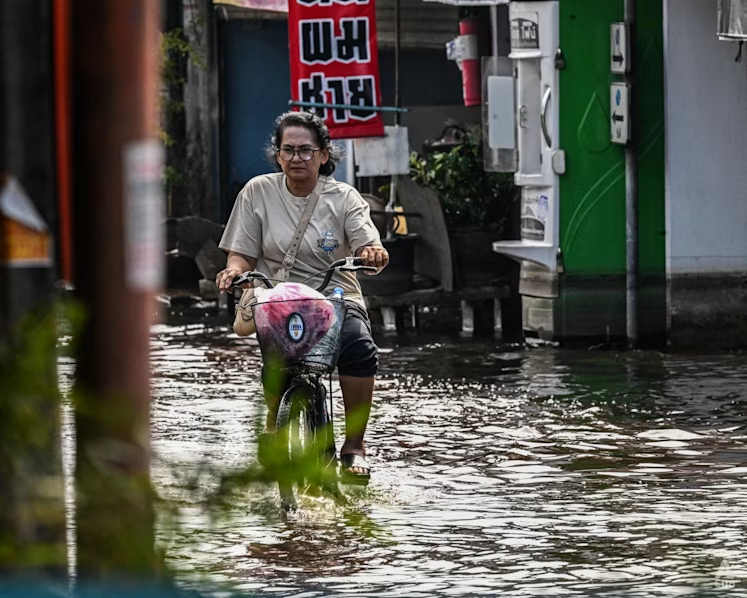
一名女子在曼谷拉勃邦区骑自行车穿越积水,此次极端降雨袭击城市已过去两周多。
A woman cycles through flood waters in Lat Krabang in Bangkok more than two weeks after extreme rain hit the city.
无法应对的设计 几个世纪以来,曼谷一直在自然积水和流动的土地上扩张。
NOT DESIGNED TO COPE For centuries, Bangkok has expanded across land where water naturally gathers and passes through.
首都位于昭披耶河盆地低洼地区,且靠近泰国湾,如今必须通过工程手段来调节水流,以应对城市发展剧烈改变后的景观。
Sitting low in the Chao Phraya basin and close to the Gulf of Thailand, the capital must now engineer the movement of water through a landscape dramatically altered by urban development.
景观建筑师葛差康·沃拉阿坤表示,曼谷在过去半个世纪里已从以水为基础的城市转变为以土地为基础的城市,估计损失了约一半的3000条运河及其“渗透能力”,同时高度依赖水泵和混凝土排水系统。
Landscape architect Kotchakorn Voraakhom said Bangkok has shifted from a water-based to land-based city over the past half century, losing about half of its estimated 3,000 canals and its “porous capacity”, while becoming heavily dependent on pumps and concrete drainage.
“我们仍然依赖一种非常过时的思维方式来思考如何与水共处,” Porous City Network 首席执行官 Kotchakorn 说,该社会企业旨在提升东南亚城市的韧性。气候变化也在提高风险,从城市边缘的海平面上升到更强的风暴和日益波动的降雨。
“We still rely on a very outdated way of thinking of how to live with water,” said Kotchakorn, the chief executive officer of Porous City Network, a social enterprise that looks to increase urban resilience in Southeast Asia Climate change is raising the stakes too, from rising seas at the city’s edge to heavier storms and increasingly volatile rainfall.
其后果远远超出被淹的房屋和街道。数以百万计的生命、主要经济活动中心以及支撑它们的基础设施和生态系统正日益暴露在风险之中。
The consequences reach far beyond flooded homes and streets. Millions of lives, major centres of economic activity and the infrastructure and ecosystems that sustain them are increasingly exposed.
初步估算显示,泰国九月下旬洪水造成的经济损失达数十亿泰铢,曼谷承担了不成比例的份额。兰实大学的一项评估估计,全国仅在四天内的经济损失就达 25.3 亿泰铢(约合 7.8 亿美元)。
Preliminary estimates have put the economic losses from Thailand's late-September floods in the tens of billions of baht, with Bangkok bearing a disproportionate share. One Rangsit University assessment estimated economic losses of 25.3 billion baht (US$780 million) nationwide over just four days.
曼谷及其周边地区的城市扩张填满了自然的防洪蓄滞区和排水通道,取而代之的是道路、建筑和工业开发,马希隆大学环境与资源研究学院副教授 Nuanchan Singkran 说。
Urban expansion in and around the capital has filled natural flood-retention areas and drainage routes with roads, buildings and industrial development, said Nuanchan Singkran, associate professor at the Faculty of Environment and Resource Studies at Mahidol University.
“与此同时,曼谷的基础设施并未设计为能够有效应对如此规模的洪水,”她说。
“At the same time, Bangkok’s infrastructure was not designed to cope effectively with flooding on this scale,” she said.
Nuchanart 表示,几个因素导致排水缓慢:排水系统超负荷运行、运河水位高、局部瓶颈、低洼地形以及持续降雨。
Nuchanart said several factors kept the water from draining quickly: overwhelmed drains, high canal levels, local bottlenecks, low-lying terrain and continued rainfall.
通过简化计算,Nuchanart 估计,曼谷报告的排水泵送能力单独来看,理论上需要三到四天才能排除由 300 毫米降雨产生的径流。
Using a simplified calculation, Nuchanart estimated that Bangkok's reported pumping capacity alone would theoretically need three to four days to remove the runoff generated by 300mm of rain.
曼谷市政当局表示,在整个紧急期间,排水泵站和闸门一直以满负荷运行,尽管主要运河水位仍然较高,因为它们正在接收来自周边地区的水流。
Bangkok’s Metropolitan Authority said pumping stations and floodgates were operating at full capacity throughout the emergency period, although major canals remained high because they were receiving water from surrounding districts.
但 Nuanchan 表示,许多排水系统和运河众所周知被垃圾或其他材料堵塞,导致其效能降低。
But many drainage systems and canals are known to be obstructed with rubbish or other materials, reducing their effectiveness, Nuanchan said.
在拉格拉邦,当地居民抱怨说,排水管堵塞、建筑废料以及抽水不足是导致他们所在地区洪水持续时间远超预期的因素。
In Lat Krabang, local residents complained that clogged drains, construction debris and inadequate pumping were factors prolonging flooding in their area, well beyond that time scale.
“与其让我们自行应对洪水,政府应该解决这个问题,”旺迪说。“他们还应确保施工现场不让沙子和碎屑冲入排水管。否则,这种情况只会一再发生。”他们还表示,防洪警报是在洪水已经汹涌而来之后才发布的。
“Instead of leaving us to deal with flooding on our own, the government should fix the problem,” Wandee said. “They should also make sure construction sites don't allow sand and debris to wash into the drains. Otherwise, this will just keep happening again and again.”They also said flood warnings came only after water was already rushing in.
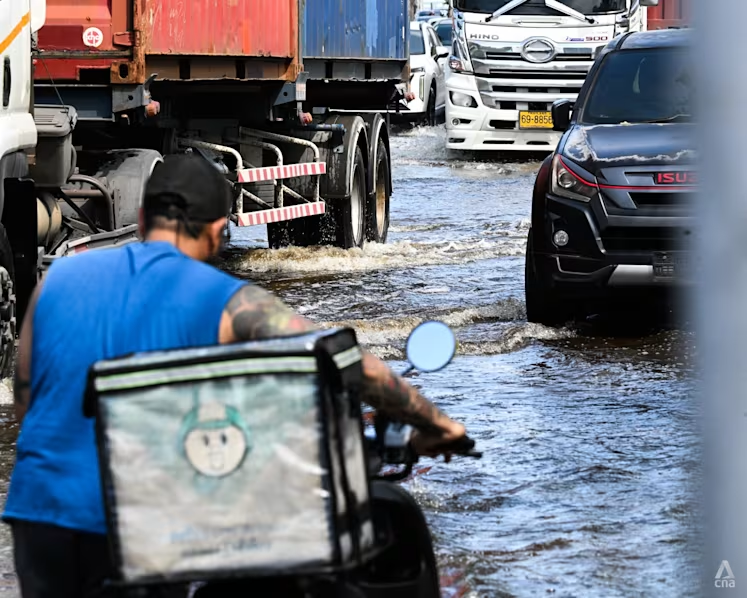
一名男子在曼谷一条被轻度洪水淹没的道路上推着摩托车前行,此时距离该市发生紧急洪水已超过两周。
A man pushes his motorcycle along a lightly flooded road in Bangkok, more than two weeks on from emergency flooding in the city.
“当气象部门发布暴雨警告时,官员们就应该已经在调动水泵并做好排水准备。他们不应该等到一切都被淹没之后才行动,”普罗特说,并补充道,他社区的居民已经在为未来做打算,比如在家中储备额外食物,并考虑将房屋抬高。
“When the weather department warns about heavy rain, officials should already be bringing in pumps and getting ready to drain the water. They shouldn't wait until everything is flooded,” Phrot said, adding that people in his community were already planning for the future by keeping extra food at home and considering raising their houses higher.
“我知道洪水部分是自然灾害,但我认为糟糕的水资源管理让情况变得更糟,”他补充道。
“I know flooding is partly a natural disaster, but I think poor water management has made things much worse,” he added.
曼谷市长查德查特·西提蓬公开承认,由于降雨预报需要高精度,发布准确的洪水警报非常困难。他还解释说,发布警报的延迟与降雨预测的不准确有关。
Bangkok Governor Chadchart Sittipunt publicly acknowledged that issuing accurate flood warnings was difficult because of the precision required in rainfall forecasting. He also explained that delays in issuing warnings were linked to difficulties predicting rainfall accurately.
接受CNA采访的专家并未认为曼谷在此类强降雨期间本可以完全避免洪水。但他们表示,提前预警、更好地维护排水系统以及更协调的水资源管理本可以减少损害和干扰。
The experts interviewed by CNA did not suggest that Bangkok could have avoided flooding altogether during such intense rainfall. But they said earlier warnings, better-maintained drainage and more coordinated water management could have reduced the damage and disruption.
努查纳特表示,改进模型以提前识别淹没区域和水深,至少可以让居民转移车辆和财物,并让当局做好应对准备。“当然,如果我们齐心协力,我们是能够做点什么的,”她说。
Nuchanart said that improved modelling to identify inundation areas and depths in advance could at least allow residents to move vehicles and belongings and authorities to prepare responses. “Of course, we can do something if we get our act together,” she said.
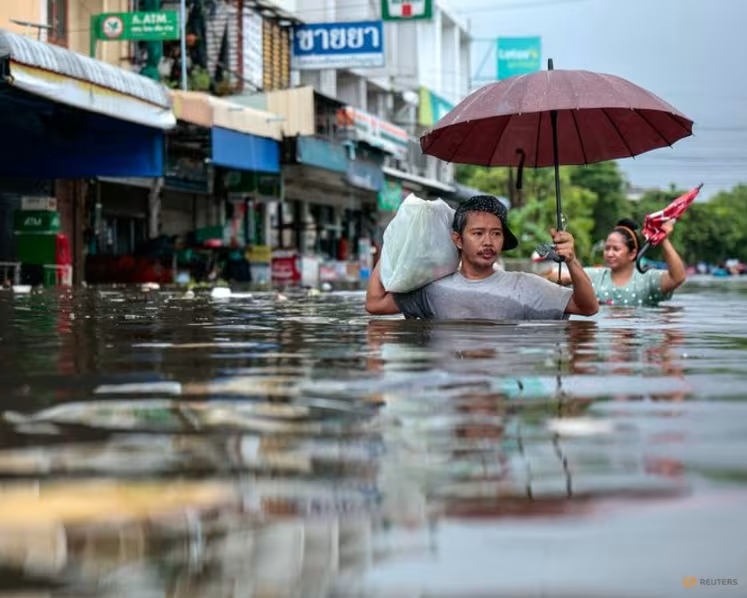
2026年9月27日,泰国曼谷,暴雨中人们涉水穿过被淹区域。
People wade through a flooded area during heavy rain in Bangkok, Thailand, September 27, 2026.
与水共存,直面不确定性 2011年洪水造成严重破坏后,泰国对其洪水管理体系和基础设施实施了多项变革。
LIVING WITH WATER AND UNCERTAINTY Following the devastation of the 2011 floods, Thailand implemented many changes to its flood management systems and infrastructure.
泰国设立了12个中部平原滞洪区,并升级了易涝地区的运河、堤坝和分洪工程。曼谷将部分湄南河防洪墙加高约0.5米,还扩建了水泵、运河和排水系统。
It established 12 central plains flood-retention areas, and upgraded canals, embankments and diversion projects in flood-prone areas. Bangkok raised sections of its Chao Phraya flood walls by around 0.5m and also expanded pumps, canals and drainage.
他还补充说,关于这些改进是否真正实现了有效的全流域协调,仍存疑问。
Thanapon said it also took positive steps through infrastructure, monitoring, forecasting and institutional reforms, but added that questions remain about whether improvements have actually produced effective basin-wide coordination.
他说:“上游水资源调度与下游防洪保护之间‘决策碎片化、协调不足’,会限制其他措施的有效性。”
He said that “fragmented decision-making and insufficient coordination” between upstream water regulation and downstream flood protection can limit the effectiveness of other measures.
他还警告说,基于过去降雨模式设计的基础设施,可能不足以应对未来更极端的条件。他说:“不确定性必须纳入规划。”
He also warned that infrastructure designed around past rainfall patterns may not be adequate for more extreme conditions in the future. “Uncertainty must be incorporated into planning,” he said.
努查纳特主张加强土地利用和滩区管理,采用基于自然的解决方案,改进预测,并推行更一体化的水治理。
Nuchanart advocated for stronger land-use and floodplain management, nature-based solutions, better forecasting and more integrated water governance.
对于科查空而言,曼谷需要进行一场更深层的理念转变,这种转变应汲取历史智慧,而非仅依赖水泵、隧道和混凝土排水设施。
For Kotchakorn, Bangkok needs to make a more philosophical shift, something inspired by its past instead of depending solely on pumps, tunnels and concrete drainage.
她说:“这不是浪漫化。这是关于一个我们必须接受的现实:我们会被淹。目前,一切仍照常进行。”
“This is not romanticised. This is about a reality that we need to accept that we're going to get wet. Right now, it's still business as usual,” she said.