胆怯的散户投资者正重新回到他们最喜欢的赌注:人工智能。根据 Citadel 证券的 Scott Rubner,散户交易员在该公司平台上上周净买入了 91 亿美元的美国股票,主要集中在与 AI 相关的股票和交易所交易基金上,尽管整体交易活动仍低于平均水平。该公司股票和衍生品策略主管在一份备忘录中写道,这是 15 周以来的最大净买入周。
Skittish retail investors are coming back around to their favorite bet: artificial intelligence. According to Citadel Securities’ Scott Rubner, retail traders net bought $9.1 billion of US equities on the firm’s platform last week, largely concentrated in AI-tied stocks and exchange traded funds, even as overall trading activity remained below average. It was the largest week of net buying in 15, the firm’s head of equity and derivatives strategy wrote in a note.
尽管对 AI 繁荣持续性的怀疑正在压制芯片股,但散户上周净买入了 26 亿美元的半导体,录得过去一年的第三佳周,Rubner 表示。这使得 10 月有望成为该公司平台上芯片制造商净买入最多的月份。个别交易者还买入了约 24 亿美元的 AI 基础设施股票。
Despite doubts about the durability of the AI boom weighing on chip stocks, retail bought $2.6 billion on net of semiconductors last week, logging the third-best week of the past year, Rubner said. That puts October on track to be the biggest month of net buying for chipmakers on the company’s platform. Individual traders also bought about $2.4 billion of AI infrastructure stocks.
尽管有人警告 AI 泡沫,但投资者仍在向 AI 交易注入资金,推动更广泛的指数走高。科技股为主的纳斯达克 100 指数和标普 500 指数上周均创历史新高。
Investors keep putting money into the AI trade, propelling the broader gauges higher, despite warnings about an AI bubble. Both the tech-heavy Nasdaq 100 and the S&P 500 set record highs last week.
Rubner 正确预测了散户投资者在 10 月初重返美国股市,此前在 9 月经历了剧烈降温。他当时指出,10 月为投资者提供了更好的入场点,以便在财报和公司回购即将回归时“重新装弹”。
Rubner correctly called this month’s return of retail investors to US stocks at the beginning of October after a sharp cooldown in September. He noted at the time that October offers a better entry point for investors to “reload” as earnings and corporate buybacks are set to return.
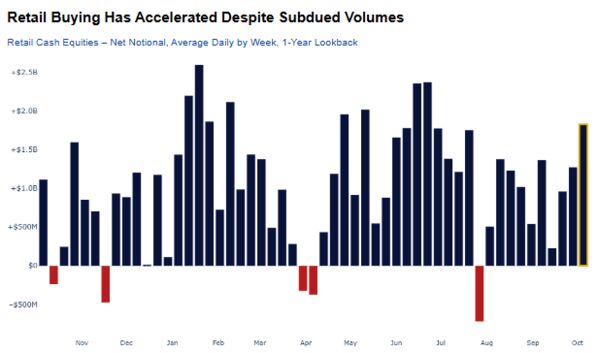
散户买入的增加总体上是由“更强的方向性信念而非放大的交易量”驱动的,Rubner 写道。散户投资者上周买入的金额比卖出多 2.7%,这是周度方向偏斜的第 90 百分位读数。总体交易活动仍处于过去一年的第 42 百分位。
The increase in retail buying was generally driven by “stronger directional conviction rather than elevated volumes,” Rubner wrote. Retail investors bought 2.7% more than they sold last week, which is a 90th-percentile reading for weekly directional skew. Gross trading activity remained in the 42nd percentile of the past year.