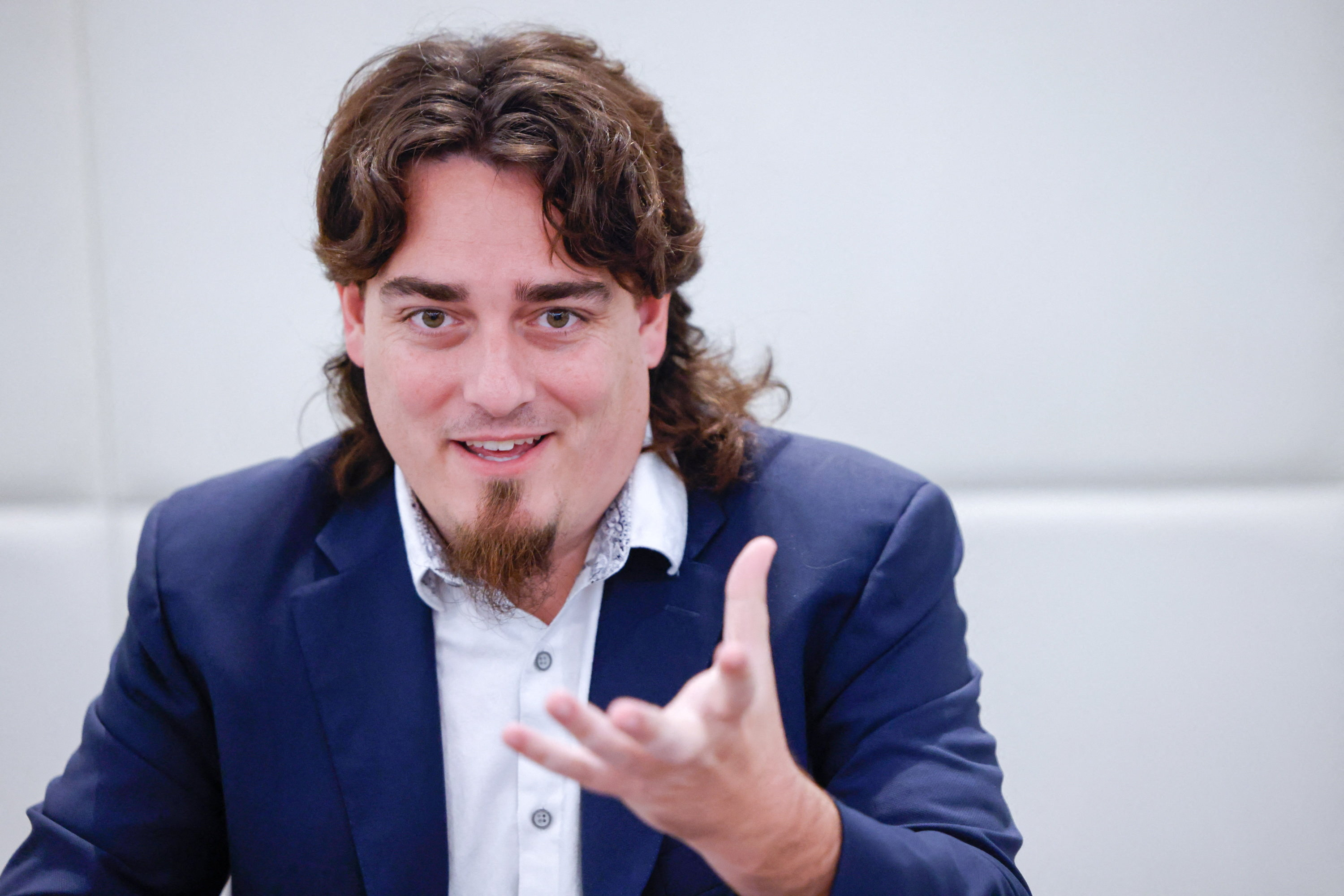
在上周的“武装力量状况”演讲中,国防部长皮特·赫格塞斯宣布了“子午线计划”,这是一项为期120天的工作,旨在研究和确定未来的武器和战场。
During his “State of the Force” speech last week, Defense Secretary Pete Hegseth announced Project Meridian, a 120-day effort to study and identify the weapons and battlefields of the future.
赫格塞斯表示,该项目“并非关于制定新战略或新政策”,而是“要以创造性的眼光展望未来,确定我们必须征服的领域和必须掌握的能力”。与埃隆·马斯克和纽特·金里奇共同领导工作组的帕尔默·拉基在演讲前几天接受美国航空航天学会采访时,谈到了他对国防未来的愿景。
Hegseth said the project was “not about developing new strategies or new policies,” but rather, “to creatively look to the future and identify the domains that we must conquer, and capabilities we must master.”Palmer Luckey, who is co-leading the workgroup alongside Elon Musk and Newt Gingrich, talked about his vision for the future of defense in an interview with the American Institute of Aeronautics and Astronautics days ahead of the speech.
拉基共同创立了国防技术公司Anduril,该公司生产无人机和潜水器等自主平台。在此之前,他创立了虚拟头显制造商Oculus VR,该公司于2014年被Facebook收购。他的两个想法似乎将在陆军的“一体化视觉增强系统”(IVAS)中融合。
Luckey co-founded the defense technology company Anduril, which makes autonomous platforms like drones and submersibles. Before that, he founded virtual headset maker Oculus VR, which was acquired by Facebook in 2014. His two ideas would seemingly merge in the Army’s Integrated Visual Augmentation System, or IVAS.
拉基解释说,他在国防领域所做的许多工作灵感来源于科幻电影《隐形战机》,该片讲述了一架获得意识后失控的自主战斗机,以及一些经典科幻小说,这些小说理论化了技术将如何演变。
Luckey explained that much of what he does in the defense space was inspired by science fiction movies like Stealth, which is about an autonomous fighter jet that goes rogue after becoming sentient, and classic science fiction novels that theorized how technology would evolve.
“事实证明,我们所做的一切早已被那些非常敏锐、真正知道自己在做什么的人所预言,”他说,并以作者罗伯特·海因莱因为例,引用了他在语音激活方面的著作。
“Turns out, everything we’re doing was predicted by guys who were really sharp [and] really knew what they were doing,” he said, referencing author Robert Heinlein as an example when he wrote about voice activation.
“我喜欢制造那些由无需担心如何变为现实的人发明的东西。他们只是知道这会是正确的事,”拉基补充道。
“I love building the things that were invented by people who didn’t have to worry about how it was going to become real. They just knew it would be the right thing,” Luckey added.
他接着讨论了保持美国战时准备状态的一系列话题,包括对自主系统的信任建立、武器设计中的开源与专利,以及直观设计与用户技能之间的平衡,但他首先谈到了他对工业制造的看法。
He went on to discuss a range of topics for keeping the U.S. wartime-ready, including developing trust in autonomous systems, open source versus patents for weapon designs, and balancing intuitive design with user skill, but he started with his thoughts on industrial manufacturing.
针对美国如何重新夺回战场优势的问题,拉基谈到了统一设计和信息共享。
In response to the question of how the U.S. can regain battlefield dominance, Luckey talked about unified design and information sharing.
“我们需要统一指挥与控制。我们需要统一信息共享。你需要让每个传感器都成为每个效能器的传感器,反之亦然。我们不能在系统之间、军种之间,尤其是我们的盟友和伙伴部队之间出现这些信息孤岛。我们希望每个人都能共享一切,”他说。
“We need to have unified command and control. We need to have unified information sharing. You need to have every sensor be a sensor for every effector and vice versa. You can’t have these stove pipes across systems, across services, and especially across our ally and partner forces. We want everyone to be able to share everything,” he said.
他补充说,他认为大家都认同这一观点,但在工业应如何设计方面,他持不同看法。
He added that he thinks everyone agrees with that notion, but he differs on how industry should be designed.
“我们需要设计能够在汽车工厂生产的导弹。我们需要设计能够在拖拉机工厂生产的飞机,”他说。“而且我们以前做过。”他指出,在二战期间,军事装备的设计是为了能够使用商业设备和技术进行制造。
“We need to design missiles that can be made in car factories. We need to design aircraft that can be made in tractor factories,” he said. “And we’ve done this before.”He argued that in World War II, military equipment was designed to be manufactured with commercial equipment and techniques.
“我们制造武器,让它们能够由汽车、拖拉机和缝纫机工厂等生产,我认为我们需要重新开始这样做,”他说。
“We made weapons to be made by car and tractor and sewing machine factories, etcetera, and I think we need to start doing that again,” he said.
他补充说,这样做不仅能满足战时需求,还能向中国等对手传递一个信息:美国的工厂能够快速转产,大规模生产武器。
He added that it would serve the practical purpose of meeting wartime demand while also sending a message to adversaries like China that U.S. factories could quickly switch gears and crank out weaponry.
虽然未来战场可能在太空看似显而易见,但拉基列出“地下领域”作为一个现实的选择,并称之为“必然”。
While it might seem obvious that future battlefields might be in space, Luckey listed “the subterranean domain” as a realistic option and “inevitable.”
虽然“地下”通常被理解为在隧道或战壕中作战,但他表示,他所说的“真正意义上的无废话地下战”指的是利用地壳作为三维机动和作战空间。
While the interpretation of “subterranean” is to mean fighting in tunnels or trenches, he said he’s literally talking about “the real deal no shit sub-T fight, where you are using the crust of the earth as a three-dimensional maneuver and battle space.”
“每个人都说我在这方面疯了,但我会一直这么说,因为这是事实,”他说。“美国曾经相信这一点。苏联也曾相信这一点。两国都在研究地下空间,因此研发能够在地壳中移动的车辆。”他认为之所以现实,是因为自主系统将使在地下环境中钻孔变得更容易,而主要成本在于前进。“之后你拖过去的一切都是免费的,”他说。他补充说,该空间可用于作战,或用于对地面敌人发动攻击。
“Everyone says that I’m nuts for this and I’m going to keep saying it because it is true,” he said. “The U.S. used to believe this. The Soviets used to believe this. Both countries were working on subterrains, so vehicles that could move through the crust of the earth.”Why he thinks this is realistic, he argued, is that autonomous systems will make it easier to bore through subterranean environments, and the primary cost is moving forward. “Everything you drag through it afterwards is free,” he said. He added that the space could be used for battle or to launch attacks against enemies on the ground.
根据赫格塞斯的《子午线计划》备忘录,工作组预计将在2027年1月28日前提交其调查结果和建议。
According to Hegseth’s Project Meridian memo, the working group is expected to submit its findings and recommendations by Jan. 28, 2027.