在大多数工厂中,自动化是固定的:机器人和机器被编程用于执行某一特定任务和产品。更换生产线意味着重新编程和实体换型,或更换设备,这可能需要数周甚至数月。总部位于旧金山的 Industrial Next 表示,它正在改变这一现状。
In most factories, automation is fixed: robots and machines are programmed for one specific task and product. Changing a line means reprogramming and physical retooling, or swapping out equipment, which can take weeks or months. San Francisco-based Industrial Next says it’s changing that.
这家初创公司今日在 TechCrunch Disrupt 2026 的 Startup Battlefield 舞台上进行了展示,它构建由专有基础模型驱动的 AI 驱动、自包含机器人工作站,该模型连接视觉、任务上下文和运动。公司表示,这使得生产线能够在几分钟而非几周内完成换型,且无需传统编程。目标是让制造商能够自动化那些传统上需要人工完成的复杂精细任务。
The startup, which presented today on the Startup Battlefield stage at TechCrunch Disrupt 2026, builds AI-driven, self-contained robotic stations powered by proprietary foundation models that connect vision, task context and motion. The company says this lets a production line be retooled in minutes rather than weeks without traditional programming. The goal is to let manufacturers automate complex and delicate tasks that traditionally require human labor.
公司在现场宣布,正与宝马集团技术办公室合作,评估 Industrial Next 的 AI 驱动灵巧操作在制造领域的应用。
The company announced on stage that it’s partnering with BMW Group Technology Office to evaluate Industrial Next’s AI-powered dexterous manipulation for manufacturing.
Industrial Next 由 Lukas Pankau 和 Allen Pan 于 2021 年创立,两人此前均在特斯拉工作。Pankau 曾担任特斯拉首席电气架构师,后前往 Waymo。Pan 主导过特斯拉的自主工厂项目,后来成为自动驾驶公司 Neolix 的首席架构师。
Industrial Next was founded in 2021 by Lukas Pankau and Allen Pan, both of whom previously worked at Tesla. Pankau served as a lead electrical architect at Tesla before moving on to Waymo. Pan led Tesla’s autonomous factory efforts and later became a chief architect at autonomous driving company Neolix.
两人在特斯拉共事期间萌生了创办 Industrial Next 的想法。Pankau 与 Pan 的初次相遇颇为戏剧性:Pan 在工厂天桥上通宵加班后睡着,Pankau 字面意义上“绊倒”了他。尽管两人最初合不来,但很快意识到彼此都痴迷于把事做成,且技能互补。
The pair came up with the idea for Industrial Next while working together at Tesla. Pankau’s first encounter with Pan was literally tripping over him as Pan was asleep on a factory catwalk after pulling an all-nighter. Although the two didn’t get along at first, they soon realized they shared an obsession with getting things done and had complementary skills.
在多年目睹尖端车辆与自动驾驶技术因几十年前的工厂设备而受阻后,两位创始人意识到,制造业需要重塑。
After years of watching cutting-edge vehicle and self-driving technology get held back by decades-old factory equipment, the founders realized that manufacturing needed to be rebuilt.
“我们曾经拥有所有这些可以在汽车上实现的高级功能。我可以运行机器学习算法为我设计一辆汽车。但我却搞不清楚如何给机器人编程,而在特斯拉的工程师中,这其实很常见,”潘考说。“你有这种巨大的鸿沟,对吧?你有那些在自己领域非常出色的人——设计汽车和设计自动驾驶系统——但随后他们在面对上世纪80年代的工厂设备时,实际上被难住了。于是我们开始重新思考,利用我们今天拥有的技术和我们今天所掌握的一切,这个系统应该是什么样子。”
“We had all these fancy things that we could do on cars. I could run machine learning algorithms to design a car for me. But I couldn’t figure out how to program a robot, and this was pretty common for engineers at Tesla,” Pankau said. “You had this massive divide, right? You had people who are really good at what they’re doing–designing cars and designing self-driving systems–and then you had them effectively stumped at the factory looking at this equipment from the 1980s. And so we started rethinking what this should look like using the technology that we have today and using everything that we know today.”
即使转到下一份工作后,两人仍一直在思考他们对工业设备的挫败感。他们保持联系,经常回忆那些从未按他们期望方式运作的机器,最终决定他们可以做得更好。
The two kept thinking about their frustrations with industrial equipment even after moving on to their next jobs. They stayed in touch, often reminiscing about the machines that never functioned the way they wanted, and eventually decided they could do better.
“我当时在Waymo工作,因为想念特斯拉的节奏,几乎要闷出病来,”潘考说。他补充道,潘当时在中国自动驾驶系统开发商Momenta处于类似的位置。潘回忆起他们的结论:“我们觉得,我们也不年轻了,但我们显然仍然对这件事充满热情。我们还在一直抱怨工业技术。就像,这已经是三年后了,我们应该创办公司了。”
“I was at Waymo at the time, kind of bored out of my mind because I was missing that pace of Tesla,” Pankau said. Pan, he added, was in a similar position at Momenta, a developer of self-driving systems in China. Pan recalled their conclusion: “We’re like, we’re not getting any younger, and we’re still obviously passionate about it. We still keep complaining about industrial technology. Like, this is three years later, we should start the company.”
潘考指出,传统工业机器人通常被编程来执行高度特定、可重复的任务。因此,即使工艺或产品出现微小变化,也可能导致机器人失效或引发昂贵的停机时间,迫使制造商为了可重复性而简化产品。
Pankau notes that traditional industrial robots are typically programmed to perform highly specific, repeatable tasks. As a result, even a small change in the process or product can cause the robot to fail or trigger costly downtime, which forces manufacturers to simplify their products for repeatability.
让机器人真正具备灵活性则面临不同的挑战。它们需要海量的训练数据,而与在互联网上训练的AI模型不同,机器人领域缺乏教会机器如何执行复杂物理任务所需的庞大数据集。
Making robots truly flexible presents a different challenge. They need enormous amounts of training data and, unlike AI models trained on the internet, robotics lacks the vast datasets needed to teach machines how to perform complex physical tasks.
“我们可以让机器人做所有这些酷炫的事情,比如跳舞,因为有相应的数据,但我们无法让它们组装高精度的东西,”Pankau解释道。“这就是我们在利用模拟环境来完成这些高精度、高灵巧性任务方面取得了很大进展的地方。我们机器人的秘诀在于,我们赋予了它们对整个过程的总体理解,但这种理解是通过一个与真实动力学极其接近的超高保真度模拟引擎构建的,以至于我们可以让机器人几乎在不看到零件的情况下完成这类高精度任务。”
“We can make robots do all these cool things like dance around, because there’s data for that, but we can’t make them assemble high-precision things,” Pankau explained. “This is where we’ve made a lot of progress on using simulated environments to do these high-precision and high-dexterity tasks. The secret sauce for the robots that we have is that we have given them an understanding of the process in general, but we build that understanding using an extremely high-fidelity simulation engine that is close to the real dynamics to where we can let the robot do these kinds of high precision tasks almost without seeing the parts at all.”
换句话说,这些机器人在一个高度详细、能够紧密模拟真实世界物理规律的虚拟世界中进行练习。Industrial Next的机器人工作站可以重新配置、组合,并跨产品线重新部署。新任务通过模拟和演示来教授,而不是通过硬编码脚本。
In other words, the robots practice in a highly detailed virtual world that closely mimics real-world physics. Industrial Next’s robotic stations can be reconfigured, combined, and redeployed across product lines. New tasks are taught through simulation and demonstration, rather than hard-coded scripts.
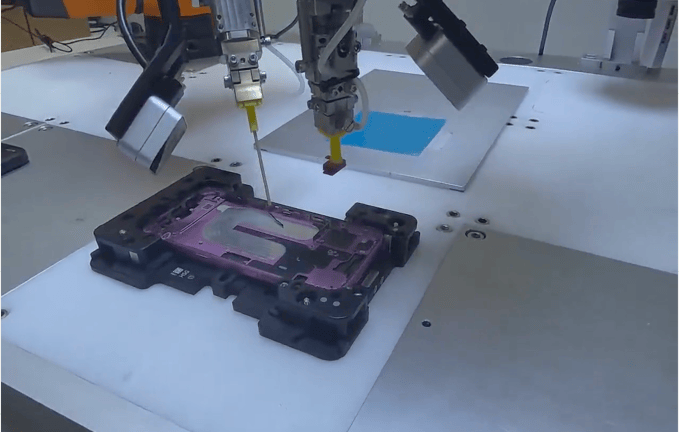
Pankau解释说,该初创公司的一些工作站已经被用于生产世界上最受欢迎的智能手机之一。它们承担着制造商多年来尝试却未能实现自动化的任务,例如穿入一根细软的柔性电缆,以及将一个微小的连接器盖卡入到位。(他无权透露客户身份。)他还描述了一个“剥离保护膜”工作站,在那里,他们的AI驱动机器人能够以与人类相当或更快的速度、100%的准确率,从摄像头模块和按钮上剥离保护膜,即使这些机器人被转移到从未见过的新手机型号和生产线上也能做到这一点。
Pankau explained that some of the startup’s workstations are already used in making one of the world’s most popular smartphones. They handle tasks that manufacturers had tried and failed to automate for years, such as threading a delicate flex cable and snapping a tiny connector cap into place. (He wasn’t at liberty to disclose the customer.) He also described a “film peeling” station, where their AI-powered robots strip protective film off camera modules and buttons at or above human speed with 100% accuracy, even when moved to a new phone model and production line they have never seen.
“我们创办这家公司,正是因为我们希望在特斯拉拥有这样的性能,当时我们不得不绕过机器人工作站,因为传统技术无法让我们有效地对它们进行编程,”潘考说。“现在我们希望将这项技术应用到比仅仅制造手机更复杂的任务上。我们最终的目标是让这项技术用于从头到尾制造一辆完整的汽车,全程无需任何人工干预。”想要了解更多初创企业战场内容 — — 以及一众资深创始人和风险投资人的独到见解,这些内容你绝对不容错过 — — 请参加本周在旧金山市中心举行的Disrupt大会。
“We started this company because that is the kind of performance that we wish we had at Tesla, where we were bypassing robot stations because we couldn’t program them effectively enough using traditional technologies,” Pankau said. “Now we want to take this to more complicated tasks than just building a phone. We ultimately want to take this to building a full car end-to-end without any human touching ever.”To check out more of the Startup Battlefield — along with a slate of established founders and VCs whose takes on the industry you won’t want to miss — join us at Disrupt, happening this week in downtown San Francisco.