“我们不得不关闭市场几天。当时正值周末和月末前夕。正是这时候我们最需要钱,”温得和克最大露天肉类市场单一区(Single Quarter)的摊贩弗朗西斯科说。
“We had to close the market for several days. It was just before the weekend and month’s end. That’s when we need the money the most,” says Francisco, a vendor at Single Quarter, Windhoek’s largest open meat market.
他把醋和食用油倒入番茄洋葱莎莎酱中,这是传统配菜,搭配卡帕纳(kapana)——一种受欢迎的烤肉街头小吃。在他周围,许多摊位和烧烤站点空无一人。通常在营业时间里人潮涌动的市场,如今只有寥寥几位顾客在摊位间穿梭。最近的关闭和对肉类供应的担忧已经扰乱了生意。
He pours vinegar and cooking oil into a tomato and onion salsa, a traditional accompaniment to kapana, a popular grilled-meat street food. Around him, many stalls and grilling stations sit empty. Instead of the crowds that typically fill the market during business hours, only a handful of customers move between the stalls. Recent closures and concerns about meat supplies have disrupted business.
“我们的生意很冷清。我们在努力采购肉类,但没有肉,我们就无法生存,”另一位要求匿名的卡帕纳摊贩说。“这是我们的生计。现在肉类价格大幅上涨,我们的总收入在减少。如果这种情况持续三个月,对我们来说将是非常糟糕的。”在温得和克最大城镇卡图图拉(Katutura),居民对牛肉供应的不确定性正在加剧他们的财政担忧。
“Our business is slow. We are struggling to buy meat, but without it, we cannot survive,” says another kapana vendor, who asked to remain anonymous. “This is our livelihood. The meat is much more expensive now, so we are making less money altogether. If this continues for three months, it is going to be very bad for us.”In Katutura, Windhoek’s largest township, uncertainty over beef supplies is adding to residents’ financial concerns.
“如果我们不吃肉,我们还能吃什么?我们是纳米比亚人,”一位居民说,他把肉描述为当地饮食的主食。另一位居民则担心价格上涨及其对纳米比亚的更广泛影响,因为畜牧业出口是该国经济的重要组成部分。
“If we don’t eat meat, what are we going to eat? We are Namibians,” one resident says, describing meat as a staple of the local diet. Another worries about rising prices and the wider consequences for Namibia, where livestock exports are an important part of the economy.
在奥库良加瓦(Okuryangava)郊区的一家超市,肉铺已经售罄一些高端牛肉产品。店长恩里科·德·阿泽维多(Enrico De Azevedo),23岁,表示消费者行为也加剧了这种压力。
At a supermarket in the Okuryangava suburb, the butchery has already run out of some premium beef products. Store manager Enrico De Azevedo, 23, says consumer behaviour has also contributed to the pressure.
“我们看到人们像在新冠疫情期间囤积卫生纸那样恐慌性采购。现在,他们可以去把肉堆放在他们卫生纸旁边,”他说。
“We saw people panic-buying like they did during the COVID-19 pandemic with toilet paper. Now, they can go and stack their meat next to their toilet paper,” he says.
德阿泽多也认识到更广泛的经济风险。“对于从事出口业务的人来说,这将产生严重影响。”疫情威胁纳米比亚的出口市场纳米比亚兽医服务局(DVS)于2026年9月23日确认,在南部//哈拉斯地区卡拉斯堡州兽医区的一家商业农场爆发了口蹄疫(FMD)。
De Azevedo also recognises the wider economic risks. “For those in the export business, this will have grave implications.”Outbreak threatens Namibia’s export market Namibia’s Directorate of Veterinary Services (DVS) confirmed an outbreak of foot-and-mouth disease (FMD) on a commercial farm in the Karasburg State Veterinary District, in the southern //Kharas Region, on September 23, 2026.
10月5日,总统努姆博·南迪-恩代塔瓦在讲话中表示,监测团队在15个农场记录了127例阳性病例。团队在68个农场检查了29,313头动物。政府还在该地区设立了20个监测团队和10个路障,作为其应对措施的一部分。
In an address on October 5, President Netumbo Nandi-Ndaitwah said surveillance teams had recorded 127 positive cases across 15 farms. Teams had inspected 29,313 animals across 68 farms. The government had also established 20 surveillance teams and 10 roadblocks in the region as part of its response.
在截至10月6日的情况更新中,农业、渔业、水资源和土地改革部报告称,129份动物样本呈阳性,17个农场被确认感染。兽医团队已检查了81个目标农场中的72个。
In an update covering the situation as of October 6, the Ministry of Agriculture, Fisheries, Water and Land Reform reported that 129 animal samples had tested positive and 17 farms had been confirmed infected. Veterinary teams had inspected 72 of 81 targeted farms.
疫情随后在第二个地区得到确认。10月7日,实验室测试确认在北部纳米比亚赞比西地区卡贝选区的卡拉拉岛的牛只中存在口蹄疫。
The outbreak was subsequently confirmed in a second region. On October 7, laboratory tests confirmed FMD in cattle at Kalala Island, in the Kabbe constituency of the Zambezi Region, in northern Namibia.
卡蒂马穆利洛州兽医办公室的兽医官员在10月5日观察到20头牛出现临床症状后,对疑似疫情进行了调查。10月6日,他们采集了12份样本并送往温得和克中央兽医实验室。次日,全部12份样本检测呈阳性。
Veterinary officials from the Katima Mulilo State Veterinary Office investigated the suspected outbreak on October 5 after observing clinical signs in 20 cattle. Twelve samples were collected and submitted to the Central Veterinary Laboratory in Windhoek on October 6. All 12 tested positive for the virus the following day.
10月10日,该部发布公开通知,概述了在确认疫情后对赞比西地区实施的限制措施。
In a public notification issued on October 10, the ministry outlined restrictions across the Zambezi Region following confirmation of the outbreak.
这些措施包括:暂停蹄类动物及其原料产品的流通,取消之前签发的流通许可证,暂停牲畜拍卖、非正式市场及其他动物聚集活动。当地屠宰场、非正式市场和社会活动的屠宰也已被暂停。
These include suspending the movement of cloven-hoofed animals and their raw products, cancelling previously issued movement permits, and halting livestock auctions, informal markets and other animal-gathering events. Slaughter at local abattoirs, informal markets and social events has also been suspended.
在符合商品贸易体系条件的出口屠宰场,只要动物符合检疫要求并通过可追溯性检查,符合条件的牛只屠宰可能仍将继续进行。
Slaughter at export abattoirs may continue for eligible cattle under the commodity-based trade system, provided the animals meet quarantine requirements and pass traceability checks.
在受影响地区已开始紧急接种疫苗,同时设置路障并加强监控,旨在防止疾病进一步传播。
Emergency vaccination has begun in the affected area, while roadblocks and intensive surveillance are intended to prevent further spread.
口蹄疫是一种高度传染性的病毒性疾病,影响有蹄的动物,包括牛、羊、山羊和猪。它可能扰乱畜牧业生产和贸易,特别是当它影响到被认定为无疫区的地区时。
FMD is a highly contagious viral disease affecting cloven-hoofed animals, including cattle, sheep, goats and pigs. It can disrupt livestock production and trade, particularly when it affects areas recognised as free of the disease.
在确认//Kharas爆发后,纳米比亚当局向世界动物卫生组织(WOAH)通报了情况,并对有蹄动物及其产品的流动和出口实施了限制。
Following confirmation of the //Kharas outbreak, Namibian authorities notified the World Organisation for Animal Health (WOAH) and introduced restrictions on the movement and export of cloven-hoofed animals and their products.
爆发后,欧盟随后修改了对纳米比亚先前授权出口区(称为NA-1)的进口规则。
The European Union subsequently amended its import rules for Namibia’s previously authorised export zone, known as NA-1, following the outbreak.
赞比西地区的检测增加了兽医当局面临的挑战,他们正努力控制疾病并防止进一步感染。现有信息确认了两个地区均发生疫情,但未确定疾病是否直接从//Kharas传播到赞比西。
The Zambezi detection has added to the challenge facing veterinary authorities, who are working to contain the disease and prevent further infections. The available information confirms outbreaks in both regions but does not establish that the disease spread directly from //Kharas to Zambezi.
纳米比亚农业联盟(NAU)传播主管玛丽安娜·普雷托里乌斯通过电子邮件向半岛电视台表示:“此次疫情对我们国家是一个沉重的打击。”“这些限制令人痛苦,但它们是必要的,NAU支持这些措施。”10月5日,欧盟宣布暂停纳米比亚先前授权出口区的特定鲜肉产品(来自牛、羊和山羊)以及其他养殖和野生有蹄动物的某些产品进入欧盟。该限制还涵盖特定的加工肉类产品,包括风干肉和肉干。
“The outbreak has been a heavy blow to our country,” Marianne Pretorius, head of communications at the Namibia Agricultural Union (NAU), told Al Jazeera by email. “The restrictions are painful, but they are necessary, and the NAU supports them.”On October 5, the European Union announced a temporary suspension of entry into the bloc of specified fresh meat products from cattle, sheep and goats, as well as certain products from other farmed and wild hoofed animals, from Namibia’s previously authorised export zone. The restrictions also cover specified processed meat products, including biltong and jerky.
该措施并非对纳米比亚所有肉类进口实施全面暂停。根据欧盟的规定,经过规定风险降低处理的某些加工产品仍符合入境条件。在9月23日之前由纳米比亚当局认证的符合条件的鲜肉批次,也可在为期90天的过渡期内进入,前提是符合适用的欧盟规则和边境管控要求。
The measure is not a blanket suspension of all Namibian meat imports. According to the EU, certain processed products that undergo the prescribed risk-mitigating treatment remain eligible for entry. Qualifying fresh-meat consignments certified by Namibian authorities before September 23 may also enter during a 90-day transitional period, subject to the applicable EU rules and border-control requirements.
这些限制适用于欧盟措施所涵盖的特定产品。尚不清楚赞比西爆发是否会影响该国向其他市场的出口或在其他贸易安排下的出口。
The restrictions apply to the specific products covered by the EU measure. It remains unclear whether the Zambezi outbreak will affect exports to other markets or under other trade arrangements.
对于该国的畜牧业而言,这些限制加剧了由国内流动管制和部分出口市场准入丧失所造成的不确定性。
For the country’s livestock industry, the restrictions add to the uncertainty created by domestic movement controls and the loss of access to some export markets.
“对于//Kharas地区的农民来说,影响是立即且严重的,但这不仅仅是//Kharas的问题,”普雷托里乌斯说。“当出口市场关闭时,全国每一位畜牧生产者都会感受到。”她警告称,即使国内贸易恢复,后果也可能持续存在。
“For farmers in the //Kharas region, the impact is immediate and severe, but this is not only a //Kharas problem,” Pretorius said. “When export markets close, every livestock producer in the country feels it.”She warned that the consequences could continue even after domestic trading resumes.
“即使国内贸易恢复,价格也可能在出口市场重新开放之前仍然承受压力,”她写道。“这就是为什么我们呼吁将市场复苏的处理力度与疫情防控同等对待。”随着经济成本上升,防控措施扩大纳米比亚已加大力度遏制疫情,包括计划在高风险地区加强兽医围栏。
“Even when domestic trade resumes, prices may remain under pressure until export markets reopen,” she wrote. “That is why we are calling for market recovery to be treated with the same determination as disease control.”Containment measures expand as economic costs mount Namibia has stepped up efforts to contain the disease, including plans to strengthen veterinary fencing in high-risk areas.
//Kharas地区沿奥兰治河的兽医隔离栅栏建设始于十月。该屏障旨在加强与南非边境的管控。政府还在高风险地区推进了额外的围栏和防控措施。
Construction of a veterinary cordon fence along the Orange River in the //Kharas Region began in October. The barrier is intended to strengthen controls along the border with South Africa. The government has also pursued additional fencing and containment measures in high-risk areas.
这些遏制措施旨在限制动物活动并降低进一步感染的风险。其有效性将取决于监测情况、对活动限制的遵守程度以及兽医当局识别和遏制新病例的能力。
The containment measures are intended to limit animal movement and reduce the risk of further infections. Their effectiveness will depend on surveillance, compliance with movement restrictions and the ability of veterinary authorities to identify and contain new cases.
此次疫情也正在影响该国的肉类加工行业。《纳米比亚人报》于10月12日报道称,纳米比亚肉业公司(Meatco)已让约400名生产工人享受全薪的三周特殊假。情况将于10月23日进行评估,工人何时返回将取决于兽医当局的指导。
The outbreak is also affecting the country’s meat-processing sector. The Namibian reported on October 12 that Meat Corporation of Namibia (Meatco) had placed about 400 production workers on three weeks of special leave with full pay. The situation was due to be reviewed on October 23, with workers’ return depending on guidance from veterinary authorities.
《纳米比亚人报》还报道称,Meatco已向农民支付3100万纳米比亚元(约合180万美元),用于其在8月29日至9月11日期间向温得和克屠宰场交付的牛只。这些付款覆盖已交付的牛只,但未来销售和出口渠道仍存在不确定性。
The Namibian also reported that Meatco had paid farmers N$31 million (about US$1.8 million) for cattle delivered to its Windhoek abattoir between August 29 and September 11. The payments cover cattle already delivered, while uncertainty remains over future sales and export access.
农民和肉类供应商承受成本 对于畜牧业生产者而言,疫情威胁着其即时收入以及企业的长期可行性。对动物流动和销售的限制甚至可能中断尚未感染疫情的农民的现金流。
Farmers and meat vendors count the cost For livestock producers, the outbreak threatens immediate income and the longer-term viability of their businesses. Restrictions on moving and selling animals can interrupt cash flow even for farmers whose herds have not been infected.
来自阿拉诺斯的40岁农民格特·恩格布雷希特表示,这些限制给生产者带来了财务和情感上的压力。
Gert Engelbrecht, a 40-year-old farmer from Aranos, said the restrictions had created financial and emotional strain for producers.
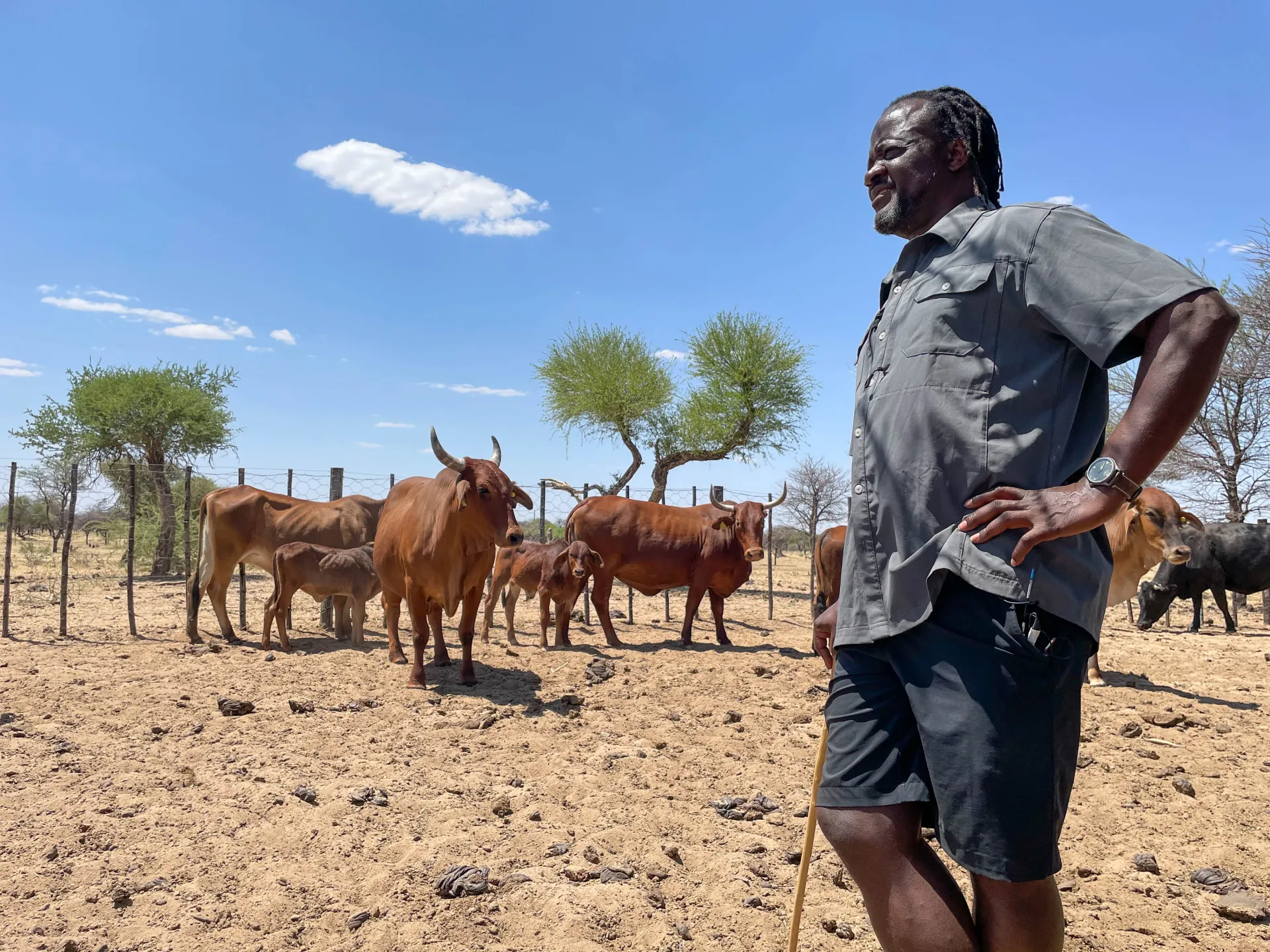
“我们的牲畜对我们而言不仅仅是生意;它是我们的生计,是我们倾注一生心血的东西,”他对半岛电视台说。“能够流通和出售牲畜是维持农场运作的基础。当流动和市场受限时,这会影响纳米比亚全国的农民。最终,我们需要恢复无疫病状态。”动物卫生局已加强监测,并正在追溯疫情被发现前发生的牲畜流动情况。
“Our livestock is not simply a business to us; it is our livelihood and something we have invested our lives in,” he told Al Jazeera. “Being able to move and sell livestock is fundamental to keeping the farming operation going. It affects farmers across Namibia when movement and markets are restricted. Ultimately, we need to regain our disease-free status.”The DVS has intensified surveillance and is tracing livestock movements that took place before the outbreaks were detected.
对于农民而言,恢复市场准入对于维持其经营至关重要。与此同时,肉类供应商则依赖可靠的供应来维持其业务。
For farmers, restoring market access is essential to keeping their operations running. Meat vendors, meanwhile, depend on reliable supplies to sustain their businesses.
“农民是斗士,”恩格尔布雷希特说。“我们理解限制措施为何必要,但我们不会袖手旁观、等待别人来解决。我们正在与兽医当局合作,使该疫情得到控制,恢复我们的地位,并重获市场准入。”
“Farmers are fighters,” Engelbrecht said. “We understand why restrictions are necessary, but we are not sitting back and waiting for somebody else to solve this. We are working with the veterinary authorities to see this disease controlled, regain our status, and restore access to our markets.”