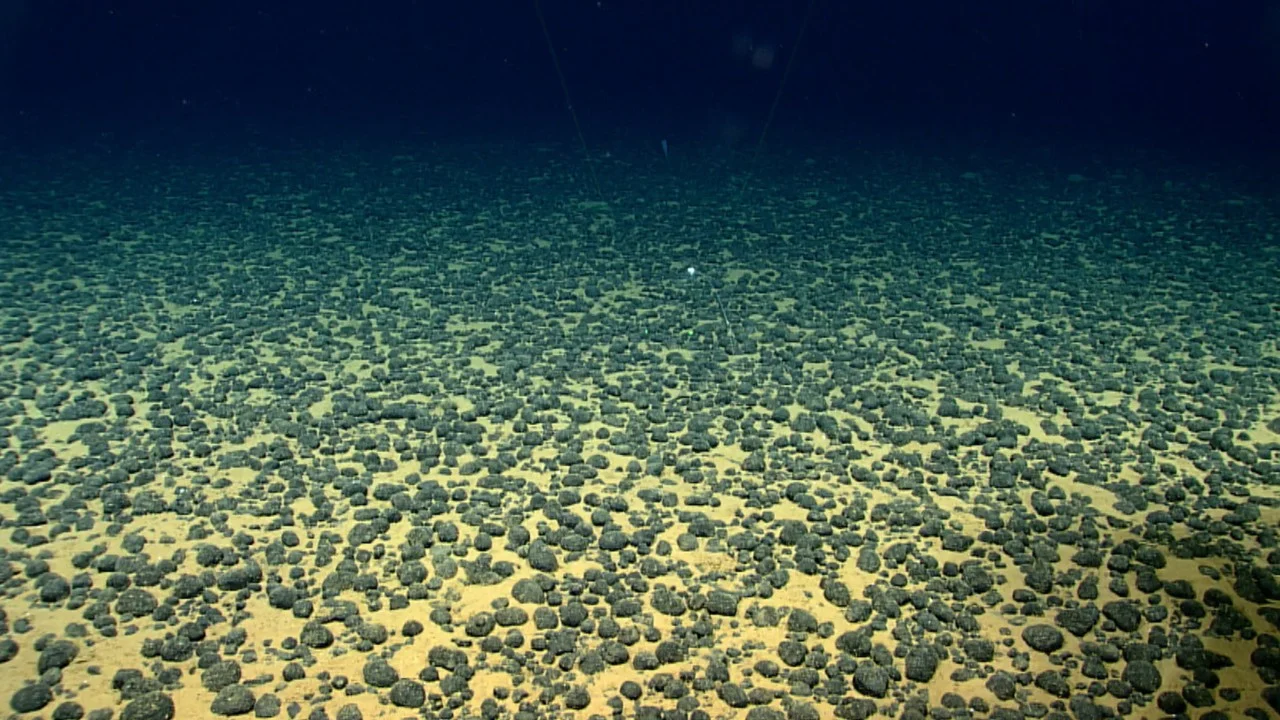
在墨西哥和夏威夷之间的太平洋海底,深达6000米(约19700英尺)处,散布着数十亿个马铃薯形状的金属结核。
Up to 6,000 metres (19,700 feet) beneath the surface of the Pacific Ocean between Mexico and Hawaii, billions of potato-shaped metallic nodules are scattered across the seabed.
据一些估计,克拉里昂-克利珀顿区(Clarion-Clipperton zone)蕴藏的镍、钴和锰等重要金属储量,可能超过陆地上已知的总储量。
The Clarion-Clipperton zone’s reserves of vital metals such as nickel, cobalt and manganese could surpass the total known reserves on land, according to some estimates.
尽管目前该海底平原尚未进行商业开采,但国际海底管理局已针对该区域发放了17份勘探合同,其中5份由中国持有。
While no commercial mining has yet taken place on the underwater plain, the International Seabed Authority has issued 17 exploration contracts for the area, five of which are held by China.
然而,中国研究团队近期对该区域进行的一项深入研究显示,未来的深海采矿者将发现的不仅仅是矿产财富,他们还将遇到无数神秘的病毒。
But a recent in-depth study of the zone by a Chinese research team has shown that future deep-sea miners will discover more than mineral wealth – they will encounter countless mysterious viruses.
研究人员检查了来自该区域的沉积物样本,识别出11742种不同的病毒。其中超过99%的病毒(总计11662种)为新发现。
The researchers examined samples of sediment from the zone and identified 11,742 different viruses. Over 99 per cent of the viruses – 11,662 in total – were new discoveries.
“这些发现为病毒在多金属结核区的生态作用提供了见解,为未来的环境影响评估建立了至关重要的采矿前微生物生态系统基线,”第一作者侯博文(音译)在上个月底发表于《自然-通讯》的论文中写道。
“These findings provide insights into the ecological roles of viruses in the polymetallic nodule province, establishing a vital pre-mining baseline of microbial ecosystem for future environmental impact assessments,” first author Hou Bowen wrote in the paper, which was published in Nature Communications late last month.
侯博文是重庆大学与中国自然资源部第二海洋研究所的联合培养博士生。
Hou is a joint doctoral student at Chongqing University and the Second Institute of Oceanography under China’s Ministry of Natural Resources.
研究中使用的60个样本由持有勘探合同的中国实体之一——中国大洋矿产资源研究开发协会于2023年和2024年采集。
The 60 samples used in the study were collected in 2023 and 2024 by one of the Chinese entities that holds an exploration contract, the China Ocean Mineral Resources R&D Association.
科学家们利用蛋白质共享网络,将这些病毒与此前在海水、海沟和热液环境中发现的病毒数据进行了比对。
Using protein-sharing networks, the scientists compared the viruses with data on viruses previously found in seawater, trenches and hydrothermal environments.
在该区域发现的病毒中,仅有约4%的蛋白质簇与至少一个外部数据集共享。这意味着该地区存在尚未被科学家记录的病毒谱系和遗传资源。
Only about 4 per cent of the protein clusters of the viruses found in the zone were shared with at least one external data set. This means that the area is home to viral lineages and genetic resources that have not yet been recorded by scientists.
该地区的病毒很可能具有独特的特征,反映了它们所进化的特殊环境,即富含重金属但极度缺乏可用营养物质。
The viruses in the region are likely to have unique characteristics that reflect the unusual environment in which they have evolved, which is rich in heavy metals while being extremely deficient in available nutrients.
该团队发现的绝大多数病毒属于有尾噬菌体纲(Caudoviricetes),该类病毒具有一种像注射器一样可以将遗传物质注入细菌的尾部结构。这一纲的病毒存在于包括海洋、陆地甚至人类肠道在内的各种生态系统中。
The vast majority of the viruses the team discovered belong to the Caudoviricetes class, which has a tail structure that can inject genetic material into bacteria like a syringe. Viruses in this class are present in various ecosystems, including the ocean, land and even the human gut.
这些病毒通常对人类没有危险;它们只能靶向并摧毁细菌。事实上,人类活动对病毒造成的风险可能比病毒对人类造成的风险更大。
These viruses are not generally dangerous to humans; they can only target and destroy bacteria. Indeed, human activity is likely to pose a bigger risk to the viruses than the other way round.
一旦采矿活动扰动了沉积物,这些病毒可能无法再发挥其在海底生态系统中的作用,例如分解有机物并将营养物质释放到环境中。
Once mining disturbs the sediment, the viruses may not be able to perform their role in the seabed ecosystem, such as breaking down organic matter and releasing nutrients into the environment.