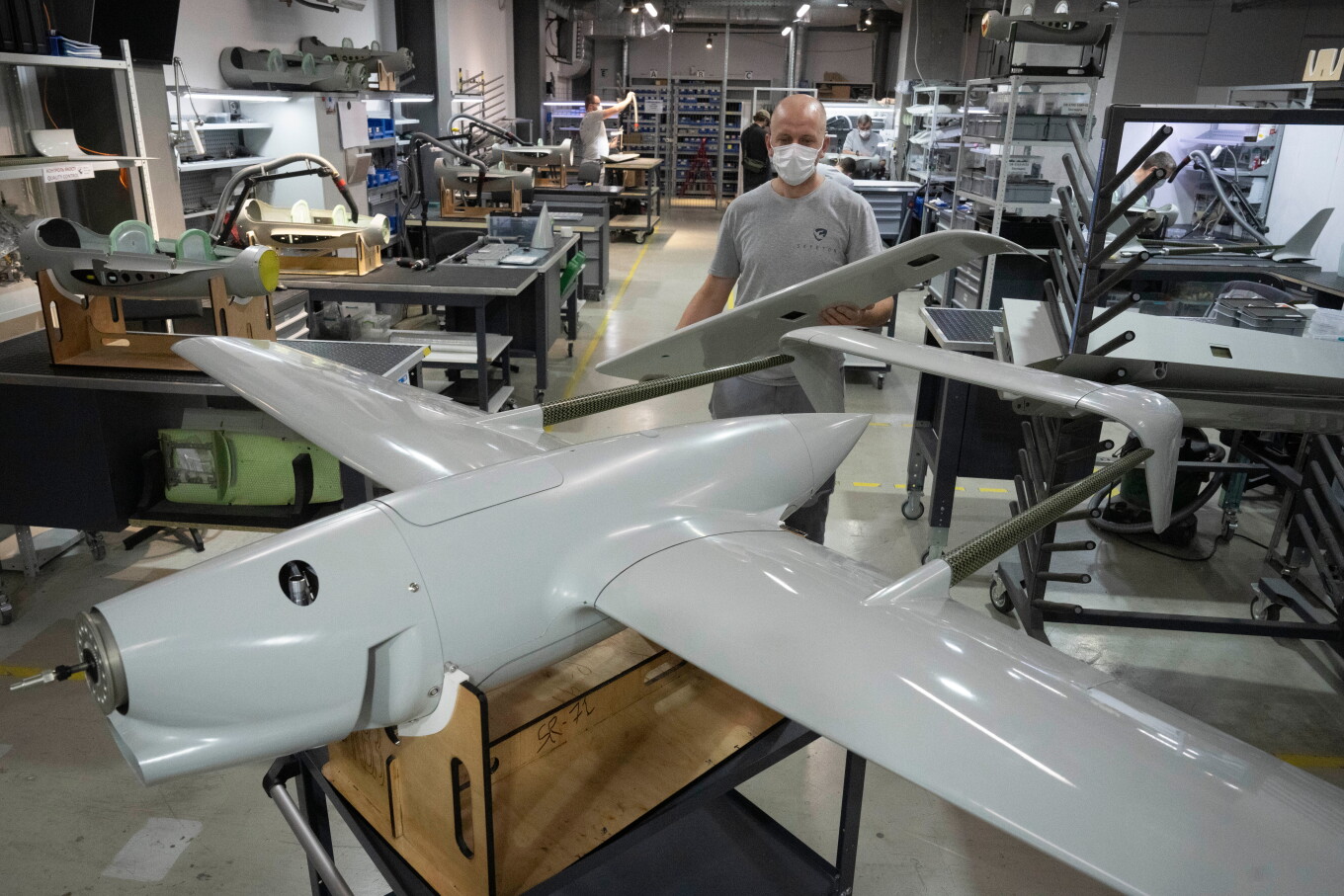
萨米亚·库拉布(SAMYA KULLAB) 乌克兰基辅——自俄罗斯四年多前入侵以来,乌克兰已成为全球军事无人机创新的领导者,使其军队得以将规模大得多的敌人拖入僵局。
SAMYA KULLAB KYIV, Ukraine — Since Russia invaded more than four years ago, Ukraine has become a global leader in military drone innovation , enabling its forces to grind a much larger enemy to a stalemate.
但这种技术上的力量倍增器也带来了一个令人不安的脆弱点:乌克兰的无人机制造商高度依赖中国制造的电子产品,而中国是俄罗斯的关键盟友。
But this technological force multiplier has come with an unsettling vulnerability: Ukrainian drone makers are highly dependent on electronics made by China, a key Russian ally.
乌克兰最担心的是,中国政府可能会严格限制其获取这些关键零部件的渠道。乌克兰还担心,同样需要这些物资的俄罗斯国防企业可能会获得中国工厂的优待。
Ukraine’s greatest fear is that the Chinese government could severely restrict its access to these critical parts. It also worries that Russian defense companies that need these same supplies could be given preferential treatment by Chinese factories.
在过去两年里,乌克兰一直试图通过扩大国内生产以及从台湾、欧洲和美国进口更多物资,来打破对中国的依赖。这已将其对中国制造的电动机、飞行控制器和其他零部件的需求降至最低。
Over the past two years, Ukraine has sought to break its dependence on China by expanding domestic manufacturing and importing more supplies from Taiwan, Europe and the U.S. That has minimized its need for Chinese-made electric motors, flight controllers and other parts. Yet Ukraine cannot entirely break free from China, whose lower costs and vastly greater production capacity cannot be matched by allied suppliers.
然而,乌克兰无法完全摆脱中国,因为盟国供应商无法比拟中国的低成本和极其庞大的生产能力。
“If China stops their production to us ... we are blinded,” said Andrii Taganskyi, an executive at Odd Systems, a Ukrainian weapons manufacturer that develops cameras for drones.
“如果中国停止向我们供货……我们就成了瞎子,”乌克兰武器制造商Odd Systems的高管安德里·塔甘斯基(Andrii Taganskyi)说,该公司负责开发无人机摄像头。“这是最可怕的部分。”中国以担心延长乌克兰战争为由,几年来一直收紧对无人机及相关设备的出口管制。虽然这些限制并未切断中国零部件流向乌克兰的渠道,但它们造成了延误并推高了成本,迫使乌克兰企业转向第三国的中间商。
“This is the scariest part.”China has tightened controls on exports of drones and related equipment for several years, citing concerns about prolonging the war in Ukraine. While the restrictions have not stopped the flow of Chinese components to Ukraine, they have caused delays and driven up costs, pushing Ukrainian companies toward intermediaries in third countries. “China has leverage,” said Robert Tallost, a researcher at the think tank RUSI.
“中国拥有筹码,”智库英国皇家联合军种国防研究所(RUSI)的研究员罗伯特·塔洛斯特(Robert Tallost)表示。“他们可以向俄罗斯输送更多物资,同时限制对西方的供应。”中国外交部表示,北京对军事出口采取“审慎负责”的态度。外交部称,中方反对将民用无人机用于军事目的,并敦促各方寻求战争的政治解决方案。
“They could direct more material to Russia while restricting supplies to the West.”China’s Foreign Ministry said Beijing takes a “prudent and responsible” approach to military exports. It said it opposes the use of civilian drones for military purposes, and urged all sides to find a political settlement of the war. Ukraine has earned worldwide recognition for its cutting-edge drone industry, designing and assembling systems that have changed modern warfare.
乌克兰凭借其尖端无人机产业赢得了全球认可,其设计和组装的系统改变了现代战争。然而,乌克兰无人机所使用的许多材料和零部件在短期内无法实现本土化。
Yet many of the materials and components that go into Ukrainian drones cannot be localized anytime soon. Magnets, motors, chips, thermal sensors, battery cells and more still largely come from China, a dozen Ukrainian manufacturers said.
十几家乌克兰制造商表示,磁铁、电机、芯片、热传感器、电池电芯等部件目前仍主要来自中国。
Switching entirely to Western alternatives could raise costs by as much as 60% and cut production by a similar amount, said Oleksandr Yakovenko of TAF Industries, a major Ukrainian defense company.
乌克兰大型国防企业TAF Industries的亚历山大·亚科文科(Oleksandr Yakovenko)表示,完全转向西方替代品可能会使成本增加高达60%,并导致产量出现同等幅度的下降。亚科文科和其他高管表示,这不是一个可行的权衡方案。尽管如此,乌克兰无人机制造商已开始减少对中国的依赖。
That is not a viable tradeoff, Yakovenko and other executives said. Still, Ukrainian drone makers have begun to wean themselves off of China. Three years ago, the Ukrainian drone maker Vyriy relied upon China for nearly 90% of the components in its attack drones.
三年前,乌克兰无人机制造商Vyriy的攻击型无人机中,近90%的零部件依赖中国。“今天,我们约70%到80%的零部件是在乌克兰制造的,”Vyriy的创始人阿列克谢·巴本科(Oleksii Babenko)说。
“Today, about 70% to 80% of our components are made in Ukraine,” said Vyriy’s founder, Oleksii Babenko. This increasing self-reliance has an extra benefit in the midst of a grueling war.
基辅智库塞尔彭斯国际安全中心(Serpens Center for International Security)的分析师阿图尔·萨夫奇(Artur Savchii)表示,这种日益增强的自给自足能力在艰苦的战争中还有额外的好处。国内制造的无人机及其零部件可以在几天内完成重新设计,以满足战场上的紧急需求,而通过外国供应链进行此类调整可能需要数月时间。
Drones and drone components made domestically can be redesigned in a matter of days to meet urgent demands on the battlefield, whereas it can take months for such changes to filter through foreign supply chains, said Artur Savchii, an analyst at the Kyiv-based think tank Serpens Center for International Security. At the beginning of 2024, nearly 90% of Ukraine’s imported drone parts came directly from China.
根据乌克兰海关的数据,2024年初,乌克兰进口的无人机零部件中,近90%直接来自中国。而在2026年的前八个月,这一比例仅为28%。
In the first eight months of 2026, it was just 28%, according to Ukraine Customs data. But the drop may not be as dramatic as it seems.
但这种下降可能并不像看起来那么剧烈。例如,许多记录显示来自波兰和捷克的零部件,极有可能是中国制造,然后经由这些国家转运。
Many components recorded as coming from Poland and the Czech Republic, for example, very likely were manufactured in China and routed through those countries. Ukraine can assemble batteries but must import the cells inside them.
乌克兰可以组装电池,但必须进口电池内部的电芯。电机需要进口磁铁和铜。虽然乌克兰可以制造一些电子产品,但中国公司能够以大得多的规模和大约一半的成本进行生产。热成像仪显示出乌克兰要打破这种依赖有多么困难。
Motors require imported magnets and copper. And while Ukraine can manufacture some electronics, Chinese companies can produce them at far greater scale and roughly half the cost. Thermal cameras show just how difficult it is for Ukraine to break its dependence. Ukrainian companies design the cameras themselves but still rely on imported sensors, which detect infrared radiation, and lenses that cannot be made domestically, manufacturers said.
制造商表示,乌克兰公司自行设计这些摄像机,但仍然依赖进口的传感器(用于探测红外辐射)和国内无法制造的镜头。关键原材料之一是锗,这是一种中国储量丰富的元素,使得中国产镜头比欧洲的替代品便宜得多。尽管美国和欧洲也生产传感器,但其中大部分都在国内使用。
One of the key raw materials is germanium, an element which China has in abundance, making Chinese lenses far cheaper than European alternatives. Although the U.S. and Europe also make sensors, most of them are used domestically. Ukraine could build thermal cameras entirely from European components, Taganskyi said, but capacity and cost are barriers: Europe produces about 600,000 thermal sensors a year, versus Ukraine’s estimated need for 4 million, he said.
塔甘斯基(Taganskyi)表示,乌克兰本可以完全使用欧洲零部件制造热成像仪,但产能和成本是障碍:他说,欧洲每年生产约60万个热成像传感器,而乌克兰估计需要400万个。目前,一些中国零部件仍然必不可少。“没有这5%,就没有摄像机,”塔甘斯基说。
For now, some Chinese components remain essential. “Without this 5%, there is no camera,” Taganskyi said. To be sure, Russia is even more dependent on China than Ukraine, experts say – in part because of Western sanctions that restrict its access to other markets.
专家表示,可以肯定的是,俄罗斯对中国的依赖程度甚至超过乌克兰——部分原因是西方制裁限制了俄罗斯进入其他市场。不同之处在于,莫斯科无需担心其盟友北京会向有利于乌克兰的方向倾斜天平。
The difference is that Moscow doesn’t face the risk of its allies in Beijing tipping the scales in favor of Ukraine. Ukrainian President Volodymyr Zelenskyy addressed Russia’s advantage vis-a-vis its relationship with China during a recent interview.
乌克兰总统弗拉基米尔·泽连斯基在最近的一次采访中谈到了俄罗斯在对华关系方面的优势。
“They are slightly on Russia’s side. And by ‘slightly,’ I mean not direct weapons supplies, but a greater openness to them, a greater willingness to help them rather than us – and for a country as large as China, ‘slightly’ means a lot,” Zelenskyy said.
“他们稍微站在俄罗斯这一边。我所说的‘稍微’,是指没有直接提供武器,但对他们更加开放,更愿意帮助他们而不是我们——对于像中国这样大的国家来说,‘稍微’意味着很多,”泽连斯基说。
Competing with Russia for the attention of the same Chinese factories carries another risk for Ukraine: revealing its needs to the enemy.
与俄罗斯争夺同一批中国工厂的关注,给乌克兰带来了另一个风险:向敌人暴露自己的需求。
The risk is clear to Babenko.
巴本科(Babenko)清楚这种风险。乌克兰军队在前线缴获的一架俄罗斯无人机配备了高度复杂的各种天线,这些天线可用于远程侦察和制导,巴本科的公司追溯发现该技术来自一家中国供应商。巴本科说,当乌克兰方面联系购买数百个时,该供应商起初拒绝了,后来在乌方同意对交易保密的前提下才表示同意,因为这项技术是为俄罗斯开发的。
A Russian drone recovered by the Ukrainian army on the front line was equipped with highly sophisticated antennas useful for long-range reconnaissance and guidance, and Babenko’s company traced the technology to a Chinese supplier. When the Ukrainians reached out to buy several hundred, the supplier initially refused, then agreed on the condition that they keep the deal private because the technology had been developed for Russia, Babenko said. The episode underscored why domestic production is a matter of strategic security, Babenko said.
巴本科表示,这一事件凸显了为何国内生产是战略安全问题。他说:“我们应该为中国完全选择俄罗斯立场的那种情况做好准备。”
“We should be ready for that situation when China will fully choose the Russian position,” he said. China has tightened export controls on drones and related components several times since 2023.
自2023年以来,中国已多次收紧对无人机及相关零部件的出口管制。这些限制措施使得乌克兰公司无法直接从中国公司购买一些远程民用无人机、电机、摄像头和红外成像设备。
The restrictions have made it impossible for Ukrainian companies to purchase some long-range civilian drones, motors, cameras and infrared imaging equipment directly from Chinese companies. The restrictions, which were tightened further this summer, have forced Ukrainian defense companies to adapt by using intermediaries in third countries to keep Chinese-made drones and parts moving.
今年夏天进一步收紧的限制措施,迫使乌克兰国防公司不得不通过在第三国使用中间商来维持中国制造的无人机和零部件的供应。许多公司表示,他们遭受了供应中断和成本上升的影响。
Many said they suffered disruptions and higher costs. “We just need to have partner companies which purchase it in other countries, then a third, then to Ukraine,” said one Ukrainian drone executive.
“我们只需要有合作公司在其他国家购买,然后再转到第三国,最后运往乌克兰,”一位乌克兰无人机高管说。“这就像是一场特别行动。”另一位高管表示,各公司还通过更改政府文书上的产品描述来规避出口管制。他说:“有时你必须有创造力。”这两位高管均以匿名方式接受采访,以避免暴露他们的策略。
“It’s like a special operation.”Another executive said companies also get around export controls by altering product descriptions on government paperwork. “Sometimes you have to be creative,” he said. Both executives spoke anonymously to avoid revealing their tactics. For now, Chinese factories’ willingness to do business with Ukrainian buyers, and the ease of routing goods through third countries, makes the trade difficult to shut down, said Joseph Webster, a senior fellow at the Atlantic Council.
大西洋理事会高级研究员约瑟夫·韦伯斯特表示,目前中国工厂与乌克兰买家进行交易的意愿,以及通过第三国运输货物的便利性,使得这种贸易难以被切断。
“This dependence is not going to go away in a war where both sides are burning through equipment at a horrifying scale,” said Samuel Bendett, an analyst of military robotics.
军事机器人分析师塞缪尔·本德特说:“在双方都以惊人的规模消耗装备的战争中,这种依赖关系不会消失。在本土工业无法跟上需求的地方,中国可以填补空缺。”
“Where domestic industry cannot keep up, China can.”